
Seat Adjustment, Comfort Features, and Safety
Seat adjustment should establish a safe driving position before it optimizes comfort. Heating, ventilation, massage, and memory can improve a well-fitting seat, but they cannot correct poor belt geometry, an unreachable pedal, or a head restraint that is too low or too far away.
Set the safe baseline
Make large adjustments first and fine-tune the support surfaces last.
- Move fore and aft. Fully depress the brake and accelerator without rotating the pelvis or locking the knee. Keep enough bend in the knee to retain control and reduce the chance of a straight leg taking the crash load.
- Set height. Maintain a clear view of the road and instruments while preserving headroom. Height changes can also alter the apparent cushion angle and pedal relationship.
- Adjust the cushion. Support most of the thighs without pressure at the back of the knees. Use a cushion-length extension if fitted.
- Set the backrest. Use a comfortable, substantially upright position that keeps the shoulders supported while the hands reach the wheel. Excessive recline increases the gap between the torso and shoulder belt and can change occupant motion in a crash.
- Position the steering wheel. Reach the top of the wheel without lifting the shoulders from the backrest. Keep the wheel aimed at the chest rather than the face.
- Adjust lumbar support. Start with minimal pressure, then add only enough to support the natural lower-back curve. Move the support vertically if possible.
- Set the head restraint. Raise it to support the back of the head and minimize the horizontal gap without forcing the head forward.
- Check the belt. The lap belt should lie low across the pelvis and the shoulder belt across the chest and shoulder, away from the neck.
- Check airbag distance. NHTSA recommends a proper upright position and at least 10 inches (25 cm) between the driver's breastbone and the steering-wheel airbag cover while maintaining comfortable control of the pedals and wheel. NHTSA — Air bags and seating position
- Recheck after driving. A setting that feels neutral for two minutes can create pressure or fatigue after 30.
NHTSA's belt guidance emphasizes an upright position and warns against reclining more than necessary because the shoulder-to-belt gap increases. The seat, belt, pretensioner, load limiter, and airbags are designed to manage the occupant together. NHTSA — Seat-belt fit and seat position
Manual and powered adjustment
Manual adjustment is light, quick for large movements, and less complex. Powered adjustment enables smaller increments, more axes, memory, and automatic functions, but can be slower and costlier to repair. The number of advertised ways is not standardized: one manufacturer may count opposite directions separately while another counts an adjustment axis.
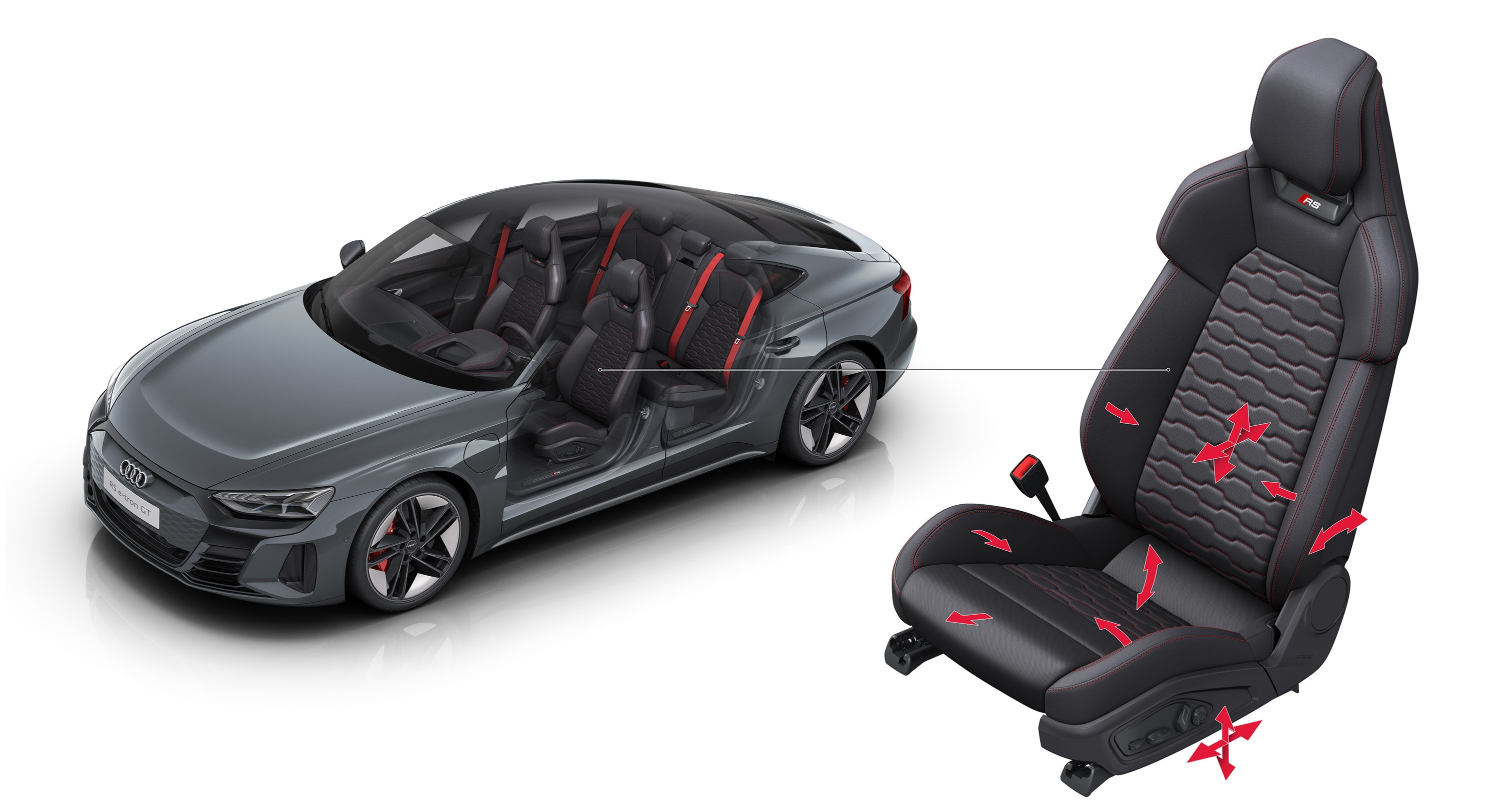
Compare the actual movements:
Fore-and-aft travel
The seat moves along its runners relative to the pedals and steering wheel. A second-row seat may also slide to trade legroom against cargo space or to open a path to the third row.
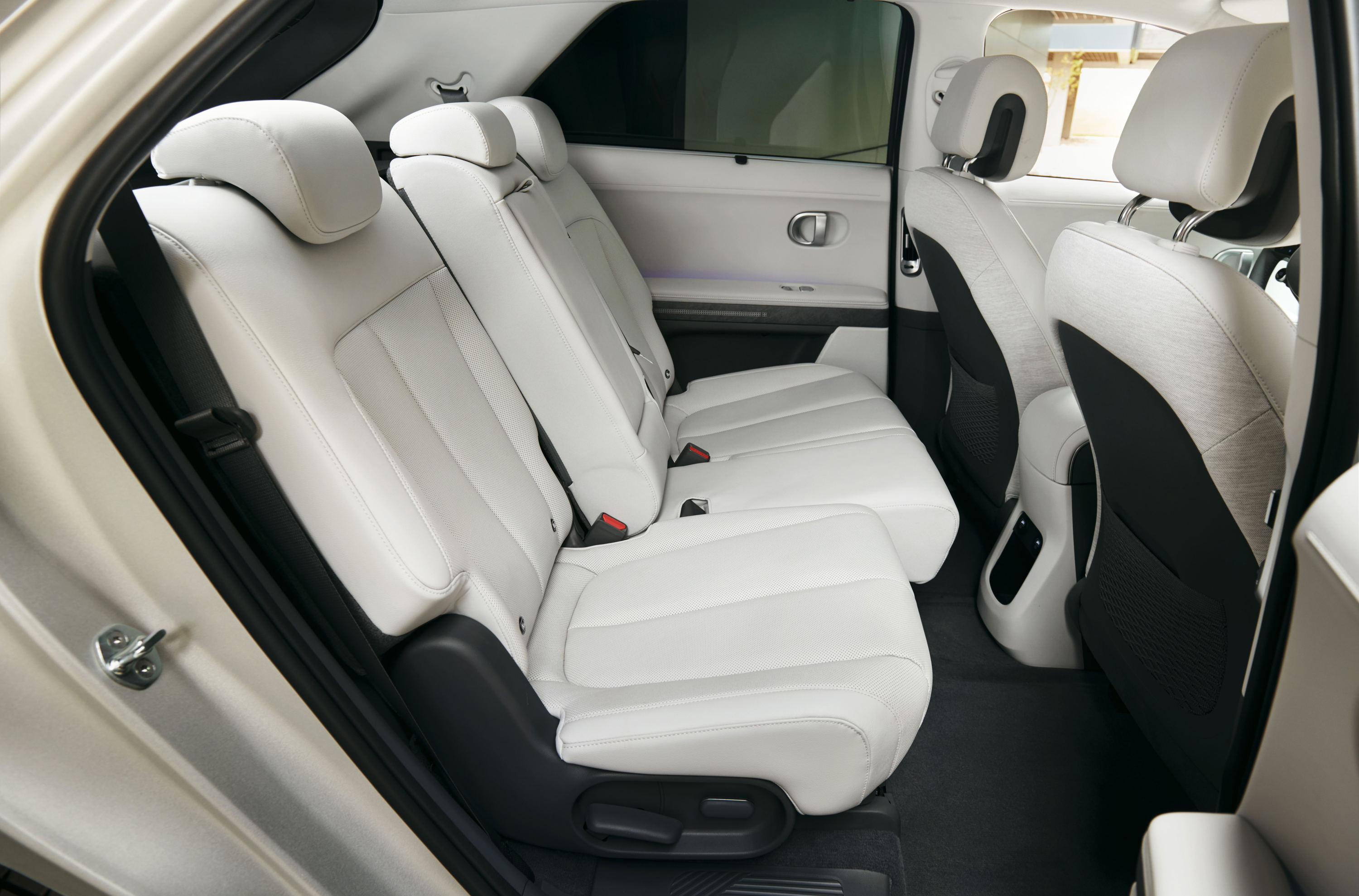
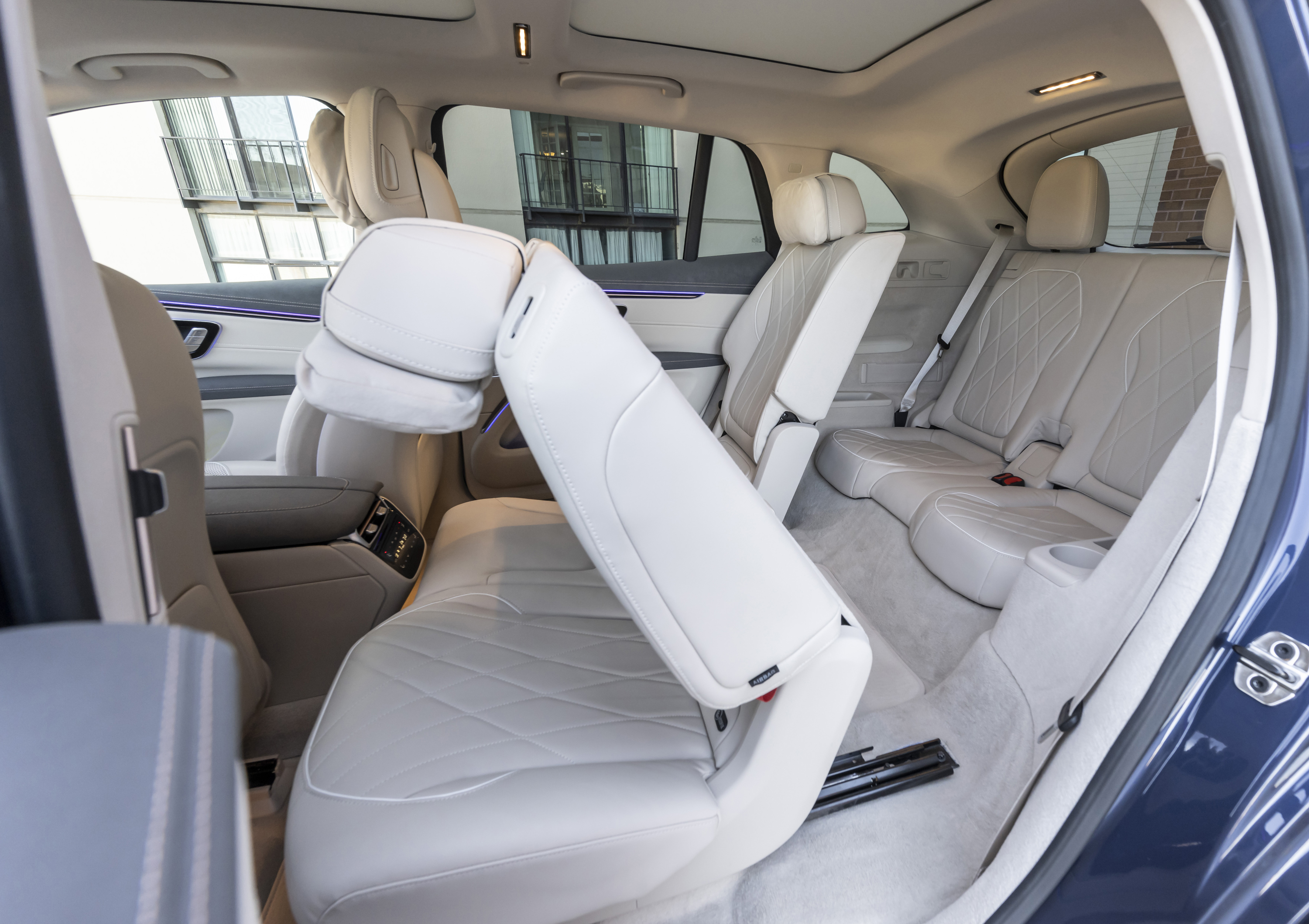
Check usable travel rather than rail length. Pedal reach, dashboard clearance, the seat behind, floor mats, child restraints, and cargo can limit the real range.
Height and cushion angle
Height adjustment moves the hip point up or down. Cushion-angle adjustment tilts the front of the cushion independently. They affect visibility, headroom, thigh support, and pressure distribution, so they should be evaluated together.
Backrest recline
The recliner changes torso angle. A small change can reduce back pressure; a large change can degrade belt and airbag geometry. A vehicle may offer a deeply reclined relaxation, rest, or zero-gravity position, but the marketing name does not establish that the position is approved for travel.
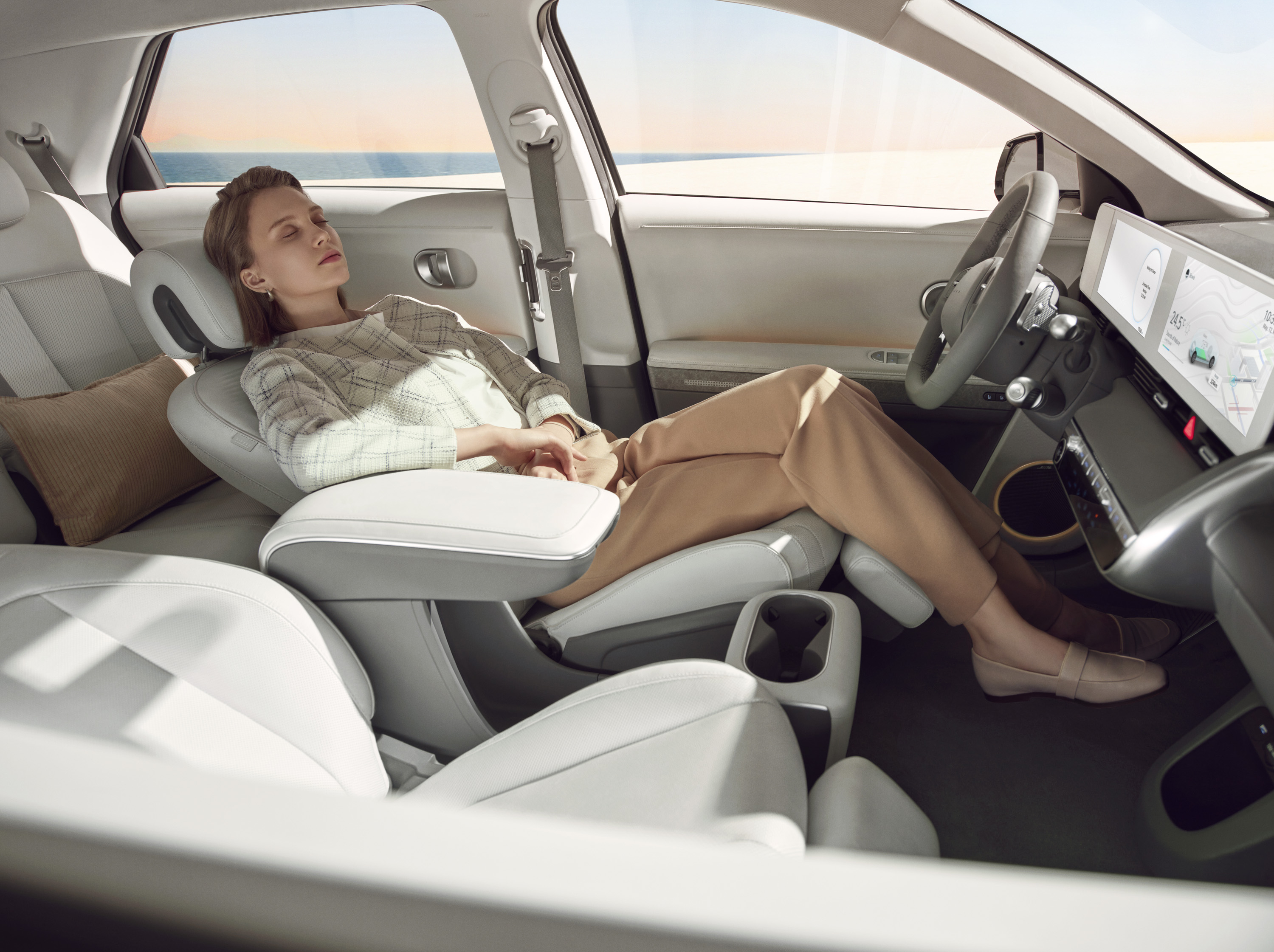
NHTSA is still researching occupant protection in forward- and rear-facing reclined configurations, including small female and obese occupants. Follow the exact vehicle manual and use the normal driving position whenever required. NHTSA — Reclined-seat occupant biomechanics research
Cushion length and thigh support
An extending front cushion supports longer thighs while preserving clearance behind the knee. Some extensions are manual; others are powered or split so each thigh can be supported separately.
Lumbar and upper-back support
A simple system moves a pad or cable in and out. Multi-way systems can alter both height and pressure. Pneumatic systems inflate and deflate air cells through valves; the same hardware can provide dynamic support or massage. AUMOVIO — Pneumatic seat-system operation
More range is useful only if the support can be placed correctly. Test the lowest pressure as carefully as the highest—an overinflated lumbar pad is a common source of discomfort.
Side bolsters
Adjustable backrest or cushion bolsters change lateral support. Some systems alter support automatically in bends. Confirm that the relaxed setting is wide enough for entry and long drives and that the active movement is subtle enough not to distract.
Heating, ventilation, and active cooling
Seat heating
Heating elements warm the cushion, backrest, or both. Directly warming contact surfaces can reduce the need to heat all the cabin air, which is particularly useful in an EV.
NREL measured a 28.5% reduction in cabin-heating energy for one combined strategy using zonal airflow and heated surfaces while maintaining equivalent reported driver thermal sensation. The result included the seat, steering wheel, and floor mat and should not be presented as a universal range improvement for seat heating alone. NREL — Climate-control load reduction for electric vehicles
Check which areas heat, how evenly they warm, the number of levels, warm-up time, automatic reduction, rear-seat availability, and whether remote preconditioning activates them. People with reduced temperature or pain sensation should follow the vehicle's warnings to avoid prolonged high heat.
Ventilation versus cooling
A ventilated seat uses blowers to push cabin air toward the occupant or pull warm, humid air away through the perforated cover and distribution layer. Supplier systems support both push and pull designs. An actively cooled seat adds a cooling device; ordinary ventilation does not make the air colder than its source. Gentherm — Seat ventilation and active climate systems
Perforation alone does not prove that a seat is ventilated. Test airflow at the cushion and backrest, fan noise at every level, and performance with the climate system operating as you normally use it.
Massage and dynamic support
Massage systems commonly cycle pneumatic cells, mechanical actuators, or both. Programs differ in area, intensity, speed, and whether they act mainly as changing lumbar support or provide a broader massage pattern.
Evaluate the quietest setting and control path. A feature that requires several touchscreen steps can be inconvenient while driving. Massage is a comfort function, not treatment for a medical condition.
Memory, entry, and passenger functions
Memory
Memory can store some combination of seat position, lumbar setting, side bolsters, steering column, mirrors, head-up display, and user profile. Confirm:
- how many physical and digital profiles exist;
- whether a key, phone, or account selects the profile;
- whether the seat moves only after a button is held or automatically;
- what happens if an obstacle is detected;
- whether guest mode, software updates, or profile synchronization changes the setting.
A memorized position should still be checked after another person has moved the seat, especially if the saved setup is close to a travel limit.
Easy entry
Easy-entry systems move a front seat or steering column to create space for the driver, or tilt and slide a second-row seat for third-row access. The label does not guarantee that the path remains usable with a child restraint installed. Follow the vehicle and child-restraint manuals before moving an occupied or restraint-equipped seat.
Leg rests and footrests
A thigh extension lengthens the cushion; a leg rest supports the lower legs; a footrest supports the feet. They solve different problems. An unsupported heel or pressure behind the knee can make an apparently restful position uncomfortable.
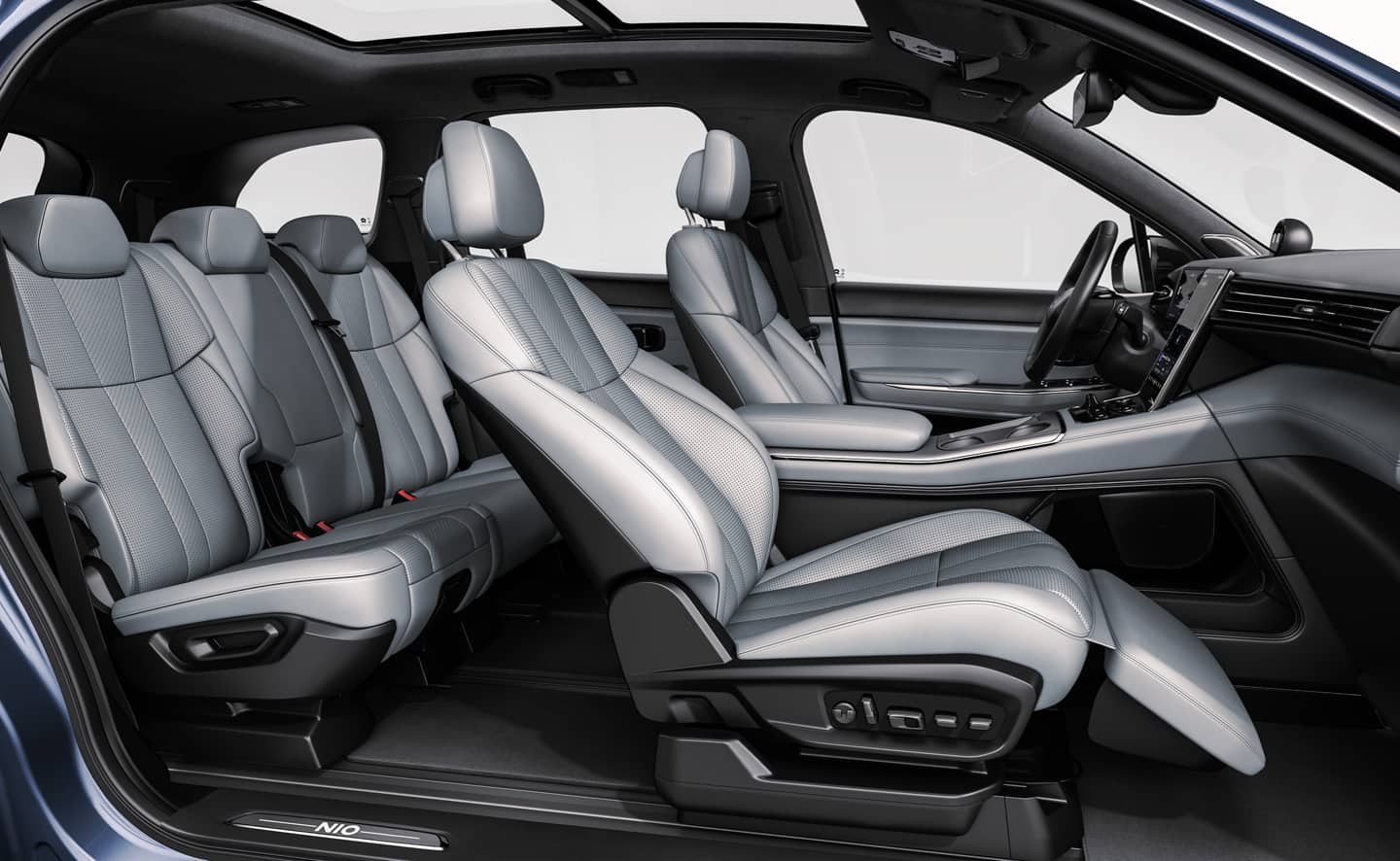
Do not assume a deployed leg rest or footrest is safe during travel. Check the approved position, airbag status, belt path, and the manual's restrictions.
Swiveling seats
A swivel can turn a seat toward a door for easier access or toward the cabin while parked. Some second-row seats can rotate to face rearward or inward.
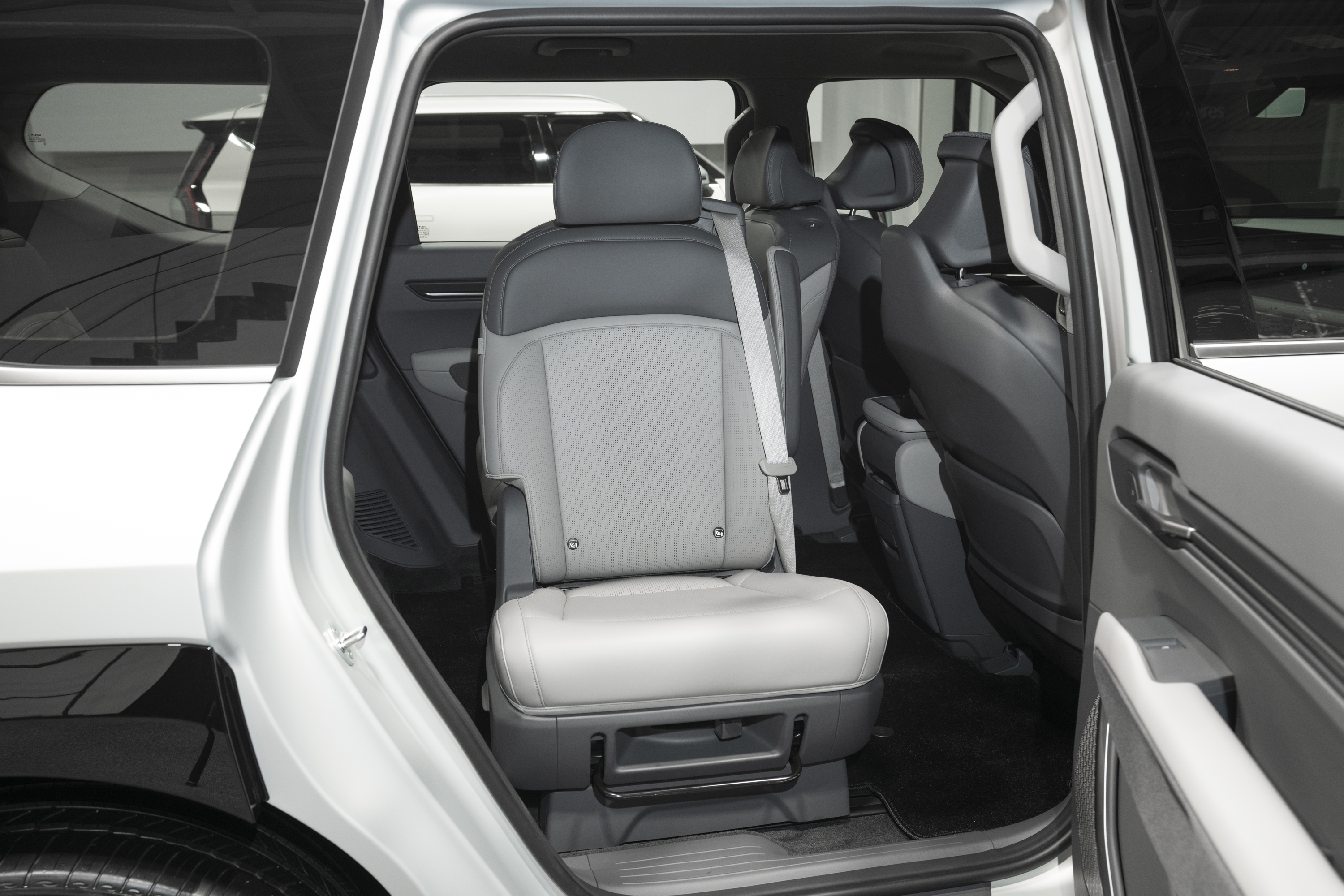
The presence of a swivel mechanism does not mean every angle is an approved travel position. Belt anchorage, airbag coverage, seat locking, and crash validation are position-dependent. Use only orientations explicitly permitted by the vehicle manufacturer.
Sensors, airbags, and repair
Modern seats may contain:
- occupant weight or pressure sensing;
- seat-position and track sensors;
- belt-buckle and belt-use sensing;
- seat-mounted side airbags;
- heating mats, temperature sensors, fans, pumps, valves, and control modules.
NHTSA notes that loading on a passenger-seat cushion can affect occupant classification. A warning light that does not match the occupant should be investigated using the manual rather than ignored. NHTSA — Air bags and seating position
Aftermarket covers, cushions, wiring, or upholstery repairs can interfere with a seat-mounted airbag, an airbag tear seam, heating, ventilation, or occupant sensing. NHTSA has specifically warned that a cover must not make a seat-mounted side airbag inoperative. Use parts and repair procedures approved for the exact seat. NHTSA — Seat covers and seat-mounted side airbags
What buyers should test
- Can every regular driver reach a safe position with adjustment travel remaining?
- Does the head restraint fit both the shortest and tallest regular occupant?
- Is the lower cushion comfortable after at least 30 minutes?
- Are controls easy to identify by touch, or buried in the screen?
- Does memory recall the complete intended setup?
- Do heating and ventilation work evenly and quietly?
- Can rear passengers control their own features?
- Do powered functions operate with the doors closed and the vehicle in the states you expect?
- Are there creaks, rocking runners, slow motors, dead zones, warning lights, or uneven heating on a used vehicle?
- Are replacement covers, foam, motors, fans, and control modules available separately, and what does calibration require?
Continue to Car Seat Upholstery and Materials to compare the surface materials through which these functions must work.
Return to Car Seats in EVs for the full seat guide.
Sources
- NHTSA — Air bags and seating position
- NHTSA — Seat-belt fit and seat position
- NHTSA — Reclined-seat occupant biomechanics research
- AUMOVIO — Pneumatic seat-system operation
- NREL — Climate-control load reduction for electric vehicles
- Gentherm — Seat ventilation and active climate systems
- NHTSA — Seat covers and seat-mounted side airbags