
Car Seats in EVs: Safety, Comfort, Packaging, and Technology
An EV seat is part furniture, part control interface, and part restraint system. Its quality is not defined by the number of motors or the upholstery name, but by whether it supports the occupant, preserves a safe belt and airbag position, works with the cabin package, and remains comfortable after hours rather than minutes.
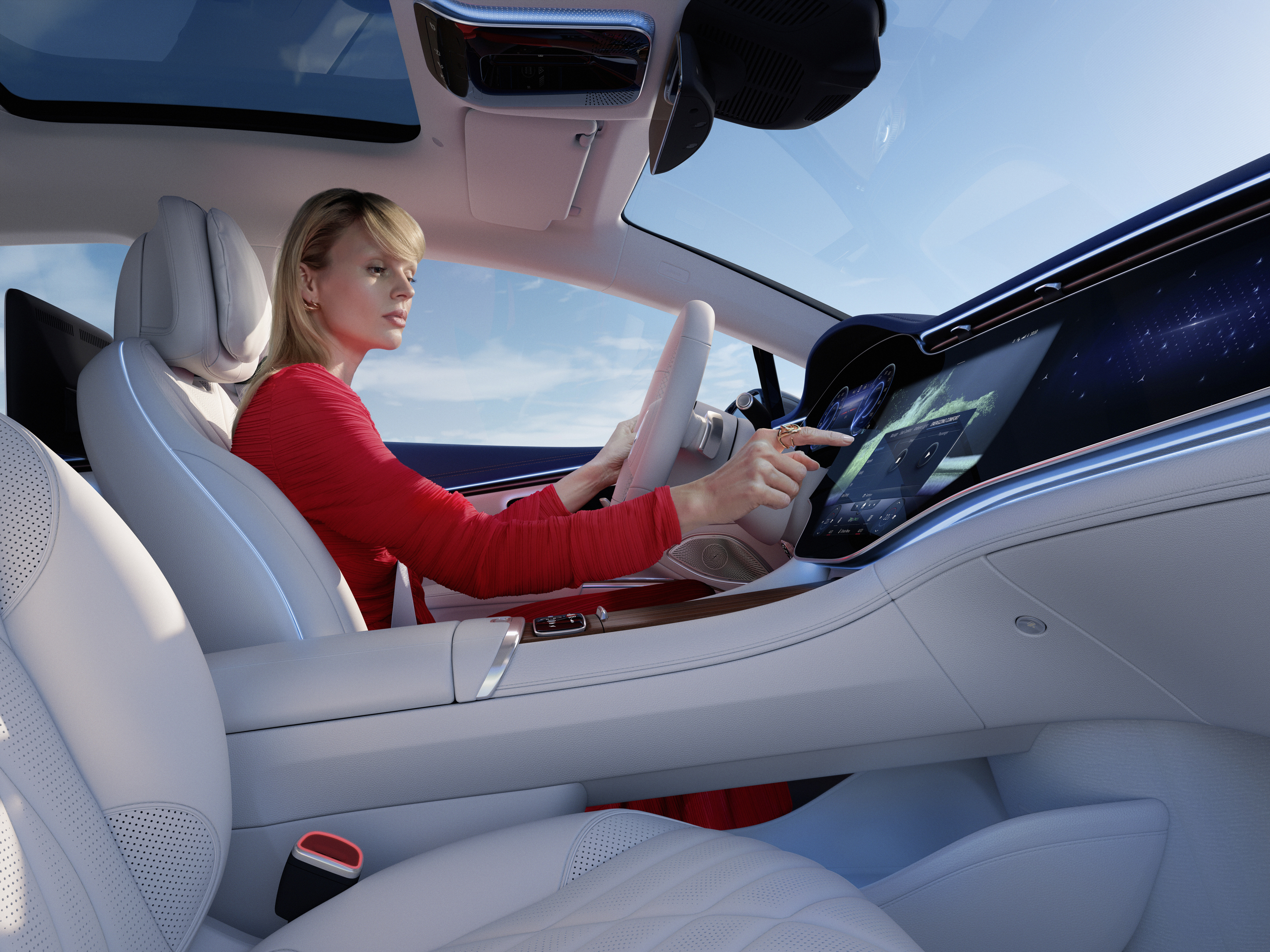
A seat is a safety system
The seat frame, runners, recliner, head restraint, belt geometry, airbags, and occupant sensors work as one system. UN Regulation No. 17 covers the strength of seats and their anchorages as well as head-restraint requirements; separate rules address safety belts and their anchorages. Passing a regulation establishes a minimum type-approval baseline, not that every seat protects or fits every body equally well. UNECE — UN Regulation No. 17: Seats, anchorages, and head restraints
Rear-impact performance also depends on how the seat and head restraint manage the occupant's motion. IIHS therefore evaluates the complete driver seat on a sled, measuring head and spine support, head-restraint contact, neck loading, and how the seat manages energy. The result cannot be inferred from a large head restraint or a soft backrest. Check the rating for the exact model year where one is available. IIHS — Whiplash prevention test
Seat position matters to the restraint system. NHTSA recommends a proper, upright position, as much distance from the frontal airbag as practical while retaining comfortable control of the pedals and steering wheel, and at least 10 inches (25 cm) between the driver's breastbone and the steering-wheel airbag cover. Occupant-detection systems can also use loading at the passenger-seat cushion to decide how the frontal airbag should operate. NHTSA — Air bags and seating position
This is why a seat should not be judged as an isolated chair. A position that feels relaxed in a showroom can place the belt poorly, move the head too far from the restraint, or put the occupant too close to an airbag.
Why an EV seat can feel different
An underfloor battery can raise the cabin floor, while a dedicated EV body can recover space through a longer wheelbase, a higher roof, thinner seat structures, or different seat mounting. A flat floor is useful for foot space and moving across the cabin, but it does not guarantee a natural seating posture.
The important relationship is between the hip point, floor, cushion, pedals, roof, and belt:
- If the floor is high relative to the cushion, adults may sit with their knees raised and limited thigh support.
- Raising the cushion can improve leg support but may reduce headroom and the view through the windshield.
- A short cushion can suit a small driver and leave a taller occupant unsupported; an extendable cushion can broaden the fit range.
- A wide cabin does not guarantee three usable rear positions if the cushion is sculpted for two people or the belt buckles and child-seat anchors compete for space.
- A third row may have adequate headroom but too little footwell depth for an adult posture.
These are packaging choices, not universal EV faults. Test every row you expect to use and do not substitute exterior dimensions for an in-person fit check.
Comfort is geometry before equipment
A supportive basic seat can be better than a heavily equipped seat with the wrong shape. Begin with passive fundamentals:
- Cushion length and angle: the thighs should be supported without pressure behind the knees.
- Backrest shape: the torso should be supported without forcing the shoulders forward.
- Lumbar range: the support must move low and high enough, not merely inflate strongly.
- Bolsters: they should stabilize the body without pressing on the ribs, hips, or thighs.
- Head restraint: it should reach high enough and sit close enough to the back of the head without pushing the head forward.
- Control relationship: the driver should reach the pedals, steering wheel, and primary controls without stretching or locking the elbows and knees.
- Belt path: the lap portion should sit across the pelvis and the shoulder portion across the chest, not the abdomen, neck, or upper arm.
Then assess active equipment such as heating, ventilation, massage, memory, and powered bolsters. These features can improve comfort, but none corrects poor basic geometry.
Seats and EV energy use
Seat heating warms the occupant directly instead of first heating all the cabin air. In NREL testing, a combined strategy using zonal airflow and heated surfaces—including the driver seat, steering wheel, and floor mat—reduced heating energy by 28.5% while maintaining equivalent reported driver thermal sensation. Vehicle, weather, set point, occupancy, and test method determine the real result; the study does not support a universal range gain for a heated seat by itself. NREL — Climate-control load reduction for electric vehicles
Ventilation is also local. A basic ventilated seat moves cabin air through or away from a perforated surface; an actively cooled seat adds a heat-pump or thermoelectric stage. The two should not be treated as equivalent when comparing specifications.
How to evaluate a seat
A short showroom sit finds obvious problems, but it does not reproduce a long drive. Use the full adjustment range and spend time in the posture you would actually drive in.
- Set the seat for safe pedal, steering-wheel, belt, head-restraint, and airbag geometry.
- Check that the cushion supports most of the thigh without contacting the back of the knee.
- Move the lumbar support through its range and confirm that it can become subtle, not only pronounced.
- Hold the steering wheel at normal driving positions and check shoulder contact with the backrest.
- Look through the windshield and mirrors without craning the neck.
- Enter and leave several times; high bolsters can support well yet make access difficult or wear rapidly.
- Sit behind your own driving position and check feet, knees, headroom, belt fit, and visibility.
- If children will travel in the car, install the actual child restraints in every intended position.
- Run heating, ventilation, and massage at more than one setting and listen for fan or pump noise.
- On a test drive, include broken pavement, a long bend, braking, and at least 30 minutes of continuous sitting if possible.
Memory profiles should be tested with every regular driver. Some vehicles save the seat alone; others also save mirrors, steering-column position, climate preferences, or a user profile. Confirm what happens after a software update, key change, or guest login rather than relying on the word memory.
Explore the seat guide
The series separates questions that are often mixed together:
- Car Seat Types and Seating Layouts explains benches, individual seats, captain's chairs, executive layouts, folding rows, and child-restraint fit.
- Seat Adjustment, Comfort Features, and Safety covers safe setup, adjustment axes, heating, ventilation, massage, memory, relaxation modes, sensors, and repair cautions.
- Car Seat Upholstery and Materials explains fabric, leather, coated synthetics, microfiber suede, wool, care, wear, and how to read environmental claims.
The EVKX EV database can filter vehicles by several seat layouts and features. Treat those filters as a shortlist, then verify the exact trim, market, and physical fit in the vehicle.
Go to the EVKX EV database.