
Car Seat Upholstery and Materials
Seat upholstery is the visible layer of a larger system. Comfort, wear, climate performance, repairability, and environmental impact depend on the cover, coatings, foam, ventilation layer, adhesives, thread, seams, airbags, sensors, and seat structure—not on a single material name.
What you are actually sitting on
A typical seat cover can combine several materials in one panel:
- a visible face material;
- a textile backing or scrim;
- foam or spacer fabric that gives softness and distributes ventilation air;
- lamination adhesive;
- thread, piping, perforations, embossing, and decorative film;
- engineered tear seams for seat-mounted airbags.
The center panels, bolsters, seat sides, rear shell, head restraint, and armrests may all use different materials. Terms such as leather interior, vegan leather, recycled upholstery, and microfiber therefore need a coverage statement: which surfaces, what composition, and what share of the complete seat?
In the United States, FMVSS No. 302 sets burn-resistance requirements for specified occupant-compartment materials, including seat cushions, seatbacks, and head restraints. That is a safety baseline; it does not rate abrasion, cleanability, chemical content, thermal comfort, or lifetime. eCFR — FMVSS No. 302: Flammability of interior materials
Fabric
Fabric or cloth can mean woven, knitted, or nonwoven textiles made from polyester, polyamide commonly called nylon, wool, other fibers, or blends. Construction matters as much as fiber: yarn, weave or knit, pile, backing, coating, and finish determine stretch, breathability, stain behavior, and wear.
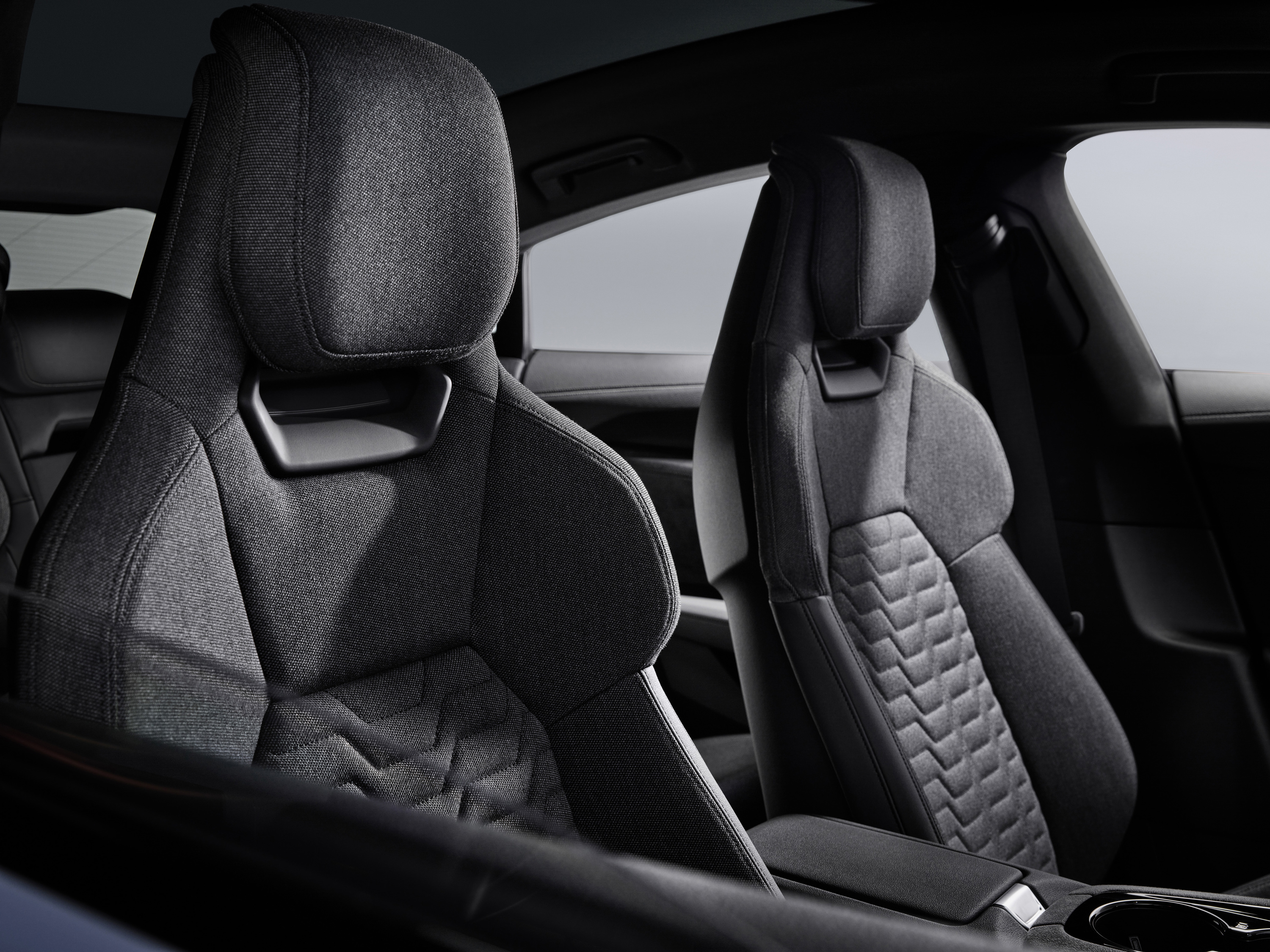
Strengths
- The surface can feel less hot or cold on first contact than a smooth coated cover.
- Textile structure can provide grip without pronounced bolsters.
- Patterns and multicolor yarns can disguise light wear.
- Repair panels may be easier to match structurally than perforated, embossed coated materials, although exact color matching still ages.
Trade-offs
- Open structures can hold liquid, crumbs, dust, and pet hair.
- A loose weave or raised pile may snag or pill.
- Strong cleaning or wet extraction can affect backing, adhesive, foam, heating, or sensors.
- Light colors and uniform weaves can show staining; dark colors can show lint and salt.
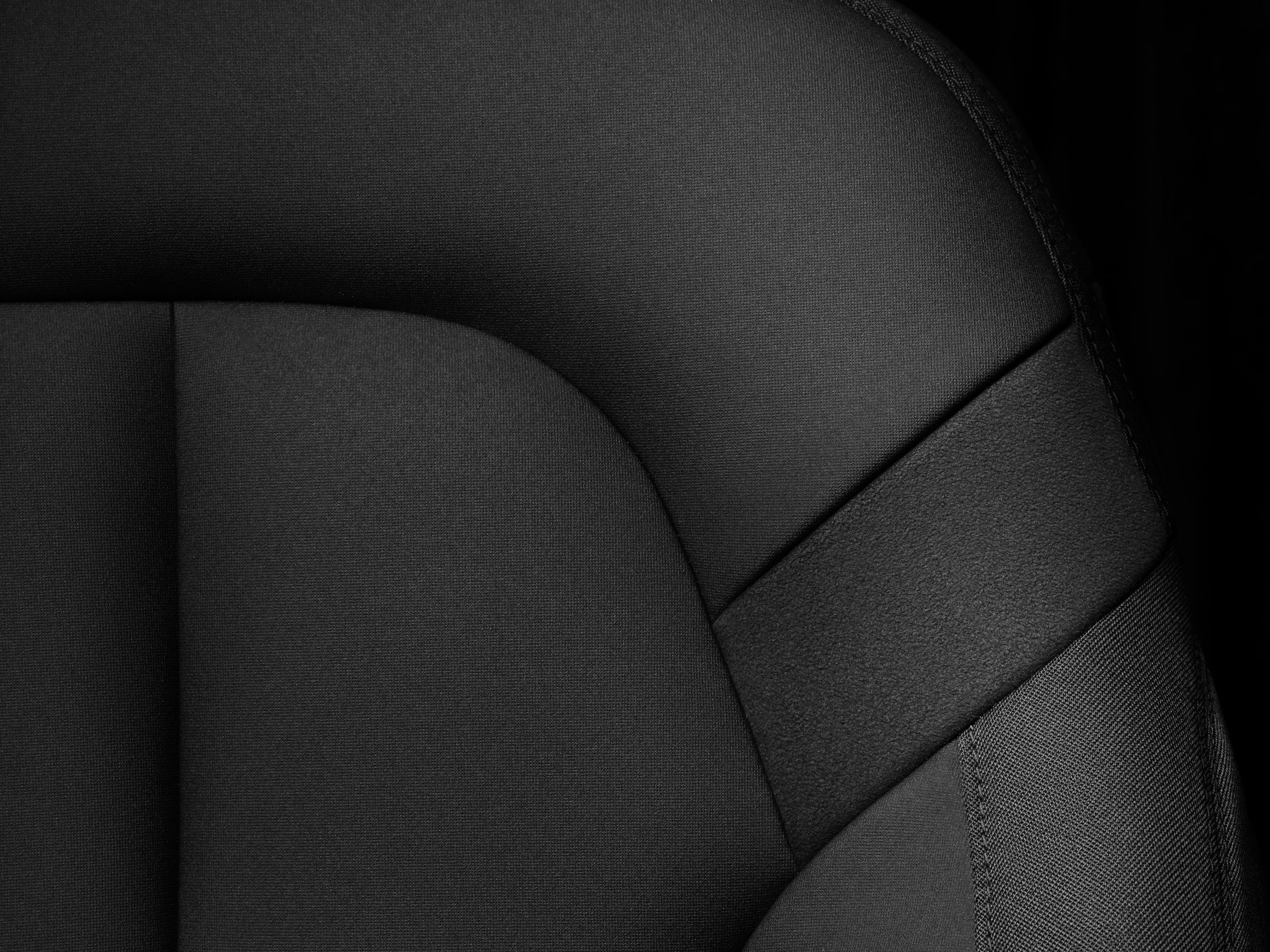
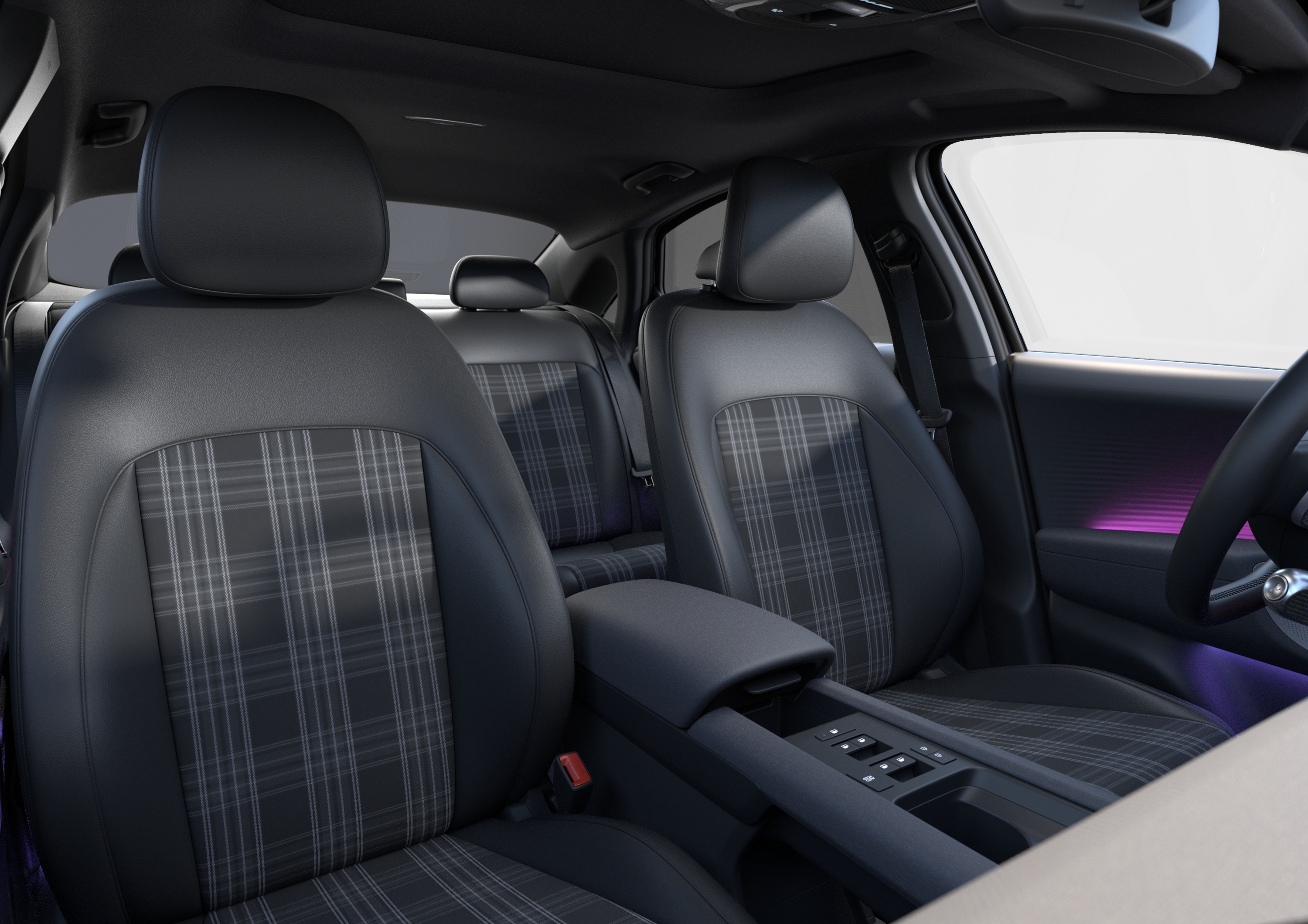
Do not assume that all polyester fabric is stain-resistant or that all nylon is more durable. Ask for the exact material specification and test the production surface. A finish that improves stain release can change hand feel, vapor transfer, and chemical content.
This manufacturer video shows one example of turning recycled plastic feedstock into yarn for an automotive textile. It demonstrates a process, not the recycled share or life-cycle result of every seat carrying the brand:
Leather
Leather retains the fibrous structure of animal hide or skin after tanning. Automotive leather is commonly finished to meet demanding requirements for light exposure, abrasion, color transfer, cleaning, temperature, and consistent appearance.
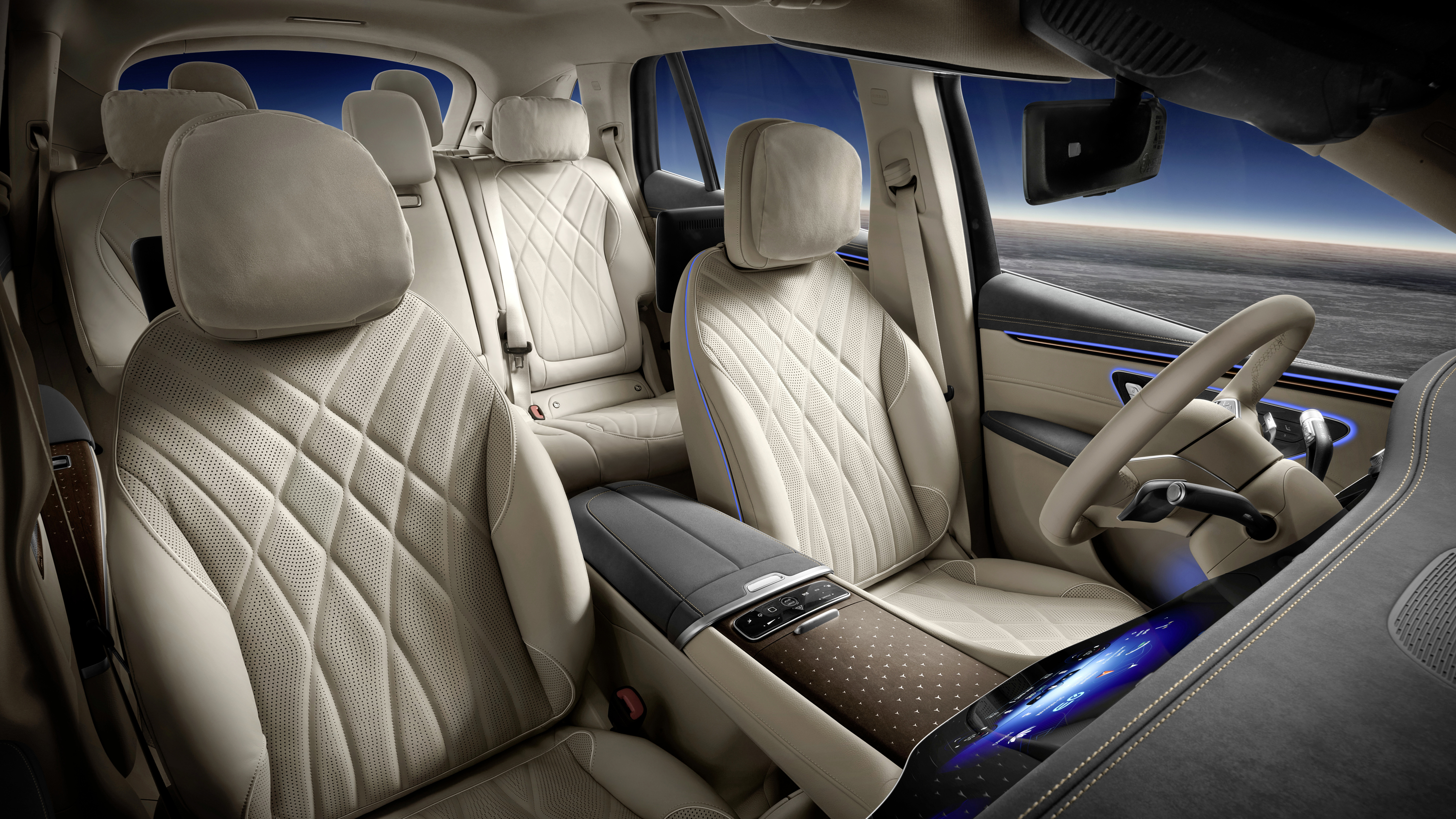
The finish changes the experience
- Aniline leather uses soluble dyes with little or no pigmented surface coating. It can retain a natural appearance but is uncommon on high-contact automotive surfaces because consistency and stain resistance are harder to achieve.
- Semi-aniline leather adds a light protective pigmented or clear finish.
- Pigmented or protected leather uses a more substantial surface finish for consistent color and resistance to wear and soiling.
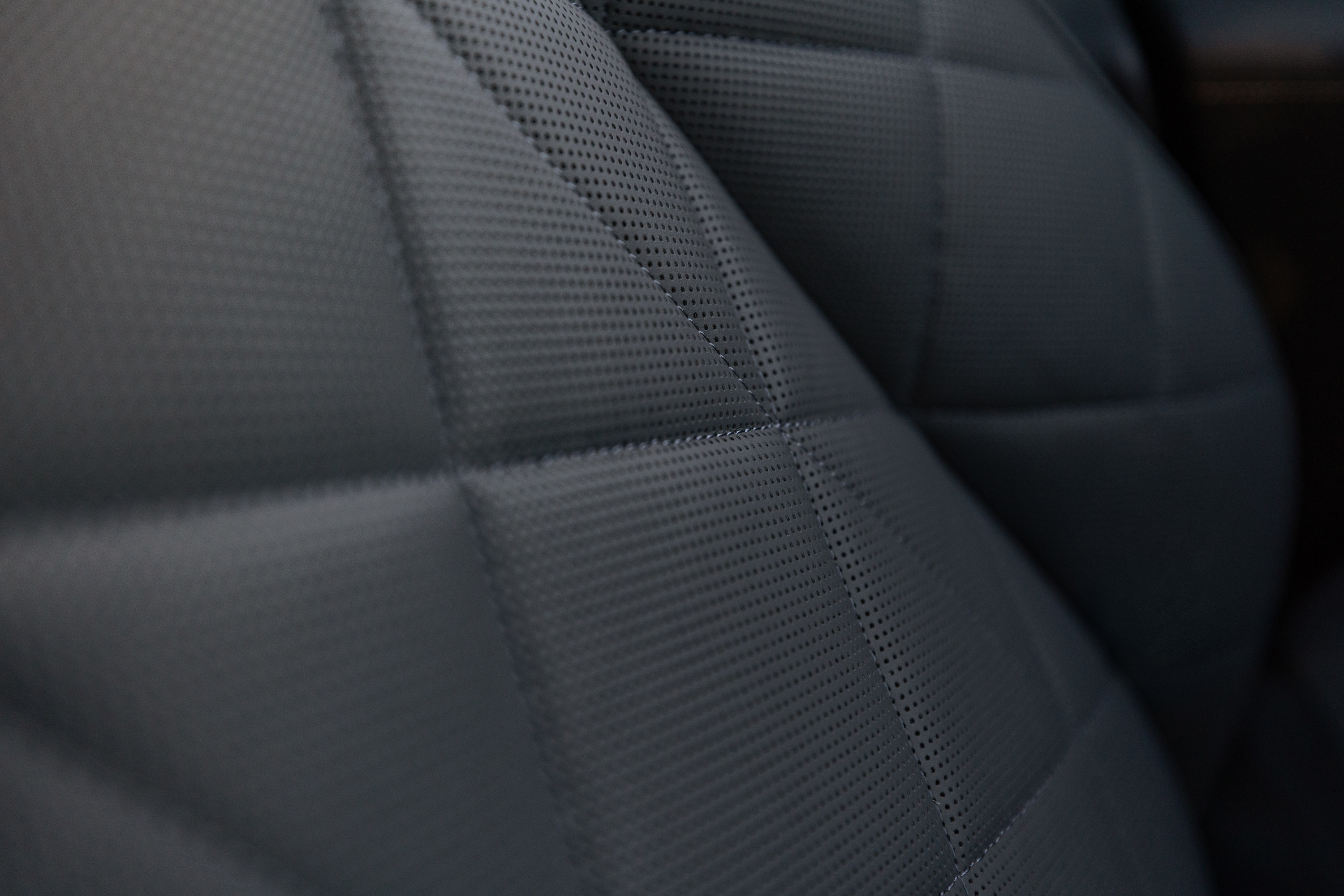
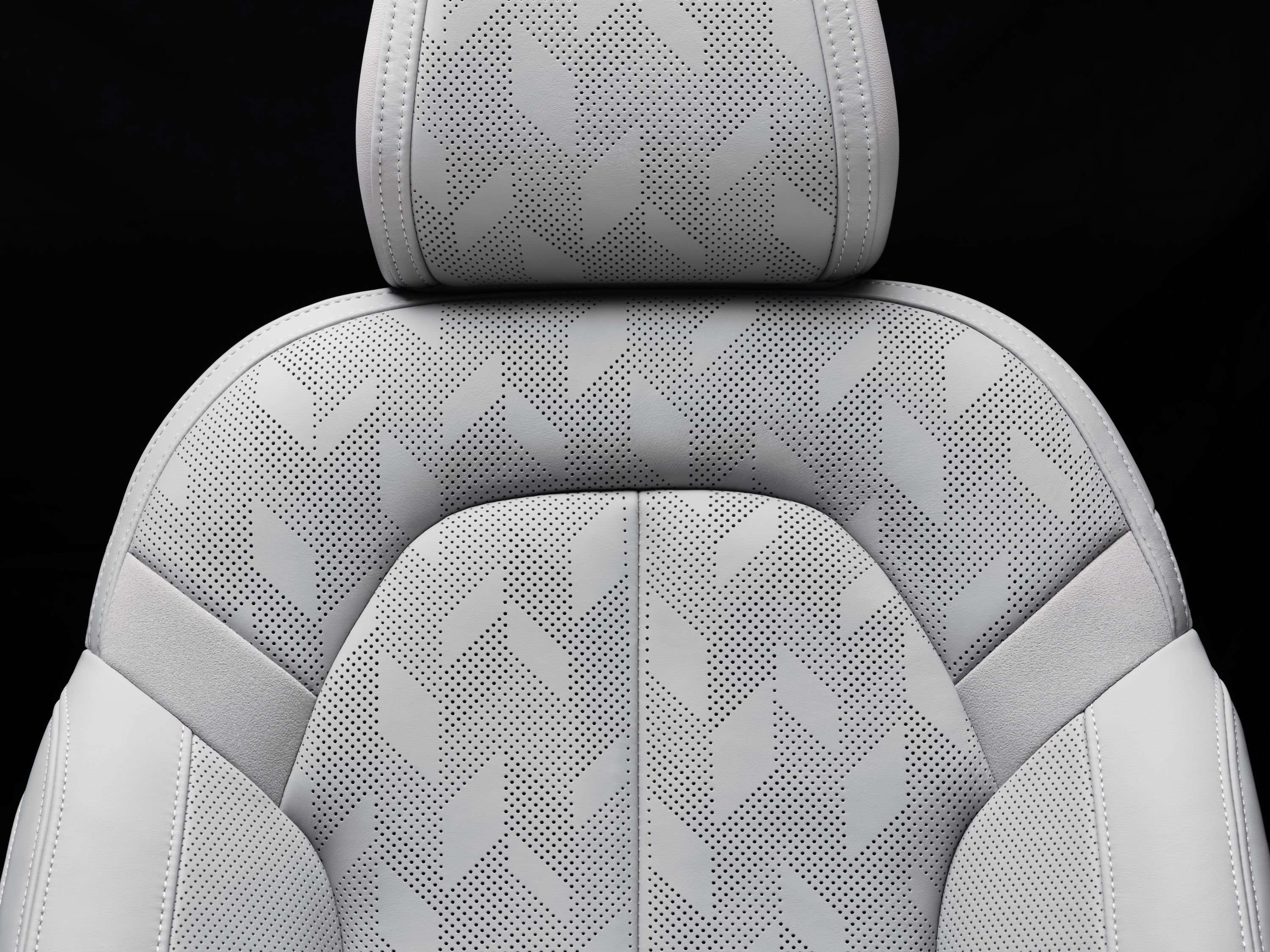
- Perforated leather has openings for appearance or airflow. Perforation does not prove that a blower is installed.
Terms are often misused:
- Full grain means the natural grain surface has not been removed by mechanical correction. It is a construction description, not a complete quality grade.
- Corrected grain has been buffed or otherwise corrected and may be embossed before finishing.
- Split leather comes from a lower layer after the hide is split.
- Bonded leather combines leather fibers or pieces with a binder and should not be confused with intact hide.
- Nappa or napa generally denotes a soft, smooth leather, but the name alone does not establish animal species, grain condition, coating, thickness, or durability.
The International Council of Tanners' labeling code distinguishes leather seats, leather-faced seats, and full leather by the surfaces actually covered. Vehicle marketing does not use these terms consistently worldwide, so read the trim specification rather than assuming every visible panel is leather. International Council of Tanners — Leather labeling and automotive terminology
Ownership questions
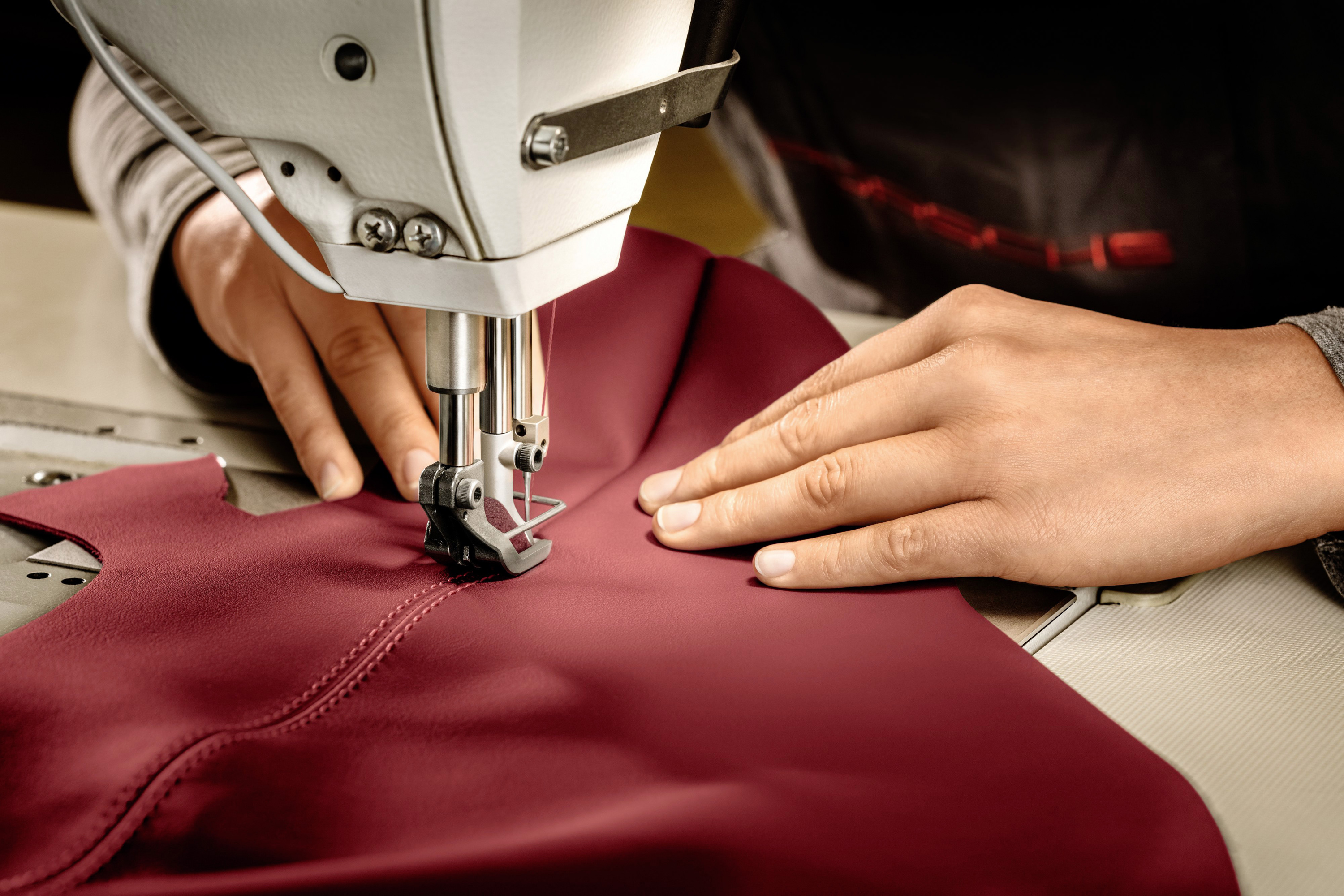
Leather can age well when the finish, color, care, and use suit the vehicle. It can also crease, polish, dye-transfer, dry, or abrade at bolsters. The correct cleaner and conditioner depend on the finish; a product intended to penetrate unfinished leather may be unsuitable for a coated automotive surface.
Ask which surfaces are leather, whether the finish is perforated, and what the manual specifies for cleaning. For a used car, compare the driver bolster with the low-contact rear panels and inspect perforation edges, seams, dye transfer, gloss, cracking, and previous recoloring.
Coated synthetic leather
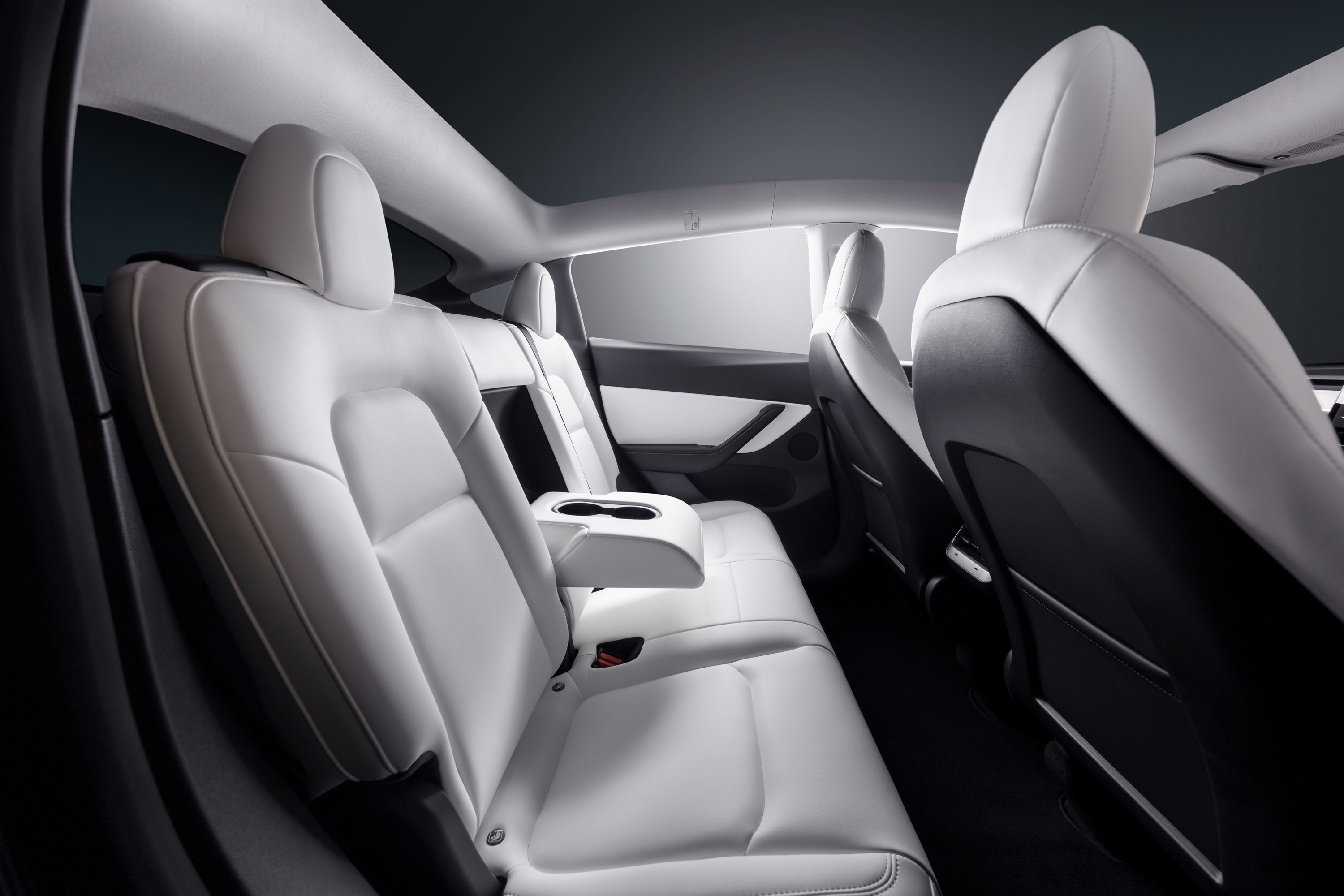
Leatherette, synthetic leather, artificial leather, and vegan leather often describe a textile backing with a polymer surface. The main coating families are:
- PVC, also called vinyl, usually with plasticizers and a protective topcoat;
- polyurethane (PU), applied as a compact or porous coating;
- multilayer systems that combine polymers, backing fabrics, fillers, and surface treatments.
PVC leatherette and vinyl are not separate material categories. PU also describes a polymer family, not a guarantee of softness, durability, or environmental performance.
Strengths
- A closed surface can be easy to wipe clean.
- Grain, color, gloss, and perforation can be made consistent.
- No animal hide is required.
- The material can be engineered for high abrasion, hydrolysis, and light resistance.
Trade-offs
- Surface coatings can feel clammy when vapor cannot move away from the body.
- Flexing, heat, ultraviolet exposure, skin oils, sunscreen, and cleaners can cause gloss change, staining, cracking, or delamination.
- Repairing an embossed or perforated panel invisibly can be difficult.
- A plant-derived filler or partly bio-based feedstock does not make the complete coated textile biodegradable.
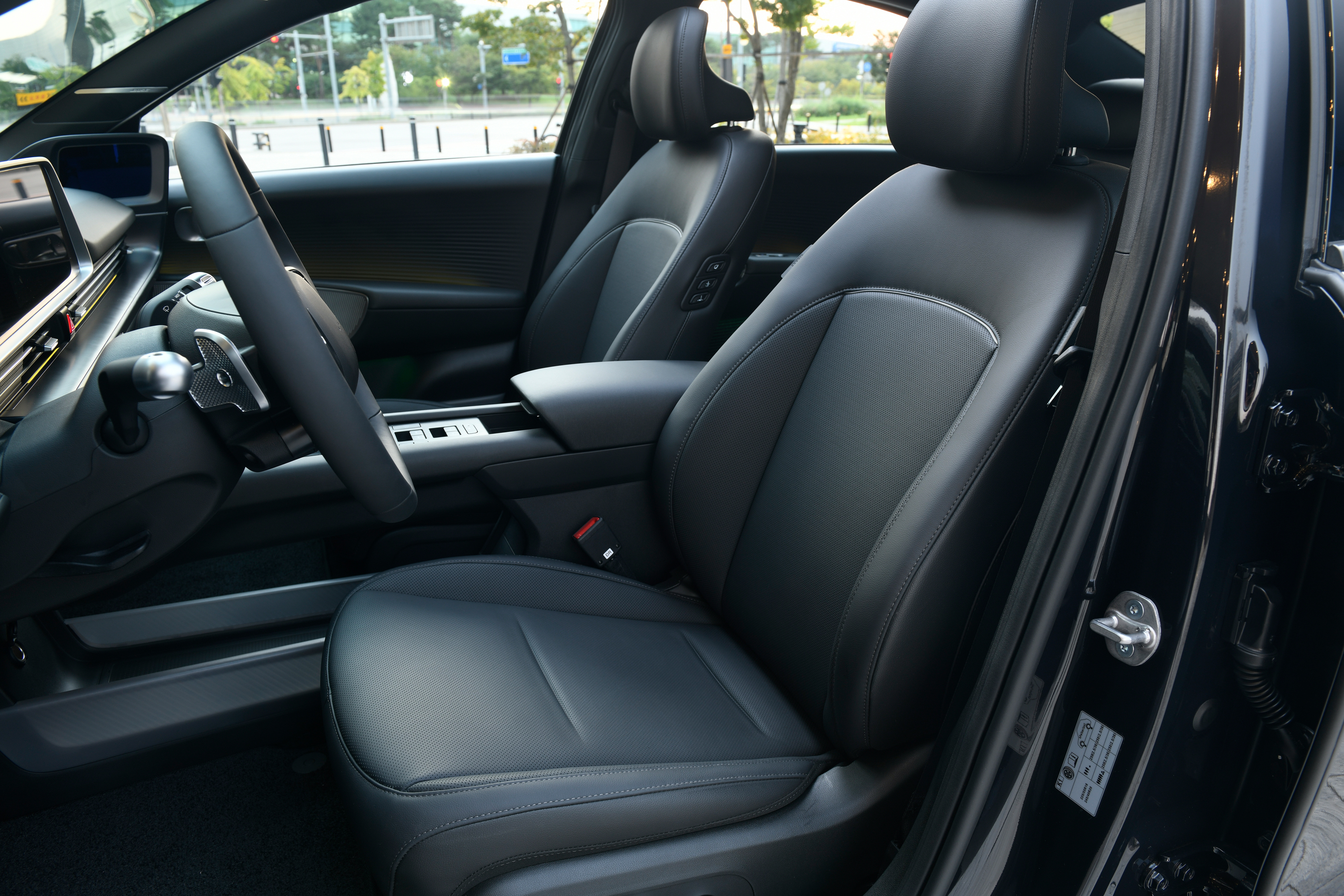
Vegan answers whether animal-derived material is intentionally used under the relevant claim or certification. It does not by itself establish fossil content, recycled share, chemical safety, durability, repairability, or greenhouse-gas impact.
Microfiber suede and brand names
Microfiber suede uses very fine synthetic fibers and a binder to create a short, suede-like nap. It can provide high grip and a warm touch, which is why it appears on seat centers and steering wheels. The category includes different fiber, binder, backing, and finish systems; it is not one universal material.
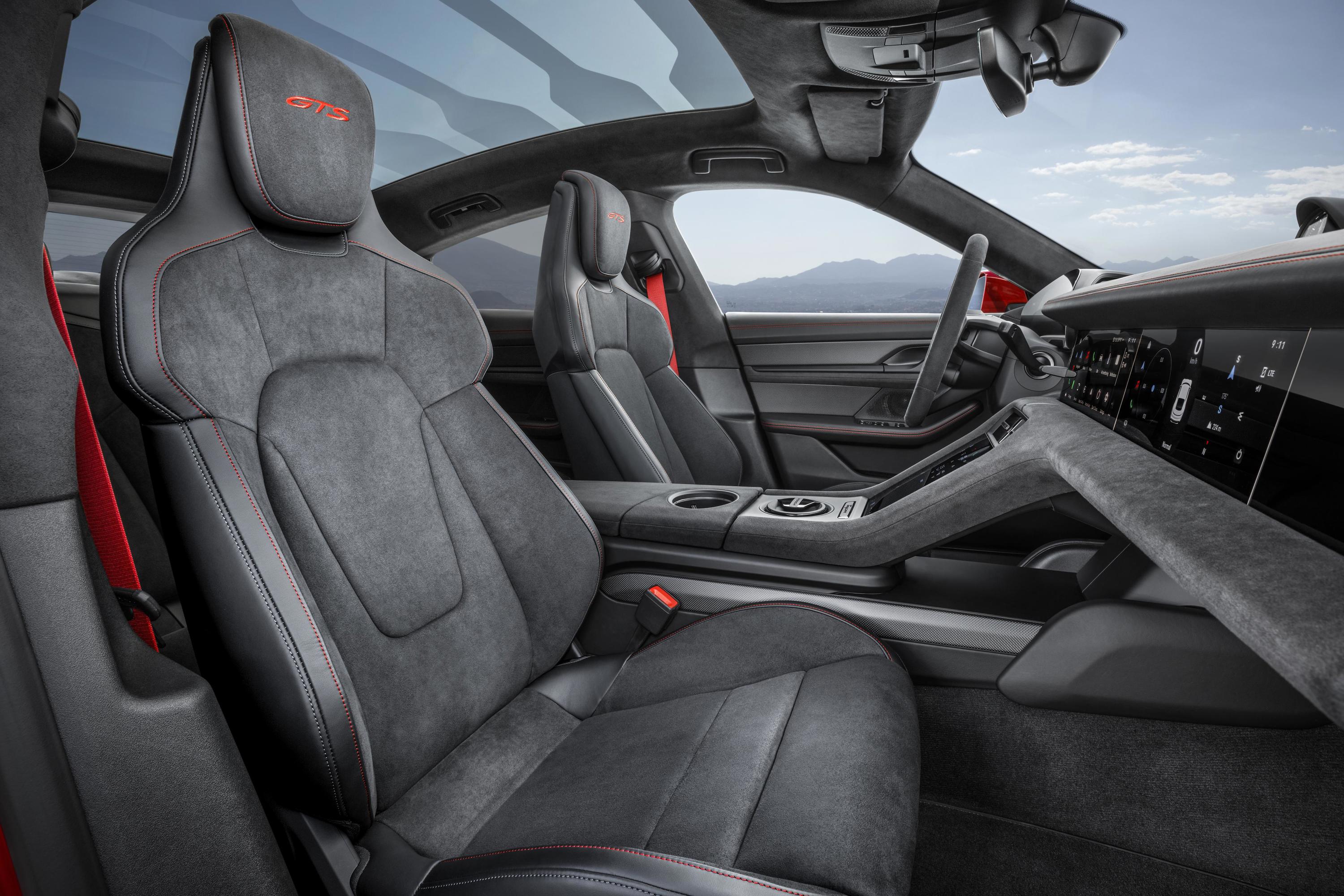
Alcantara
Alcantara is a registered material brand, not a synonym for every microfiber suede. Alcantara states that its base material is 68% polyester and 32% polyurethane. Product-specific laminations, backings, treatments, and recycled versions can change the complete construction, so the technical sheet for the actual automotive grade is more useful than the brand name alone. Alcantara — Material composition and technical properties
Dinamica
Dinamica is another branded man-made suede based on polyester ultramicrofiber and polyurethane. Miko's automotive technical sheet describes the material as a textile product for automotive interiors. The company separately states that recycled content varies by product line and application, so a claim for one Dinamica grade should not be transferred to every grade. Miko — Dinamica Auto technical data sheet Miko — Dinamica recycled-content scope
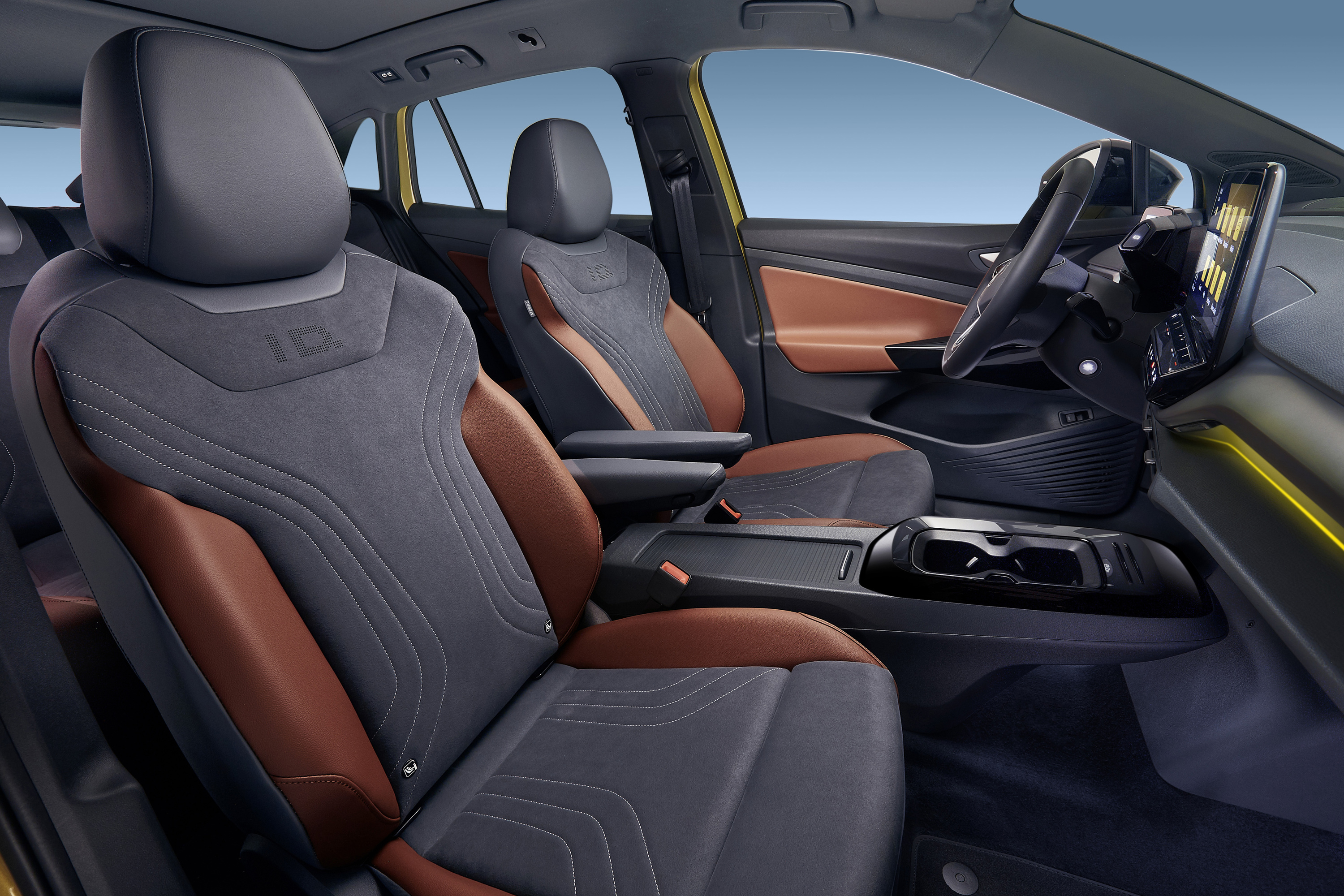

What to test
Run a hand across the nap in both directions and look for color change, flattening, and marks. On a used car, inspect the steering wheel, entry bolster, and cushion front edge. A grippy surface can hold the occupant well but also collect skin oil or show pressure paths. Use the vehicle maker's cleaning method; aggressive brushing can change the nap permanently.
Wool and wool blends
Wool can be woven or knitted into a breathable, resilient seat surface and is often blended with synthetic fibers for strength, stretch, color control, or backing compatibility.
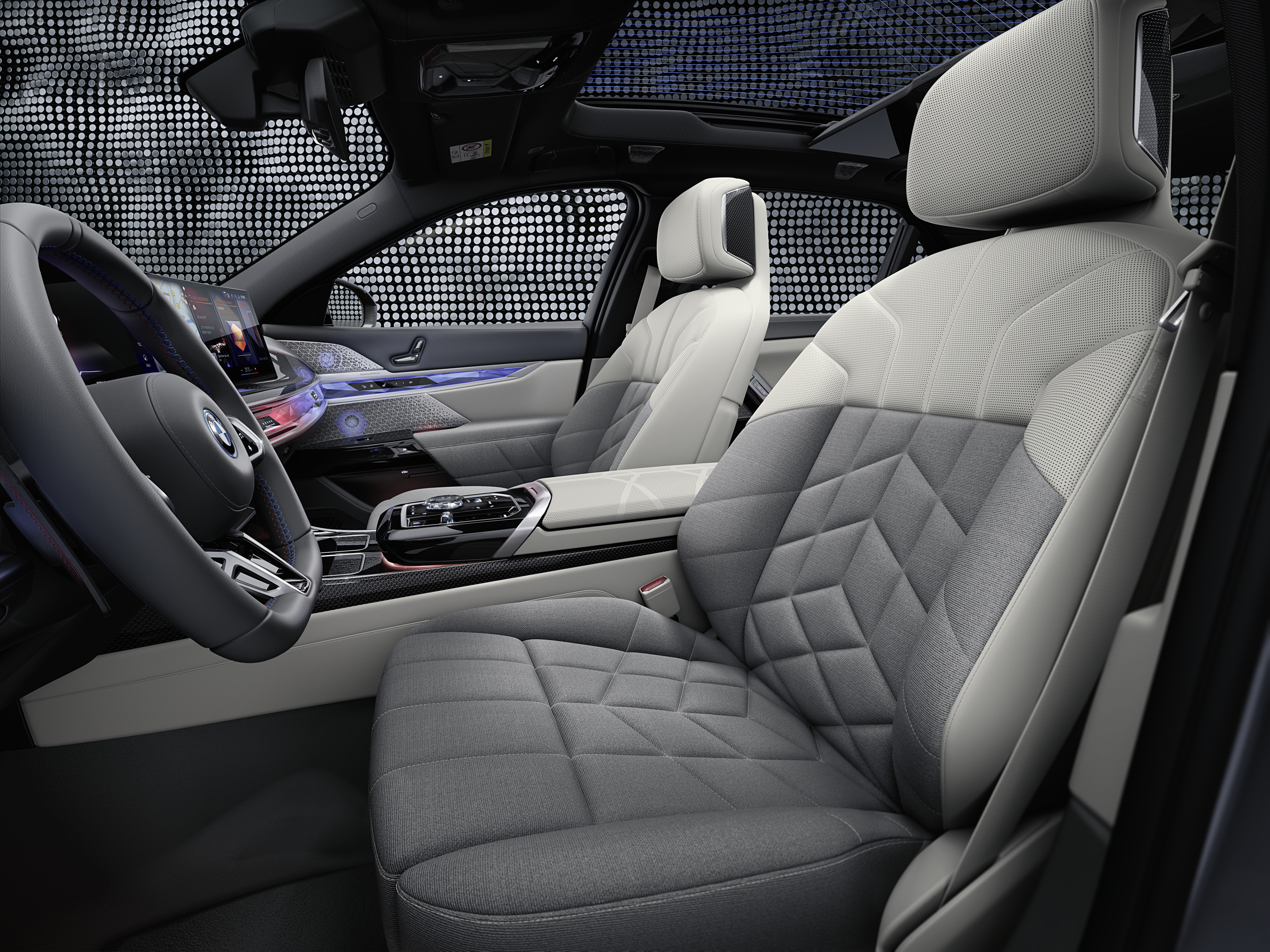
Wool can buffer moisture and feel comfortable across a wide temperature range. It can also be expensive, hold lint, and require material-specific stain treatment. A trim described as wool may use it only in the visible center panel or as one fraction of a blend.
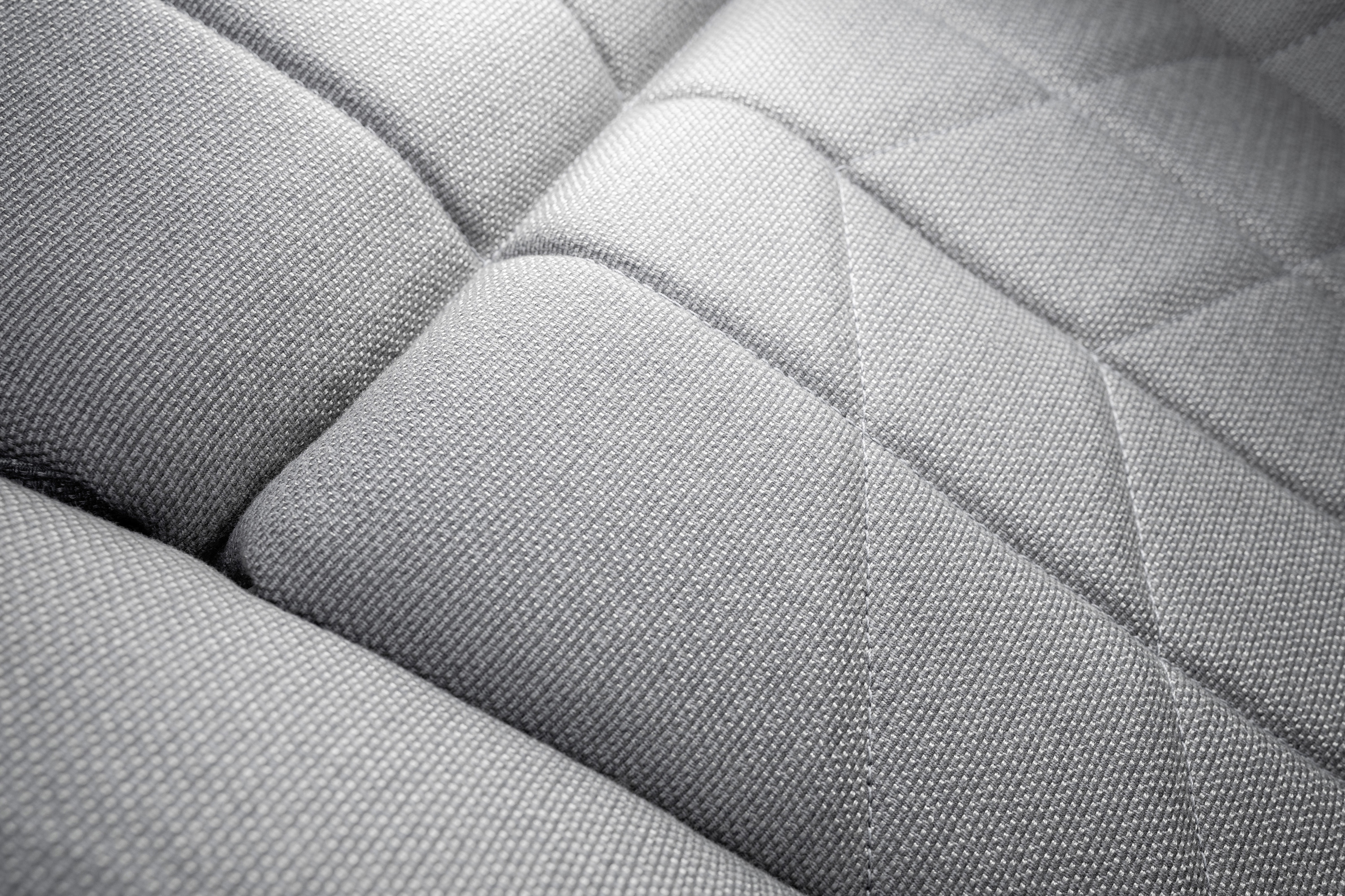
Ask for fiber percentages, covered surfaces, and care instructions. Natural flame behavior does not remove the requirement for the complete seat materials to meet the applicable vehicle safety rules.
Color, perforation, and climate functions
Color changes more than appearance:
- Dark surfaces can reach higher temperatures in sunlight and show pale dust or salt.
- Light surfaces can reduce the visual effect of dust but show denim transfer, cosmetics, and dark stains.
- Highly saturated colors may reveal wear differently at creases and bolster edges.
- Contrasting piping and stitching add edges that can abrade during entry.
Perforation can support ventilation, soften a stiff surface, or be decorative. Compare hole size, open area, backing, and the actual airflow system. Small perforations can trap residue, and cleaning liquid should not be driven through the cover into fans, heating, foam, or electronics.
Seat heating must conduct through the cover and padding; ventilation must move air through or around them. The same material can therefore feel different on a basic seat and on a climate seat with perforation, spacer fabric, and blowers.
How to judge environmental claims
There is no universally lowest-impact upholstery category. A credible comparison needs the exact product, functional unit, service life, geographic energy mix, feedstock assumptions, manufacturing process, maintenance, repair, and end-of-life scenario.
Read claims in layers:
- Material identity: What are the face, backing, binder, coating, foam, and adhesive?
- Coverage and mass: Which panels use the claimed material, and what share of the seat or interior does it represent?
- Recycled or bio-based content: Is the percentage stated for the named component or the complete product?
- Chain of custody: Is the claimed input traced through an independent system?
- Chemical testing: Which substances, limits, product class, sample, and certificate period apply?
- Manufacturing audit: Is the facility audited, and for which processes and impact categories?
- Life-cycle assessment: Are the system boundary, functional unit, allocation, geography, data age, and verification published?
- Durability and repair: Will the material meet the required life with realistic cleaning and local panel repair?
- End of life: Is recycling available at vehicle scale, or only technically possible in a pilot?
The certifications answer different questions:
- The Global Recycled Standard verifies and tracks recycled raw material through the supply chain and adds processing criteria. It is evidence for a defined recycled-content claim, not proof that the complete seat has the lowest life-cycle impact. Textile Exchange — Global Recycled Standard scope
- OEKO-TEX Standard 100 tests a certified textile article and its components against a list of harmful substances, with requirements based on intended skin contact. It does not by itself measure climate impact or durability. OEKO-TEX — Standard 100 scope and testing
- A Leather Working Group audit assesses a leather-manufacturing facility across areas such as water, energy, effluent, chemicals, traceability, and management. LWG explicitly states that this is not a full-product assessment or a like-for-like comparison with other materials. Leather Working Group — Audit scope and product-claim limits
- An Environmental Product Declaration can disclose life-cycle results for a defined product and set of rules. Two EPD numbers are comparable only when their product-category rules, functional unit, system boundary, assumptions, and data are aligned.
Words that sound similar are not interchangeable: recycled does not mean recyclable; bio-based does not mean biodegradable; animal-free does not mean plastic-free; and carbon neutral can include offsetting rather than elimination of product emissions.
Care, repair, and safety
Follow the manual for the exact upholstery. Test any cleaner in a hidden location, remove loose dirt before rubbing, avoid saturating the cover, and treat spills early. Do not assume that household leather, textile, steam, solvent, or disinfectant products are compatible with an automotive finish.
Aftermarket covers and cushions can block ventilation, change heater temperatures, affect occupant sensing, or obstruct a seat-mounted side airbag and its tear seam. NHTSA has warned that a cover must not make a compliant seat-mounted airbag inoperative. NHTSA — Seat covers and seat-mounted side airbags
For a damaged seat:
- determine whether the affected panel contains an airbag seam, sensor, heater, or ventilation layer;
- use the vehicle maker's repair procedure and approved thread, seam, cover, foam, and calibration process;
- confirm that the replacement material matches the required flammability and safety specification;
- treat an airbag or occupant-classification warning as a safety fault.
What buyers should check
- Exact material composition and the surfaces it covers
- Cushion and bolster comfort in hot and cold conditions
- Friction against normal clothing and ease of entry
- Perforation, real airflow, fan noise, and heating uniformity
- Cleaning instructions and restrictions
- Denim, sunscreen, cosmetic, pet, and child-use resistance
- Abrasion, pilling, light-fastness, hydrolysis, and color-transfer data where published
- Replacement-panel availability and color matching
- The scope and validity of recycled-content, chemical, facility, and life-cycle claims
- Compatibility of any intended child-seat protector or aftermarket cover with airbags and occupant sensors
Return to Car Seats in EVs for the full seat guide.
Sources
- eCFR — FMVSS No. 302: Flammability of interior materials
- International Council of Tanners — Leather labeling and automotive terminology
- Alcantara — Material composition and technical properties
- Miko — Dinamica Auto technical data sheet
- Miko — Dinamica recycled-content scope
- Textile Exchange — Global Recycled Standard scope
- OEKO-TEX — Standard 100 scope and testing
- Leather Working Group — Audit scope and product-claim limits
- NHTSA — Seat covers and seat-mounted side airbags