
Seat belts
The three-point seat belt is the primary occupant restraint in a modern car. It keeps the body inside the survival space, spreads force across the pelvis and ribcage, and positions the occupant so the airbags and seat can do their jobs.
The geometry that makes it work
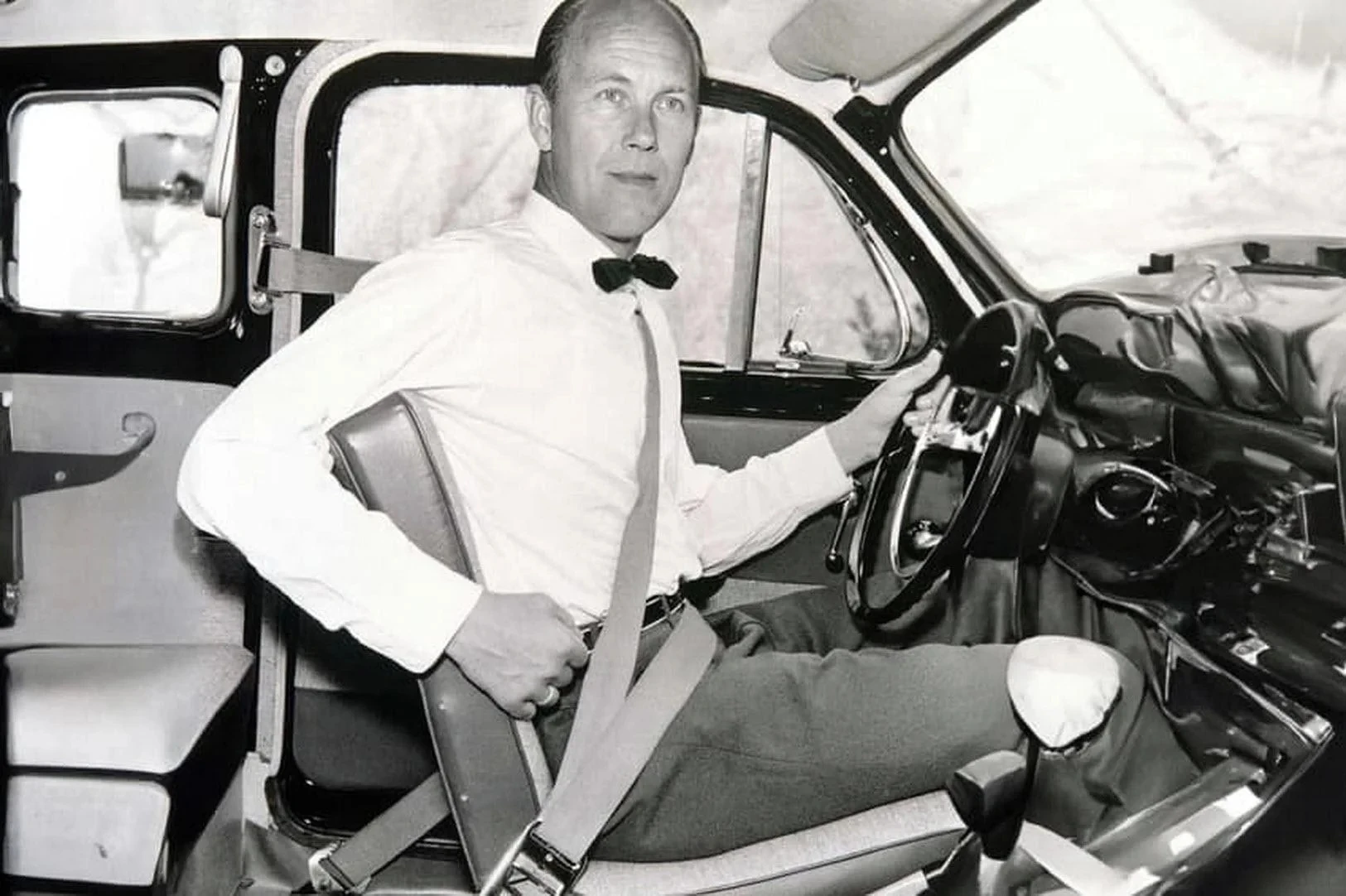
A three-point belt combines a lap section and a diagonal shoulder section in one continuous restraint. The lap belt should lie low across the hips and pelvic bones; the shoulder belt should cross the chest and the middle of the shoulder. That geometry restrains the torso and pelvis while loading stronger parts of the skeleton.
Volvo engineer Nils Bohlin developed the familiar V-shaped arrangement, which Volvo introduced as standard equipment in Sweden in 1959 and made available to other manufacturers. The basic geometry remains, but the simple webbing is now part of an electronically coordinated restraint system.
NHTSA estimates that a correctly worn belt in the front seat of a passenger car reduces the risk of fatal injury by 45% and moderate-to-critical injury by 50%. The exact benefit varies by crash and vehicle, but no airbag or driver-assistance feature replaces the belt.
What happens in a crash
In normal driving, the retractor lets the occupant move while keeping light tension on the webbing. It locks when its mechanism detects rapid webbing extraction, vehicle deceleration, or another programmed condition. The belt then restrains the occupant through several coordinated functions.
Pretensioners
A pretensioner removes slack early in the crash so the occupant begins decelerating with the vehicle and meets the airbag in the intended position.
Rear-seat pretensioner during crash testing. Euro NCAP / YouTube.
A pyrotechnic retractor pretensioner uses a small gas generator to pull in webbing. It operates once and must be replaced after deployment.
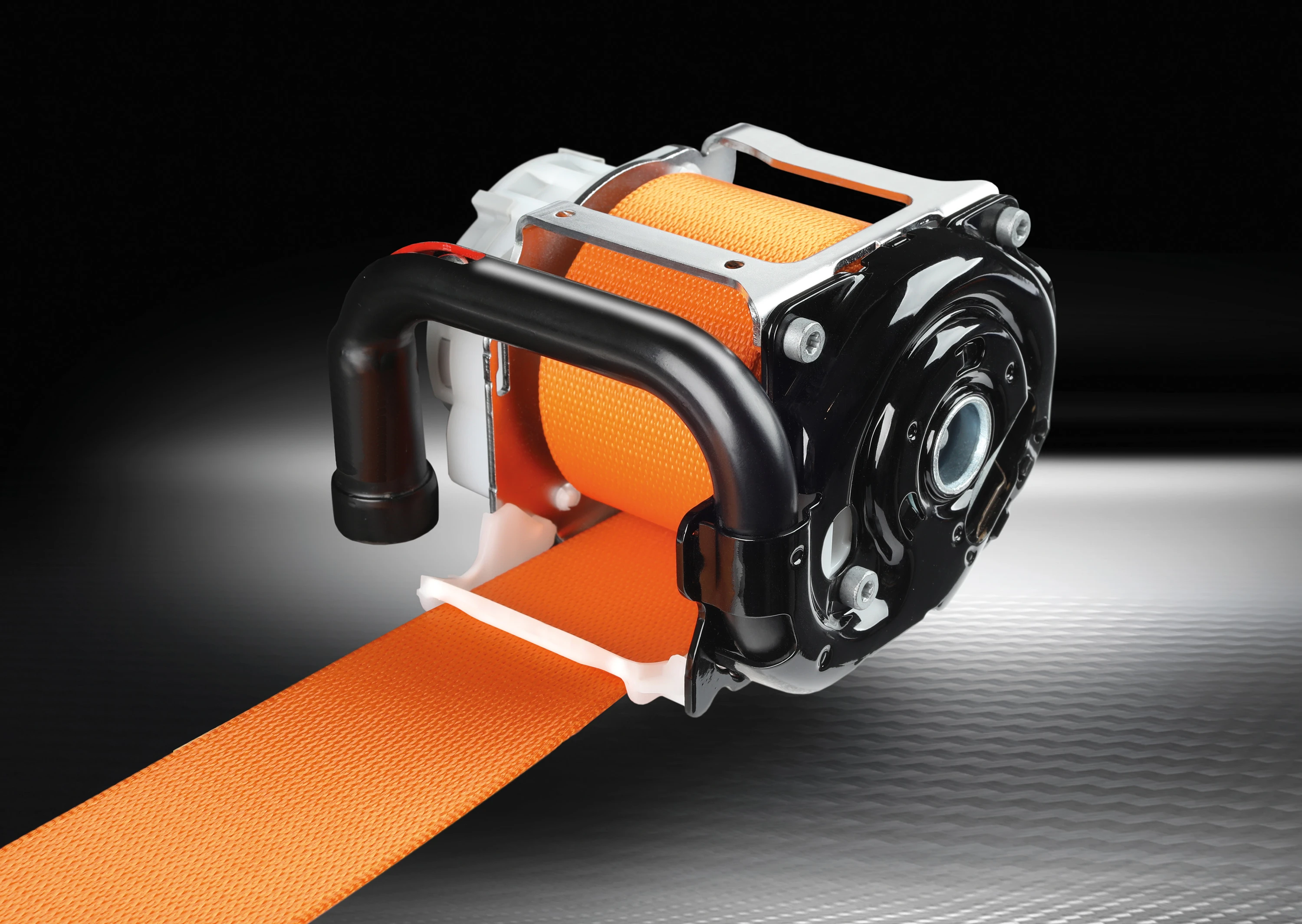
A buckle pretensioner pulls the buckle downward to tighten the lap and shoulder portions. Some vehicles combine buckle and retractor pretensioners to control different sources of slack.
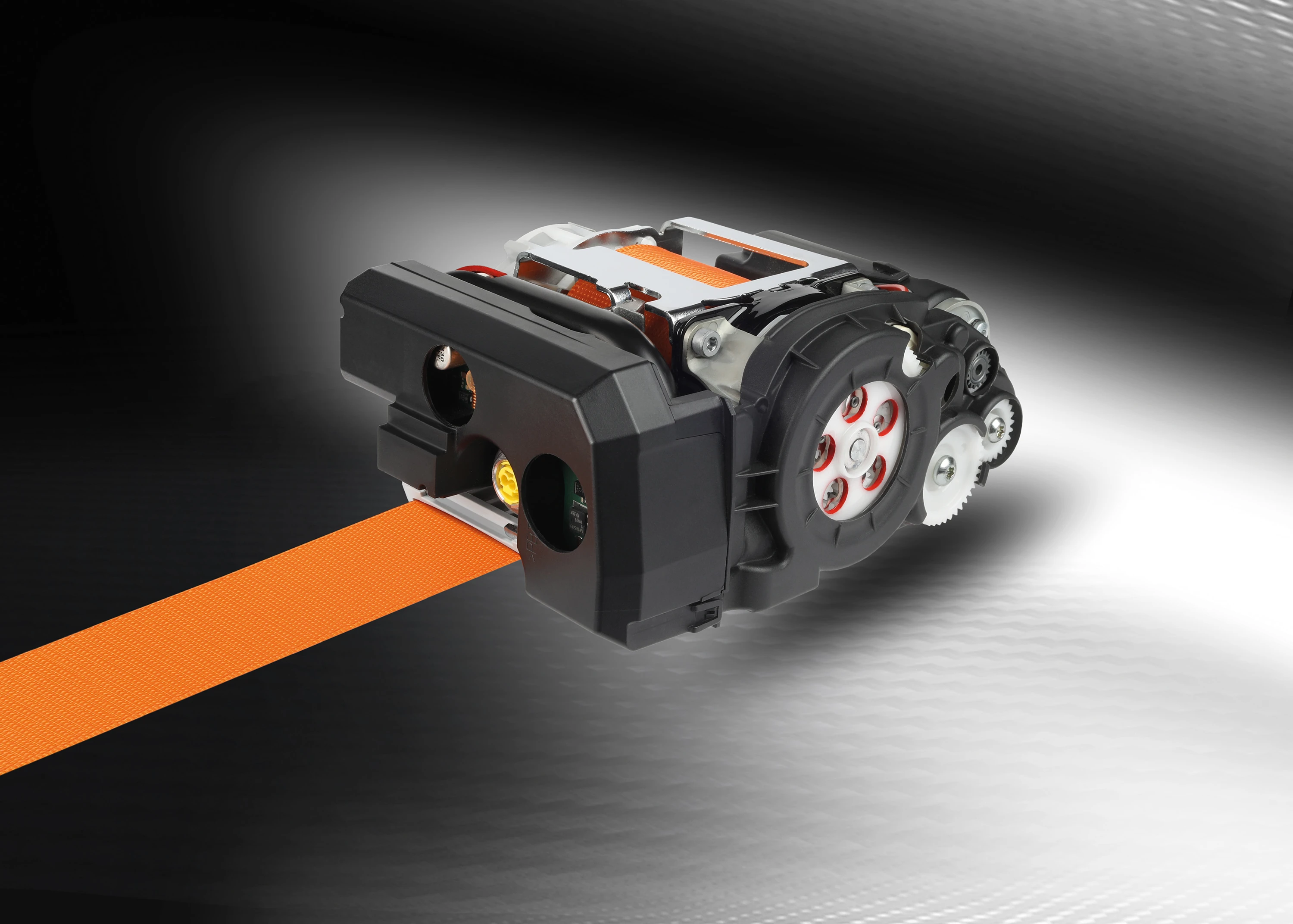
A reversible pretensioner uses an electric motor. It can tighten the belt during emergency braking, an evasive manoeuvre, or a threat detected by the vehicle's driver-assistance systems, then release it if the danger passes. This pre-crash action is distinct from the irreversible pyrotechnic stage used in a severe impact.
Load limiters
Holding an occupant as rigidly as possible is not the goal. A load limiter allows controlled belt payout once the force reaches a calibrated level, reducing chest loading while the airbag and remaining ride-down space manage forward movement. Different seating positions can use different pretensioner and load-limiter strategies.
Belt reminders and occupancy sensing
Seat-occupancy sensors and buckle switches support warnings for unbelted occupants. They may also inform airbag deployment logic. A reminder only confirms the system state it can sense; it does not prove that the belt is routed correctly or that a child restraint is properly installed.
Fit matters as much as hardware
A belt cannot distribute force correctly if it is under the arm, behind the back, across the abdomen, heavily twisted, or routed over a thick object. Occupants should sit upright, remove slack, and adjust the upper anchor where one is provided. Excessive recline increases the risk of sliding under the lap belt, called submarining.
Children should use a child restraint or booster appropriate to their size and local rules until the adult belt fits correctly. A rear-facing child restraint must never be placed in front of an active frontal airbag. During pregnancy, the lap belt should remain low under the abdomen across the hips, with the shoulder belt across the chest; follow medical advice and the vehicle manual.
The rear seat deserves the same attention as the front. Check for three-point belts, pretensioners, load limiters, reminders, head restraints, and compatibility with the child restraints you intend to use.
Adaptive restraints
Modern restraint controllers can select different belt-force strategies using crash direction and severity, seating position, and available occupant information. Volvo's multi-adaptive safety belt, introduced in the EX60, expands this idea by using interior, exterior, and crash-sensor data to choose among more load-limiting profiles for the front occupants.
Volvo multi-adaptive safety belt. Volvo Cars / YouTube.
This is an evolution of pretensioning and load limiting, not a replacement for correct belt use. The manufacturer's claimed benefit must ultimately be judged through independent crash results and real-world injury data.
Design, inspection, and repair
Coloured webbing can be a visual design choice without changing the restraint's required performance.
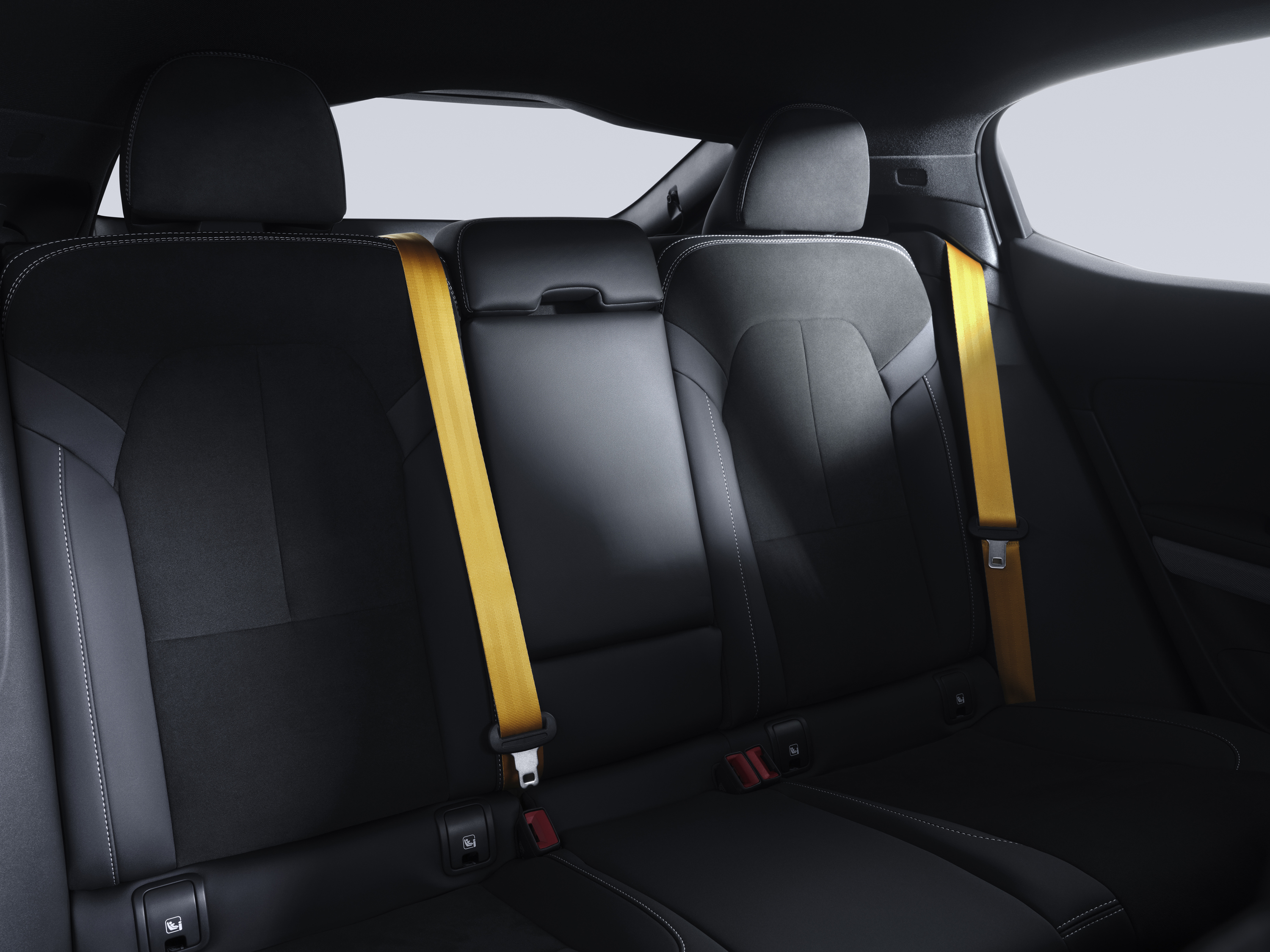
More important is condition. Webbing should not be cut, heavily frayed, contaminated, or trapped by trim. Buckles and retractors should operate smoothly, and a restraint warning lamp needs diagnosis. After a significant collision or pretensioner deployment, follow the manufacturer's inspection and replacement procedure; damage is not always visible.
Airbags explains the other half of the restraint system, while Crash testing and safety ratings shows how assessors evaluate belt loads, occupant movement, and injury measurements together.