
EV Batteries
An EV battery is a complete high-voltage energy system, not just a collection of cells. Its capacity, chemistry, voltage, thermal control, software limits, and physical construction affect range, charging, performance, durability, weight, repairability, and cost.
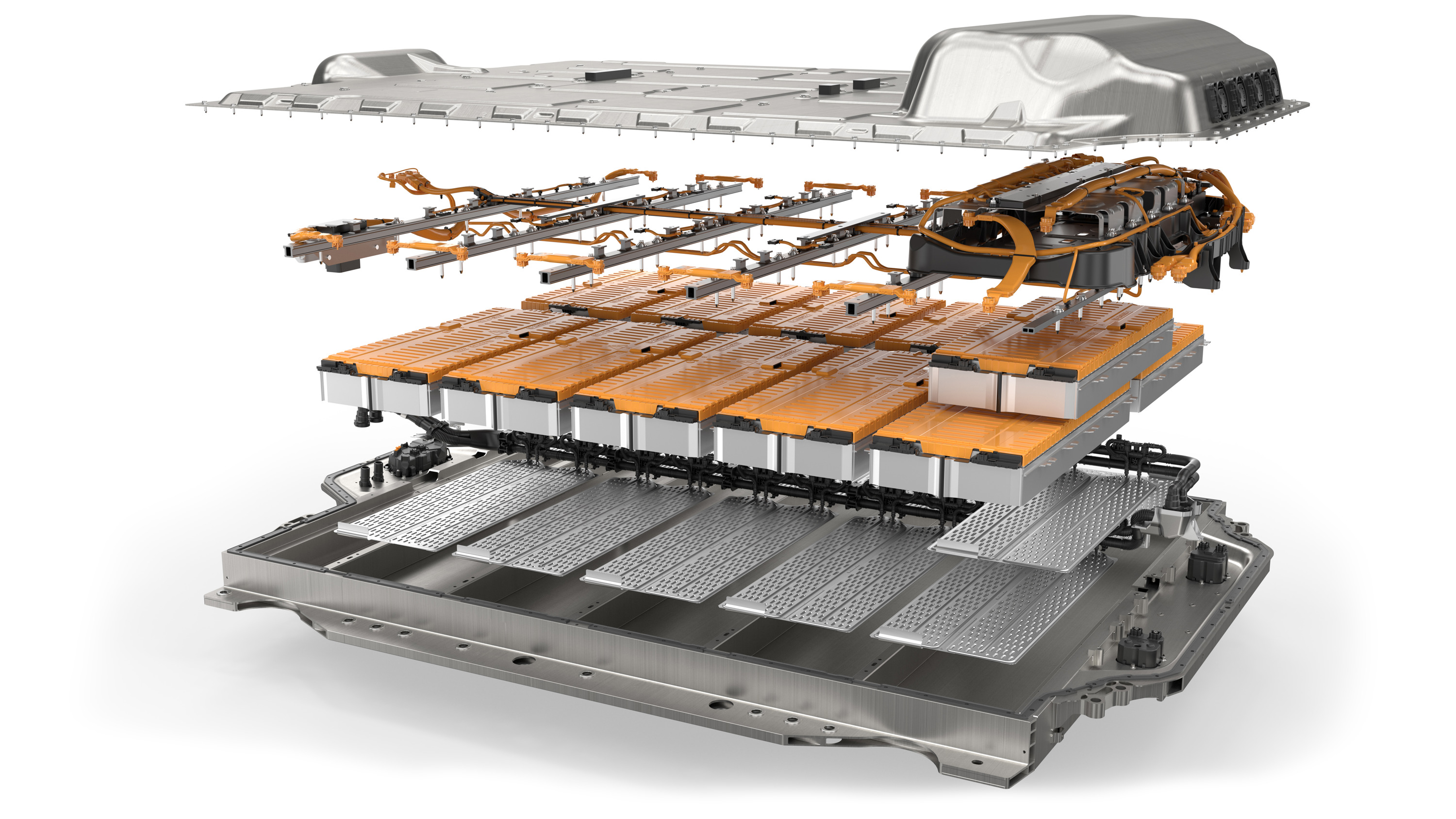
What matters when comparing EV batteries
Battery capacity is usually the first specification buyers notice, but a larger battery does not automatically provide longer range or faster charging.
The most useful characteristics include:
- Gross or rated capacity: The complete nominal energy content specified for the battery
- Usable capacity: The energy the vehicle allows the driver to use
- Battery buffer: Energy reserved outside the normal operating window or below the displayed state-of-charge range
- Efficiency: How much battery energy the vehicle uses to travel a given distance
- Charging curve: How charging power changes with state of charge, temperature, and battery limits
- Cell chemistry: The materials that influence energy density, cost, charging, durability, and thermal behaviour
- Thermal management: How the vehicle heats or cools the cells
- Degradation: The gradual loss of usable capacity and power capability
- Warranty: The manufacturer’s coverage for defects and excessive capacity loss
Efficiency can matter as much as capacity. A vehicle using 16 kWh/100 km will travel considerably farther on the same usable energy than one using 24 kWh/100 km.
Peak charging power is also incomplete on its own. Charging time depends on the complete charging curve, starting state of charge, battery temperature, charger capability, and how long the battery can maintain high power.
How this series is organised
The core chapters explain the battery information most relevant to EV ownership:
- Battery Basics explains how a rechargeable cell stores and releases energy.
- Battery Charging explains battery-side charging behaviour, charging curves, temperature limits, and charging time.
- Battery Degradation explains why batteries age and which conditions accelerate capacity or power loss.
- Battery Buffer and Usable Capacity explains gross, usable, displayed, and reserved energy.
- EV Battery Warranty explains warranty periods, capacity guarantees, exclusions, diagnostics, and repair approaches.
The engineering chapters explain how the battery is constructed and controlled:
- Cell Formats compares cylindrical, prismatic, pouch, and blade-type cells.
- Battery Pack and Configuration covers series and parallel connections, modules, voltage classes, structural integration, and pack-level energy density.
- Battery Management System explains monitoring, protection, state estimation, and control.
- Battery Thermal Management covers cooling, heating, preconditioning, and temperature limits.
- Cell Balancing explains how the battery keeps series-connected cells within a safe operating range.
- EV Battery Safety and Failure Management explains how packs prevent, detect, and contain electrical, mechanical, and thermal failures.
The advanced and regularly updated chapters provide broader technical and industry context:
- Cell Chemistry and Components covers electrodes, electrolytes, separators, and the main battery chemistries.
- EV Battery Lifecycle, Repair, Second Life and Recycling explains diagnosis, repair, reuse, repurposing, and material recovery.
- EV Battery Manufacturers covers major cell producers, technologies, production scale, and customers.
- Latest in Battery Technology tracks technologies entering production and claims that still require validation.
For charging connectors, charging stations, home charging, public infrastructure, bidirectional charging, and battery swapping, use the separate EV Charging guide.