
EV battery packs: configuration, construction and repairability
An EV battery pack connects cells into a system that stores energy and supplies the vehicle with power. The electrical connections set its voltage and ampere-hour capacity; cooling, protection and integration into the vehicle affect weight, packaging and repair options.
This chapter builds on Battery Basics and Cell Formats to explain how cells are connected, assembled and integrated into the vehicle.
What a battery pack contains
Cells store energy, while busbars and other conductors connect them to one another and to the vehicle. The enclosure holds the assembly in place and protects it from the environment and mechanical damage. Cooling hardware carries heat away during driving and charging; heating can prepare a cold battery for use.
The battery management system (BMS) monitors voltages, temperatures and current so that charging and discharging stay within operating limits. Contactors connect or isolate the pack from the vehicle's high-voltage circuit. Fuses and, in some designs, pyrotechnic disconnects provide additional protection during faults or a crash. These functions work together: detecting an unsafe condition is useful only if the system can limit power or interrupt the relevant circuit. Nexperia: automotive battery management systems
Opening the contactors does not remove the energy stored inside the cells. Tesla's emergency-response guidance makes this distinction explicit: even after a vehicle's high-voltage system is disabled, the pack retains stored energy, and damaged components must be treated as potentially live. Tesla: Model 3 emergency response guide
For more detail on monitoring and temperature control, see Battery management system and Battery thermal management.
How series and parallel connections work
Battery configurations use s for series connections and p for parallel connections. A 3s4p arrangement has three groups connected in series, with four cells connected in parallel within each group: 12 cells in total.
Series adds voltage; parallel adds capacity
Connecting matched cells in series adds their voltages. The same current flows through each series position, while ampere-hour capacity remains that of one cell or parallel group.
Connecting matched cells in parallel keeps the group's voltage at the voltage of one cell and adds their ampere-hour capacities. The cells share the current, although differences in resistance, temperature and connections can make that sharing uneven. A monitor connected across the group sees a shared terminal voltage, rather than a separate voltage for every parallel cell. Texas Instruments: monitoring parallel cell groups The role of these monitored groups in keeping charge levels aligned is explained in Cell Balancing.
For identical cells, the basic relationships are:
- Pack nominal voltage = number of series groups × cell nominal voltage.
- Pack capacity in Ah = cells per parallel group × cell capacity in Ah.
- Approximate nominal energy in Wh = nominal voltage × capacity in Ah.
Ampere-hours measure electric charge; kilowatt-hours measure energy. A higher Ah figure does not necessarily mean more energy if the pack voltage is lower. The voltage also changes during use, so multiplying nominal voltage by Ah is an approximation, not a measurement of energy delivered over a discharge.
A worked example
Consider an illustrative pack with 96s46p connections and cells rated at 3.7 V and 4.8 Ah. These are assumed values for explaining the calculation, not specifications for a production vehicle.
| Calculation | Result |
|---|---|
| Cell count: 96 × 46 | 4,416 |
| Nominal voltage: 96 × 3.7 V | 355.2 V |
| Capacity: 46 × 4.8 Ah | 220.8 Ah |
| Nominal energy: 355.2 V × 220.8 Ah | About 78.4 kWh |
Changing the same cell inventory to 192s23p would double nominal voltage and halve Ah capacity. The calculated energy would remain the same. This shows why voltage class and battery size describe different properties.
A documented example is the 2012 US-market Mitsubishi i-MiEV. The US Department of Energy's test report lists 88 cells, 3.7 V nominal cell voltage, 325.6 V nominal pack voltage and 50 Ah rated pack capacity. These figures are consistent with 88s1p: 88 × 3.7 V = 325.6 V, and 325.6 V × 50 Ah = 16.28 kWh, rounded to the report's 16.3 kWh rating. The report separately records 14.6 kWh measured in its baseline laboratory capacity test. Rated and measured energy should not be substituted for one another. US Department of Energy: 2012 Mitsubishi i-MiEV battery test
Electrical groups are different from modules
Module count describes physical assembly. A module can contain cells connected in series, parallel, or both; the connections within and between modules determine pack voltage.
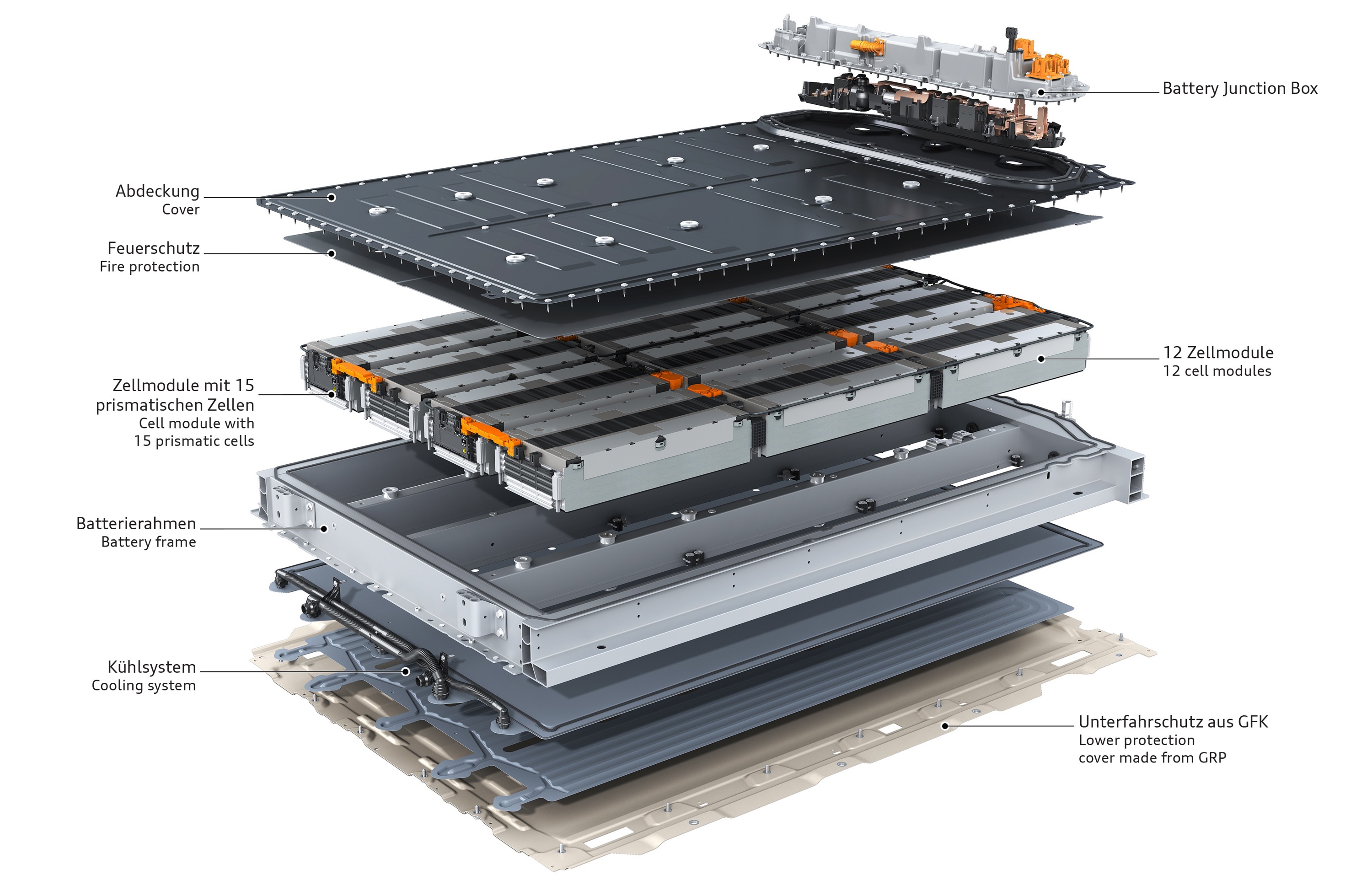
The 100 kWh Porsche Macan Electric pack introduced in 2024 has 12 modules, each containing 15 prismatic cells connected in series. In its normal high-voltage configuration, the resulting 180-cell arrangement is 180s1p. Porsche: Macan battery and charging
The Audi Q8 55 e-tron introduced in late 2022 illustrates a different layout. Audi documents 36 modules and 432 cells for the Q8 e-tron family, and specifies 114 kWh gross, 106 kWh net and 396 V nominal for the larger pack. Audi: PPE high-voltage battery Audi: Q8 e-tron battery capacity and charging
What pack voltage changes
Electrical power is voltage multiplied by current: P = V × I. At a given power, increasing voltage reduces the current required.
For an idealized 300 kW transfer, 400 V requires 750 A, while 800 V requires 375 A. Resistive heating follows I²R. If resistance stays unchanged, halving current reduces that heating to one quarter. Designers can use this trade-off to reduce losses, conductor size, or some combination of the two.
These are calculations at specified voltages. A vehicle described as having a 400 V or 800 V architecture does not operate at that exact voltage throughout its charge cycle. Nominal voltage, maximum voltage and the broad architecture class are different specifications.
Higher voltage also requires compatible power electronics, insulation, connectors and charging equipment. It does not establish charging time by itself: the cells' charge acceptance, battery temperature, charging curve and station limits still determine how much power reaches the pack.
Connecting an 800 V pack to a 400 V charger
A vehicle may use voltage conversion or reconfigure its battery to accept a lower charger voltage. The implementation determines the available charging power.
For the Macan's 100 kWh system, Porsche describes a switch that divides the pack into two banks for 400 V charging. The banks are charged concurrently, after their states of charge are aligned if needed. Porsche specifies up to 135 kW for this charging mode, compared with up to 270 kW at a suitable 800 V station. The 135 kW figure is the vehicle's charging limit in that mode, not an allowance for each bank. Porsche: Macan battery and charging
For voltage-conversion methods, charging curves and station limits, see Battery Charging and Charging Performance.
Modules, cell-to-pack and structural integration
Three separate questions help make sense of pack descriptions: how the cells are electrically connected, how they are physically grouped, and how the battery contributes to the vehicle's structure. Terms such as cell-to-pack and structural battery address the latter two questions. They do not specify cell chemistry or the series/parallel arrangement.
Module-based packs
In a module-based design, cells are assembled into modules before those modules are installed in the pack:
Cell → module → pack → vehicle
Modules provide defined assemblies for cell support, connections and handling. They can also make it possible to vary capacity by changing the module count. The trade-off is the space and mass of repeated housings, connectors and fasteners.
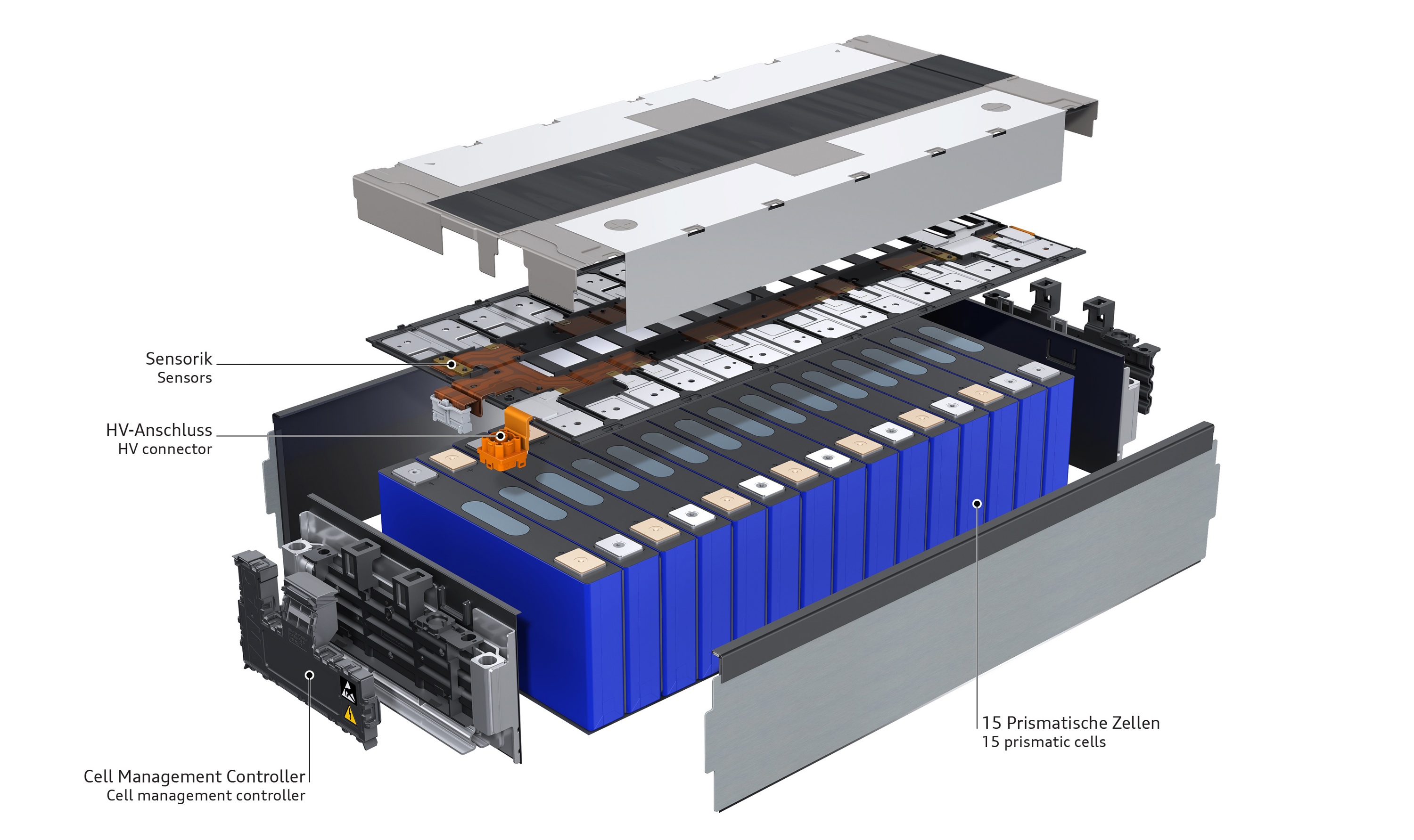
Audi's Q6 e-tron batteries show how this approach can scale. Its 100 kWh gross pack uses 12 modules and 180 cells; the 83 kWh version uses ten modules and 150 cells. Audi also attributes part of the PPE pack's packaging improvement to fewer module connections and fastenings than its earlier designs. Fewer, larger modules can therefore reduce assembly overhead while retaining a modular structure. Audi: PPE high-voltage battery
Cell-to-pack
Cell-to-pack (CTP) removes or reduces the conventional intermediate module enclosure:
Cell → pack → vehicle
A CTP pack can use rows, frames and compressed groups to support and connect its cells. Cooling and protection remain essential. The engineering opportunity is to combine functions and remove repeated material.
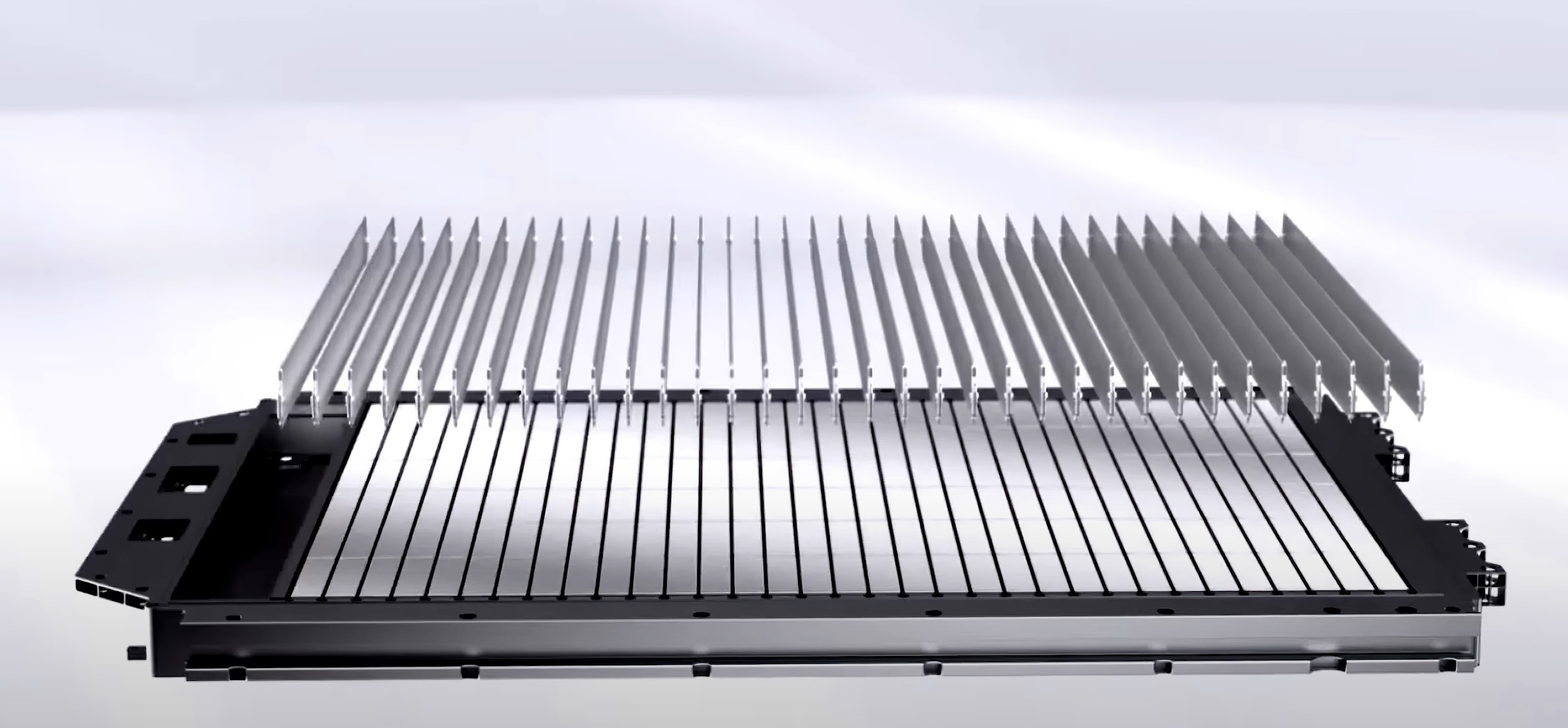
CATL's Qilin design combines structural, cooling and thermal-interface functions in an interlayer between cells. At its June 2022 launch, CATL claimed 72% volume utilization. This is the manufacturer's packaging metric, not a measure of charging efficiency or usable battery capacity. CATL: Qilin CTP 3.0 battery announcement
Volkswagen's September 2025 presentation of the PowerCo Unified Cell paired a standardized prismatic cell format with a CTP battery system. The company described the cell format as compatible with multiple chemistries. A common cell format and a pack integration method can therefore be discussed separately from the materials used inside the cell. Volkswagen: Unified Cell and cell-to-pack system
BYD Blade and cell-to-body
BYD's Blade Battery uses long LFP cells arranged to make efficient use of pack space. Blade describes a particular battery design; LFP identifies the cell chemistry.
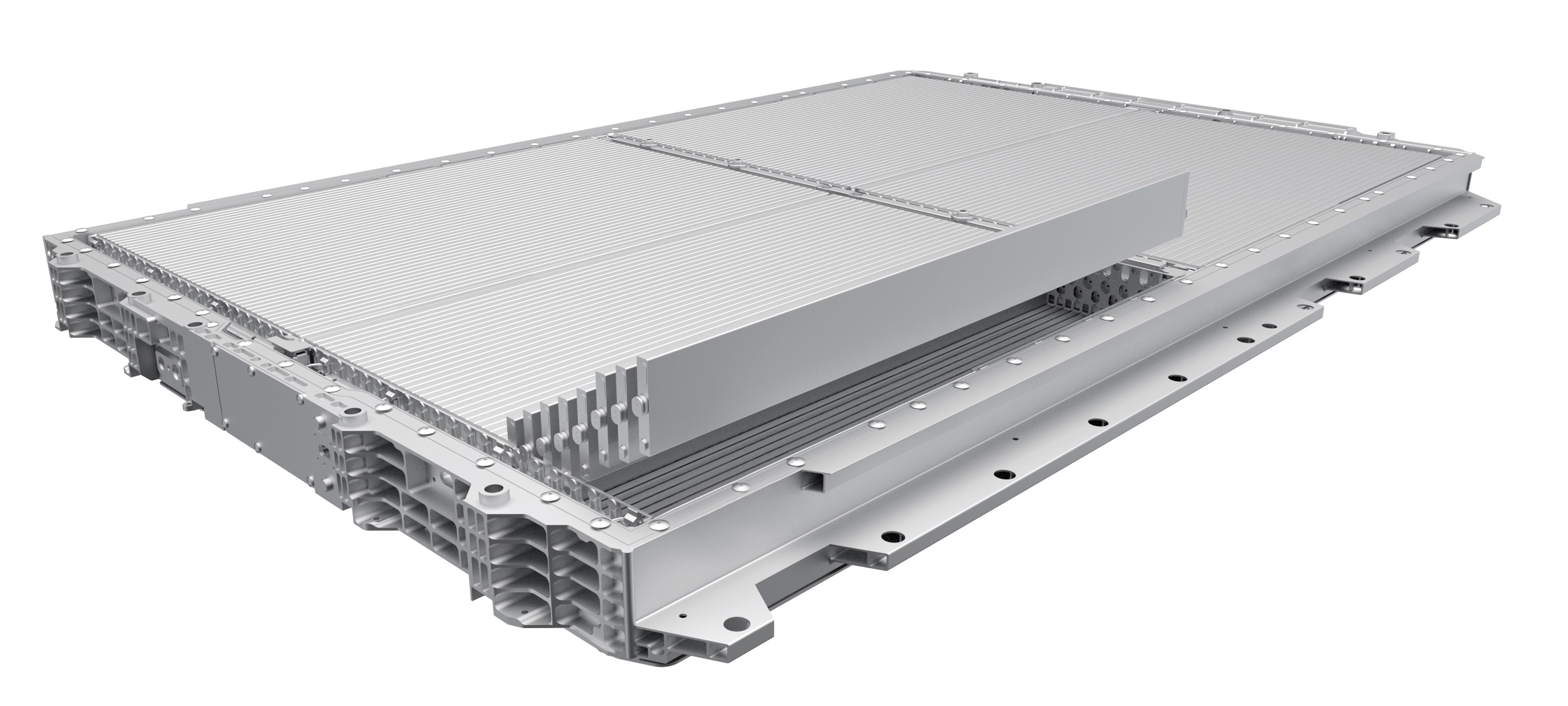
For the BYD Seal launched in Europe in 2023, BYD describes cell-to-body (CTB) construction in which the battery's top cover is integrated with the body floor. The cover, cells and tray form a structure that contributes to the vehicle body. This goes beyond removing module housings inside a conventional pack. BYD: European Seal launch and cell-to-body construction
Structural packs can retain modules
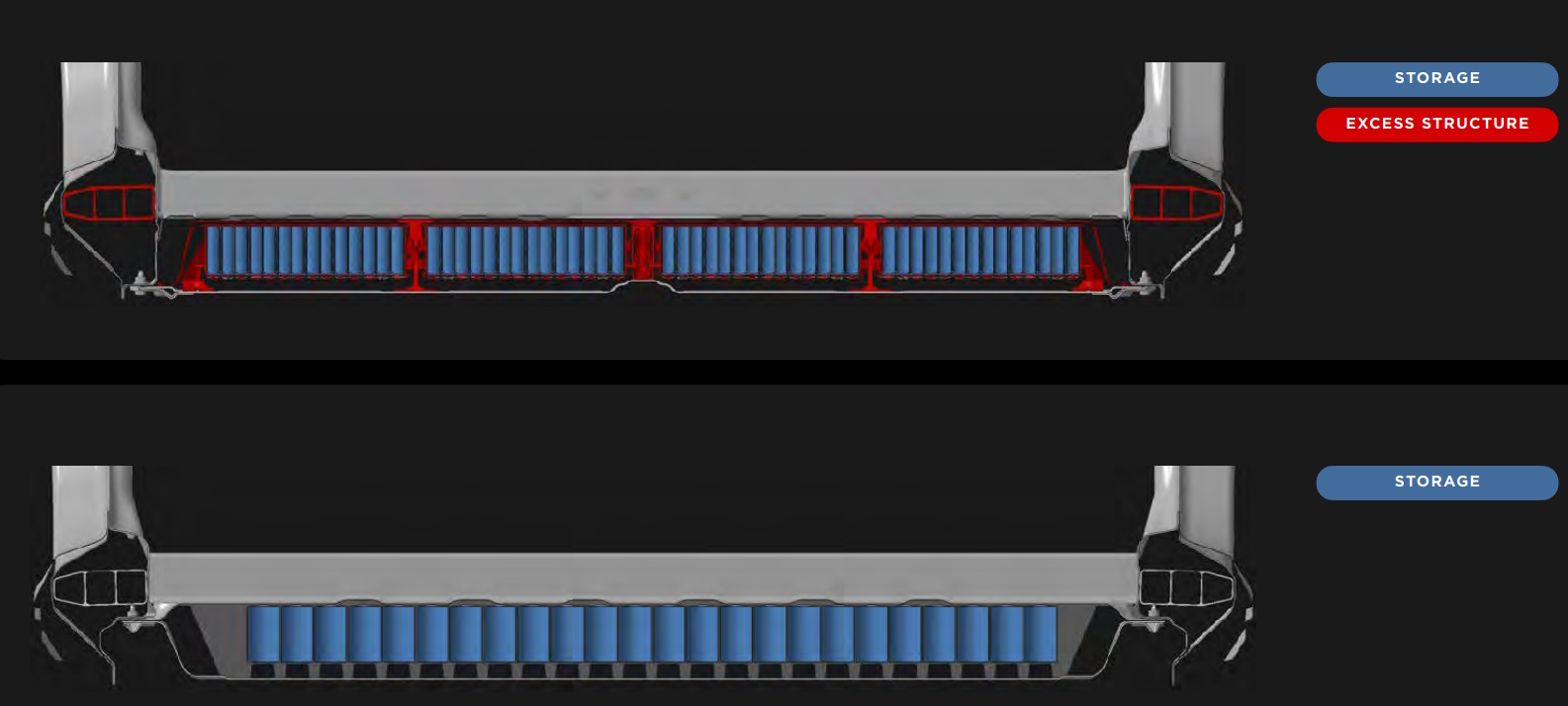
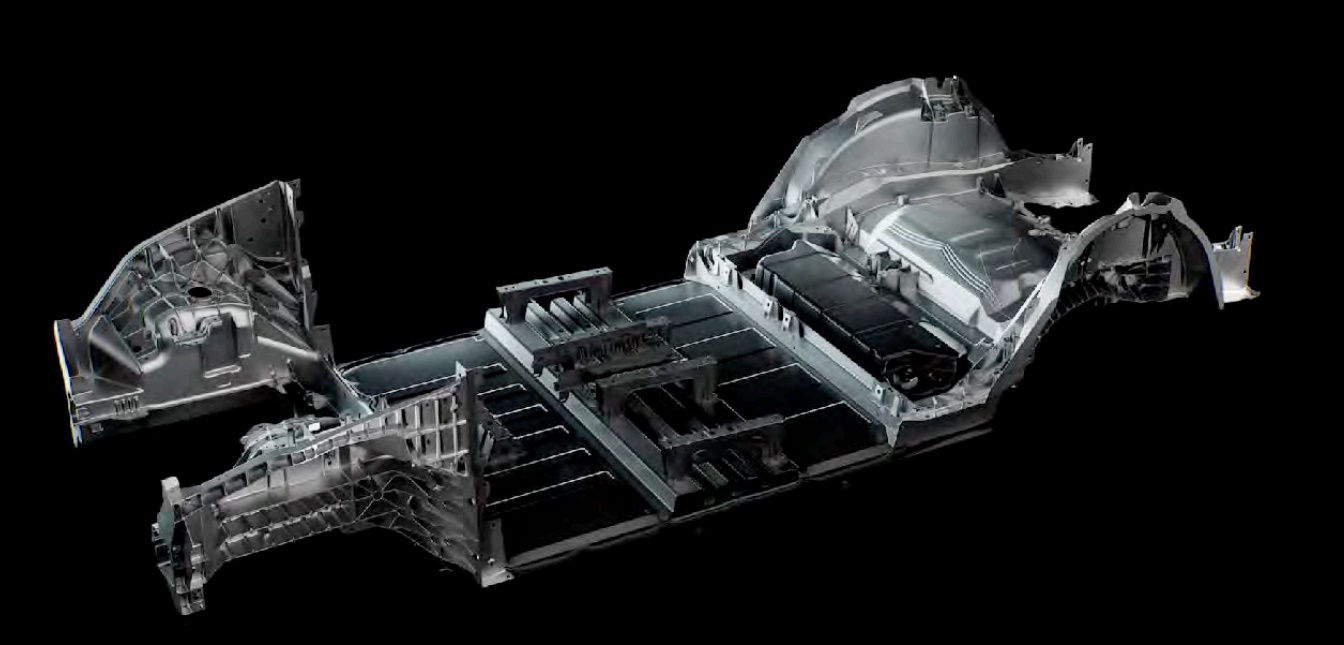
A structural battery takes part in carrying vehicle loads. Integrating battery and body functions can reduce duplicated material, but the term does not prescribe one internal layout.
Tesla's April 2022 Austin Model Y deliveries used 4680 cells and structural packs. Tesla's report for the same period describes the initial Berlin Model Y production as using 2170 cells and non-structural packs. The factory and release matter; the Model Y name alone does not identify its battery construction. Tesla: Q1 2022 update filed with the SEC
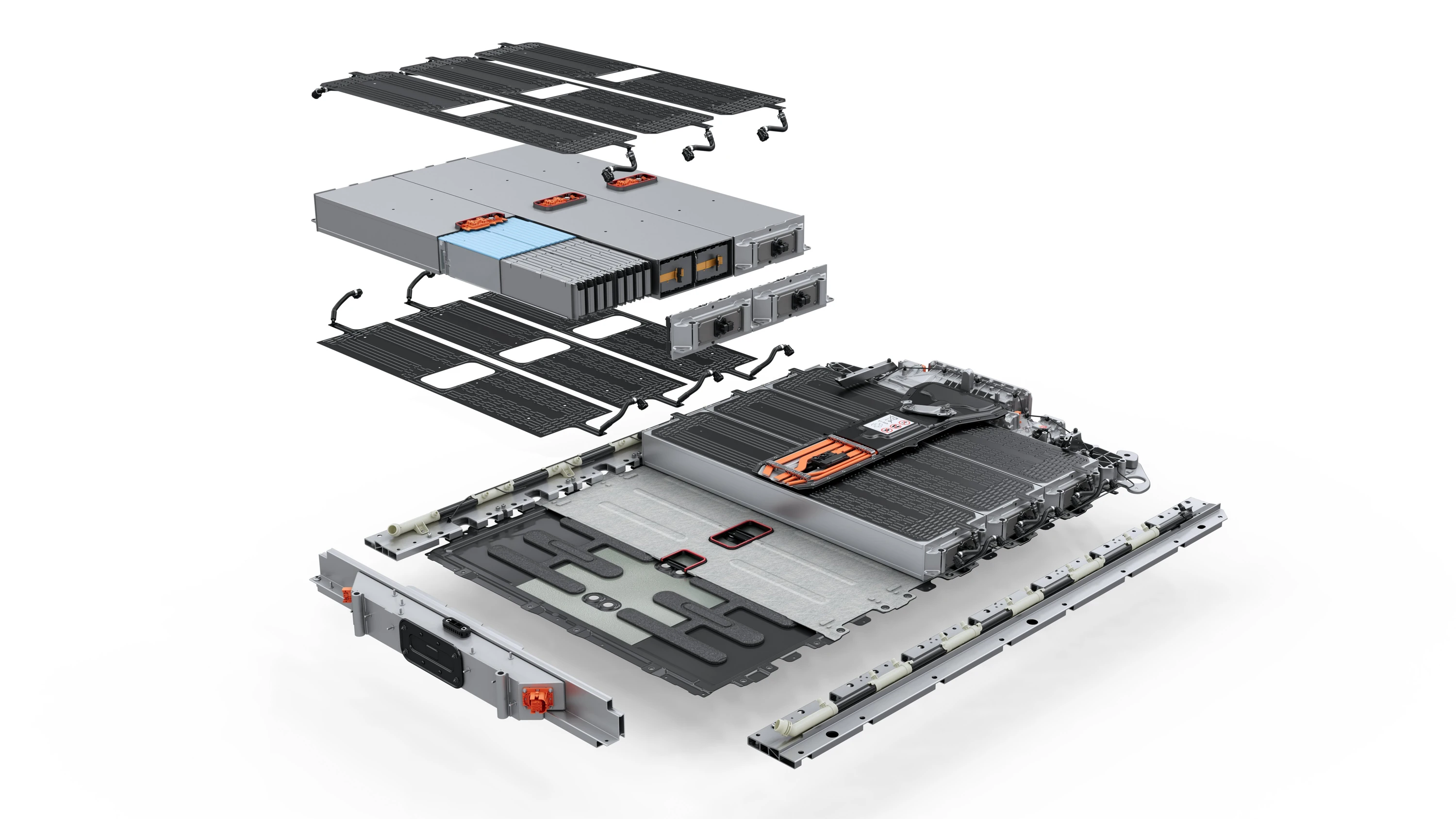
The Porsche Cayenne Electric provides a modular example. Porsche describes its 113 kWh gross battery as part of the body structure, yet it contains six modules and 192 pouch cells. Each module has cooling plates above and below it. Structural integration and module construction coexist in this design. Porsche: Cayenne Electric high-voltage system
Comparing pack energy density
Gravimetric energy density, often called specific energy, expresses energy per unit of mass in Wh/kg.
For a complete pack, the mass includes the cells and the hardware packaged with them. Cell-level figures exclude much of that hardware and should not be compared directly with pack-level figures.
The calculation is straightforward:
Pack specific energy (Wh/kg) = gross pack energy (kWh) × 1,000 ÷ pack mass (kg)
For comparisons of physical pack design, use gross capacity: the total energy capacity before subtracting the operating buffers. Usable capacity also reflects how much of that energy the manufacturer makes accessible to the driver. Mixing the two bases can make a pack with a larger buffer appear less energy-dense. Battery Buffer and Usable Capacity explains the distinction.
Pack mass also needs a consistent boundary, especially when structural and cooling components are shared with the vehicle.
Gross and rated pack-energy examples
The table uses manufacturers' gross capacities or published total-energy ratings, rather than usable capacities. The labels retain each source's basis: an advertised or rated figure is not an independently measured gross capacity. The Wh/kg values are EVKX calculations rounded to whole numbers.
| Pack and source | Gross / rated energy (kWh) | Pack mass (kg) | Calculated Wh/kg |
|---|---|---|---|
| Tesla Model S 85 kWh, introduced in 2012; service-manual mass — Tesla: 2012 Model S specifications Tesla: Model S 85 kWh battery mass in the service manual | 85 advertised | 569 quoted | 149 |
| VW e-Golf, 2014 UK specification — Volkswagen: 2014 UK e-Golf press pack | 24.2 quoted | 318 | 76 |
| VW e-Golf, 2017 French specification — Volkswagen: 2017 French e-Golf specifications | 35.8 quoted | 318 | 113 |
| Audi S/RS e-tron GT, June 2024 update — Audi: June 2024 e-tron GT update | 105 gross | 625 | 168 |
| NIO ET7, 100 kWh packs in the cited manual — NIO: ET7 user manual | 100 rated | 555 | 180 |
The Model S provides an early benchmark. Tesla's 2012 specifications quote 85 kWh, while its 2012–2020 service manual lists 569 kg for the 85 kWh battery. The manual does not identify the pack revision, and its accompanying pound value does not convert exactly to the stated kilograms. The table uses the quoted metric value, so treat the resulting 149 Wh/kg as an approximate historical comparison. Tesla: 2012 Model S specifications Tesla: Model S 85 kWh battery mass in the service manual
On these published figures, the 2024 e-tron GT is about 12% higher than the early Model S benchmark, and the NIO 100 kWh pack is about 21% higher. These are modest pack-level gains relative to an early long-range design. Progress varies with the starting point, as the e-Golf comparison below shows; this selection does not establish an industry-wide improvement rate.
The e-Golf rows use Volkswagen's headline capacity figures: 24.2 and 35.8 kWh, an increase of about 48%. Both documents specify 318 kg, 264 cells and 27 modules. The gain came from higher-capacity cells: at Volkswagen's 2016 technical briefing, development chief Volkmar Tanneberger described the move from 25 Ah to 37 Ah cells, as reported firsthand by electrive. electrive: Volkswagen briefing on higher-capacity e-Golf cells
Audi attributes the 2024 e-tron GT's higher energy density to changes in cell materials, separators and chemistry, together with revised cooling. Its 105 kWh gross pack weighs 625 kg, 9 kg less than its predecessor. This example combines cell development with changes to pack hardware. Audi: June 2024 e-tron GT update
The NIO manual lists two supplier versions of the 100 kWh pack, both weighing 555 kg. NIO: ET7 user manual
NIO's limited-production semi-solid pack
The ET7 manual also lists a 150 kWh pack weighing 575 kg, giving a calculated 261 Wh/kg. It stores 50% more rated energy than the listed 100 kWh packs for 20 kg more mass. WeLion identifies this application as semi-solid-state and rates its NIO production cells at 360 Wh/kg; the 261 Wh/kg figure includes the complete pack. NIO: ET7 user manual WeLion Battery Europe: NIO 150 kWh semi-solid-state application WeLion Energy: semi-solid-state cell technology
Availability limits its relevance as a benchmark for widely sold batteries. In a November 2025 interview with EV, NIO CEO William Li said only several hundred packs had been produced and described lower-than-expected use of the flexible upgrades offered in China. EV reported that production had stopped; the exact stop date was not given. The small fleet could serve multiple customers through swapping, so the production count is not a count of users. EV: William Li on NIO's limited 150 kWh production
This is a useful example of higher specific energy enabled by different cell technology, with limited deployment. See Cell Chemistry & Components for the distinction between electrode chemistry and liquid, semi-solid and solid electrolyte designs.
Mass savings beyond the pack
CTP can improve pack specific energy by reducing module housings and other internal hardware. Structural integration extends the opportunity to the vehicle body: battery and body components can share load-bearing or floor functions, reducing duplicated material. These are separate design choices; a CTP pack is not automatically structural.
The Seal and Cayenne examples above illustrate that shared role. Porsche explicitly attributes lower weight to the Cayenne battery's integration into the body. A design can therefore reduce the combined mass of the battery and body even when the pack's own Wh/kg changes little. Assessing that benefit requires comparing both assemblies on a consistent basis. BYD: European Seal launch and cell-to-body construction Porsche: Cayenne Electric high-voltage system
Cell development, pack construction and body integration all offer routes to lower mass. The examples here do not establish which route will deliver the largest future saving. Energy per kilogram also leaves charging performance, service life and repairability to be assessed separately.
What determines repairability
Repairability depends on the fault and on how the pack can be opened, diagnosed and restored. A replaceable contactor or control unit presents a different repair from damage to bonded cells, a cooling plate or a structural enclosure.
Modules can provide useful replacement units, but access, sealing, coolant connections, replacement parts and diagnostic procedures must support the work. Bonding cells and supports into larger assemblies can reduce the number of independently replaceable units. Fraunhofer IPA identifies extensive adhesive and foam joints in highly integrated CTP packs as obstacles to selective disassembly and repair. Fraunhofer IPA — disassembly and repair of integrated CTP batteries
The Cayenne example above shows why a structural role alone does not settle the question: a load-bearing pack can still retain modules.
Porsche gives a concrete commitment for the Macan: its 12 modules and other important pack components can be replaced individually. That is stronger evidence of a repair route than a cutaway showing module boundaries. Porsche: Macan battery and charging
Munro Live's video below follows removal of a 4680 structural pack from a Model Y. Removing the complete pack and repairing its internal components are separate service operations.
Diagnosis, replacement-part matching and repair decisions are covered in Battery Lifecycle, Repair, Second Life and Recycling. High-voltage work requires trained personnel and vehicle-specific procedures; EV battery safety and failure management explains electrical isolation, stored energy and failure management.
Sources
23
Nexperia: automotive battery management systems — pack construction, monitoring and contactor control.
Texas Instruments: monitoring parallel cell groups — how monitoring treats cells connected in parallel.
Tesla: Model 3 emergency response guide — electrical isolation and stored energy, especially printed pages 8–9.
US Department of Energy: 2012 Mitsubishi i-MiEV battery test — rated specifications and separate laboratory results for the 2012 US-market test vehicle.
Porsche: Macan battery and charging — 100 kWh pack construction, charging modes and component replacement.
Audi: Q8 e-tron battery capacity and charging — December 2022 capacity and nominal-voltage specifications.
Audi: PPE high-voltage battery — Q6 e-tron module/cell counts and comparison with the Q8 e-tron.
CATL: Qilin CTP 3.0 battery announcement — June 2022 design announcement and manufacturer packaging claim.
Volkswagen: Unified Cell and cell-to-pack system — September 2025 cell format and CTP system announcement.
BYD: European Seal launch and cell-to-body construction — September 2023 European Seal launch and CTB construction.
Tesla: Q1 2022 update filed with the SEC — April 2022 Austin and Berlin pack configurations, slide 7.
Porsche: Cayenne Electric high-voltage system — structural role, modules, cells and cooling.
Tesla: 2012 Model S specifications — 2012 specifications, including the advertised 85 kWh energy figure.
Tesla: Model S 85 kWh battery mass in the service manual — 2012–2020 service manual, electrical specifications: quoted 569 kg for the 85 kWh battery; pack revision unspecified and pound/kilogram values inconsistent.
Volkswagen: 2014 UK e-Golf press pack — UK press pack, battery specifications on printed page 7.
Volkswagen: 2017 French e-Golf specifications — French specification dated 24 February 2017, page 14.
Audi: June 2024 e-tron GT update — 18 June 2024 battery update.
NIO: ET7 user manual — high-voltage battery parameters; undated online manual checked 22 October 2026.
electrive: Volkswagen briefing on higher-capacity e-Golf cells — firsthand reporting of Volkswagen's May 2016 technical briefing on the cell-capacity increase.
EV: William Li on NIO's limited 150 kWh production — EV's 7 November 2025 interview with William Li: several hundred packs produced, flexible-upgrade use in China and reported production halt.
WeLion Battery Europe: NIO 150 kWh semi-solid-state application — WeLion Battery Europe identifies the NIO 150 kWh application as semi-solid-state.
WeLion Energy: semi-solid-state cell technology — WeLion's production-cell technology and 360 Wh/kg NIO cell rating.
Fraunhofer IPA — disassembly and repair of integrated CTP batteries — Fraunhofer IPA's April 2026 research announcement on adhesive and foam joints, selective disassembly and repair in highly integrated CTP packs.