
EV battery cell formats: cylindrical, prismatic and pouch
EV battery cells come in three main formats: cylindrical cells in round metal cans, prismatic cells in rectangular metal cases, and pouch cells sealed in flexible laminated film. Baazouzi et al.: cylindrical cell design and manufacturing (2023) Their shape and enclosure affect how they fit together, how heat leaves the cell, and how the battery supports them.
This chapter explains that physical construction, building on the materials described in Cell Chemistry & Components.
Cell format and internal assembly
Inside a cell, thin positive and negative electrodes are separated by an electrically insulating separator. These layers form a repeated assembly, which can be wound or stacked.
Winding rolls continuous electrode and separator strips into a structure often called a jelly roll. Cylindrical cells use a round winding. A prismatic case can contain flattened windings or stacked electrodes. Baazouzi et al.: cylindrical cell design and manufacturing (2023) In Z-stacking, individual electrode sheets are placed on alternating sides of a separator folded back and forth. Samsung SDI describes winding and Z-stacking as different ways to assemble the same essential layers, and stresses precise alignment during winding to prevent internal short circuits. Samsung SDI: cell assembly, winding and Z-stacking (2026)
The enclosure and the internal assembly are therefore separate design choices. “Prismatic” describes the external shape; it does not tell you whether the electrodes inside are wound or stacked. Likewise, the format does not specify the chemistry: LFP and NMC describe electrode materials, while cylindrical, prismatic and pouch describe physical construction. PowerCo: first Salzgitter cells and Unified Cell architecture (2025)
Cylindrical cells
A cylindrical cell encloses its wound electrodes in a rigid metal can. Baazouzi et al.: cylindrical cell design and manufacturing (2023) The can provides a defined shape for handling and assembly. When cylinders are arranged together, spaces remain between their curved surfaces. Pack designers can use some of that space for cooling or other components.
Sizes and naming
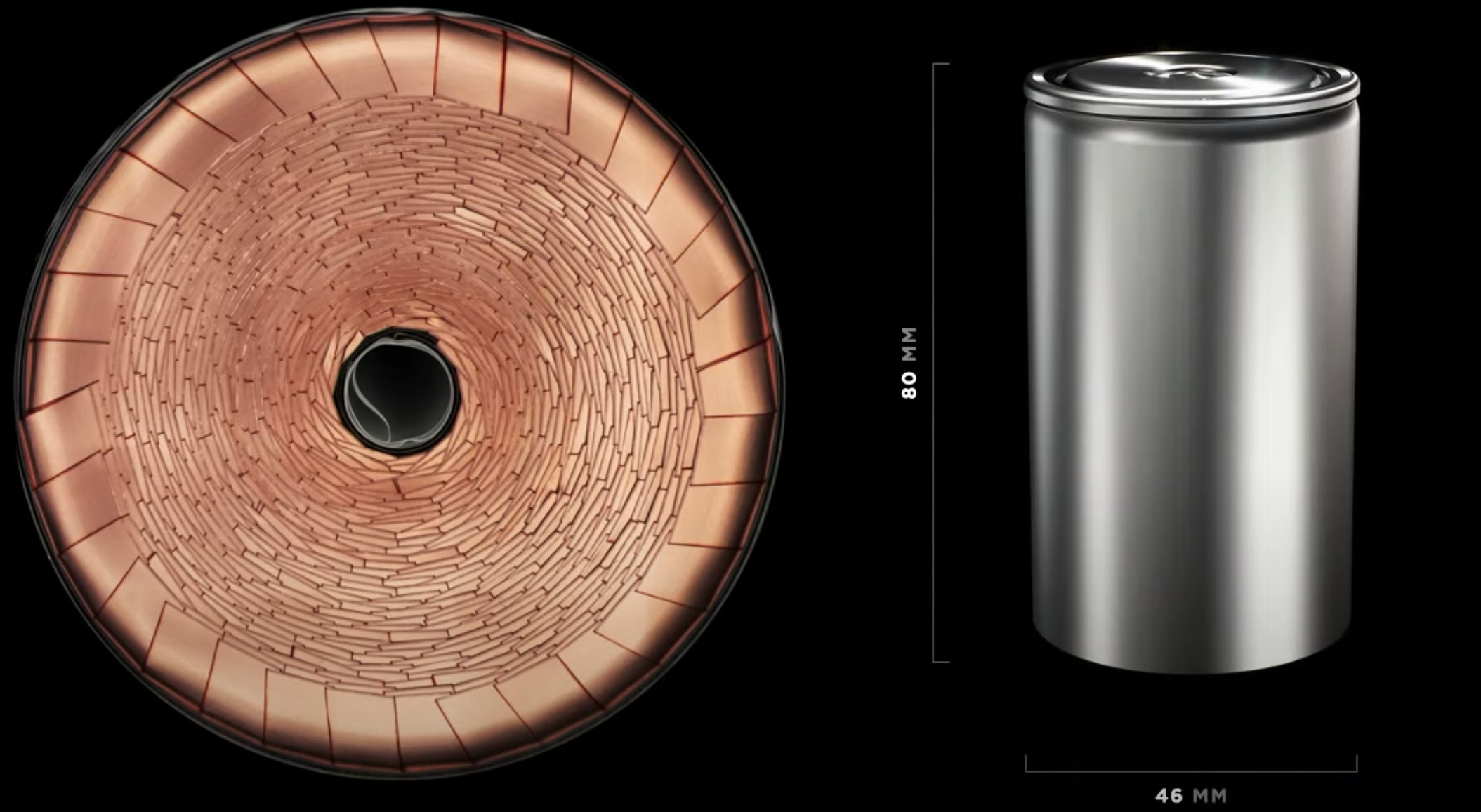
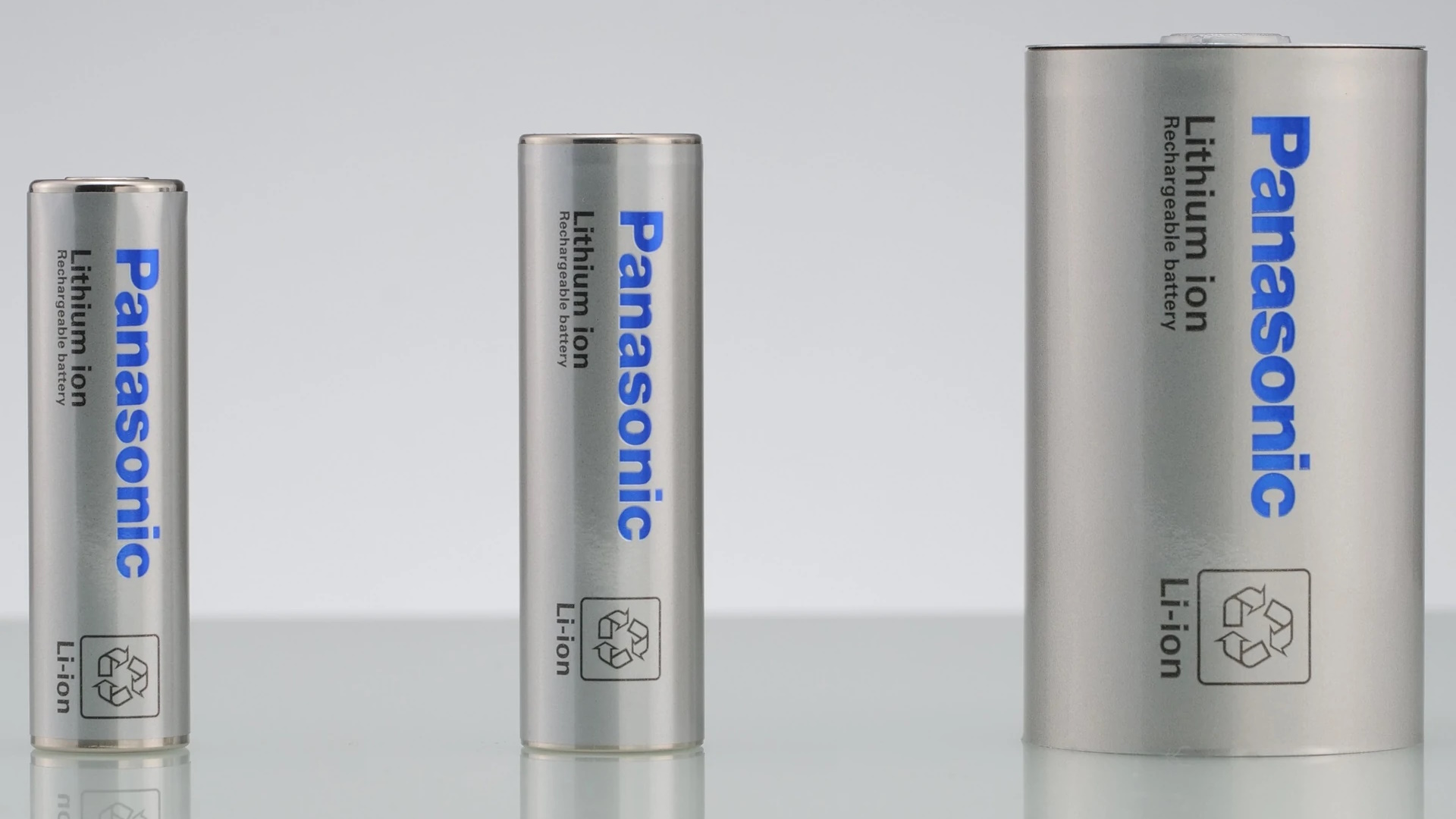
Common size labels describe approximate diameter and height. An 18650 cell is about 18 mm in diameter and 65 mm high. Panasonic: 18650 cell dimensions (2012) A 21700 cell, also called 2170, is about 21 mm by 70 mm. Panasonic: cylindrical cell size naming (2021) A 4680 cell is about 46 mm by 80 mm. Baazouzi et al.: cylindrical cell design and manufacturing (2023) These are nominal size descriptions; exact dimensions and tolerances come from the individual cell's specification.
Tabs and current collection
The electrode coatings sit on metal foils called current collectors. Electrical connections between these foils and the cell terminals are commonly called tabs. Their placement determines how far current must travel along the foil and where electrical resistance produces heat.
A design with a few localised tabs concentrates current collection at those positions. Multiple tabs, or connections distributed along the electrode edges, shorten the paths through the foil. Li et al.: cylindrical-cell tab design and cooling (2021) Designs described as “tabless” still have electrical connections: the term describes distributed current collection instead of a few separate tabs. Baazouzi and colleagues document connections made through the exposed edges of the current-collector foils. Baazouzi et al.: cylindrical cell design and manufacturing (2023)
Heat can leave through the sidewall or ends, depending on which surfaces are connected to the cooling system. In a validated model of the LG M50T 21700 cell, Li and colleagues found that distributed current collection reduced heat generation and internal temperature differences. Under the study's 3C discharge simulations, a continuous-tab design with conductive side cooling gave the best cooling performance. Cooling the sides was more effective than cooling only the base in that model. Li et al.: cylindrical-cell tab design and cooling (2021)
Prismatic cells
Prismatic cells use a rigid rectangular case. Baazouzi et al.: cylindrical cell design and manufacturing (2023) Their shape lets neighbouring cells sit face to face, with space allocated for insulation, support and the chosen cooling arrangement. Cell thickness, terminal placement and expansion allowance shape the final assembly.
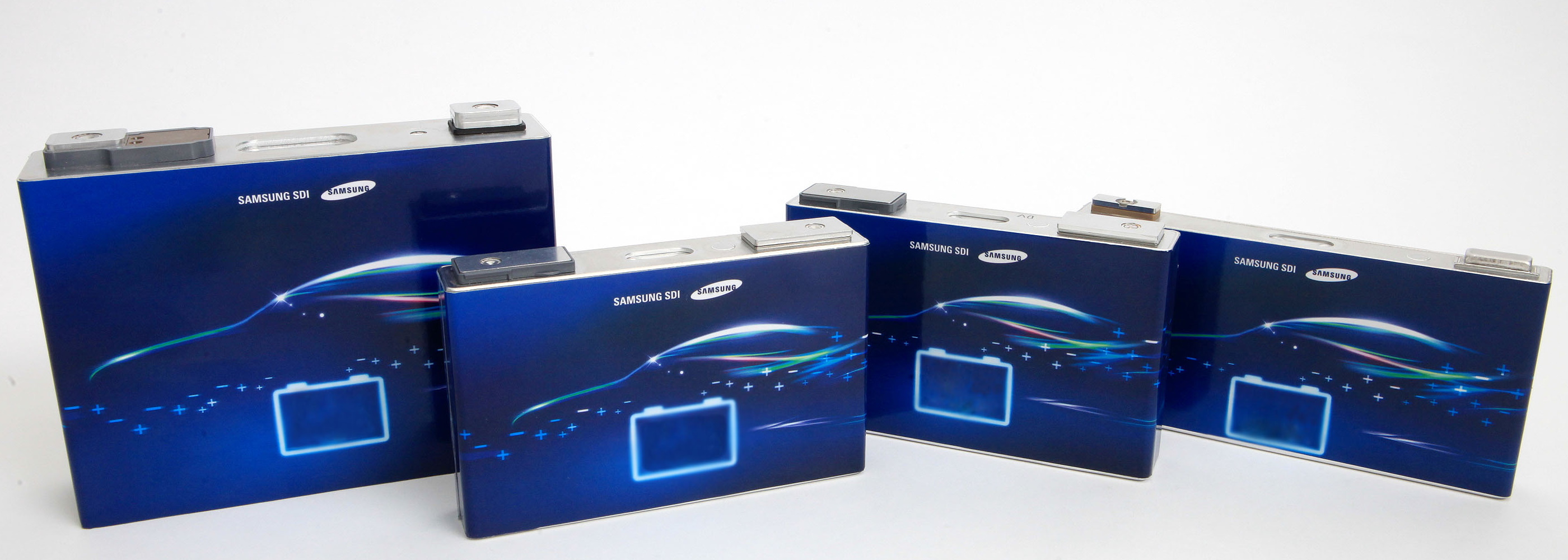
A common enclosure can also support different chemistries. In its December 2025 announcement of the first cells made at Salzgitter, PowerCo described its Unified Cell as a standardised prismatic architecture. Those first cells used NMC chemistry, with LFP planned to follow. The initial NMC version and planned LFP version illustrate how a common physical architecture can accommodate different electrode materials. PowerCo: first Salzgitter cells and Unified Cell architecture (2025)
Where BYD Blade cells fit
BYD's Blade design is a long, narrow prismatic cell design, classified within that family in Fraunhofer ISI's cell-format study. Fraunhofer ISI: lithium-ion cell formats (2022) In BYD's 2024 SEAL brochure, the manufacturer describes an array of thin, elongated cells using LFP cathode material. BYD Ireland: SEAL MY2024 brochure, Blade Battery
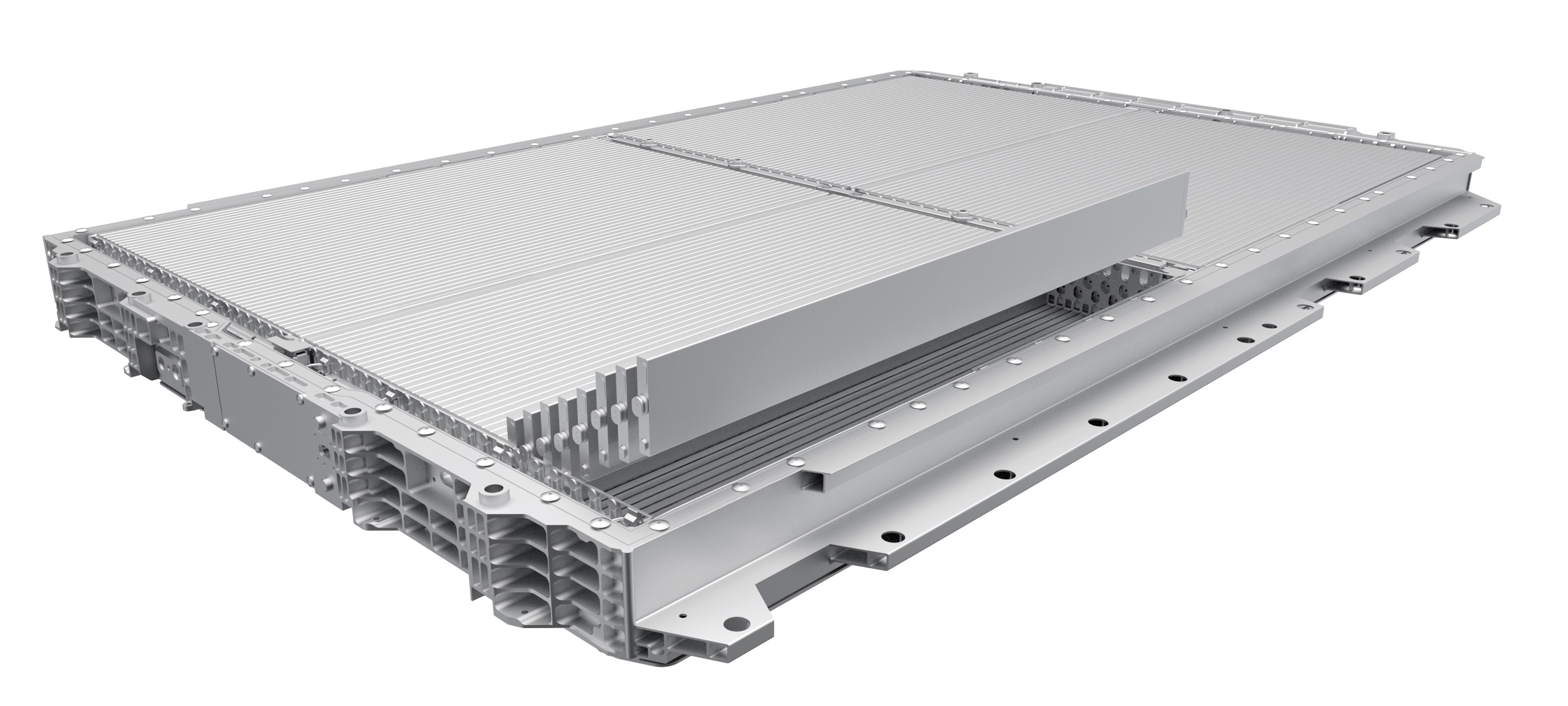
“Blade” identifies BYD's design and LFP its cathode material. Cell-to-pack and cell-to-body describe how cells are integrated into the battery or vehicle structure.
Pouch cells
A pouch cell encloses the electrode assembly in laminated film containing an aluminium barrier layer and polymer layers. US Department of Energy: Sustainable Manufacturing and Circular Economy report (2023) Without a rigid can, the cell relies more on the surrounding assembly for mechanical support and protection. Fraunhofer ISI: lithium-ion cell formats (2022) Its sealed edges and terminal leads also occupy space around the electrode assembly. LG Energy Solution: pouch-cell assembly (2023)
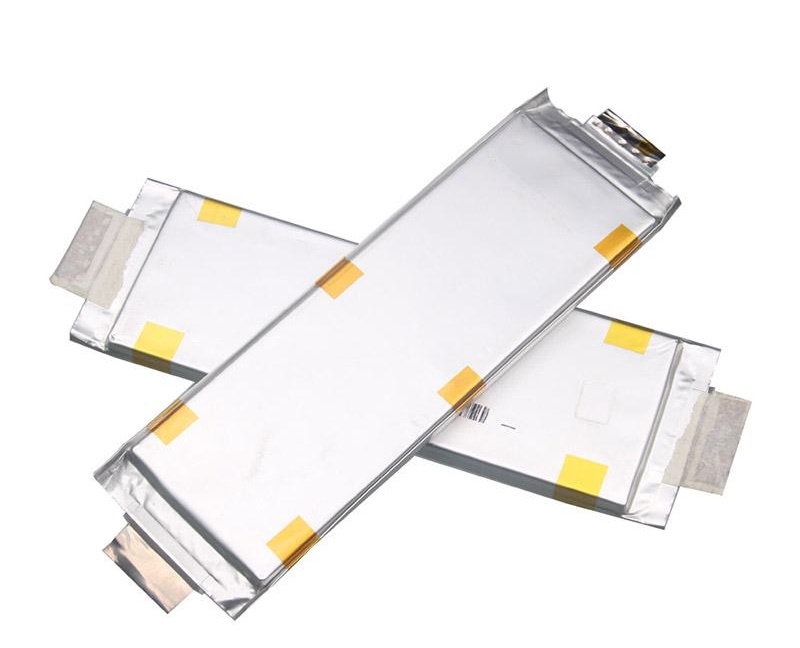
LG Energy Solution describes a pouch-cell process in which laminated electrode units are stacked, the leads are welded, and the assembly is inserted into a formed pouch. The cell is filled with electrolyte and sealed. A temporary gas pocket accommodates gas produced during formation; this gas is removed before final sealing. LG Energy Solution: pouch-cell assembly (2023)
Support, swelling and pressure
After formation gas has been removed, the cell still changes thickness during use. Electrodes change volume as the cell charges and discharges. Some thickness change is reversible with state of charge, while ageing can produce lasting expansion. The surrounding structure must accommodate these changes while maintaining the intended contact between layers and cooling surfaces.
External compression is one way to control that contact. The required pressure and how it changes as the cell expands are specific to the cell and its installation. More pressure is not automatically better. In experiments on commercial 60 Ah NMC622/graphite pouch cells, Michelini and colleagues found that the higher tested preload produced less lasting thickening but faster capacity loss. Those results support designing and validating a pressure range for the particular cell, rather than assigning one compression requirement to all pouch cells. Michelini et al.: pouch-cell swelling under varying preload (2023)
Cooling a flat cell
The broad faces of a pouch cell provide a large contact area for cooling. Heat nevertheless travels differently along the electrode layers and across them. Measurements by Lin and colleagues on a commercial 20 Ah LFP pouch cell at full charge gave thermal conductivities of about 26.6 W/(m·K) along the layers and 0.52 W/(m·K) through the stack: roughly a 50-fold difference. This directional behaviour helps explain why cell thickness, contact area and the location of cooling surfaces all matter. Lin et al.: directional thermal conductivity in pouch cells (2022)
Cooling through the tabs provides another route. In experiments on 5 Ah NMC pouch cells, Hunt and colleagues found that surface cooling created temperature differences between electrode layers, producing uneven current distribution. During cycling with 6C discharge and 2C charge, the surface-cooled cell lost usable capacity under load faster than the tab-cooled cell, although their low-rate capacity faded similarly. Each run used one cell per cooling arrangement, with comparable results reported from two runs on different battery cyclers. Hunt et al.: pouch-cell surface and tab cooling (2016) Vehicle coolant circuits and temperature control are covered in Battery Thermal Management.
What changes when cells get larger?
A larger cell can store more energy and reduce the number of separate cells needed for a given battery capacity. It also changes current collection, heat flow and the number of external connections.
More energy per cell versus higher density
In September 2024, Panasonic described its 4680 cell as having five times the capacity of its 2170 cell. Panasonic Energy: 4680 development and capacity comparison (2024) Using the nominal dimensions above, EVKX calculates a cylinder-volume ratio of (46² × 80) / (21² × 70), or about 5.5 times. The capacity increase therefore accompanies a substantial increase in cell size.
BMW's June 2026 iX5 announcement gives another example: cells 46 mm in diameter and 120 mm high, using the same chemistry as the 95 mm-high cells in the iX3. BMW attributed almost 30% more usable energy per cell to the increased height. BMW: iX5 announcement and cylindrical cell dimensions (2026) At equal diameter, the nominal volume increases by 120 / 95, or about 26%.
An energy-density comparison requires energy measured on the same basis, divided by the actual cell volume or mass. The nominal volume calculations above put the per-cell capacity claims in context.
Connections and voltage monitoring
Using fewer cells can reduce the number of external cell connections. The voltage-monitoring requirement follows the electrical arrangement, however. Cells connected directly in parallel share a voltage, so a battery-management system normally measures that parallel group as one series position.
Replacing several smaller parallel cells with one larger cell can therefore reduce the physical cell count without reducing the number of monitored voltages. In a TI E2E support-forum answer, Texas Instruments engineer Matt Sunna explains that the monitor treats directly connected parallel cells as one larger cell. TI E2E support-forum answer: monitoring parallel cell groups Temperature-sensor placement is a separate design decision.
Electrical, thermal and ionic paths
Increasing the dimensions of a cell can lengthen paths along its current-collector foils or from its interior to a cooling surface. Tab placement and cooling geometry address those electrical and thermal paths.
Lithium-ion transport occurs locally through the electrolyte-filled pores and separator, and within the active-material particles. Making a cell taller or wider does not by itself lengthen these paths. Electrode coating thickness, pore structure and particle dimensions govern them. A larger housing and a thicker coating are separate design choices; Cell Chemistry & Components explains the electrode trade-offs.
Cell-level protection
Rigid cylindrical and prismatic cases can incorporate pressure-relief vents. Some cylindrical designs also include a pressure-operated current-interrupt device (CID), which disconnects the electrical path, and a positive-temperature-coefficient (PTC) element, which increases resistance as it heats. Pouch designs can release gas through a seam in the heat-sealed enclosure. A study presented at NASA's 2021 battery workshop describes these mechanisms and tests cylindrical cells without PTC elements, showing why the fitted devices must be checked for the particular cell design. Chung et al., NASA battery workshop: cell safety devices (2021)
Comparing the three formats
| Format | Enclosure and assembly | Main integration considerations |
|---|---|---|
| Cylindrical | Rigid round can with wound electrodes | Spaces between cells, current-collection design, and cooling through sides or ends |
| Prismatic | Rigid rectangular case with flattened windings or stacked electrodes | Cell thickness, flat-face contact, expansion allowance, and terminal layout |
| Pouch | Flexible laminated enclosure around an electrode assembly | External support, protection of seals and leads, controlled pressure, and cooling contact |
Battery Pack & Configuration covers how cells are connected, cooled and supported in a vehicle battery; Battery Safety covers fault containment.
Sources
18
- US Department of Energy: Sustainable Manufacturing and Circular Economy report (2023) — cell enclosures and construction.
- Samsung SDI: cell assembly, winding and Z-stacking (2026) — winding and Z-stacking.
- Baazouzi et al.: cylindrical cell design and manufacturing (2023) — cell formats, dimensions and internal construction.
- Li et al.: cylindrical-cell tab design and cooling (2021) — cylindrical-cell current collection and cooling.
- PowerCo: first Salzgitter cells and Unified Cell architecture (2025) — December 2025 Unified Cell announcement.
- BYD Ireland: SEAL MY2024 brochure, Blade Battery — Blade cell shape and chemistry, printed page 16.
- LG Energy Solution: pouch-cell assembly (2023) — pouch-cell assembly and formation.
- Michelini et al.: pouch-cell swelling under varying preload (2023) — pouch-cell swelling and preload experiments.
- Lin et al.: directional thermal conductivity in pouch cells (2022) — directional heat conduction in pouch cells.
- Hunt et al.: pouch-cell surface and tab cooling (2016) — tab and surface cooling under controlled test conditions.
- Panasonic Energy: 4680 development and capacity comparison (2024) — 4680 capacity compared with 2170.
- BMW: iX5 announcement and cylindrical cell dimensions (2026) — 95 mm and 120 mm cylindrical cells.
- TI E2E support-forum answer: monitoring parallel cell groups — voltage monitoring of parallel cells.
- NIST: pore alignment, electrode thickness and ion transport (2021) — background research on electrode thickness and ion transport.
- Panasonic: 18650 cell dimensions (2012) — nominal 18650 dimensions.
- Panasonic: cylindrical cell size naming (2021) — cylindrical size labels and 2170 dimensions.
- Fraunhofer ISI: lithium-ion cell formats (2022) — Blade classification and pouch-cell support requirements.
- Chung et al., NASA battery workshop: cell safety devices (2021) — cell vents, current interruption and PTC devices.