
Car Seat Types and Seating Layouts
Seat labels describe a layout, not the complete structure or safety performance. Two vehicles can both advertise a three-seat bench or captain's chairs while differing greatly in cushion width, belt geometry, folding hardware, child-seat access, and adult comfort.
Read the seating plan first
Start with the homologated number and location of seating positions, then inspect how each position is built and restrained. A wide cushion is not necessarily a legal seating position, and a head restraint does not prove that a complete three-point belt, airbag coverage, or child-restraint anchorage is present.
UN Regulation No. 17 addresses seat and head-restraint strength, while UN Regulation No. 14 addresses safety-belt anchorages. These are system requirements: a seat frame, track, backrest, floor attachment, and any belt loads carried by the seat have to work together. UNECE — UN Regulations Nos. 14 and 17
The questions that matter are:
- Is each place an individual seat or part of a shared frame and cushion?
- Does the belt attach to the body, the seat, or both?
- Can the seat slide, recline, fold, tumble, swivel, or be removed?
- Which movements are permitted while driving?
- Where are the lower child-seat anchors and top-tether points?
- Does changing one position compromise another passenger, child restraint, or cargo barrier?
Front-seat designs
Comfort and sport seats
Most passenger EVs use two individual front seats. A comfort seat usually prioritizes a broad cushion, compliant padding, and a wide adjustment range. A sport seat typically adds deeper shoulder, torso, and thigh bolsters. The names are not standardized: the useful comparison is cushion geometry, adjustment range, restraint integration, and how the bolsters fit the occupant.

High fixed bolsters can improve lateral support but make entry harder and can wear at the outer edge. Integrated head restraints may reduce adjustment range. A one-piece performance shell can be light and rigid, but it may fit a narrower range of bodies than a conventional backrest.
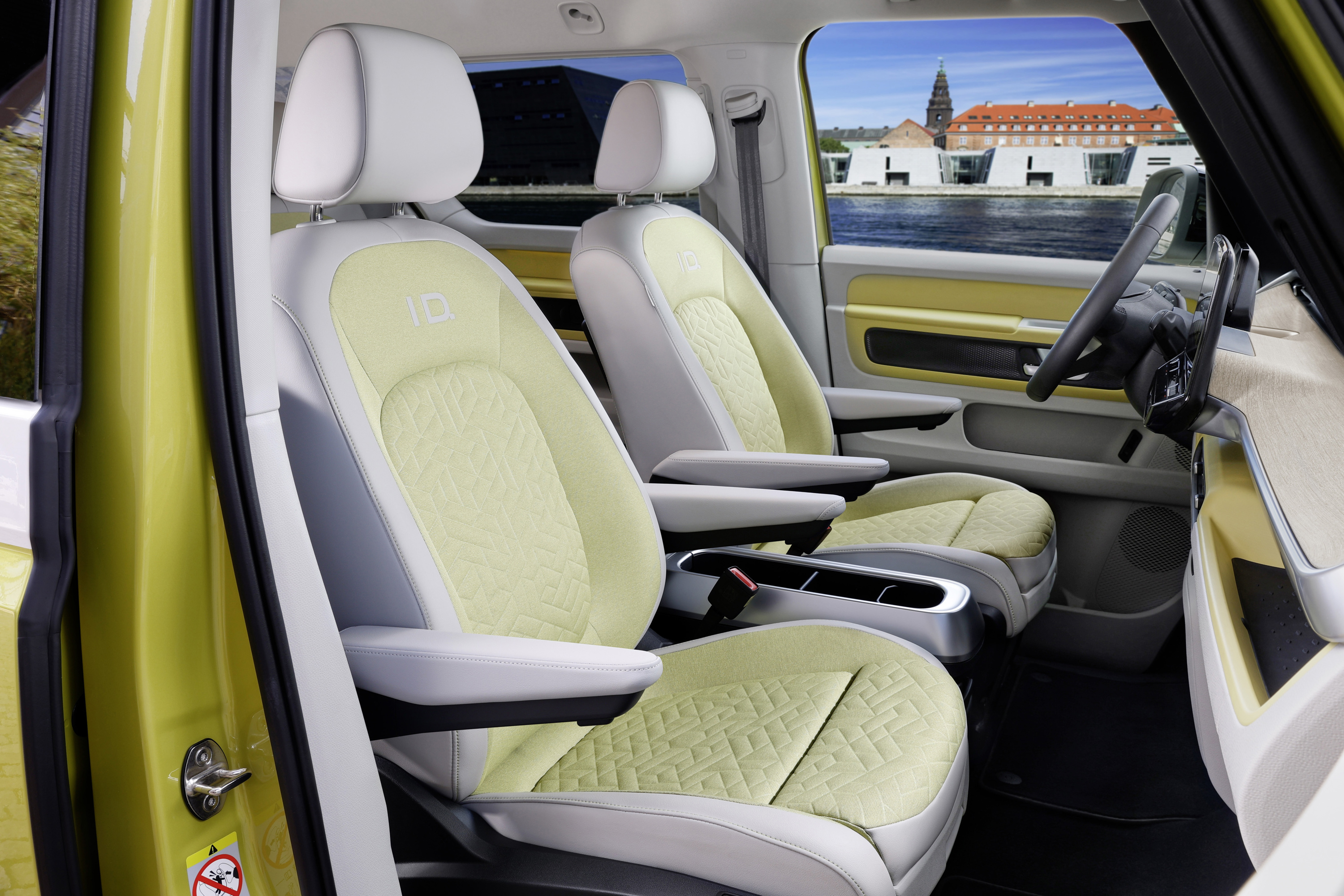
High-mounted captain's seats
Vans and MPVs often place the driver and front passenger higher, with individual armrests and a more upright posture. The extra height can improve outward visibility and access, but the seat must still provide a suitable pedal, wheel, belt, and airbag relationship.
A 1+2 front bench
A commercial-vehicle layout can combine one driver seat with a two-person passenger bench. It adds a third front position without lengthening the vehicle, but the center passenger may have less shoulder, knee, and foot space. Check the exact belt type, airbag coverage, storage intrusions, and whether the bench folds to expose storage.

Second-row layouts
Three-seat bench
A second-row bench is the most space-efficient way to provide three nominal positions. Its real versatility depends on the split:
- 60/40 usually lets one outer position fold separately from the other outer and center positions.
- 40/20/40 can preserve two outer seats while opening a long-load pass-through.
- Three separate sections can give each passenger an individual slide, recline, or fold function.
The split ratio does not reveal cushion width or whether three child restraints fit. Sculpted outer cushions, raised center tunnels, rigid buckles, armrests, and anchor spacing can make the middle position much less useful than the seat count suggests.
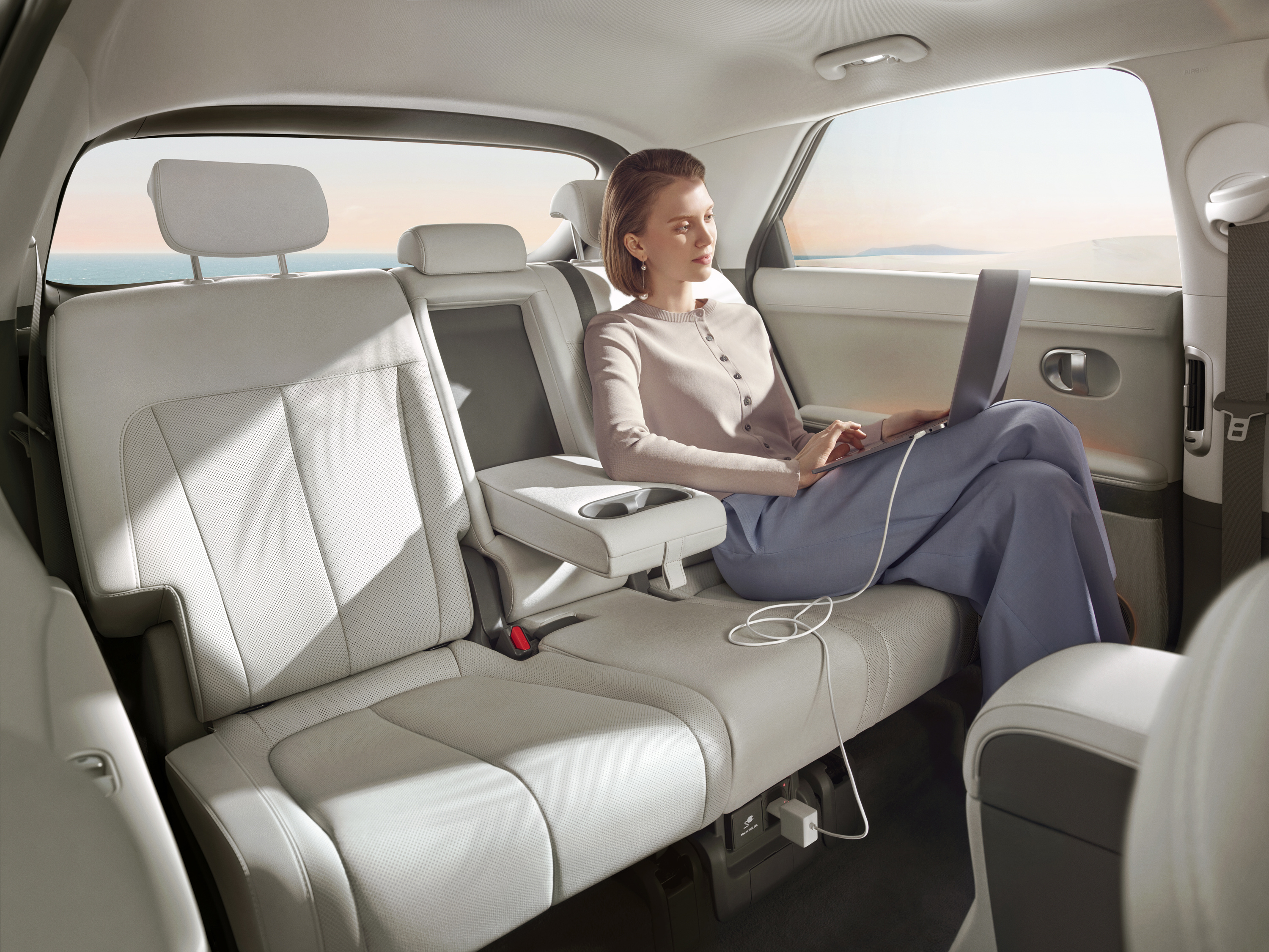
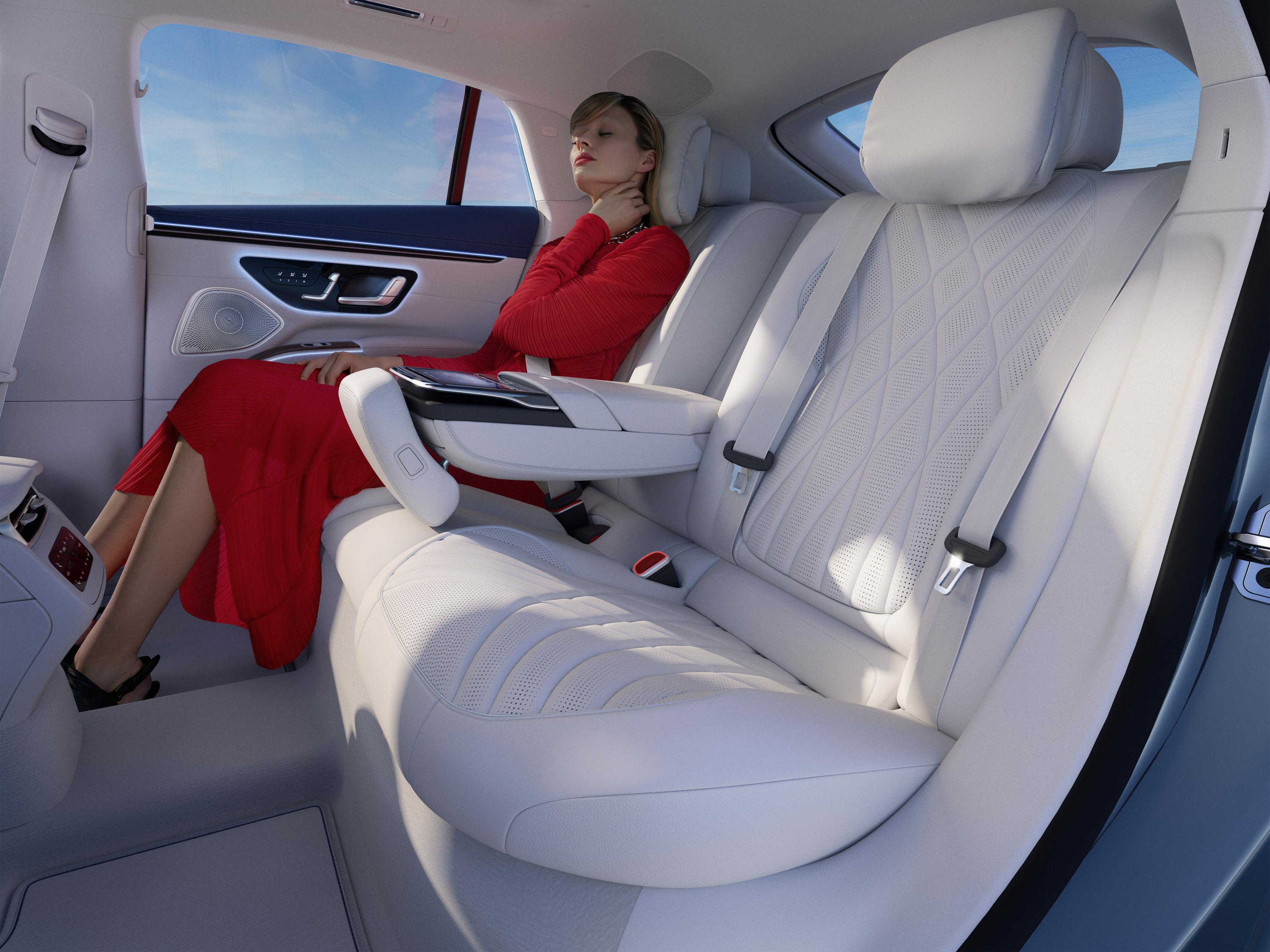
A sliding bench trades passenger space against cargo or third-row space. Check whether each section slides independently and whether a child restraint may remain installed while the seat moves or tilts; the vehicle and child-restraint manuals control.
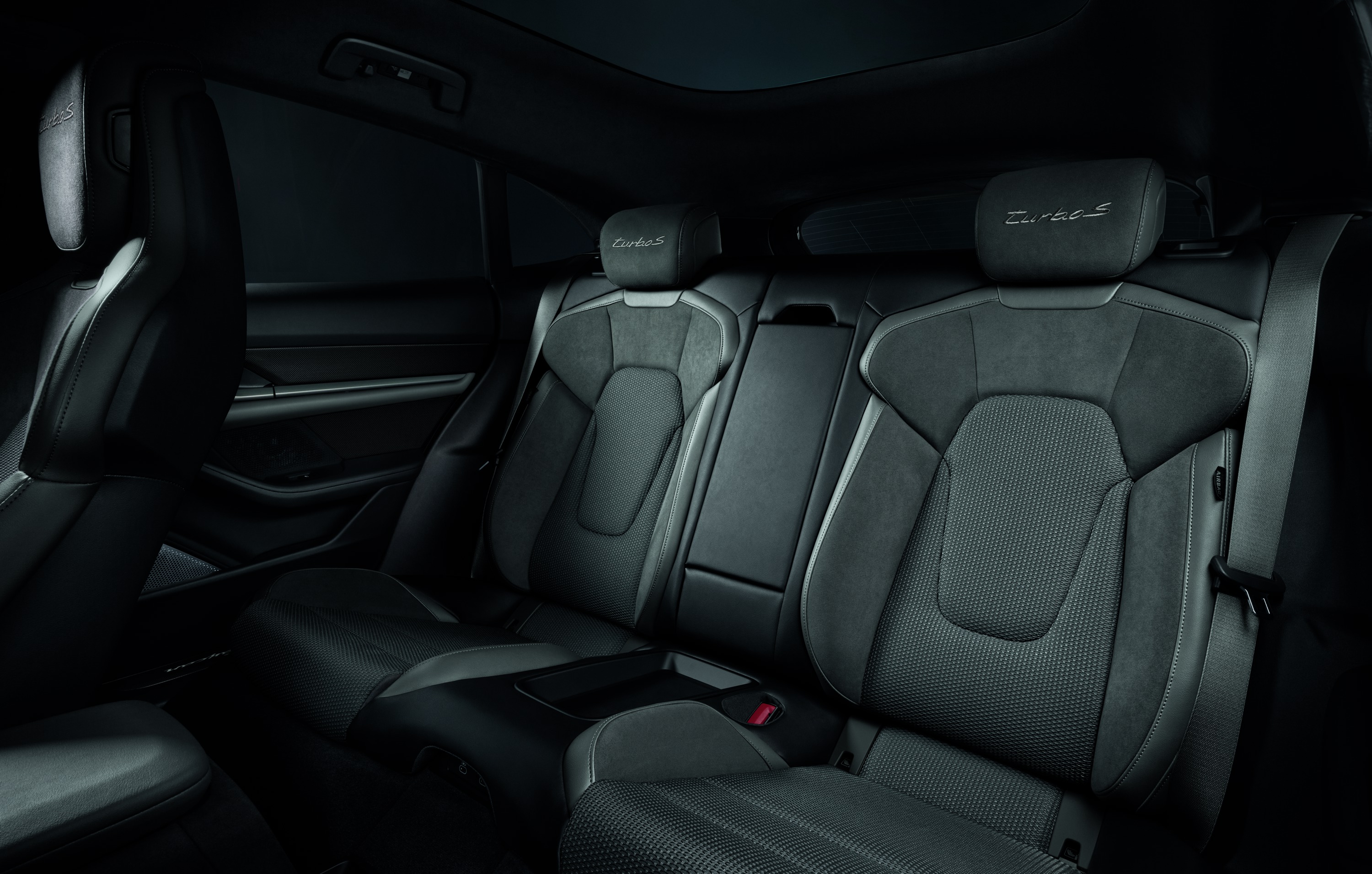
Two-seat rear bench
Some cars use two sculpted rear positions with a console or tray between them. Others offer a two-person bench as part of a narrow body or a trim-specific four-seat configuration. This can improve lateral support and storage but removes the flexibility of a center passenger.
Captain's chairs
Second-row captain's chairs are two separate seats, commonly with inboard armrests and an aisle or console between them. They can improve individual comfort and third-row access, but usually reduce maximum capacity by one compared with a three-seat bench.
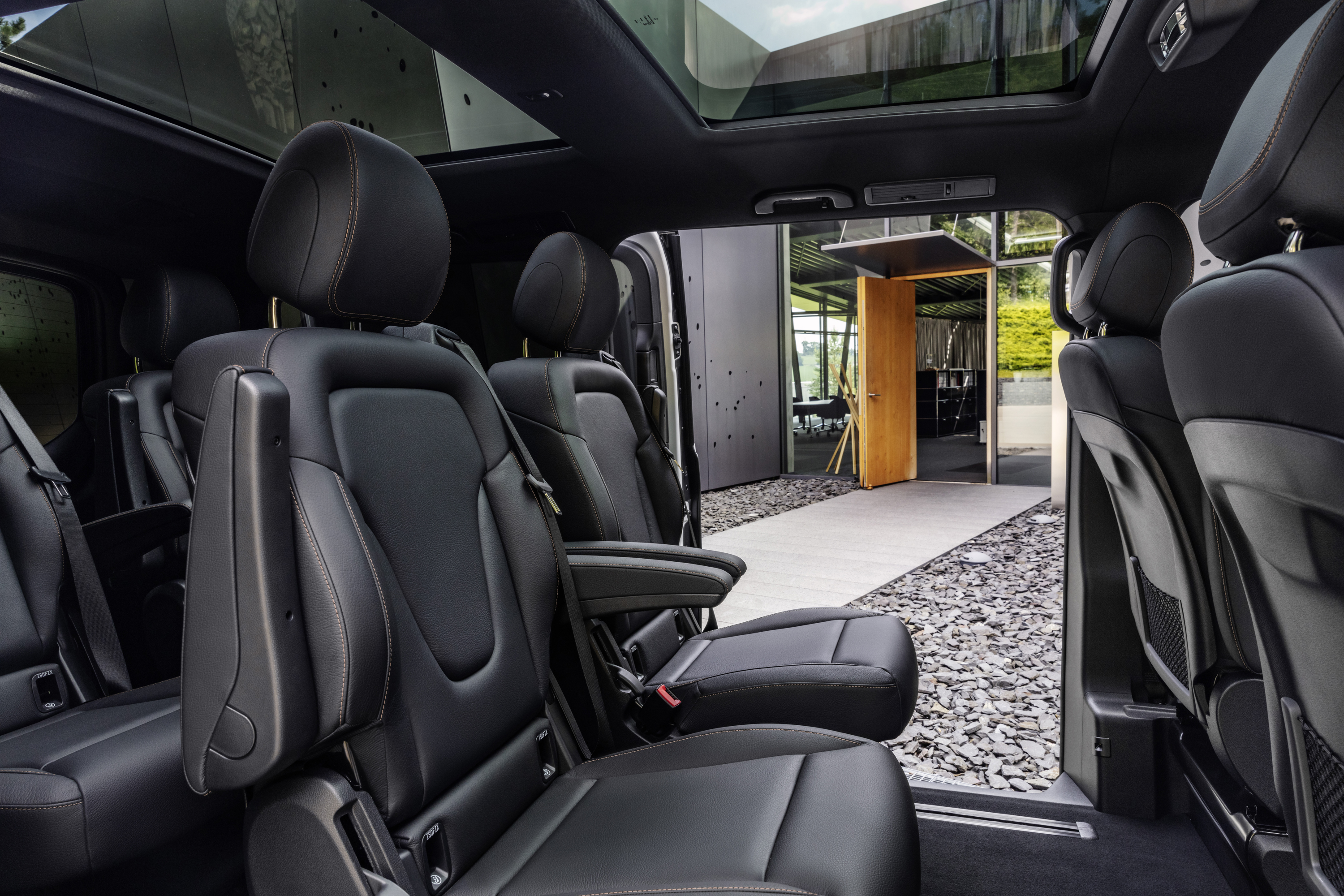
An aisle is not automatically usable: seat width, armrests, console height, child restraints, and the distance between the seats determine whether someone can pass through. A tilt-and-slide outer seat may provide a larger opening, but access can be blocked when a child restraint is installed.
Executive seating
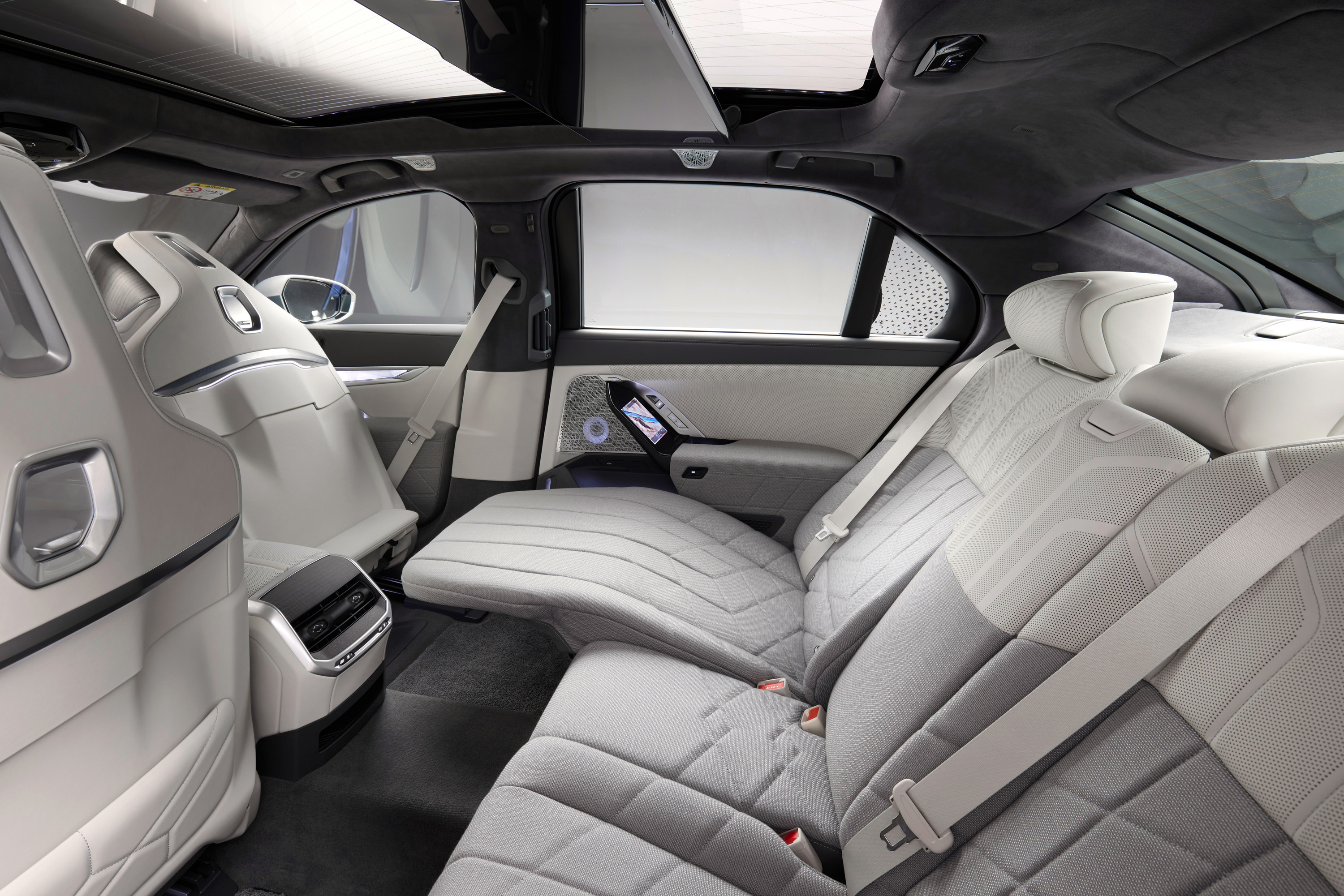
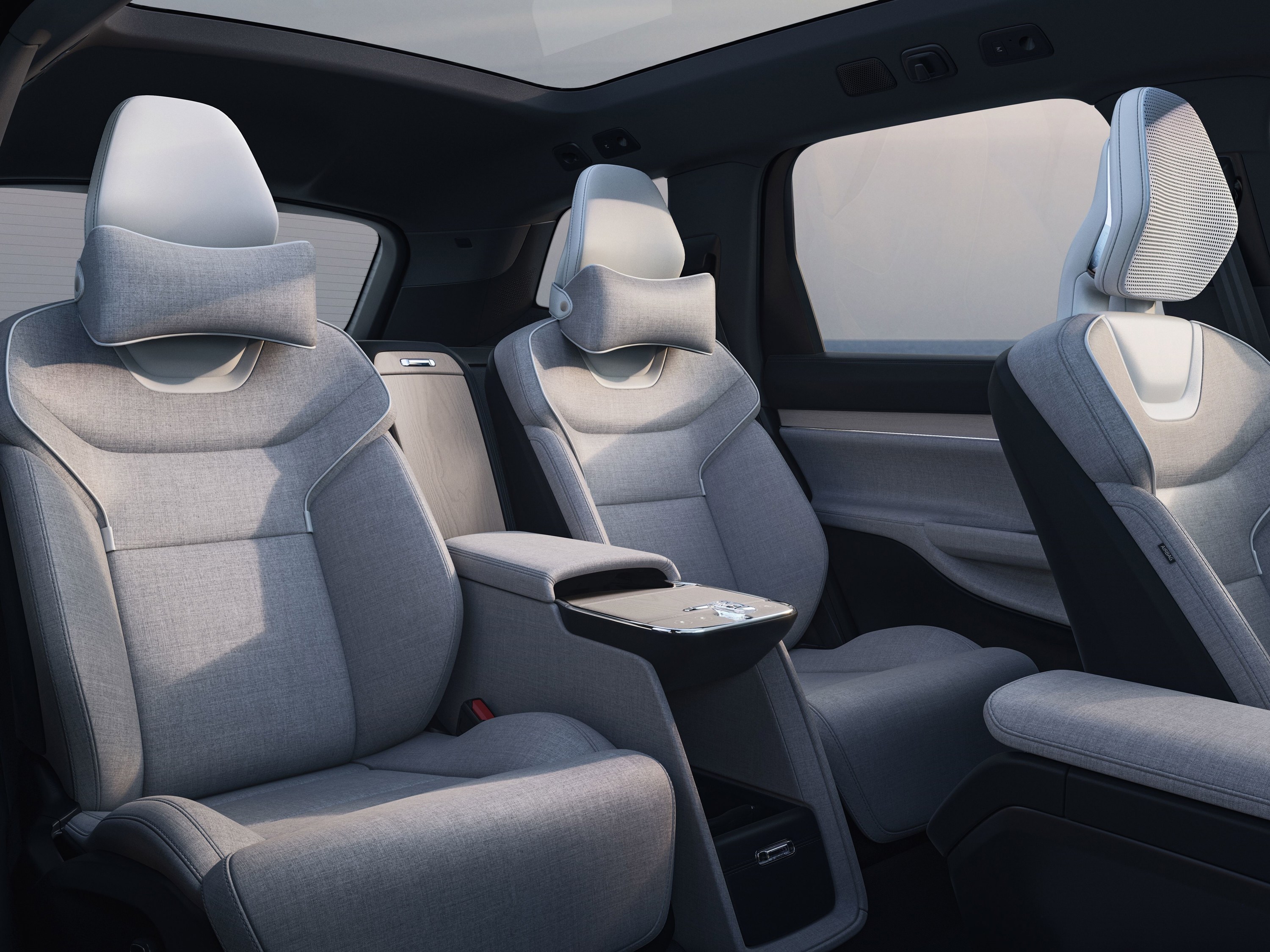
Executive seat is a marketing description rather than a regulated category. It commonly means a rear seat with extended slide and recline, a leg rest, powered controls, and additional climate or massage functions.
A vehicle may pair one highly adjustable executive position with a two-person bench:
Or it may use two large individual rear seats:

The maximum recline or leg-rest position should not be assumed safe for travel. Check the manual for permitted positions and return the seat to a normal belt-compatible posture whenever required.
Third-row seats
Most third rows fold into or against the cargo floor. A flat load surface is useful, but the packaging underneath can leave a low cushion and high foot position when the seat is occupied.
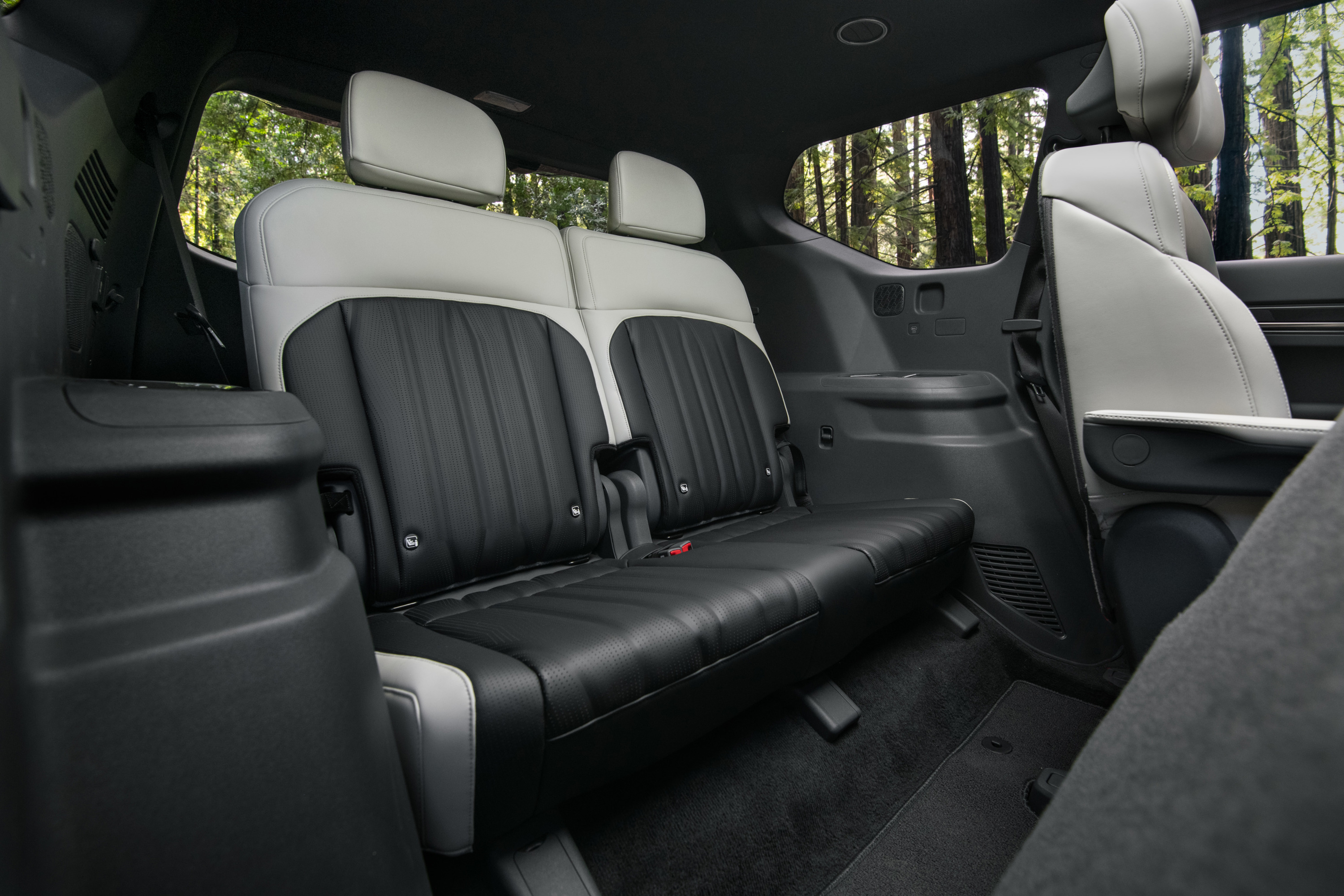
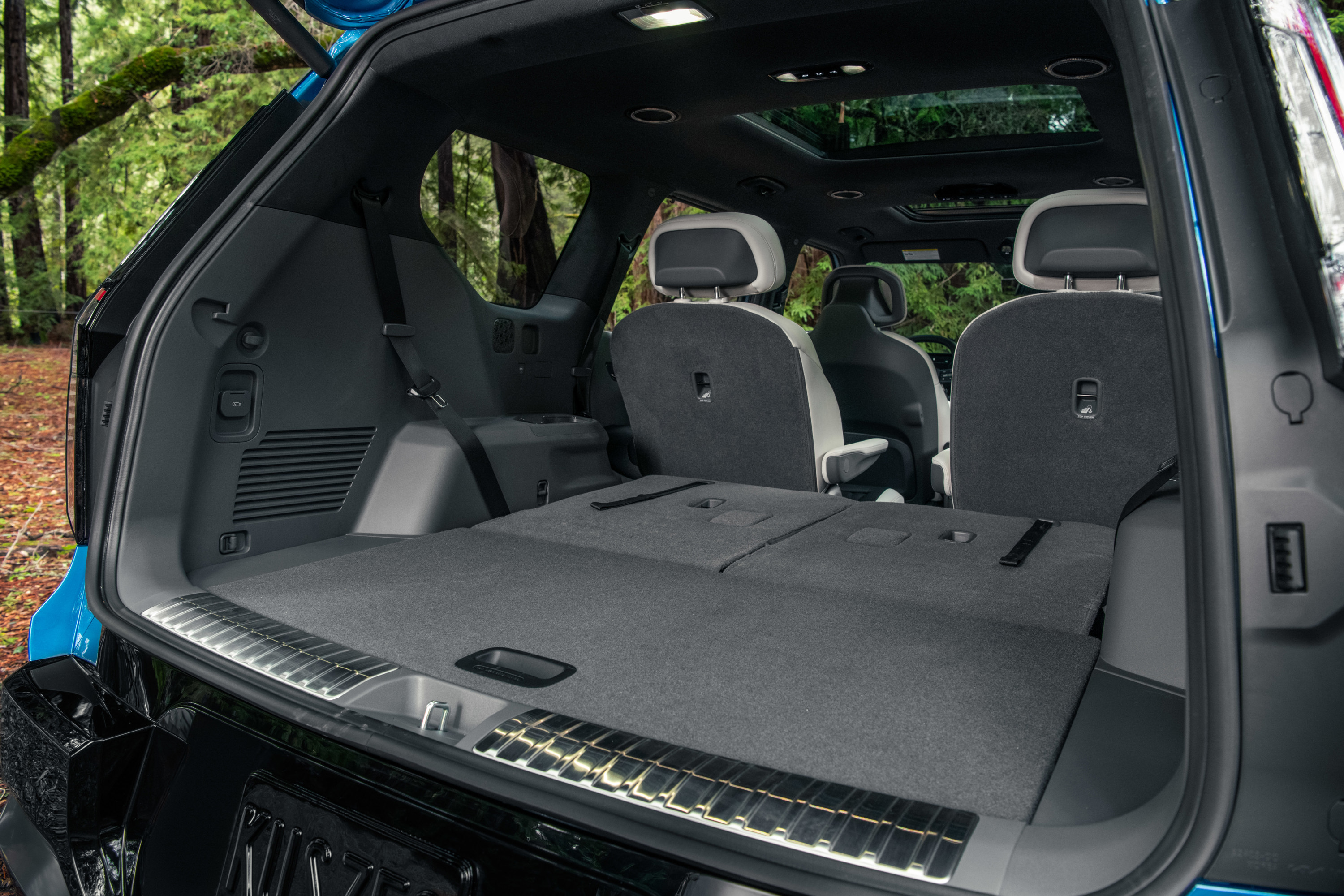
Evaluate a third row with the second row in a realistic position. Check:
- foot space under the second row and knee clearance;
- cushion height and thigh support;
- headroom with the head restraint correctly raised;
- the position of the shoulder belt and buckle;
- side-curtain airbag coverage and the exact crash-test result;
- top-tether or ISOFIX/i-Size availability;
- ventilation, charging ports, and a way to communicate with the driver;
- whether occupants can release and move the second row in an emergency;
- remaining cargo space and cargo restraint behind the occupied row.
Some large vans use individual seats in the third row as well as the second:
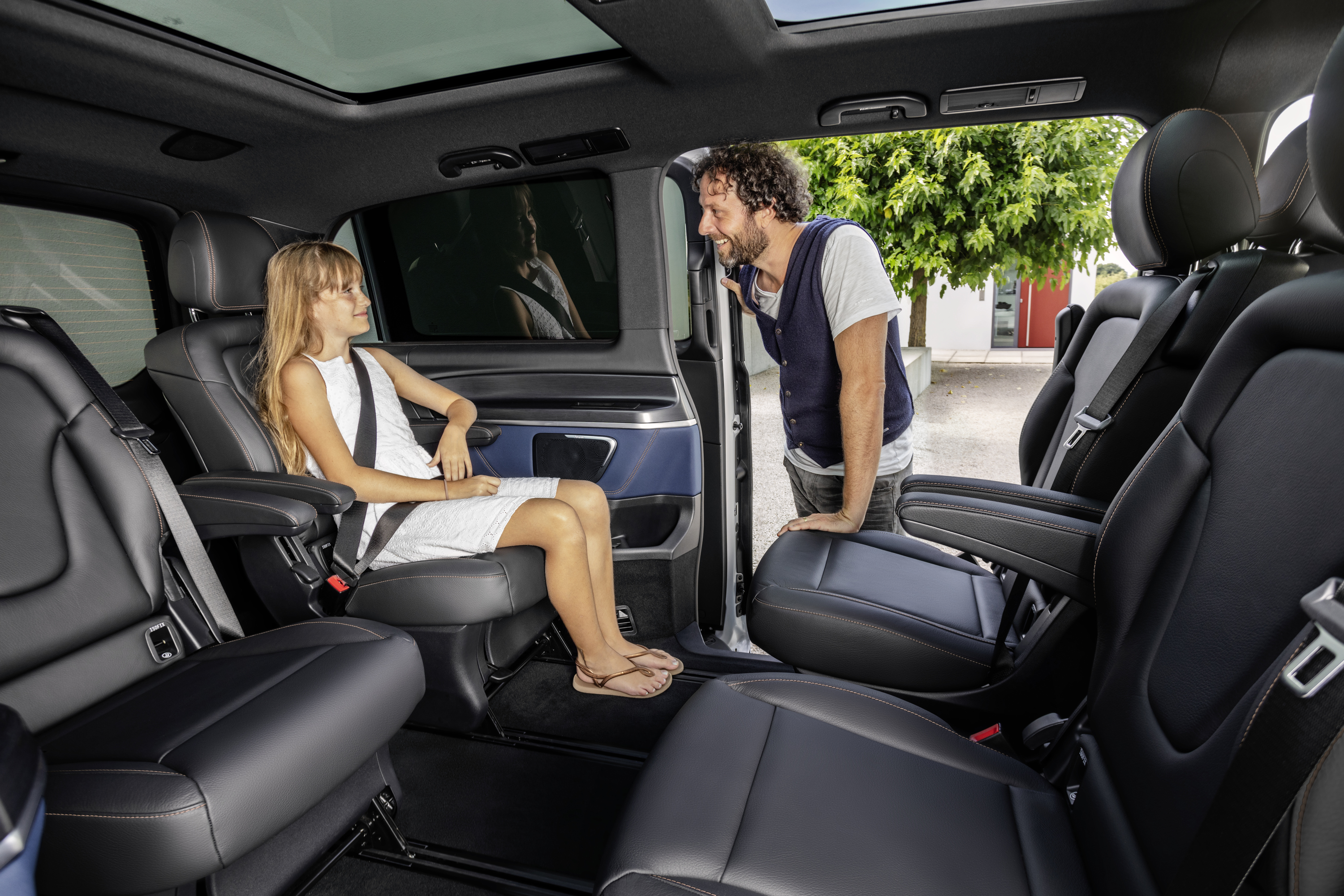
Removable seats add cargo flexibility, but their mass, electrical connectors, attachment indicators, storage, and refitting procedure matter. A seat that is not fully latched is a safety defect, not a minor rattle.
Child-restraint compatibility
ISOFIX, i-Size, and the North American LATCH system describe standardized attachment concepts, not a promise that every child restraint fits every position. UN Regulation No. 145 defines vehicle anchorage and i-Size seating-position requirements, while UN Regulation No. 129 covers enhanced child restraint systems. The manuals for the exact vehicle and restraint remain decisive. UNECE — UN Regulation No. 145: ISOFIX and i-Size vehicle anchorages UNECE — UN Regulation No. 129: Enhanced Child Restraint Systems
The hardware must also be usable. IIHS evaluates whether lower anchors are easy to find and connect to and whether top-tether anchors are accessible and distinguishable from other hardware. Deeply buried anchors can turn a nominally compatible position into a difficult daily installation. IIHS — LATCH ease-of-use evaluation
Before choosing a vehicle:
- Install the actual rear-facing, forward-facing, or booster seats you will use.
- Confirm permitted positions, support-leg zones, top-tether routing, and lower-anchor or belt limits in both manuals.
- Check that the front passenger can sit safely ahead of a rear-facing restraint.
- Verify whether three restraints fit without overlapping buckles or using anchors assigned to another position.
- Make sure a booster occupant can reach and buckle the belt independently and that the shoulder belt retracts freely.
- Confirm that third-row access still works with the installed restraints.
NHTSA notes that not all child restraints fit all vehicles and recommends testing the intended seat in the vehicle before purchase. Euro NCAP also evaluates child-restraint accommodation, installation, airbag labeling, and i-Size readiness as part of its vehicle assessment. NHTSA — Car seats and booster seats Euro NCAP — Child occupant protection and restraint accommodation
Choosing the right layout
A family that regularly carries three children may benefit more from a genuinely usable three-position bench than from two more luxurious captain's chairs. Adults using the third row may value an aisle, but a sliding bench can provide more flexible legroom. A four-seat executive layout prioritizes two rear occupants and sacrifices capacity and cargo adaptability.
Compare the worst routine case, not the best showroom configuration: every regular passenger seated, child restraints installed, mobility needs accommodated, and the cargo area loaded. Then continue to Seat Adjustment, Comfort Features, and Safety for the adjustment and comfort features that determine how well each position fits.
Return to Car Seats in EVs for the full seat guide.
Sources
- UNECE — UN Regulations Nos. 14 and 17
- UNECE — UN Regulation No. 145: ISOFIX and i-Size vehicle anchorages
- UNECE — UN Regulation No. 129: Enhanced Child Restraint Systems
- IIHS — LATCH ease-of-use evaluation
- NHTSA — Car seats and booster seats
- Euro NCAP — Child occupant protection and restraint accommodation