
EV charging connectors and inlets
The connector on a charging cable mates with the inlet on the car. Their contact layout determines how AC or DC power reaches the vehicle and which cable or adapter can connect them.
Connector, inlet and charge port
The connector and inlet together form a coupler. Drivers commonly call the vehicle inlet the charge port. On a charging station, a port is an output that can charge one vehicle at a time. SAE J3400/2 — Connectors and inlets for NACS US Joint Office of Energy and Transportation — Charging connectors and terminology
Power contacts carry the charging current; other contacts provide protective earth and connection or control signals. For the AC and DC power paths, see EV charging: how the system works. Charging protocols and services covers the communication, authorisation and payment services used around that physical connection.
Connector families
Type 1 and CCS Combo 1
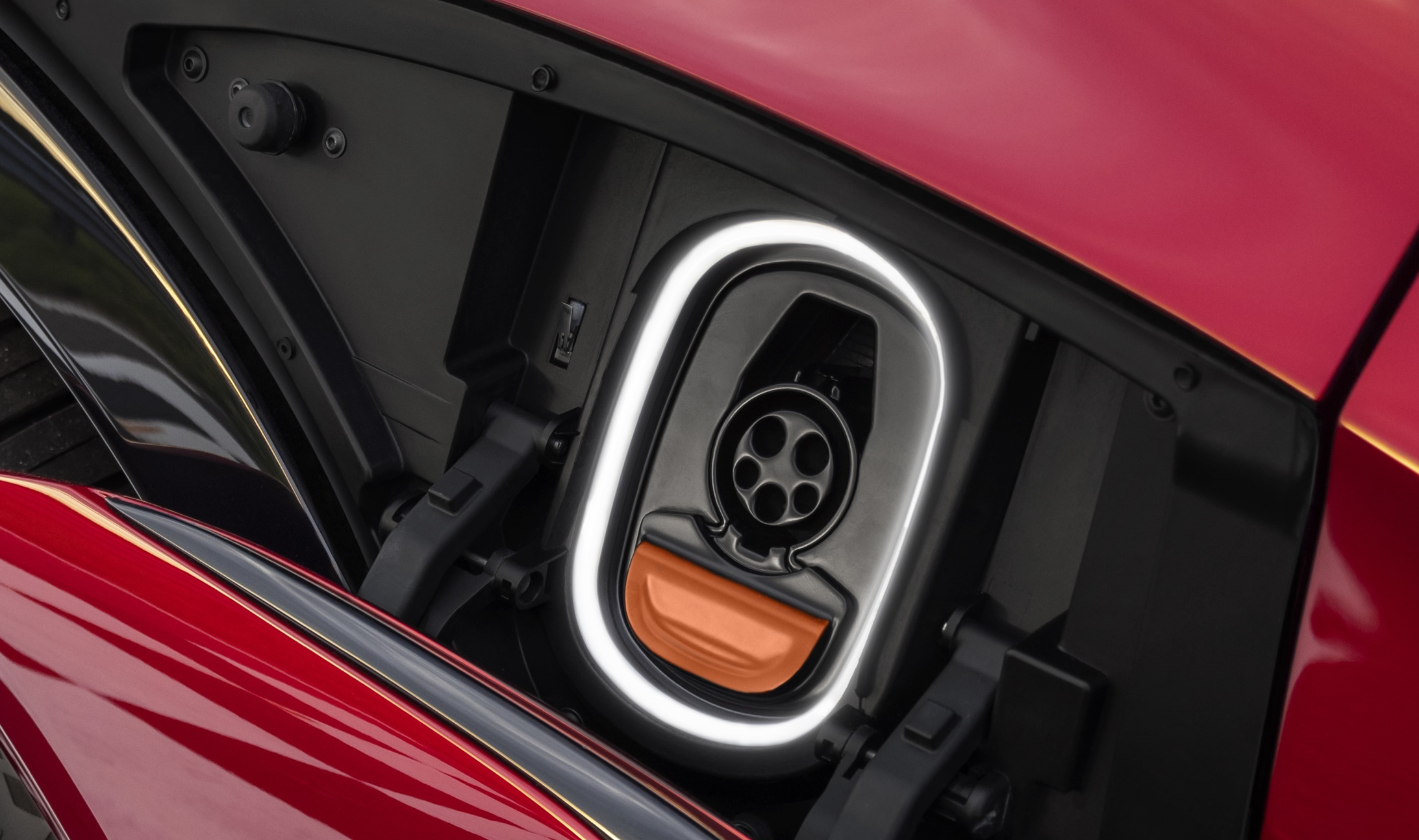
Type 1, commonly called J1772 in North America, supports single-phase AC charging. It has two power contacts, protective earth, a control pilot and a proximity circuit. SAE J1772 — North American conductive charge coupler (2024) US Joint Office of Energy and Transportation — Charging connectors and terminology
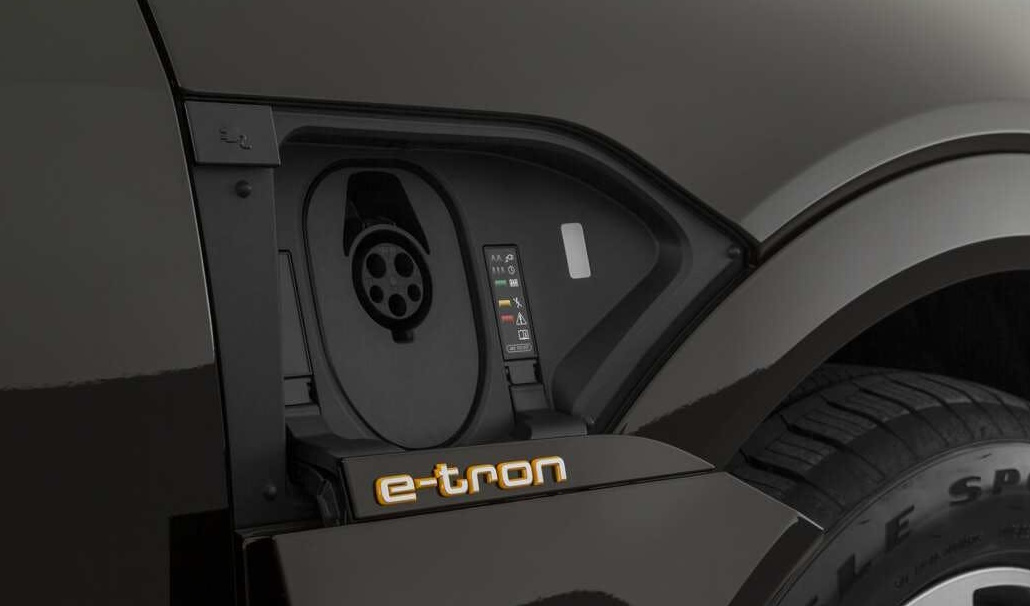
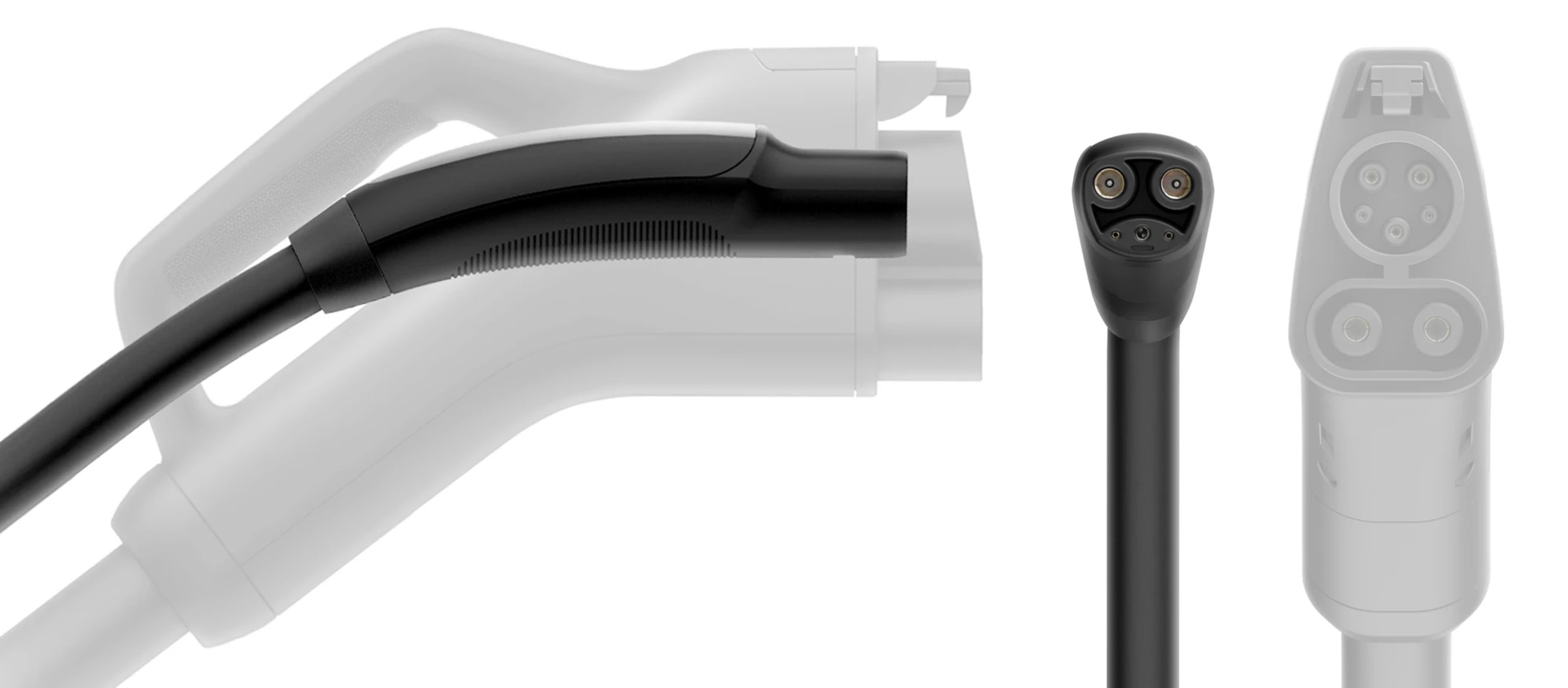
CCS Combo 1 adds two large DC contacts below the Type 1 section. A Type 1 AC connector fits the upper part of the combined inlet; a CCS1 connector uses the lower DC contacts together with the upper connection's earth and signalling contacts. This gives the vehicle AC and DC charging through one inlet. US Joint Office of Energy and Transportation — Charging connectors and terminology CharIN — Overview of charging connectors used worldwide
NACS and SAE J3400
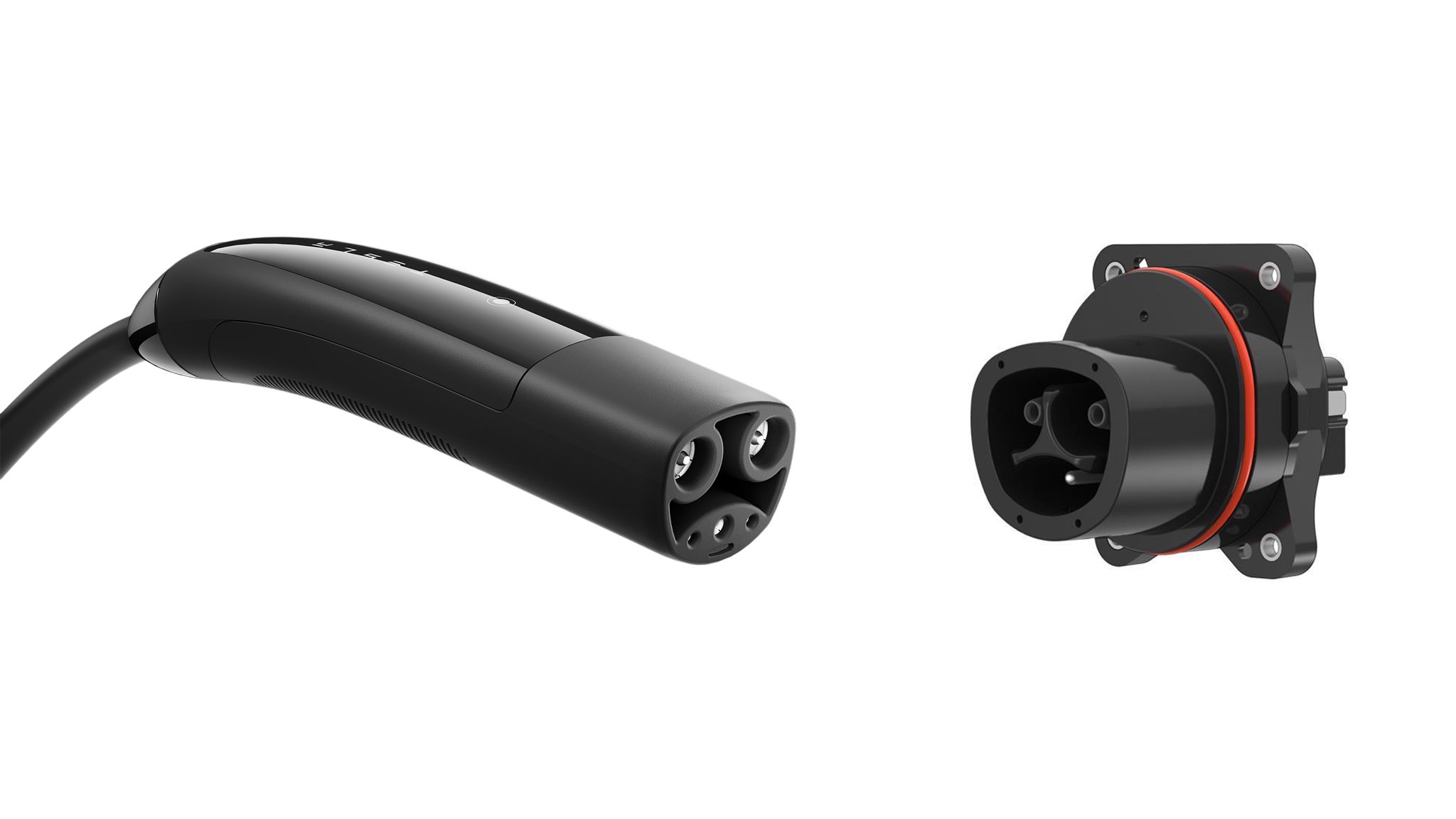
Tesla's NACS connector design is standardised through the SAE J3400 family. Its two power contacts carry either single-phase AC or DC. The main J3400 document covers the electrical and functional interface, while J3400/2 defines the dimensions of the connector and inlet. SAE J3400 — North American Charging System (2024) SAE J3400/2 — Connectors and inlets for NACS
Type 2
Type 2 supports single-phase and three-phase AC and is widely used in Europe. CharIN — Overview of charging connectors used worldwide
A Type 2 AC station can have an attached, tethered cable or a socket for a separate cable supplied by the driver. For cable choice and installation, see Home EV charging.
IEC 62196-2:2025 covers AC accessories rated up to 480 V AC, with current limits of 63 A for three-phase and 70 A for single-phase operation. These define the standard's scope; the vehicle's onboard charger and electrical supply determine the available AC charging power. IEC 62196-2:2025 — AC charging accessories
For EU Mode 3 AC infrastructure, the European Commission's AFIR guidance identifies Type 2 and references EN IEC 62196-2:2022 for light-duty recharging points installed or renovated from 8 January 2026. European Commission — AFIR questions and answers
CCS Combo 2
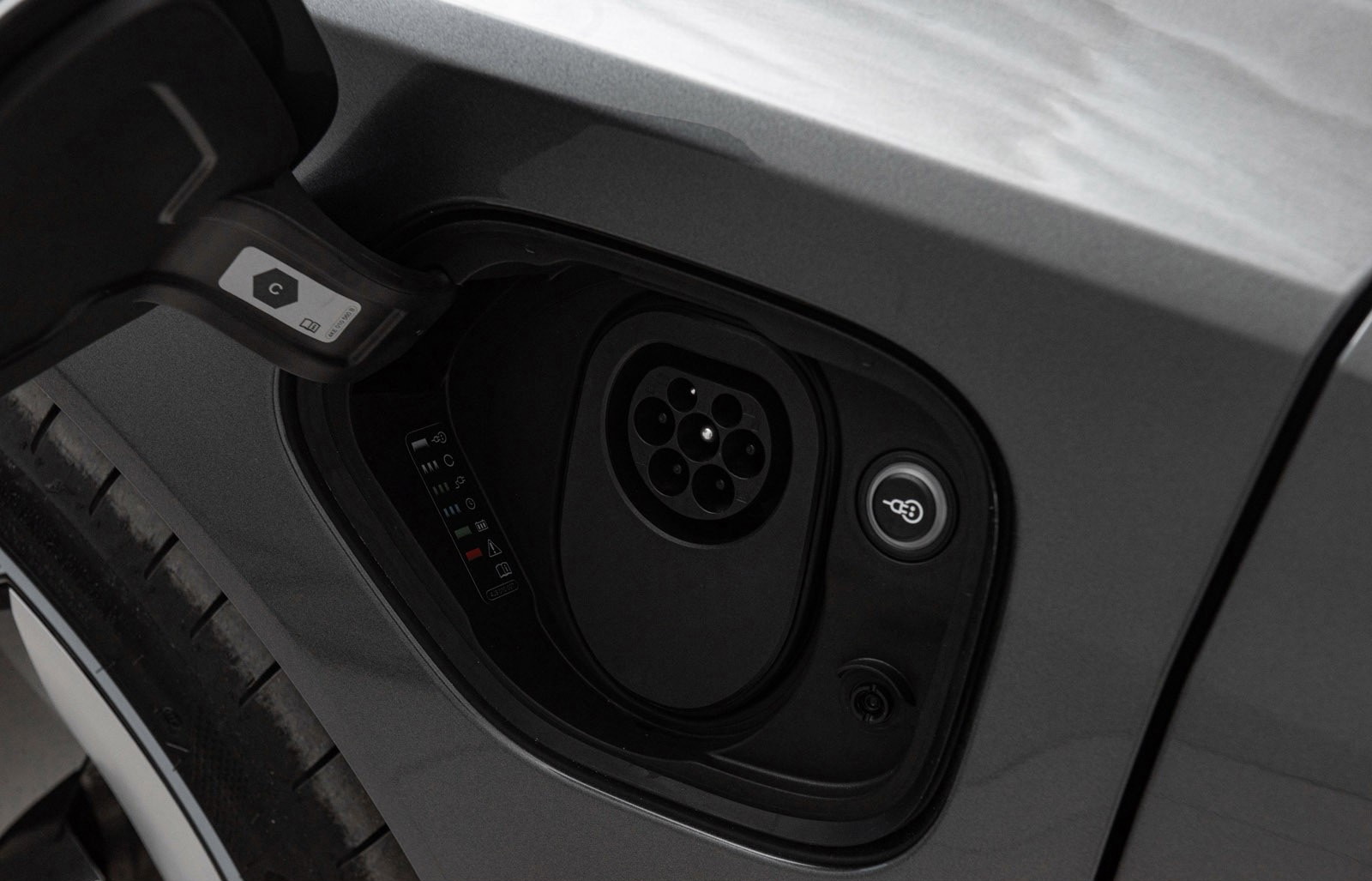
CCS Combo 2 combines the Type 2 inlet layout with two additional DC contacts below it. An AC Type 2 connector uses the upper section. During CCS2 DC charging, the lower contacts carry the charging current, while protective earth and signalling use contacts in the upper section. Type 2 and CCS2 form the main AC/DC connector pairing in Europe. CharIN — Overview of charging connectors used worldwide Phoenix Contact — CCS Type 2 inlet installation notes
CHAdeMO
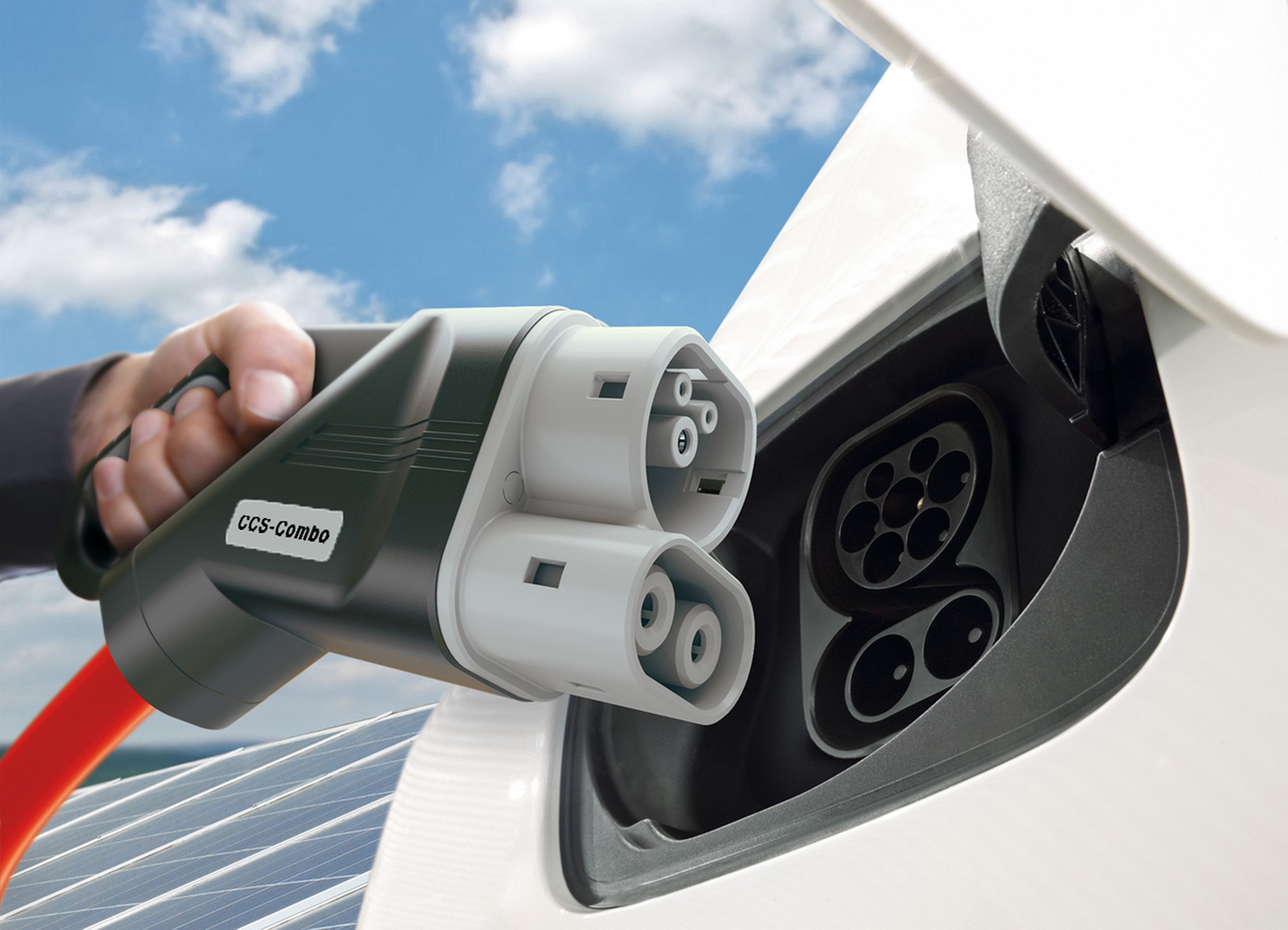
CHAdeMO is a DC interface found on Japanese EVs and exported models, often alongside a separate AC inlet. Its established vehicle-to-charger communication uses CAN. CHAdeMO Association — CHAdeMO 2.1 release
In May 2026, the CHAdeMO Association released protocol 2.1, specifying up to 800 A and 800 kW using the existing CHAdeMO connector configuration. Installed stations and vehicles charge at their own ratings, which can be far below those protocol limits. CHAdeMO Association — CHAdeMO 2.1 release
GB/T and ChaoJi
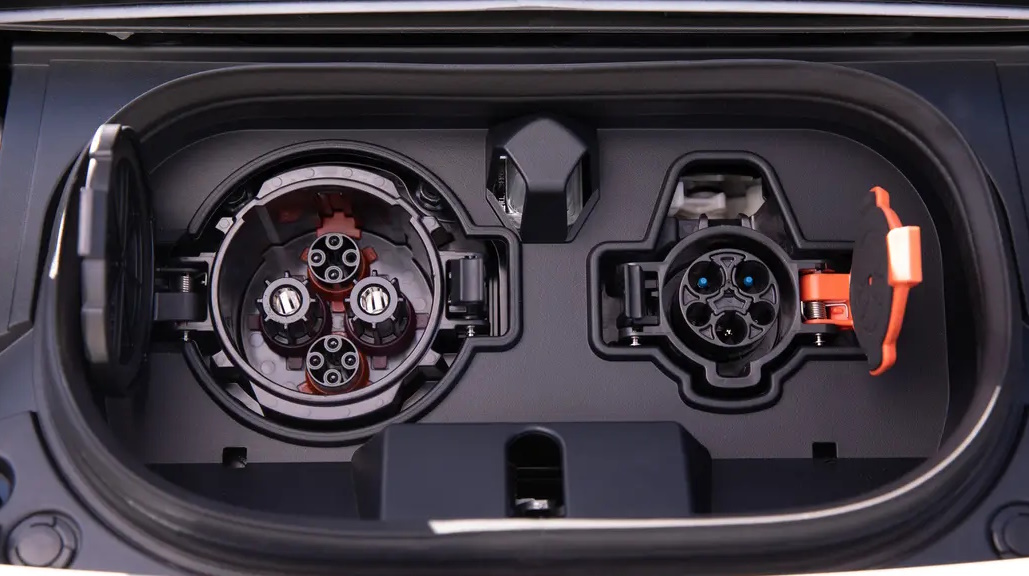
China's GB/T system has separate AC and DC couplers: GB/T 20234.2 covers the AC interface, while GB/T 20234.3 covers the established DC interface. GB/T 20234.2-2015 — AC charging coupler China MIIT — 2023 GB/T conductive-charging connector standards
GB/T 20234.3-2023 updated the established DC interface while retaining compatibility with the previous connector design. China's Ministry of Industry and Information Technology says the update raised the maximum charging current from 250 A to 800 A and added requirements for active cooling and temperature monitoring. China MIIT — 2023 GB/T conductive-charging connector standards
GB/T 20234.4-2023 defines the high-power DC coupler used by ChaoJi-1. ChaoJi-1 and ChaoJi-2 share the new coupler design but use GB/T and CHAdeMO communication protocols respectively. GB/T 20234.4-2023 — High-power DC charging coupler CHAdeMO Association — ChaoJi GB/T standards release (2023)
ChaoJi's design objectives include enabling vehicles with the new inlet to use existing GB/T and CHAdeMO chargers through adapters. In its 2023 standards announcement, the CHAdeMO Association described adapter interoperability and safety requirements as still under discussion at the IEC. CHAdeMO Association — ChaoJi high-power charging CHAdeMO Association — ChaoJi GB/T standards release (2023)
Cable current, cooling and charging power
A connector's current rating belongs to a particular cable assembly and operating conditions. Continuous and temporary boost ratings can differ. For example, Phoenix Contact's liquid-cooled CCS2 cable 1087136 is rated at 500 A continuously and up to 700 A in boost operation, with the boost rating dependent on ambient conditions. Its documentation also specifies temperature monitoring and current reduction at higher ambient temperatures. Phoenix Contact — Liquid-cooled CCS2 cable 1087136
At that cable's 500 A continuous rating, it can carry 200 kW at 400 V or 400 kW at 800 V, before losses. Whether a session reaches either figure depends on the station and vehicle. DC fast charging explains station output, power sharing and how to compare energy added and elapsed time.
Choosing a compatible adapter
Identify the station connector, the vehicle inlet and whether the intended connection is AC or DC. An adapter must support that specific combination and be approved for use with the vehicle and charging network.
Porsche's US NACS DC adapter connects a NACS DC charging cable to a CCS1 vehicle inlet. Porsche explicitly excludes AC use, including home and Destination Chargers with NACS connectors. The NACS interface uses the same two power contacts for AC and DC, but this adapter routes DC to the CCS1 inlet's dedicated DC contacts. SAE J3400 — North American Charging System (2024) Porsche — NACS DC adapter guidance (United States)
SAE J3400/1 is an information report describing a process for evaluating adapter suitability for NACS couplers. Its April 2025 edition covers adapters between SAE J3400 and SAE J1772. SAE J3400/1 — Charging-adapter safety and OEM-qualified designation
In North America, select Tesla Supercharger sites support other manufacturers' NACS-equipped vehicles and CCS1 vehicles using NACS DC adapters. Tesla requires those adapters to be supplied by Tesla or the vehicle manufacturer and prohibits third-party adapters. Check the exact vehicle and site's compatibility in Tesla's app or map. Tesla — Supercharging other EVs (North America)
Follow the instructions for the exact adapter. Rivian's NACS DC adapter guide requires inspection for damage before use and prohibits extension cords or cable extenders with that adapter. Rivian — NACS DC adapter guide (March 2025)
Port placement and cable reach
Port position affects how the car must be parked and whether the cable reaches without stretching. Tesla says differing inlet positions can require cable sharing between adjacent stalls at many Supercharger sites. Check the actual site layout, particularly when towing or using a short tethered cable. Tesla — Supercharging other EVs (North America)
Rear corner
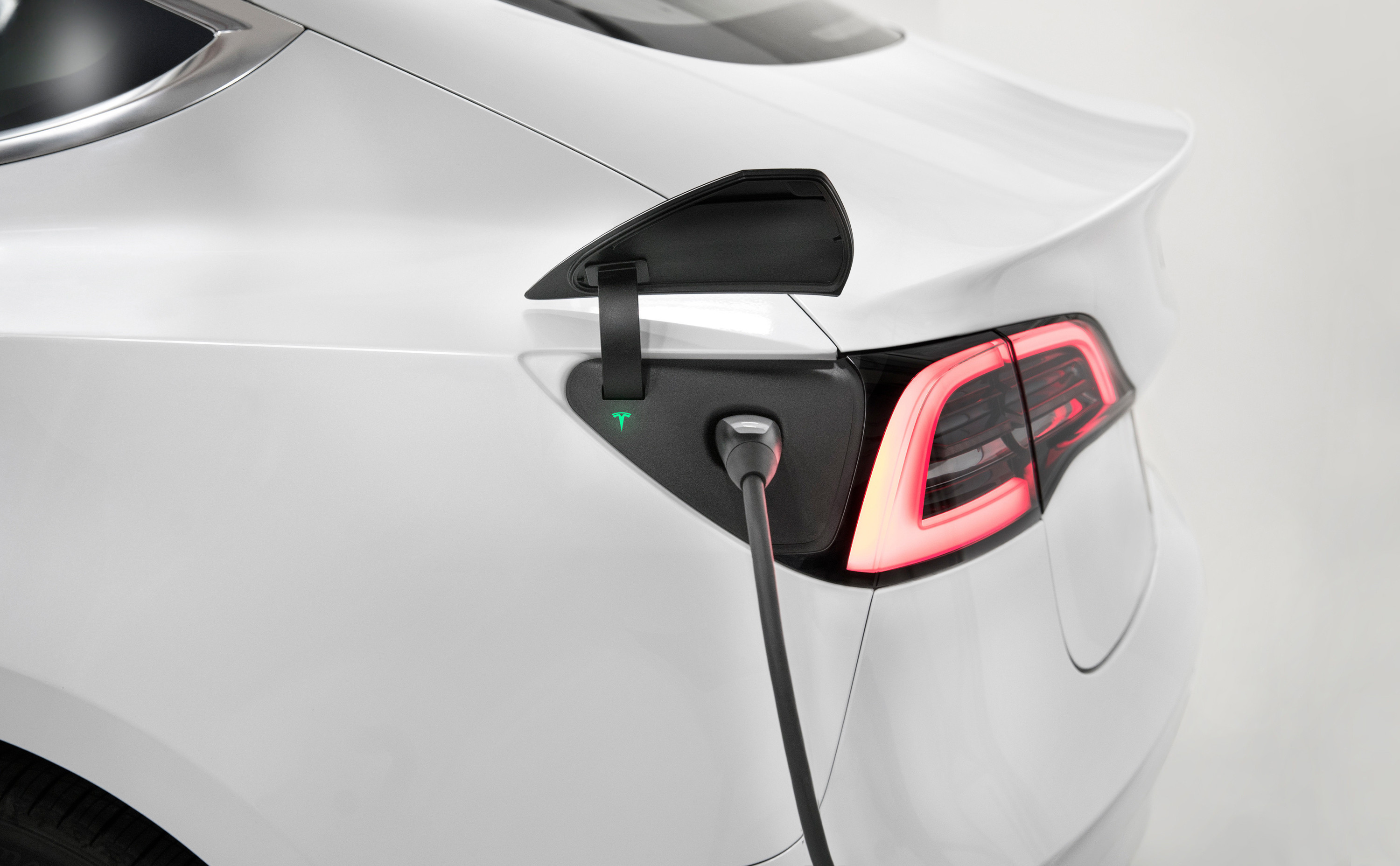
With a rear-corner inlet, reversing towards a post behind the parking space brings the inlet close to the cable. If the site requires nose-in parking with the post at the far end of the space, the cable must reach farther along the vehicle to the rear inlet.
Front side
A front-side inlet can be approached from beside the vehicle or from a post ahead of it. The side carrying the inlet determines whether a cable must reach across the front of the car.
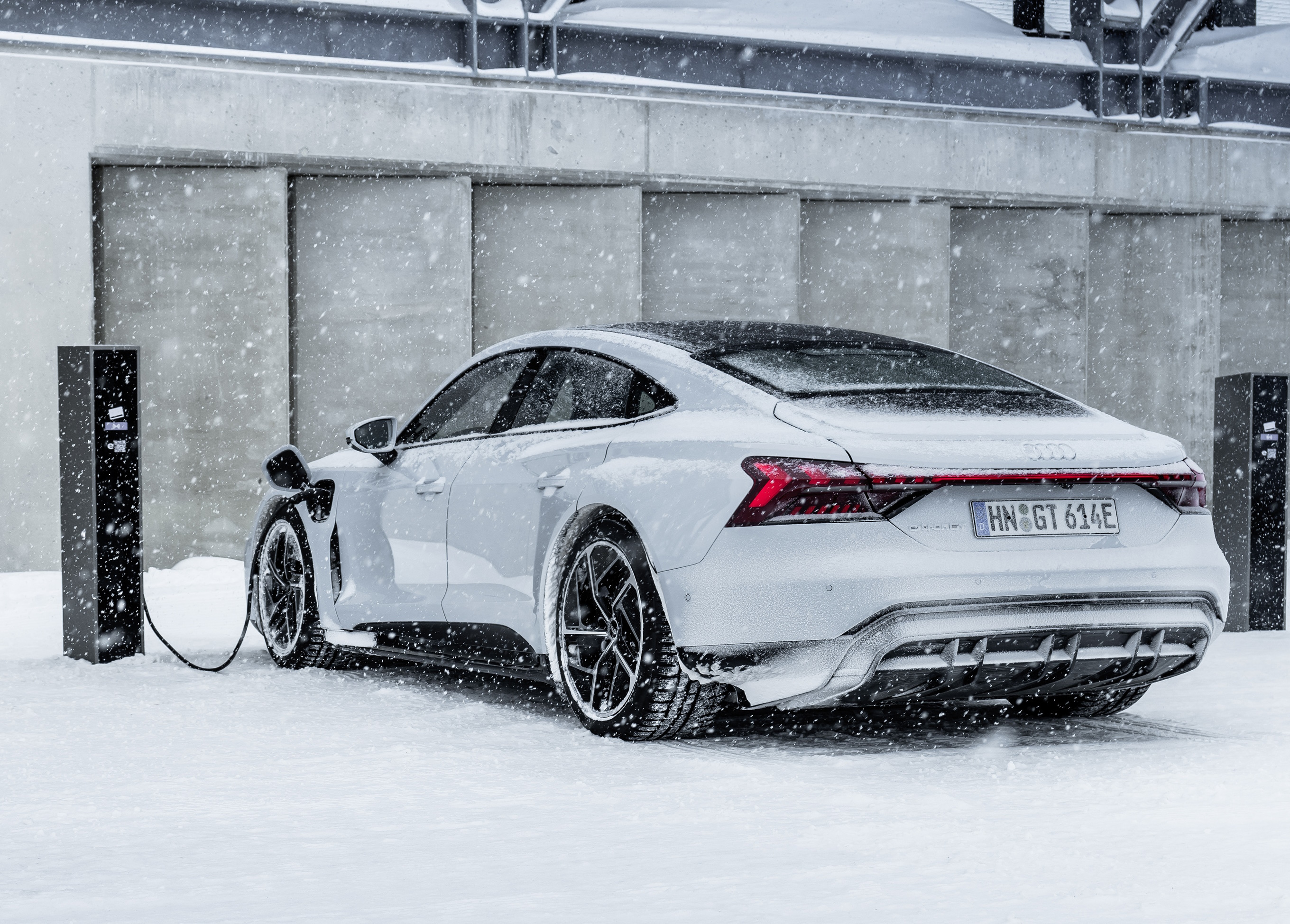
Rear side
For a rear-side inlet, check the distance from the charging post to the rear quarter of the car. At home, assess that distance in the parking position you normally use.

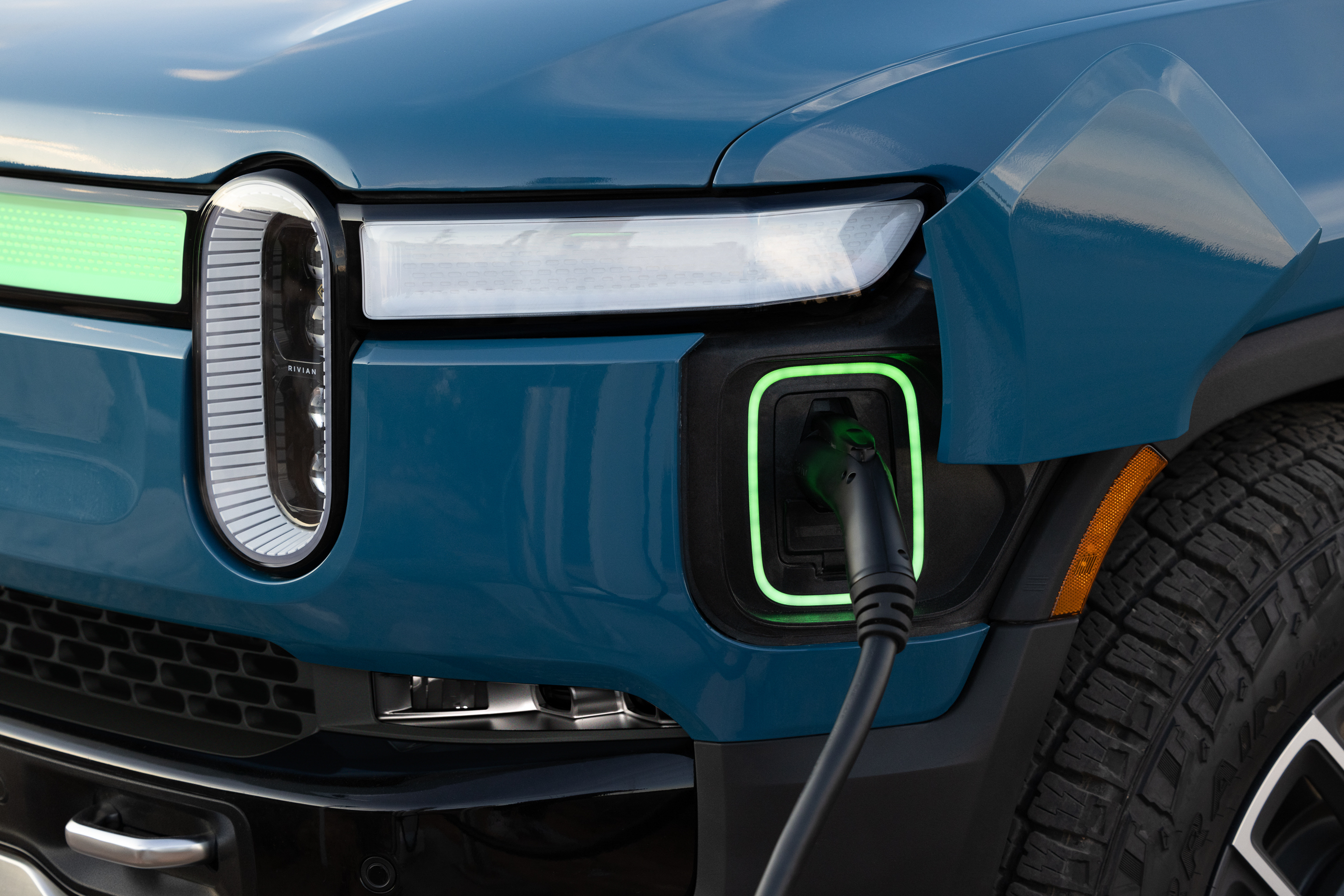
Front corner
A front-corner inlet places the connection ahead of an attached trailer. Charging without unhitching still requires a space that accommodates the full vehicle-and-trailer combination.
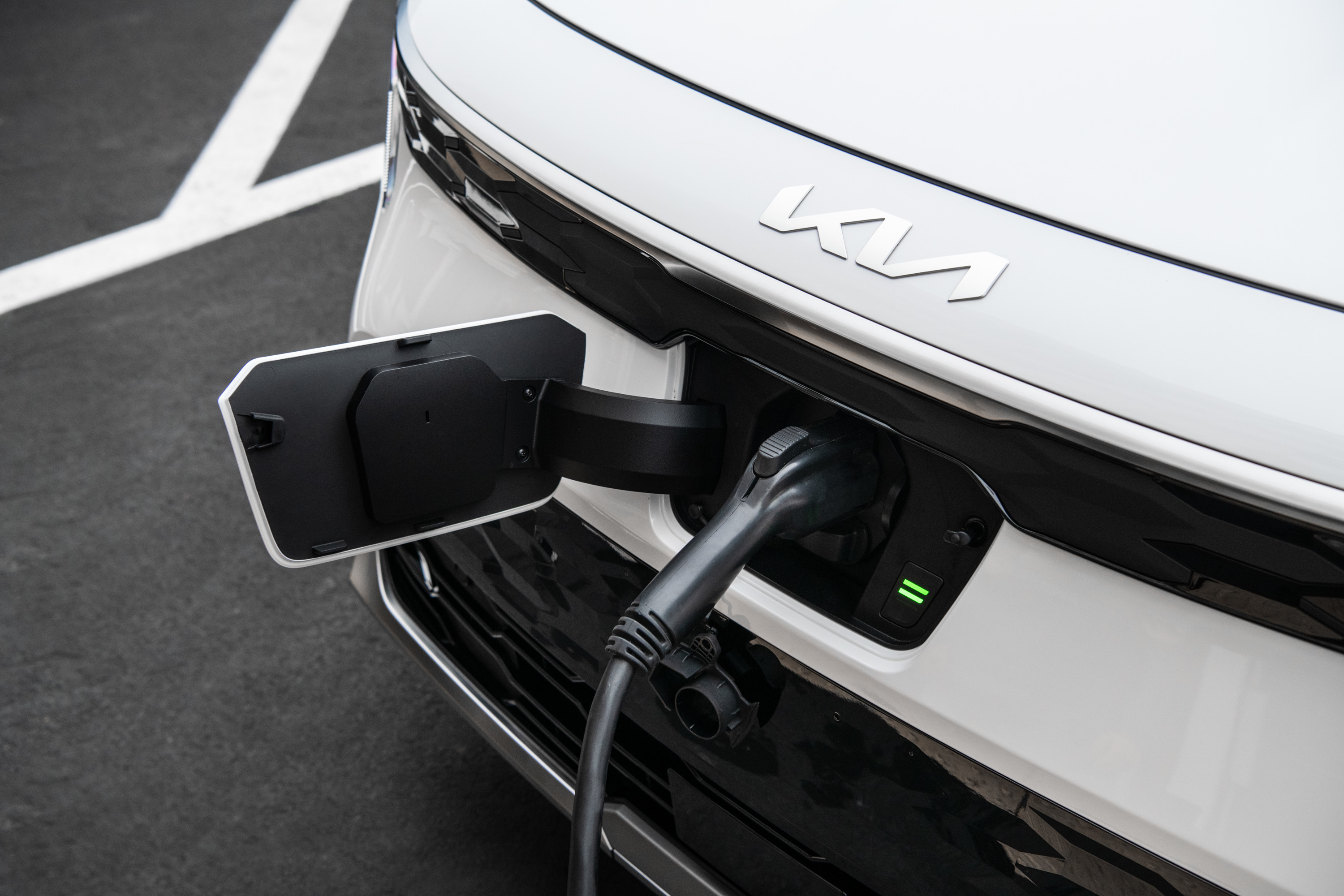
Front centre
A front-centre inlet provides access at the nose of the car. When assessing a nose-in space, allow room between the vehicle and any wall or charging post to insert and handle the connector.
Before relying on a cable or adapter
- Confirm the inlet fitted to the exact vehicle and market, including whether that connection supports AC, DC or both.
- Check the cable or adapter's supported interfaces and ratings, plus the vehicle and network approvals.
- Establish whether the station supplies a tethered cable or requires you to bring one.
- Check cable reach in the intended parking position and use the operator's vehicle-specific compatibility information.
Sources
20
- SAE J1772 — North American conductive charge coupler (2024) — North American conductive charging interface; January 2024 revision.
- SAE J3400 — North American Charging System (2024) — J3400 electrical and functional scope.
- SAE J3400/2 — Connectors and inlets for NACS — connector and inlet dimensions in J3400/2.
- SAE J3400/1 — Charging-adapter safety and OEM-qualified designation — adapter suitability evaluation; the April 2025 edition covers J3400–J1772 adapters.
- IEC 62196-2:2025 — AC charging accessories — scope and ratings of AC charging accessories.
- EU Delegated Regulation 2025/656 — Charging interoperability standards — underlying EU interoperability amendment.
- European Commission — AFIR questions and answers — Commission explanation of the applicable Type 2 standard and installation dates.
- CharIN — Overview of charging connectors used worldwide — regional connector families and contact layouts.
- US Joint Office of Energy and Transportation — Charging connectors and terminology — connector terminology, CCS1 and NACS physical connections.
- CHAdeMO Association — CHAdeMO 2.1 release — protocol 2.1 release and its stated current and power limits.
- CHAdeMO Association — ChaoJi high-power charging — ChaoJi development and adapter objectives.
- GB/T 20234.2-2015 — AC charging coupler — the separate GB/T AC charging coupler standard.
- China MIIT — 2023 GB/T conductive-charging connector standards — changes to the established GB/T DC interface in 2023.
- GB/T 20234.4-2023 — High-power DC charging coupler — the separate GB/T high-power DC coupler standard.
- CHAdeMO Association — ChaoJi GB/T standards release (2023) — the shared ChaoJi coupler and the GB/T/CHAdeMO protocol distinction.
- Phoenix Contact — CCS Type 2 inlet installation notes — CCS2 AC/DC contact arrangement and inlet protection.
- Phoenix Contact — Liquid-cooled CCS2 cable 1087136 — continuous and boost current, cooling and temperature limits for cable 1087136.
- Porsche — NACS DC adapter guidance (United States) — US NACS-to-CCS1 DC adapter use and the AC exclusion.
- Tesla — Supercharging other EVs (North America) — North American Supercharger access, adapter policy and cable reach.
- Rivian — NACS DC adapter guide (March 2025) — NACS DC adapter handling and extension-cable restrictions.