
Home EV charging: power, installation and daily use
Choose home charging power around the energy you need to replace and the time the car spends parked. The installation must also fit the vehicle's AC charging capability and the home's electrical supply.
Match charging power to your parking time
Start with daily driving, including longer days and winter use. For an illustrative car consuming 20 kWh/100 km from its battery over a 60 km day:
Battery energy used = 60 km × 20 kWh/100 km = 12 kWh
Assuming 90% efficiency from the electricity meter to stored battery energy, replacing those 12 kWh would require about 13.3 kWh at the meter. Over ten hours, that is an average input of approximately 1.3 kW.
These are planning assumptions, not measured results. The consumption figure is battery-side; if the figure you use already includes charging losses, do not add them again. The 1.3 kW average describes the energy needed across the parking window. The car can charge at a supported higher power for part of that time.
A shorter low-price window changes the requirement. Under the same assumptions, replacing the energy within four hours would need approximately 3.3 kW on average. Leave headroom for higher consumption, delayed arrivals and power reductions when other household equipment is running.
The vehicle and installation must support the same voltage, current and phase arrangement. On a nominal 230/400 V supply, an 11 kW three-phase wallbox rated at 16 A per phase supplies about 3.7 kW to a car using only one phase: 230 V × 16 A. Reaching about 7.4 kW on one phase requires 32 A, supported by the vehicle, wallbox, cable and installation. Compare the current available on each phase rather than simply taking the lower of two advertised kW ratings. Schneider Electric: EVlink Home Smart technical data
Higher power earns its cost when a car regularly returns with little energy and must leave again soon, or when several vehicles need substantial charging in a short window. For a modest daily requirement and a long overnight stay, the extra power may go unused.
Plan the installation and supply connection
A home AC wallbox, or electric vehicle supply equipment (EVSE), controls the electrical connection to the car. The onboard charger converts that AC supply to DC for the battery; the power path is explained in EV charging: how the system works.
Have a qualified electrical installer assess the available supply capacity, existing household loads and cable route. EV charging can draw substantial current for hours. The design must accommodate that sustained demand, with appropriate circuit protection, earthing or grounding, and equipment rated for its location. Ask about a second EV or other planned electrical loads before the installation is designed. US Department of Energy guidance identifies EV charging as a continuous load under the National Electrical Code and directs owners to local codes and permits. U.S. Alternative Fuels Data Center — Charging electric vehicles at home
IEC 61851-1 covers EV supply equipment and its electrical safety requirements. IEC 61851-1 — General requirements for conductive EV charging systems The circuit, protection and cable route are designed to the applicable national wiring rules, such as NEK 400 in Norway or the NEC in the US. Norwegian DSB: guidance on EV charging installations U.S. Alternative Fuels Data Center — Charging electric vehicles at home
There are two separate connection choices. First, the wallbox can be hardwired to the building or, where permitted, plugged into a suitable supply receptacle. Second, its vehicle cable can be permanently attached or detachable. A hardwired wallbox can therefore still have a socket for a detachable vehicle cable.
Hardwiring removes the supply plug-and-socket connection. A plug-in unit can be removed without disconnecting fixed wiring, but its outlet and circuit must be suitable for sustained charging and permitted locally. US guidance describes overnight Level 1 charging from an existing outlet on a suitable dedicated branch circuit as an option. Norway's DSB recommends a Mode 3 charging station and states that, from January 2023, new ordinary socket installations for vehicle-charging equipment rated above 5 A are not permitted under NEK 400-7-722:2022. It distinguishes these from compliant existing Mode 2 installations that can remain in use. U.S. Alternative Fuels Data Center — Charging electric vehicles at home Norwegian DSB: guidance on EV charging installations
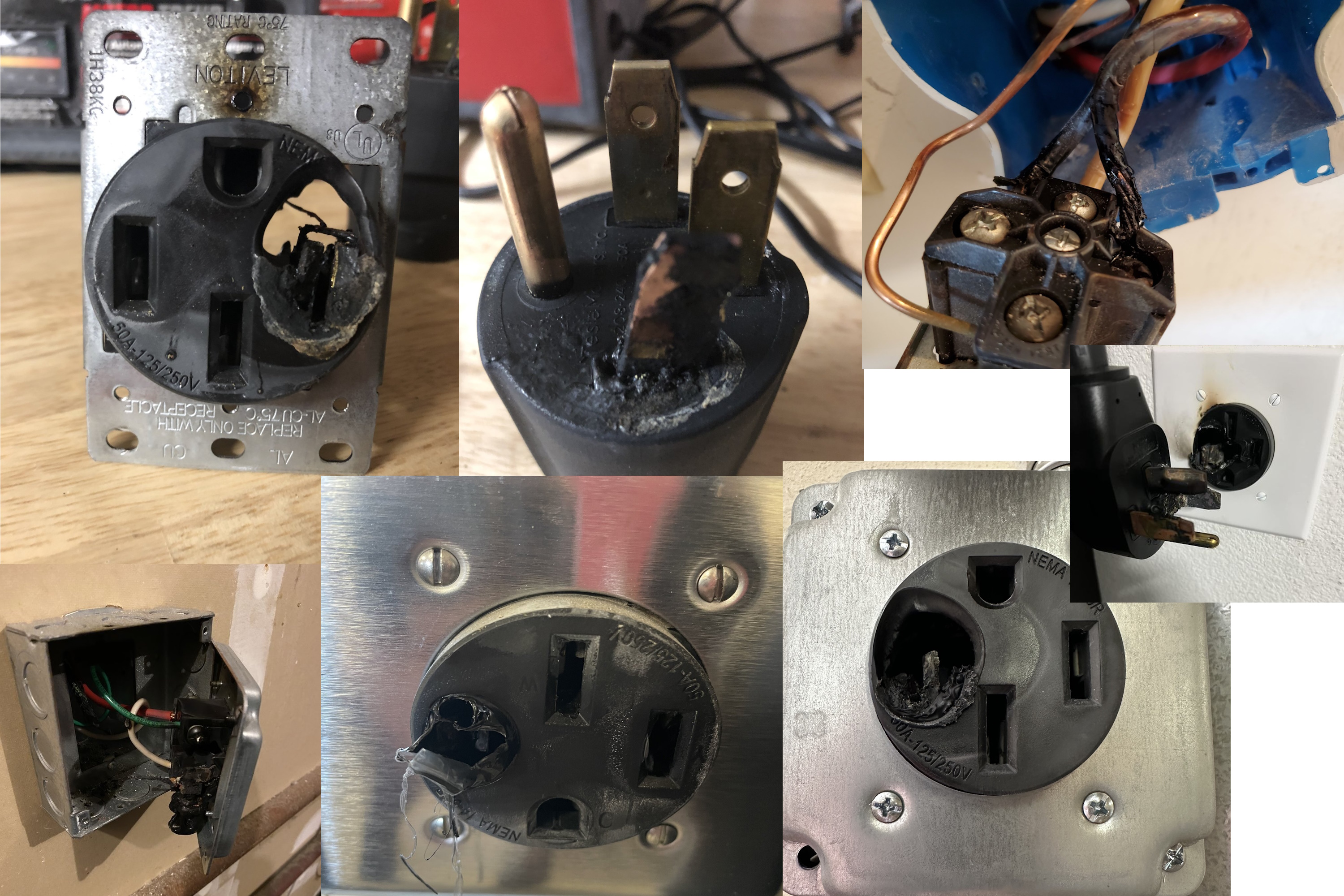
DSB identifies discolouration, a burnt smell and crackling as signs of overheating in sockets or wiring. Norwegian DSB: safe EV charging and signs of overheating Stop using suspect equipment and have it inspected. Norway's DSB says extension leads and plug adapters must not be used for EV charging. Norwegian DSB: guidance on EV charging installations
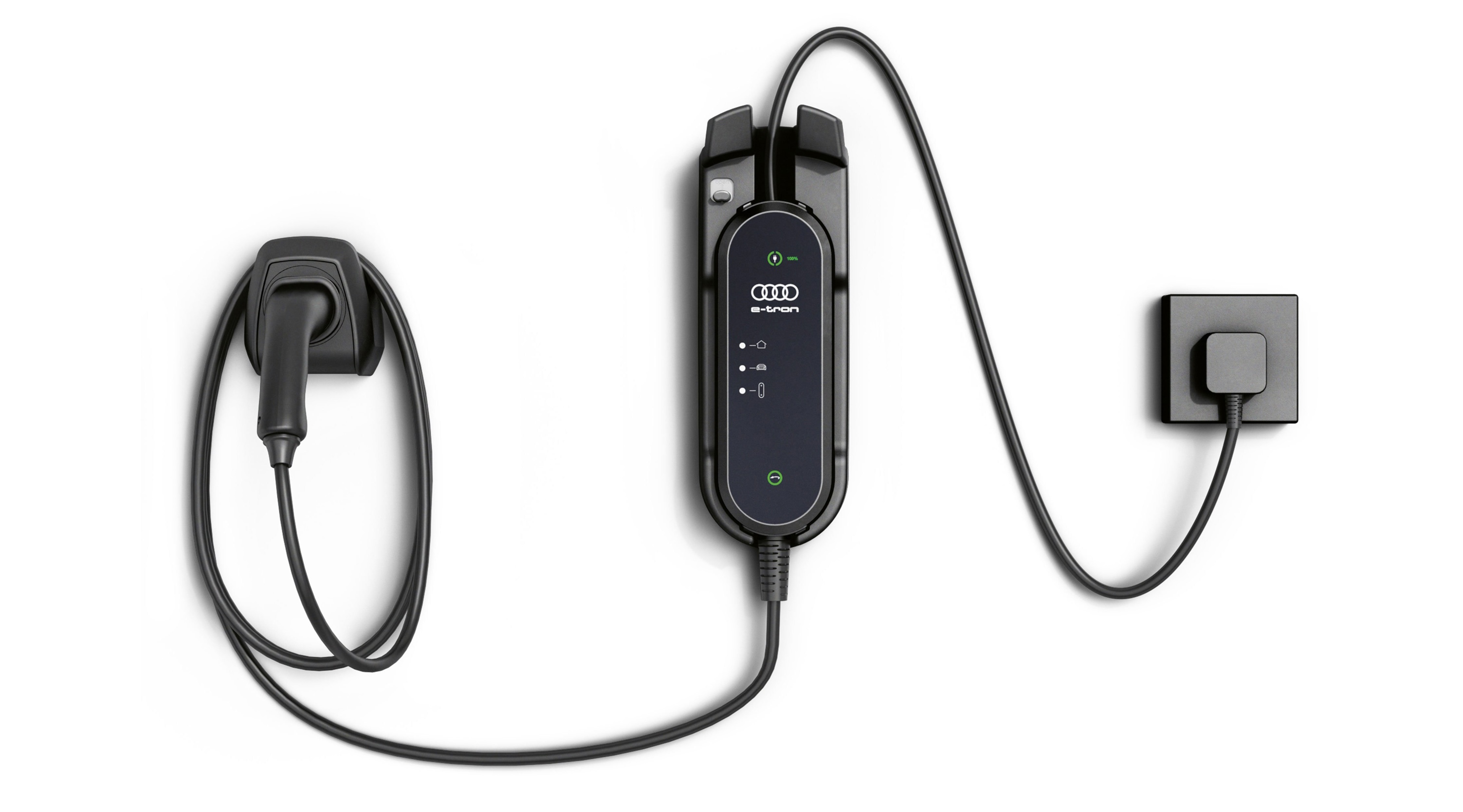
For occasional charging with a portable cordset, confirm that the outlet and circuit are suitable, follow the equipment instructions and support the control box so that it does not hang from the socket. DSB describes such charging as a contingency when visiting or travelling if a suitable alternative is unavailable. Norwegian DSB: guidance on EV charging installations
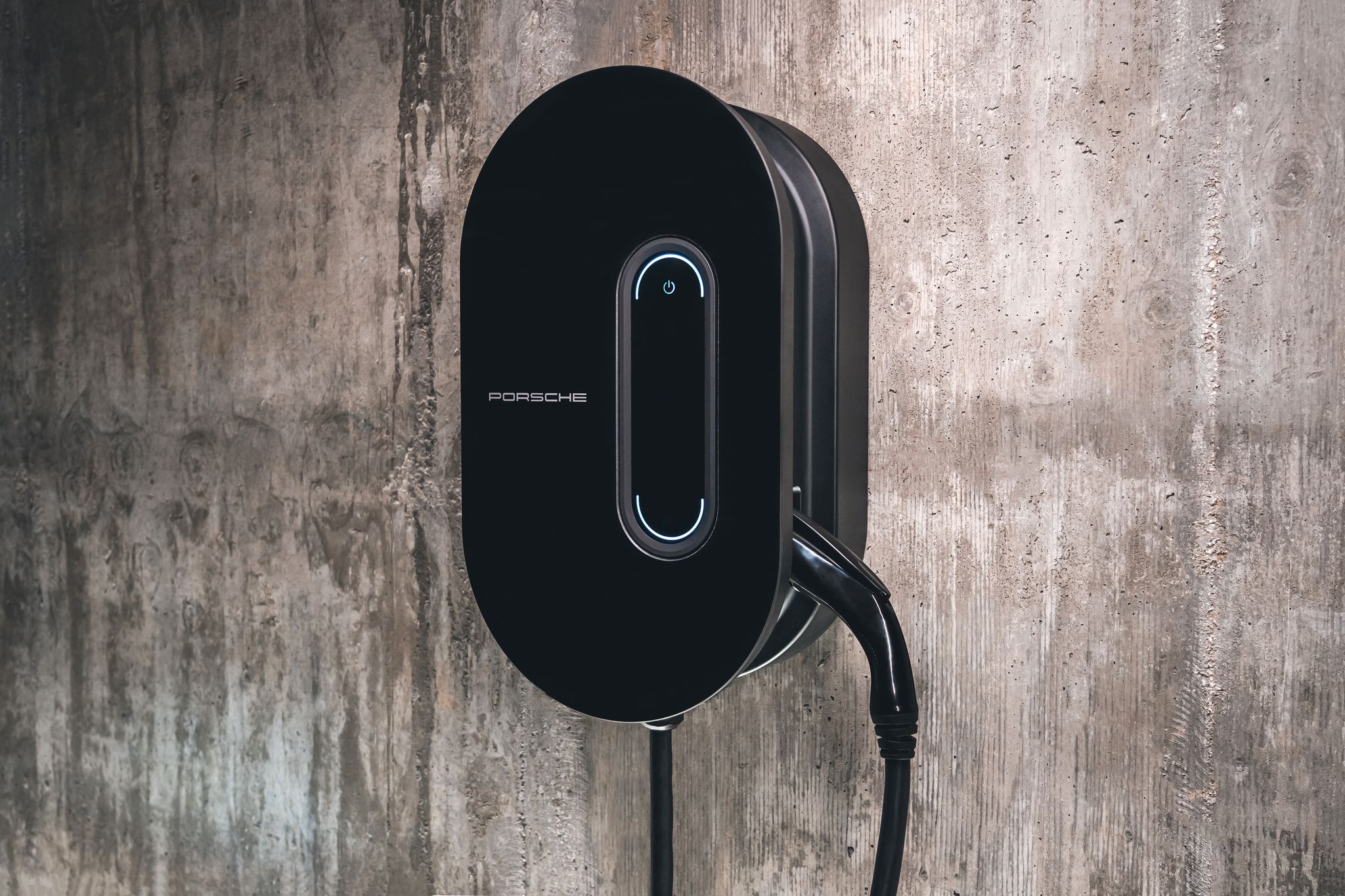
At the higher-power end, Porsche's US announcement in December 2022 specified a 19.2 kW Wall Charger Connect, hardwired to a 100 A circuit for full output and adjustable for lower-capacity circuits. That is a product-specific installation example; choosing its full rating only makes sense if the car can accept it and the parking window calls for it. Porsche Cars North America: 19.2 kW charging equipment, December 2022
Choose the vehicle cable and wallbox location
A tethered wallbox keeps the vehicle cable attached and ready to connect. With an untethered Type 2 wallbox, the driver connects a separate cable at both ends. The detachable cable can be stored elsewhere and replaced independently, but its connector, phase support and current rating must match the intended charging setup.
Plan the cable route with the car in its usual parking position. It should reach the inlet without being stretched, crossing a pedestrian route or being exposed to vehicle damage. Choose a mounting position that keeps the controls and cable holder accessible, including when snow or stored items reduce the available space. Outdoor equipment needs an appropriate environmental rating. U.S. Alternative Fuels Data Center — Charging electric vehicles at home
Connector compatibility and inlet positioning are covered in EV charging connectors and inlets.
Schedule charging and manage household demand
Scheduling shifts charging into chosen hours. Fixed load sharing divides a set current budget between wallboxes. Dynamic load management adjusts the charging budget as household demand changes: it can reduce the car's draw while a heat pump or cooker is running, then increase it when capacity becomes available. Tesla documents this dynamic control for its Wall Connector with a compatible meter. Tesla: Wall Connector dynamic power management
With two EVs, establish how the system divides the available capacity and whether it can prioritise the earlier departure. US Department of Energy: smart charge management implementation The wider control options, including solar charging and utility programmes, are explained in Smart Charging and Grid Integration.
Use the household electricity contract and network tariff to compare charging costs. In Norway, NVE identifies electricity supply, network charges and taxes as separate parts of the bill. NVE/RME: household electricity bills and network charges Nordvest Nett's household tariff effective from July 2026 combines day/night energy rates with a capacity charge based on the highest hourly consumption on three separate days in the billing period. Under that tariff, charging alongside other large loads can affect the capacity charge as well as the energy bill. Nordvest Nett: household network tariff effective July 2026
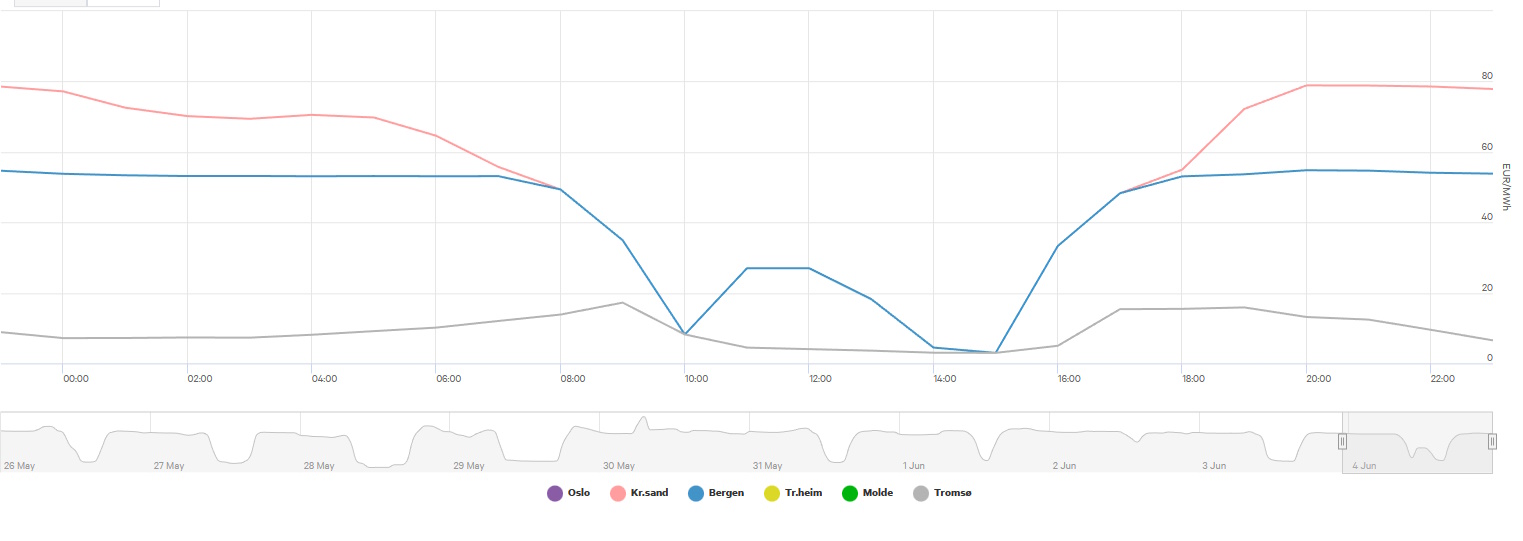
The Kristiansand and Bergen curves reach their lowest levels in the early afternoon, below their overnight prices. Network charges and taxes are not shown. Choose the charging window using the total applicable price and the energy needed before departure.
Check what remains available without internet access: local start controls, stored schedules and the ability to charge without the vendor's cloud service. Separately, ask the installer how the system maintains the installation's electrical limits if its meter or controller stops reporting, including whether charging is reduced or suspended.
For private charge points within the scope of Great Britain's smart-charge-point regulations, requirements include continued charging without a communications-network connection, changeable off-peak defaults and a random-delay function. The rules generally apply to qualifying domestic and workplace charge points sold from 30 June 2022; they do not cover Northern Ireland or public charge points. UK Government — Electric Vehicles (Smart Charge Points) Regulations guidance
Allow for losses and set the vehicle's charge limit
Charging draws more energy from the supply than it stores in the battery. AC-to-DC conversion and electronics that remain active during charging account for part of that difference. Lower-power charging can increase the share consumed by those electronics because they run for longer. In ADAC's five-car test reported in August 2026, losses were 5.1–7.0% at an 11 kW wallbox and 8.0–12.8% at a reduced three-phase setting of 4.1 kW. Measurements took place within the 10–90% state-of-charge range, with battery temperatures initially between 20 and 30 °C. ADAC: measurements of EV charging losses
Use a suitable charging power within the permitted window rather than assuming the lowest current will minimise electricity use. Charging Loss explains the measurement boundaries and where charging energy is lost.
Follow the vehicle manufacturer's guidance on the daily battery charge limit. EV battery degradation: capacity loss, power fade and ageing explains how time spent at high charge levels affects ageing; EV battery charging: power, charging curves and charging time covers temperature, state of charge and charging behaviour.
Check the installation at handover
Ask the installer to record and demonstrate:
- The circuit rating, configured charging-current limit and required inspection or commissioning documentation.
- Normal charging with the car, including the cable route and access to the controls.
- Load management, if fitted, and the configured response to loss of its meter or controller.
- Scheduling and manual override, plus the controls available without internet access.
- How to isolate the equipment safely, and whom to contact for equipment or installation faults.
Sources
12
- U.S. Alternative Fuels Data Center — Charging electric vehicles at home
- IEC 61851-1 — General requirements for conductive EV charging systems
- Norwegian DSB: guidance on EV charging installations
- Norwegian DSB: safe EV charging and signs of overheating
- Schneider Electric: EVlink Home Smart technical data
- Porsche Cars North America: 19.2 kW charging equipment, December 2022
- Tesla: Wall Connector dynamic power management
- US Department of Energy: smart charge management implementation
- NVE/RME: household electricity bills and network charges
- Nordvest Nett: household network tariff effective July 2026
- UK Government — Electric Vehicles (Smart Charge Points) Regulations guidance
- ADAC: measurements of EV charging losses