
Bidirectional EV charging: powering appliances, homes and the grid
Bidirectional charging lets an EV supply electricity to appliances, a building or the public grid. The practical difference is whether the system powers a separate load, supplies a building while the grid is available, keeps selected circuits working during an outage, or exports electricity to the grid.
What V2L, V2H and V2G do
V2X is the collective name for these power-export uses. The Australian bidirectional-charging roadmap classifies grid-synchronised operation as V2G, including home consumption with no net export, and reserves V2H/V2B for circuits separated from the grid. enX for ARENA and RACE for 2030 — National Bidirectional EV Charging Roadmap background paper Volkswagen instead uses V2H for energy supplied within the household and V2G for electricity returned to the public network. Volkswagen Austria — bidirectional charging and V2H/V2G terminology The distinctions below identify the intended use; check separately whether a product supports grid-connected home supply, isolated backup or both.
| Function | Where the electricity goes | What to establish |
|---|---|---|
| V2L — vehicle to load | Appliances or tools connected to an approved socket or adapter | Outlet rating and appliance compatibility |
| V2V — vehicle to vehicle | Another EV, through a supported charging connection | Equipment accepted by both vehicles |
| V2H — vehicle to home | Household circuits | Grid-connected home supply, isolated backup, or both |
| V2B — vehicle to building | Loads at a workplace or another building | Site controls, connected loads and operating mode |
| V2G — vehicle to grid | Grid-connected circuits, potentially including export to the public network | Interconnection approval and any required service agreement |
For buildings and fleets, the U.S. Department of Energy describes backup power, time-of-use energy shifting and grid services as applications of bidirectional vehicles. U.S. Department of Energy — Bidirectional charging and mobile storage
Managed one-way charging, often called V1G, changes when or how quickly the car charges. Its scheduling and load-control functions are covered in Smart Charging and Grid Integration. For the underlying AC and DC charging process, see EV charging: how the system works.
Where DC becomes AC
The traction battery stores DC energy. To supply ordinary AC appliances or the electricity grid, an inverter converts that energy to AC. This conversion can take place in the vehicle or in external equipment. enX for ARENA and RACE for 2030 — National Bidirectional EV Charging Roadmap background paper
With onboard conversion, the inverter is in the car. The vehicle can supply a dedicated socket, an approved V2L adapter or a compatible AC connection to a building installation. Renault's V2G instructions for the Renault 5, for example, specify a bidirectional AC charging terminal and a service subscription. Renault 5 manual — vehicle-to-grid charging
With offboard conversion, DC leaves the battery through the vehicle's charging interface and an external bidirectional charger converts it to AC. Mercedes-Benz's German V2G package uses this arrangement with a bidirectional DC wallbox. The wallbox's DC designation describes its vehicle connection; the building and grid connection is AC. Mercedes-Benz — German bidirectional charging launch, 12 October 2026
Both arrangements need controls and protection suited to their operating mode. An inverter supplying an isolated home must establish the local voltage and frequency; one exporting alongside the grid must synchronise with it. enX for ARENA and RACE for 2030 — National Bidirectional EV Charging Roadmap background paper A V2L socket alone does not establish support for either a fixed home installation or grid export. Inlet types are explained in EV charging connectors and inlets.
Portable power and charging another vehicle
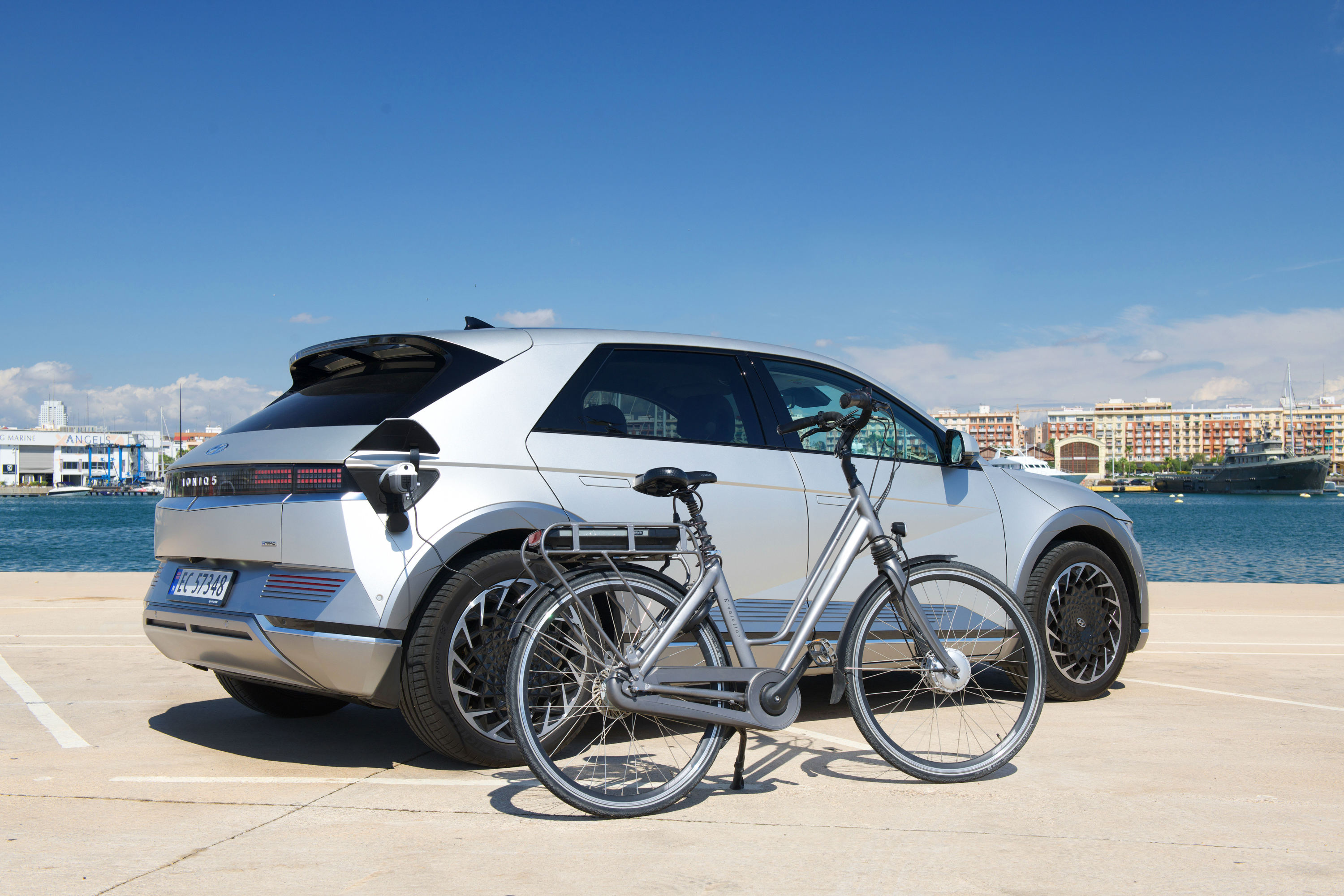
V2L supplies separate appliances through a vehicle outlet or an adapter connected to the charge inlet. The outlet voltage, continuous power rating and permitted short-duration demand determine what it can run. Hyundai's instructions warn that some devices need more power when starting than their normal consumption suggests. Hyundai IONIQ 5 U.S. manual — V2L safety precautions Compressors, pumps and other motor-driven appliances can have this starting surge; resistance heaters mainly impose a sustained high load.
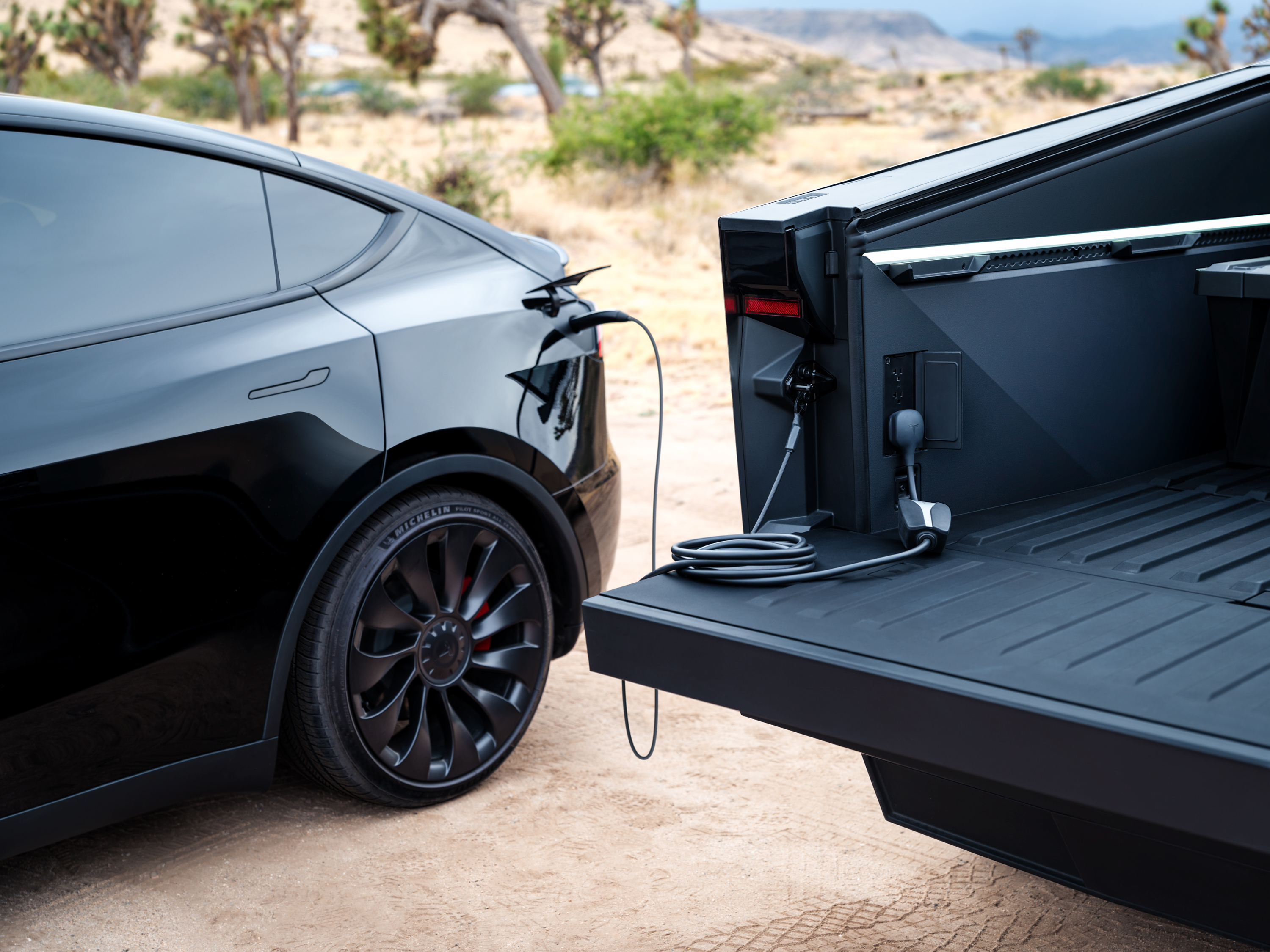
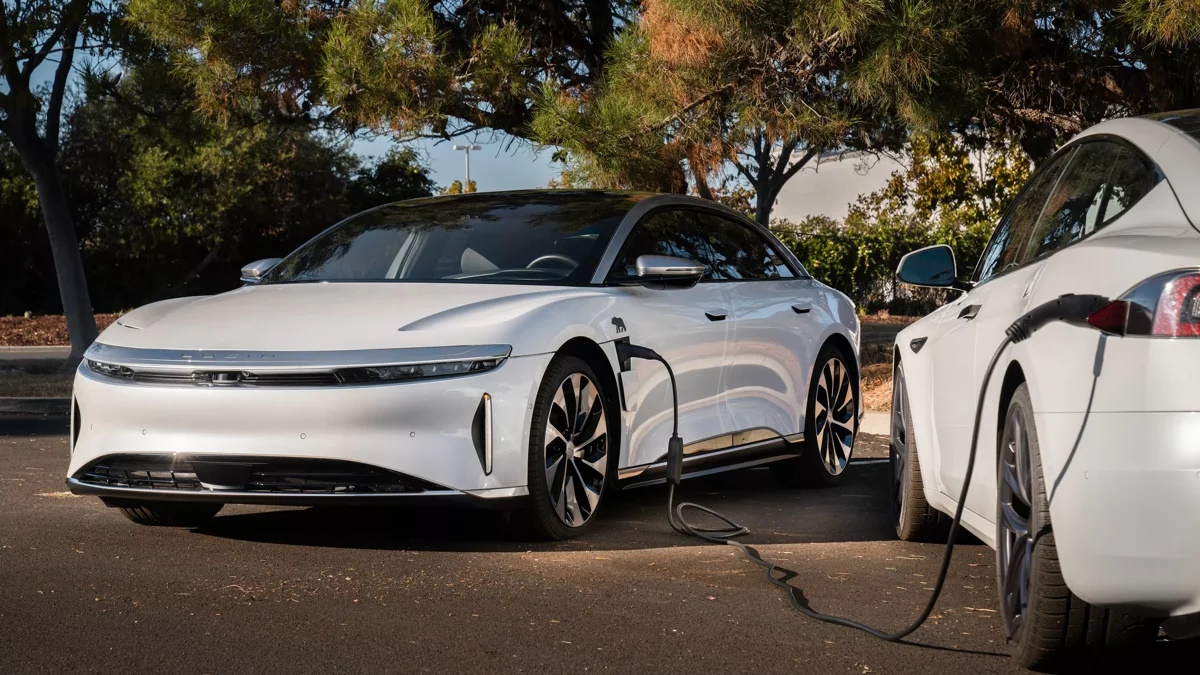
Charging another EV through a supported AC outlet and portable charging cable is one form of V2V. Its speed is constrained by the source outlet, the cable's current limit and the receiving car's AC charging capability. Use equipment and a connection arrangement approved for both vehicles.
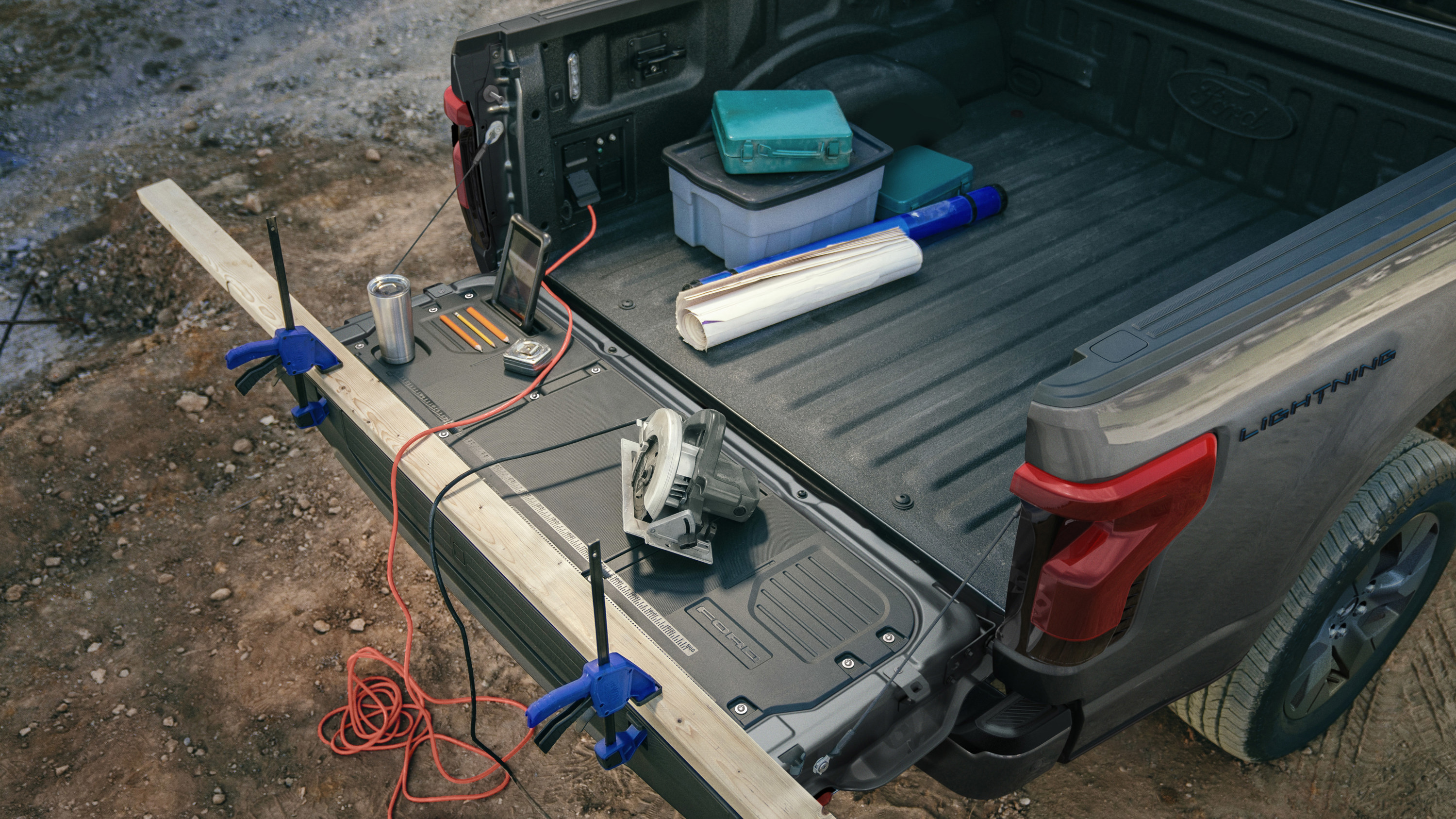
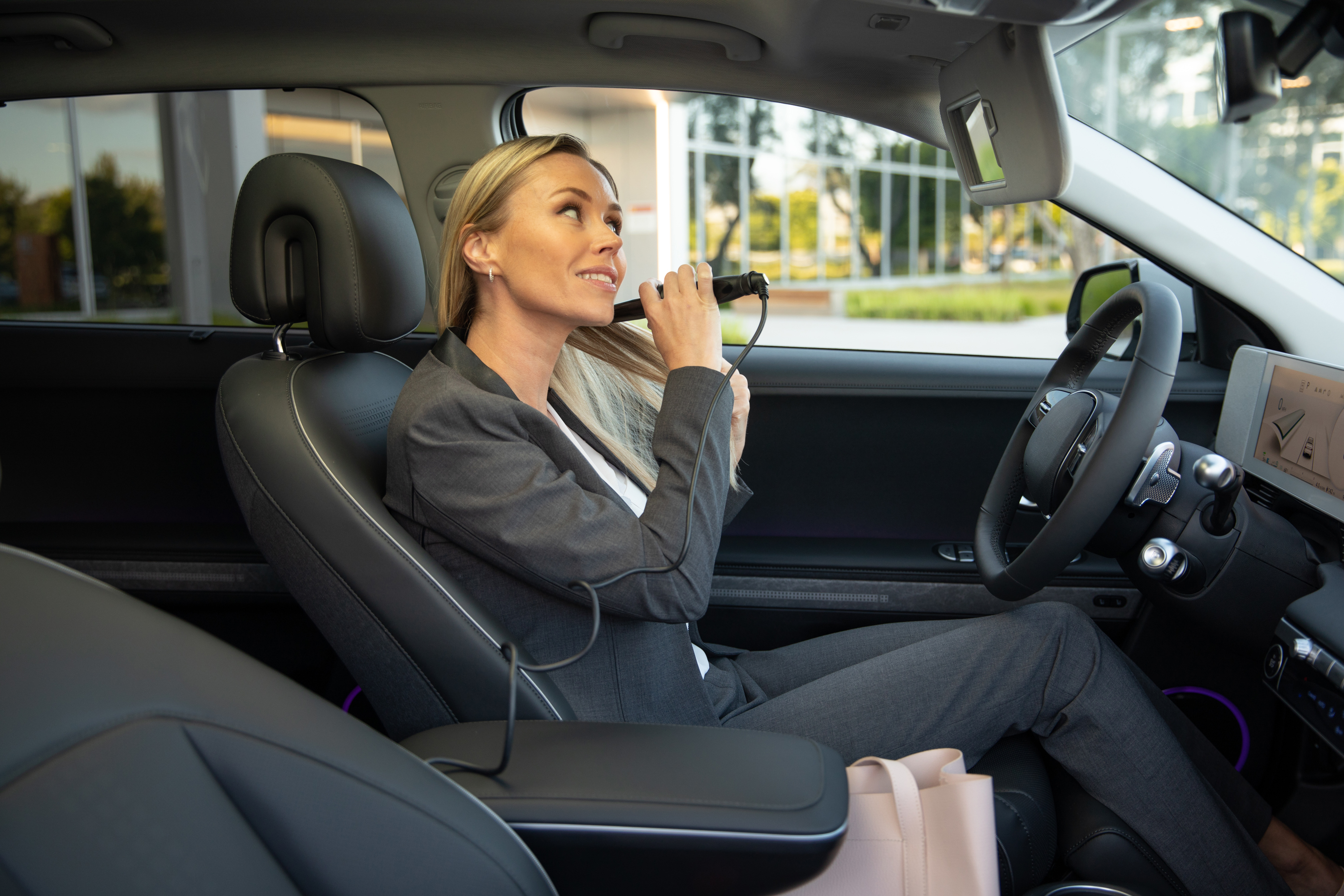
Follow the vehicle's restrictions on appliance type and location, as well as its power limit. Hyundai's U.S. instructions, for example, warn against using electric heating appliances inside the vehicle and against using V2L for equipment that needs an uninterrupted supply. Hyundai IONIQ 5 U.S. manual — V2L safety precautions
Do not feed power into a home through an ordinary wall receptacle. Supplying fixed building circuits requires a purpose-designed installation with the appropriate protection and, for outage operation, isolation from the utility supply. Electrical Safety Foundation — backup-power and backfeeding safety
Home energy use and outage backup
A system supporting grid-connected home or building supply can discharge while the grid is available to reduce expensive electricity imports or use energy previously stored from solar generation. This requires the vehicle to be connected when the building needs that energy. DOE identifies time-of-use shifting and greater use of local solar generation among the potential applications for buildings. U.S. Department of Energy — Bidirectional charging and mobile storage
Outage backup adds a separate requirement: the installation must disconnect the circuits it will supply from the utility before energising them. This prevents the vehicle from feeding a failed utility line. The backup system then establishes the isolated supply and manages the eventual return to grid power. enX for ARENA and RACE for 2030 — National Bidirectional EV Charging Roadmap background paper
In Tesla's Powerwall configuration, an islanding contactor disconnects the home from the grid and Powerwall supplies it first. When Powerwall's stored energy runs low, the Powershare vehicle begins supplying the home and recharging Powerwall. The system also controls the return to grid power once the utility supply is restored. Tesla — Powershare with Powerwall: system operation
The installation may cover selected essential circuits or the whole home. Whole-home connection still has an output limit: cooking, water heating and space heating may need to be reduced or disconnected when their combined demand exceeds it. An installer must establish the protection, earthing and transfer arrangements for the local supply. The general installation questions are covered in Home EV charging: power, installation and daily use.
Automatic backup can involve an interruption. For Cybertruck Powershare Home Backup, Tesla quotes a start time of within one minute and lists a Powershare Gateway and Universal Wall Connector for installations without Powerwall. Tesla — Powershare Home Backup In the Powerwall configuration described above, Powerwall supplies the home during the changeover before the vehicle contributes. Tesla — Powershare with Powerwall: system operation Check the transfer performance required by equipment that must remain powered throughout an outage.
How long can the battery power a home?
Output power, in kW, limits the appliances that can run together. Available energy, in kWh, determines duration.
For an illustrative calculation, assume 75 kWh of usable battery energy, a starting charge of 100%, a minimum reserve of 30% and 90% efficiency from the battery to the supplied loads:
Energy delivered = 75 kWh × (1.00 − 0.30) × 0.90 = 47.25 kWh.
That is approximately 47 hours at an average load of 1 kW, or 9.5 hours at 5 kW. These are calculated examples, not measured vehicle results. Additional standby consumption, battery heating or cooling, and any vehicle limit that stops export above the chosen reserve shorten the duration. Charging efficiency is excluded because the example starts with energy already stored in the battery.
Grid export and available services
V2G supplies electricity while connected to the public grid. The inverter must meet the applicable interconnection requirements, and the installation needs any required network permission. In California, for example, the Energy Commission explains that customers must complete the utility's interconnection process and receive Permission to Operate before delivering power to the grid. California Energy Commission — Vehicle-to-grid equipment list
The service contract determines how export is controlled and rewarded. A provider may coordinate many vehicles while respecting their departure times and minimum reserves. Payments can relate to availability as well as electricity delivered, so an advertised annual reward is not a universal value per exported kWh.
Two European examples, checked in October 2026, show how the vehicle, equipment and service fit together:
- In France, Renault lists the Renault 5 E-Tech electric, excluding the five version, among vehicles eligible for power V2G. It requires the bidirectional Plug Inn Powerbox, a Mobilize electricity contract operated by The Mobility House, a Linky meter in an Enedis service area and an internet connection. Enedis export approval and Consuel installation certification are also required. For homes with solar generation, the service currently requires a contract selling all solar output through a dedicated connection point; other generation arrangements are not yet supported. Renault France — power V2G service and eligibility
- On 12 October 2026, Mercedes-Benz announced its German MB.CHARGE Home Pro Intelligent package with an 11 kW bidirectional DC wallbox, the Intelligent Pro Eco tariff and a smart meter. The announcement names the electric GLC and C-Class first, with further models planned and model-dependent activation through software updates after market launch. Mercedes-Benz — German bidirectional charging launch, 12 October 2026
These sources describe grid-export services; they do not establish outage-backup capability for the installations described. Grid-connected export and isolated backup require different controls and equipment.
Communication standards connect parts of these systems. ISO 15118-20 defines vehicle-to-charger messages for bidirectional transfer, while OCPP 2.1 adds bidirectional and distributed-energy-resource functions between chargers and their management systems. ISO 15118-20 — Bidirectional vehicle-to-grid communication Open Charge Alliance — OCPP 2.1 bidirectional and DER support Product safety and grid-interconnection requirements are separate; UL's North American overview discusses power-export equipment and inverter standards. UL Solutions — Bidirectional EV charging and power-export standards See EV Charging Protocols and Services for the communication layers.
Costs, battery use and checks before buying
Energy passes through conversion equipment during both charging and export. Compare the cost of the electricity taken in with the value of the electricity actually delivered, allowing for conversion losses and vehicle auxiliary loads. For home self-consumption, the benefit may be avoided electricity purchases; for grid export, it follows the service's payment rules. Hardware, installation, subscription fees and any availability payments belong in the same calculation.
Additional charging and discharging increase battery energy throughput. The effect on ageing depends on chemistry, temperature, charge window, power and the control strategy. DOE's assessment finds that V2X degradation cannot be assigned a single result across different uses and vehicles. U.S. Department of Energy — Vehicles-to-Grid Integration Assessment, January 2025 The mechanisms are explained in EV battery degradation: capacity loss, power fade and ageing. Check the vehicle's permitted V2X use, operating limits and warranty conditions; EV battery warranty: coverage, capacity and claims explains general coverage and claims.
Before committing to equipment or a service, obtain confirmation of:
- The supported vehicle, software, charger and gateway combination in your country, including any activation still required.
- The permitted functions: appliance supply, daily home energy use, outage backup and grid export.
- Continuous output, starting-load capability, supplied circuits and transfer time during an outage.
- Whether the system can start after an outage has already begun, and what works without internet or the provider's cloud service.
- Minimum battery reserve, departure-time controls, installation approvals and the complete tariff and warranty terms.
Sources
15
- enX for ARENA and RACE for 2030 — National Bidirectional EV Charging Roadmap background paper — terminology and onboard/offboard conversion.
- Electrical Safety Foundation — backup-power and backfeeding safety — electrical backfeeding and transfer-switch safety.
- U.S. Department of Energy — Bidirectional charging and mobile storage — building energy use, backup and grid-service applications.
- Renault 5 manual — vehicle-to-grid charging — Renault 5 bidirectional AC connection.
- Hyundai IONIQ 5 U.S. manual — V2L safety precautions — appliance compatibility, starting loads and use restrictions.
- Tesla — Powershare with Powerwall: system operation — isolation and return-to-grid sequence.
- Tesla — Powershare Home Backup — Cybertruck backup transfer time.
- California Energy Commission — Vehicle-to-grid equipment list — California utility permission for export.
- Renault France — power V2G service and eligibility — French service eligibility and installation conditions.
- Mercedes-Benz — German bidirectional charging launch, 12 October 2026 — German package announced on 12 October 2026.
- ISO 15118-20 — Bidirectional vehicle-to-grid communication — vehicle-to-charger communication.
- Open Charge Alliance — OCPP 2.1 bidirectional and DER support — charger-management communication.
- UL Solutions — Bidirectional EV charging and power-export standards — 2023 webinar on North American power-export safety and interconnection standards.
- U.S. Department of Energy — Vehicles-to-Grid Integration Assessment, January 2025 — V2X battery-ageing evidence and its limits.
- Volkswagen Austria — bidirectional charging and V2H/V2G terminology — Volkswagen Austria's distinction between household supply and grid export.