
Crash testing and safety ratings
Vehicle safety ratings combine several controlled tests; they do not certify that a car is safe in every crash. Their value is that identical procedures expose differences in structure, restraints, crash avoidance, and post-crash response that are difficult to judge from a specification sheet.
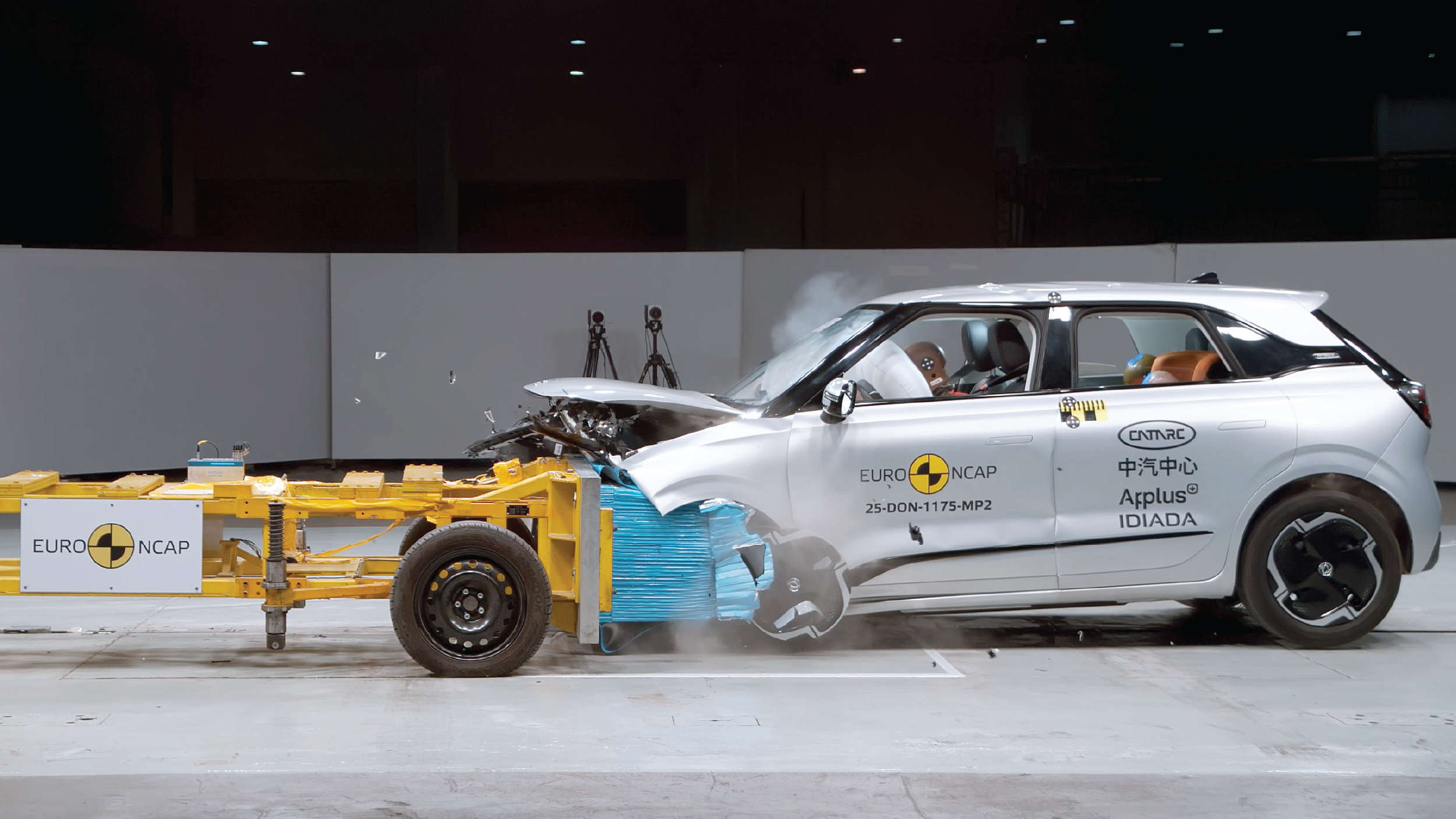
Regulation and consumer ratings are different
A vehicle must satisfy the legal requirements of each market in which it is sold. New Car Assessment Programmes such as Euro NCAP, ANCAP, and the U.S. NCAP add consumer tests and scoring intended to push performance beyond the regulatory minimum. IIHS is an insurance-industry research organisation with its own crashworthiness and crash-avoidance evaluations.
A missing NCAP rating does not mean that a vehicle is unregulated, and five stars do not mean zero risk. Each programme uses its own barriers, speeds, dummies, injury limits, equipment rules, and scoring weights. Results should be read within that programme.
Frontal crash protection
Frontal tests answer different questions depending on how much of the vehicle overlaps the barrier and whether the barrier deforms or moves.
- A full-width barrier engages much of the front structure and creates a sharp deceleration pulse, placing strong demands on belts, load limiters, airbags, and rear-seat protection.
- A moderate-overlap deformable test examines the main front load paths, cabin stability, restraint performance, and compatibility with another vehicle.
- A small-overlap test loads the outer corner of the car, where the impact may bypass the main longitudinal rails and challenge the wheel, suspension, footwell, A-pillar, and door aperture.
Crash-test dummies or human-body models estimate injury risk from measurements such as head acceleration, neck load, chest deflection, femur force, and lower-leg loading. Assessors also inspect intrusion, airbag contact, belt position, and the occupant's movement through high-speed video.
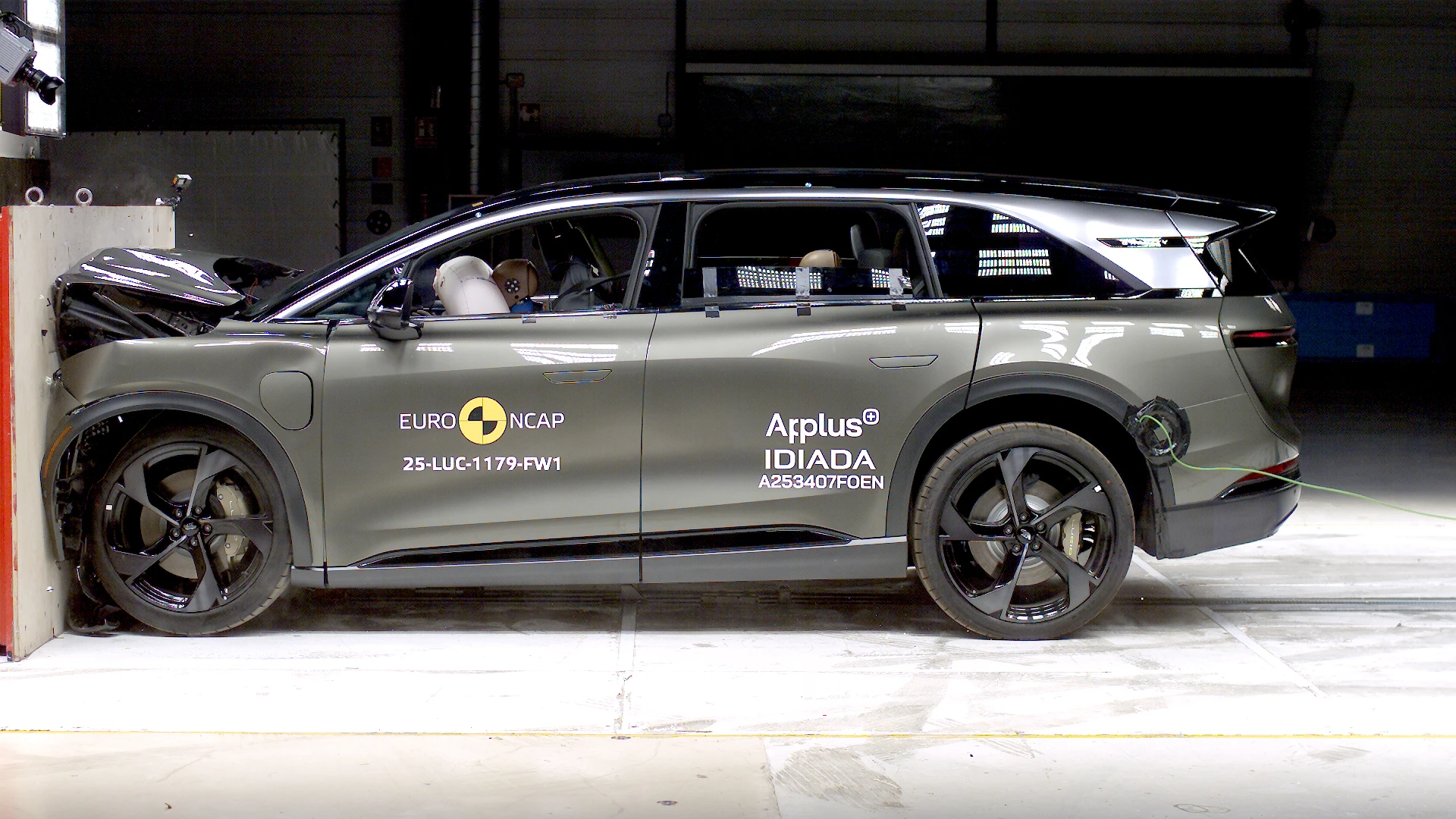
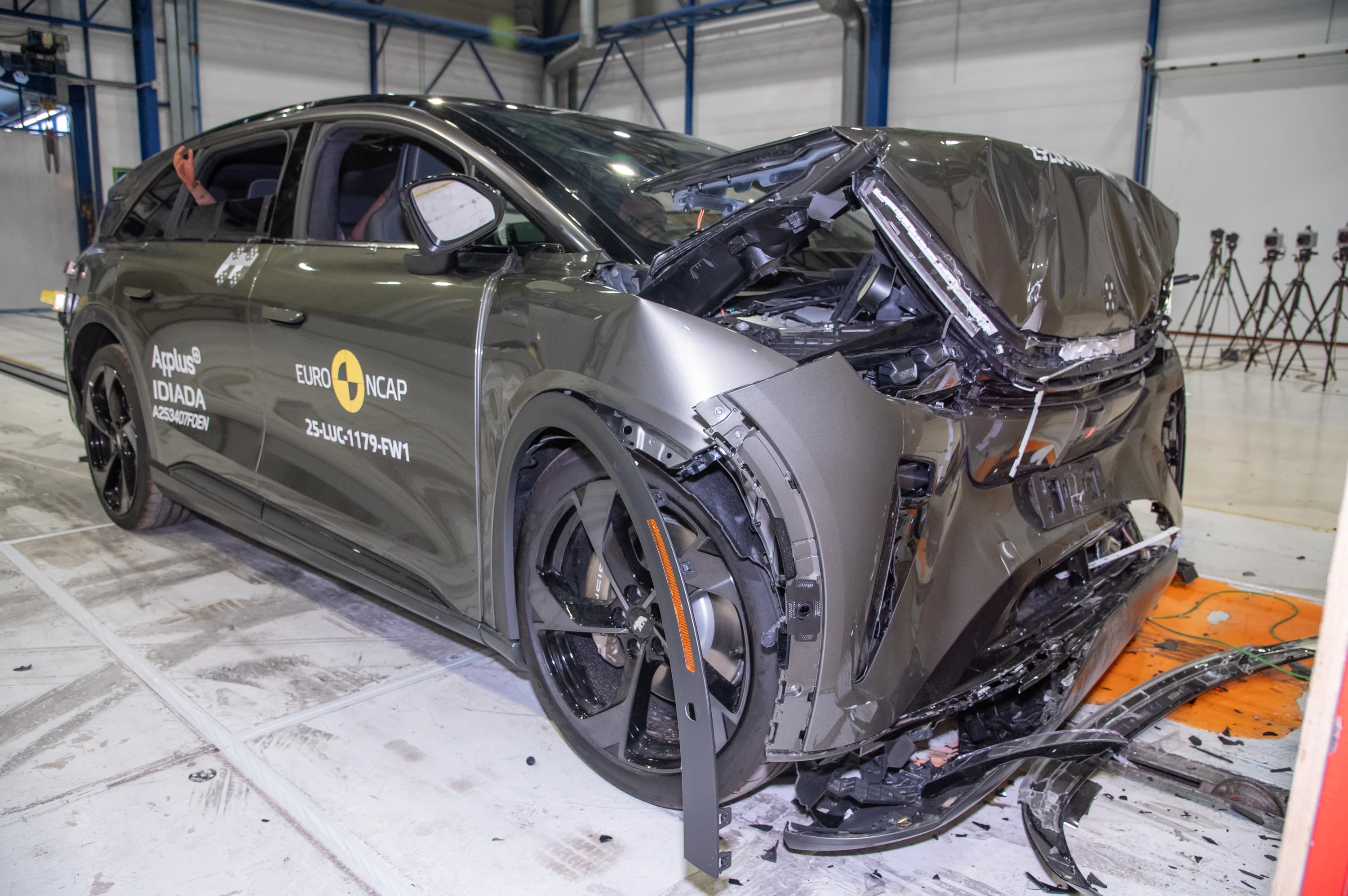
Tesla Cybertruck IIHS updated moderate-overlap test. IIHS / YouTube.
Side, far-side, rear, and rollover protection
A moving deformable barrier represents a vehicle striking the side. A pole test concentrates the load into a narrow area with very little crush space. These tests examine the sill, pillars, doors, floor and seat structure, as well as side, curtain, and centre-airbag performance.
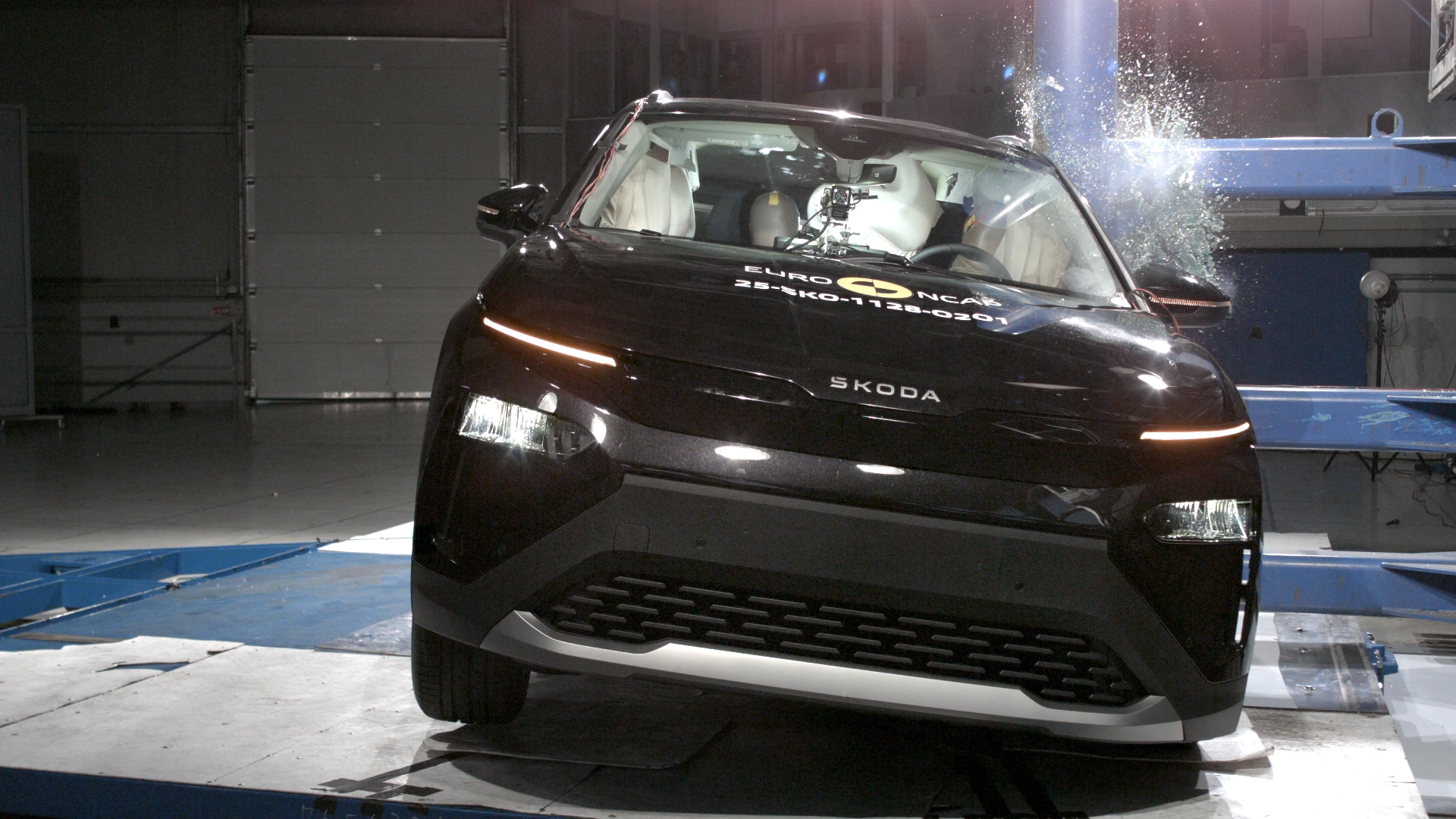
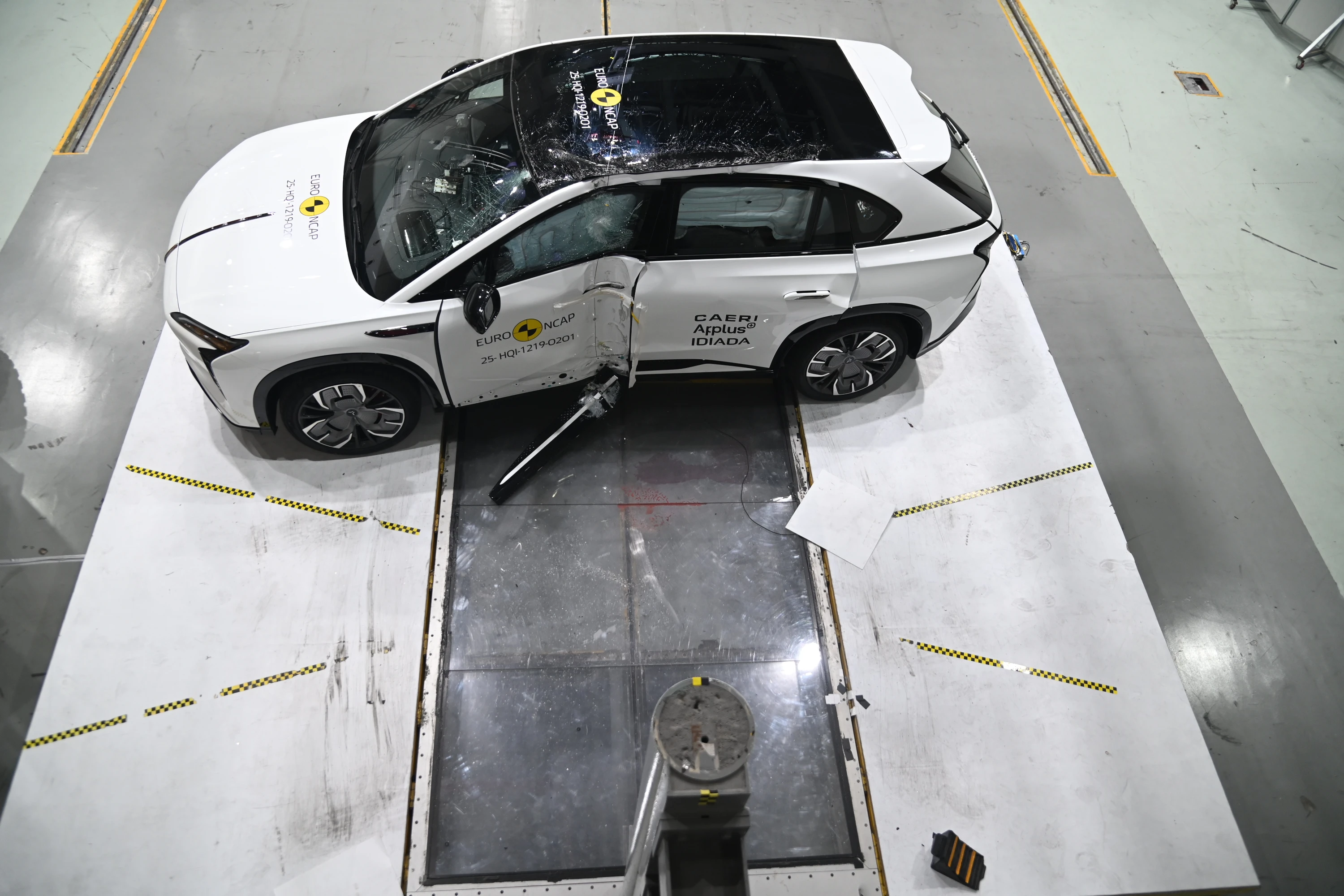
2024 Acura ZDX IIHS updated side test. IIHS / YouTube.
Far-side assessment looks at the occupant seated away from the struck side. The belt, seat, and any centre airbag must control movement toward the other occupant or the centre of the cabin.
Rear-impact sled tests evaluate the seat and head restraint's ability to limit whiplash risk. Rollover-related assessment can include roof strength, ejection mitigation, curtain-airbag behaviour, seat-belt use, and a vehicle's geometric resistance to tipping, depending on the programme.
Rear-impact and whiplash assessment. Euro NCAP / YouTube.
Children and vulnerable road users
Child-occupant assessment covers dummy injury measures, restraint installation, airbag-disable information, ISOFIX or i-Size positions, and the availability of suitable restraints across seating positions. Buyers should read the installation details because an aggregate child score cannot guarantee that a particular child seat fits a particular position.
Pedestrian and cyclist protection has two parts. Physical impact tests or simulations assess the front of the vehicle where a head, pelvis, or leg may strike. Crash-avoidance trials evaluate whether the car detects vulnerable road users and warns or brakes in daytime, low light, crossing, turning, or reversing scenarios defined by the programme.
Active safety and ADAS testing
Modern ratings test whether assistance systems prevent or mitigate a conflict, not merely whether the feature name appears on a brochure. Robotic targets and controlled tracks allow repeatable trials across speeds, overlaps, lighting conditions, road geometry, and target types.
The driver-assistance systems (ADAS) series provides the detailed technology explanations. Rating programmes commonly examine:
- automatic emergency braking in vehicle-to-vehicle, pedestrian, cyclist, junction, crossing, and reversing scenarios;
- lane-keeping assistance and emergency lane support near road edges, lane markings, and adjacent traffic;
- driver monitoring for attention, distraction, impairment cues, and unresponsive-driver strategies;
- speed-limit information, restraint reminders, child-presence detection, and the usability of safety-critical controls.
No controlled test covers every road, weather condition, object, or misuse case. Read the scenario-level results and the assessor's comments, especially when the system is optional or its performance varies by speed.
Euro NCAP active-safety testing of the Audi A6 e-tron. Euro NCAP / YouTube.
EV-specific and post-crash checks
An EV is subjected to the same occupant-protection tests as another passenger car, with added attention to the rechargeable energy-storage system and high-voltage circuit. Inspectors can check pack deformation, electrolyte leakage, electrical isolation, fire or smoke, and whether the high-voltage bus is made safe after impact.
Post-crash assessment extends beyond the battery. It can cover automatic emergency calling, multi-collision braking, door and buckle operation, rescue-sheet availability, submerged-vehicle provisions, and the information available to first responders. Euro NCAP's 2026 framework makes post-crash safety one of four separately scored stages.
Battery safety explains thermal propagation and high-voltage protection beyond the crash laboratory.
Euro NCAP testing of the 2025 Tesla Model Y. Euro NCAP / YouTube.
How the 2026 Euro NCAP rating works
From 2026, Euro NCAP groups its assessment into four stages, each scored out of 100:
- Safe Driving: occupant monitoring, driver engagement, speed assistance, and the usability of vehicle controls.
- Crash Avoidance: frontal, lane-departure, and low-speed collision avoidance.
- Crash Protection: frontal, side, rear, and vulnerable-road-user impact protection.
- Post-Crash Safety: rescue information, emergency assistance, and measures that reduce harm after impact.
Minimum thresholds in each stage influence the final star rating. This structure makes an important point visible: a car should help the driver, avoid what it can, protect people when it cannot, and support rescue afterwards.
How to read a rating
Check these details before comparing two vehicles:
- Organisation and test year: protocols become more demanding. Euro NCAP says comparisons across years are meaningful only when protocol changes were minor, and its ratings are valid for up to six years.
- Exact vehicle: confirm market, model year, body style, drivetrain, left- or right-hand drive, build date, and the variants covered by the result.
- Standard or optional equipment: a base rating and a safety-pack rating are not the same vehicle specification.
- Category and subtest results: a headline score can hide a weak body region, seating position, crash direction, or assistance scenario.
- Vehicle mass: frontal results can have comparison limits. NHTSA restricts frontal-star comparisons to vehicles of similar type and weight, and IIHS warns that crash severity changes with vehicle mass.
- Assessor comments and warnings: door opening, restraint behaviour, battery observations, penalties, and safety concerns can be more useful than the headline score.
- Rating validity and recalls: a facelift, equipment change, software change, or recall may affect how an older result applies.
Use the public result page, not an advertisement that says only “five stars”. The Structural safety, Seat belts, and Airbags articles explain the hardware behind the measurements.