
Electrically Excited Synchronous Motors
An electrically excited synchronous motor (EESM) replaces permanent rotor magnets with an electromagnet whose field can be adjusted while the vehicle is moving. It is also called a wound-field synchronous motor (WFSM), wound-rotor synchronous motor (WRSM), or current-excited synchronous motor.
How it works
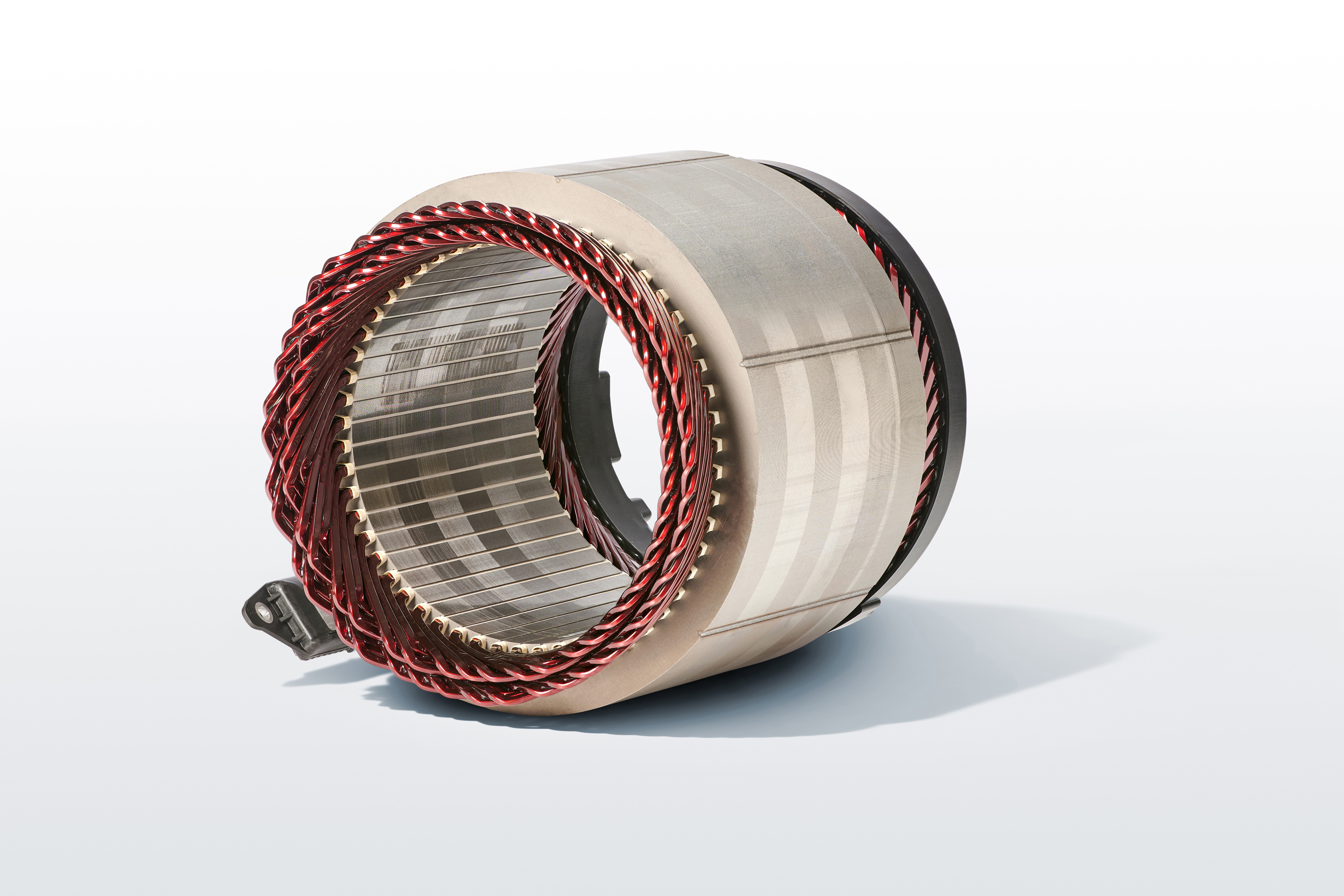
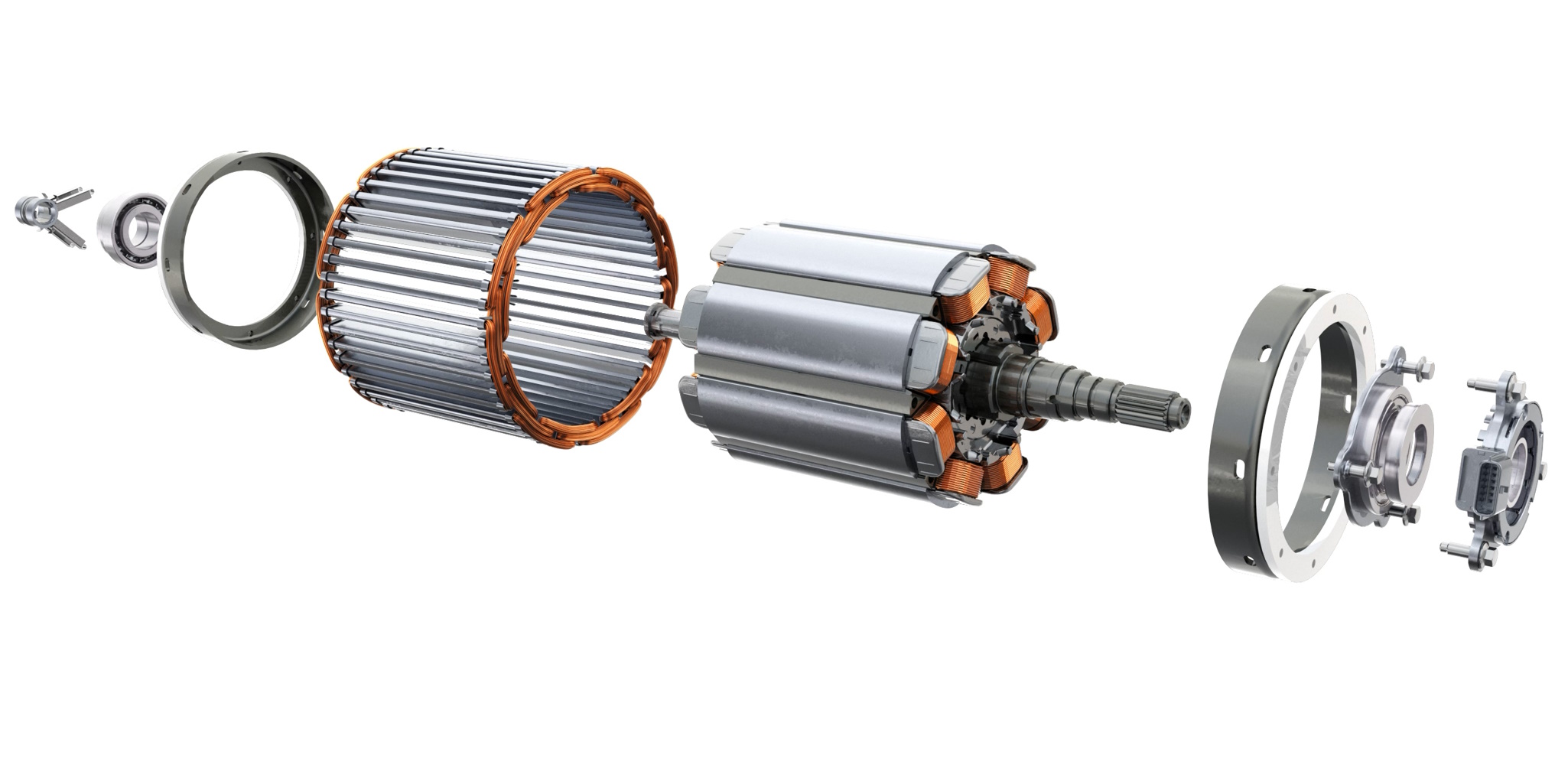
The stator is supplied with controlled three-phase current by the traction inverter, just as in other AC traction motors. A separate excitation circuit supplies direct current to windings on the rotor. That DC creates magnetic poles which lock to the stator’s rotating field, so the rotor runs synchronously with it.
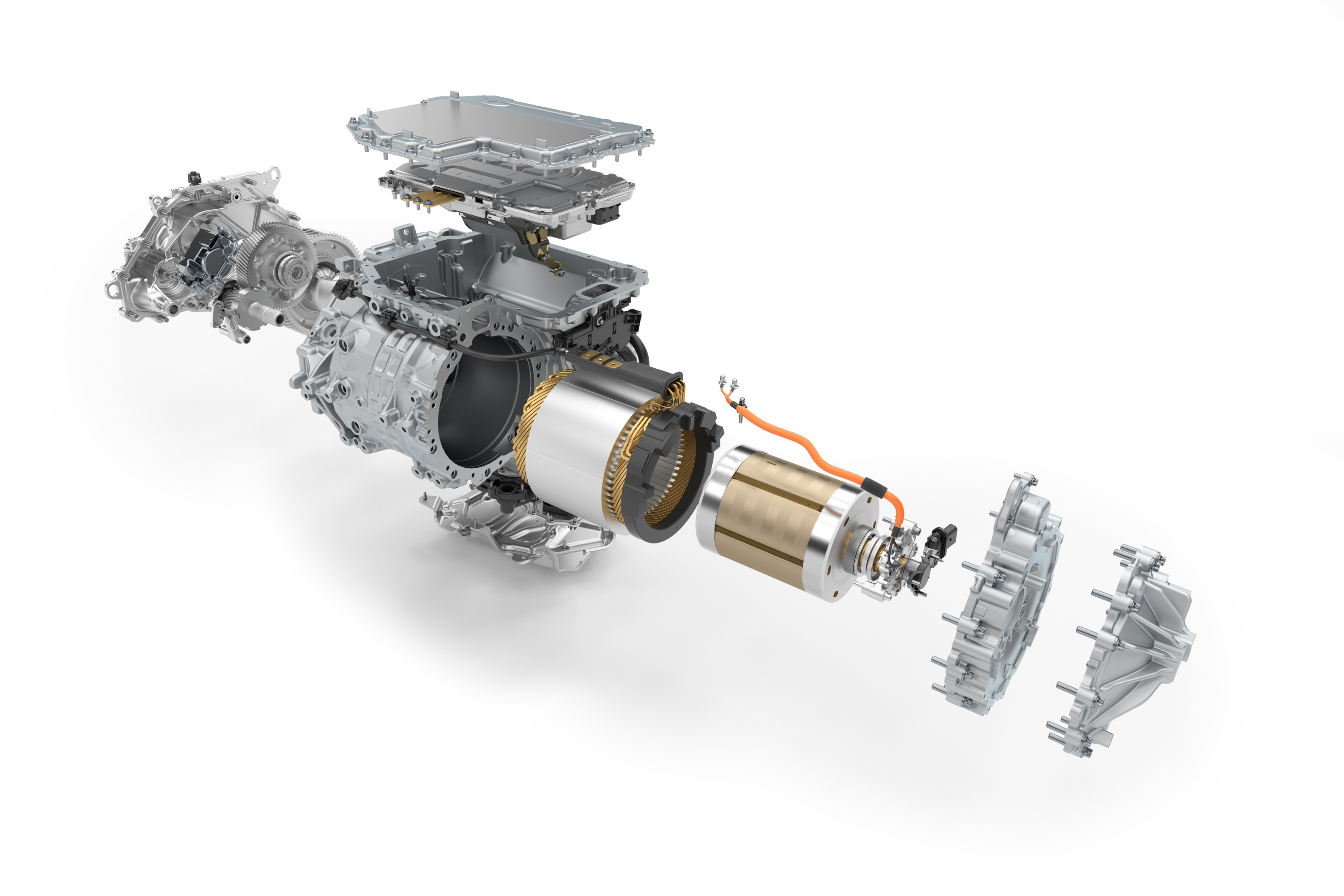
In a conventional automotive design, stationary brushes contact slip rings on the rotating shaft to deliver excitation current. The brush gear is compact and enclosed within the drive unit; it is not the commutator used by a brushed DC traction motor. Brushless exciters based on inductive, capacitive, or transformer-like power transfer are another design path, but they add components and control requirements.
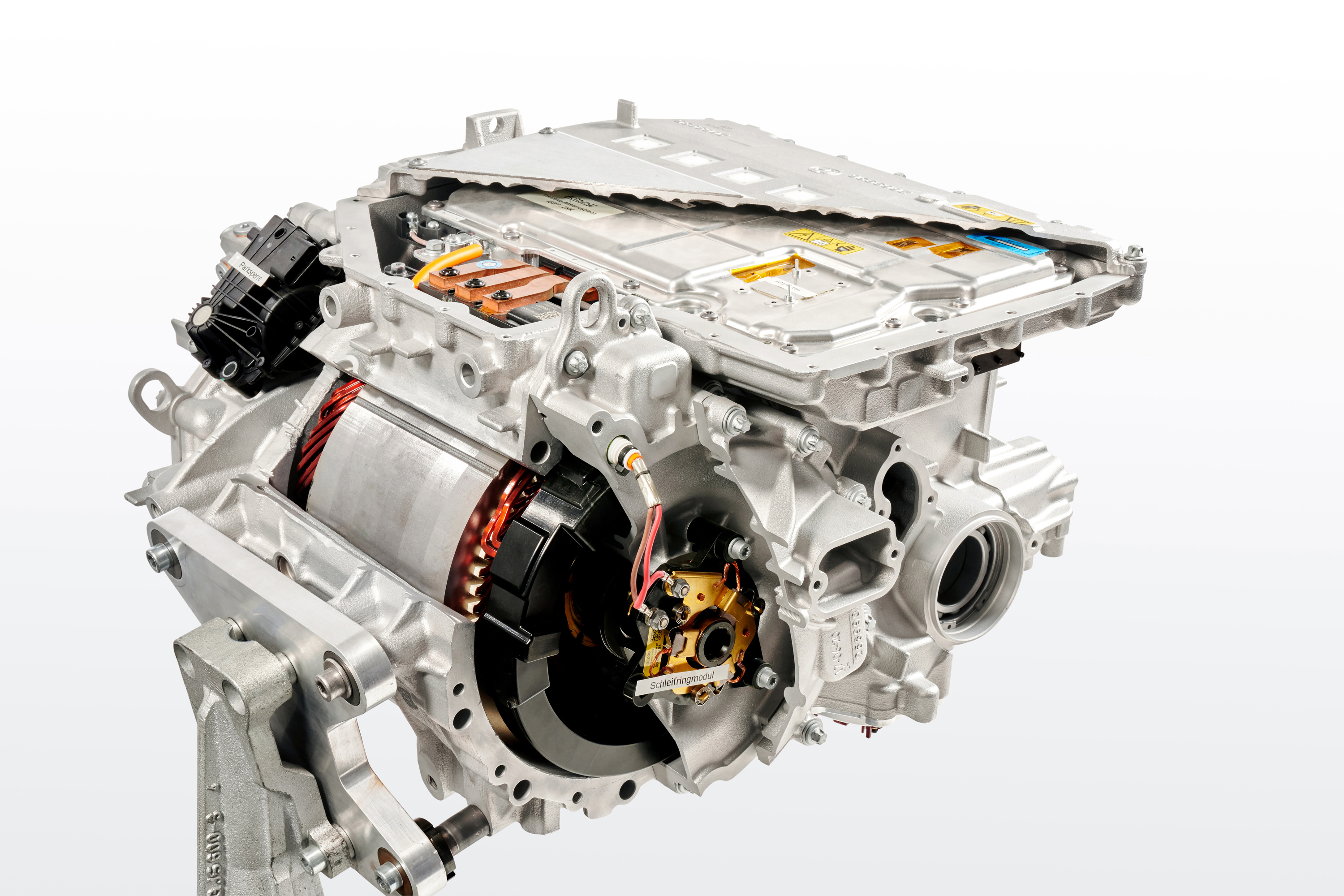
The rotor field is created by DC excitation, not by adding an external resistor to a wound induction rotor. Speed and torque are controlled through stator current, electrical frequency, current angle, and rotor field current.
A magnetic field that can be adjusted
Permanent magnets supply essentially fixed rotor flux. An EESM gives the controller another degree of freedom: excitation current.
At high torque, the controller can strengthen the rotor field within thermal, inverter, and magnetic limits. At light load, it can reduce excitation to avoid carrying more flux than the operating point needs. At high speed, it can weaken the field directly, reducing back EMF without relying entirely on opposing stator current.
This flexibility can widen the efficient operating region and simplify high-speed field weakening. The best current combination is still a system optimization: stator copper loss, rotor excitation loss, inverter loss, voltage, torque, speed, and temperature must all be considered together.
Why EV makers choose it
The rotor needs no permanent magnets, so the design can avoid the rare-earth materials commonly used in high-power-density PMSMs. That changes exposure to magnet prices and processing supply chains, although the complete motor still uses substantial copper and electrical steel.
Controllable flux is useful across a wide speed range. When an axle is not producing torque, field current can be reduced or removed, limiting magnetically induced losses. In a fault, the control system can also remove rotor excitation, although stored magnetic energy and induced voltage must still be handled safely.
The architecture can provide high power and stable high-speed operation. Its benefit is not “free efficiency”: energy used to excite the rotor becomes part of the loss calculation.
The engineering costs
Rotor excitation produces I²R copper loss in a rotating part. That heat must cross the rotor, shaft, air gap, or internal coolant path, and the excitation supply consumes power that a permanent magnet does not require.
Brushes and slip rings introduce wear surfaces, debris management, contact resistance, and another potential failure mode. Automotive systems are engineered as sealed, long-life assemblies rather than routinely serviced industrial slip rings, so a generic maintenance schedule cannot be assumed. Durability depends on brush material, current density, shaft speed, sealing, cooling, vibration, and the OEM design target.
Brushless excitation removes sliding electrical contact but adds a rotating transformer, capacitive coupler, or other field-power hardware plus rectification and control. It moves the trade-off rather than eliminating it.
Power density and cost also depend on the excitation assembly, rotor winding space, cooling, and inverter rating. A well-designed EESM can compete strongly with permanent-magnet and induction drives, but no single topology wins at every operating point.
Production examples
BMW’s fifth-generation eDrive uses current-excited synchronous motors in vehicles including the i4, i5, i7, and iX. BMW states that the rotor field is produced electrically, allowing rare-earth magnetic materials to be omitted from these motors.
Renault also identifies its EESM rotor technology as a magnet-free path and has developed it across multiple electric powertrains. The two manufacturers’ implementations should not be assumed identical: winding, brush gear, cooling, control, voltage, and integration remain proprietary design choices.
When comparing EESM vehicles, useful data include peak and continuous output, maximum speed, the combined motor-and-inverter efficiency map, excitation method, cooling, and whether quoted efficiency includes rotor-field power.
Return to Electric Motors and Drive Units.