
Charging Loss
Charging loss is the difference between electrical energy measured at one point in the charging path and the energy retained by the traction battery. The measurement boundary must be stated, because “energy from the wall,†“energy delivered by the charger,†and “energy stored in the battery†are not the same quantity.
Where the measurement is taken
Commercial charging equipment records transaction energy in kilowatt-hours for display and billing. Legal-metrology requirements define how that delivered energy is measured near the vehicle connection. The meter does not measure the battery cells' final chemical energy.
For AC charging, a building meter can include losses in the charging equipment, cable, onboard charger, battery, and vehicle systems. For DC charging, the external charger performs the main AC-to-DC conversion, while the transaction meter may report energy delivered at the charger-to-vehicle connection. Comparisons are only meaningful when they use the same boundaries.
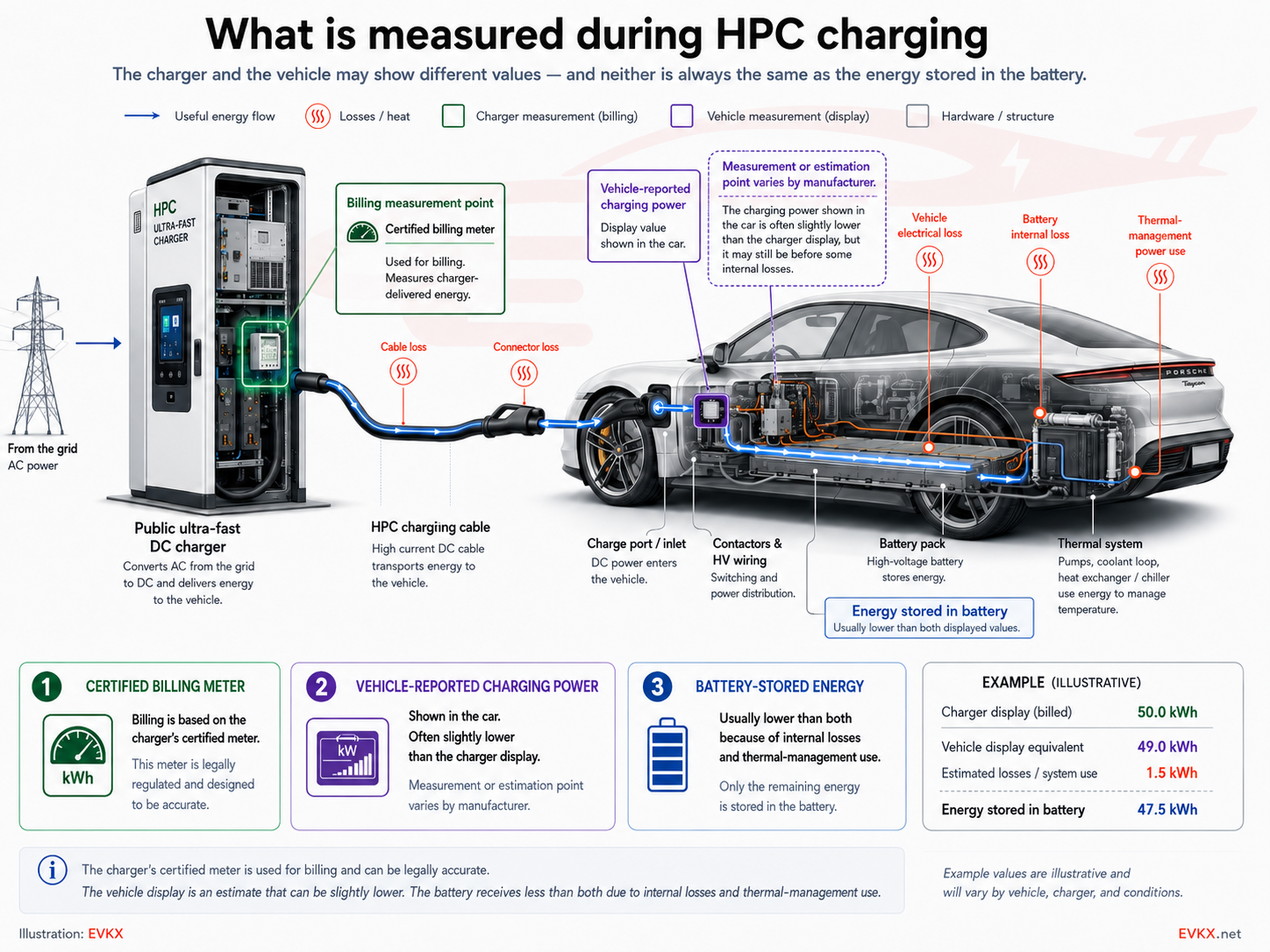
The charger and vehicle can also show slightly different power or energy because they use separate sensors, sampling, rounding, and display logic. That difference is not by itself evidence that either meter is faulty.
Where energy goes
Energy can be converted to heat or used by equipment that must operate during the session:
- cables, contacts, busbars, and battery cells have electrical resistance;
- power electronics consume energy during conversion and control;
- pumps, fans, valves, heaters, and compressors manage battery temperature;
- battery-management and low-voltage systems remain active; and
- cell balancing or other pack-management tasks may use energy.
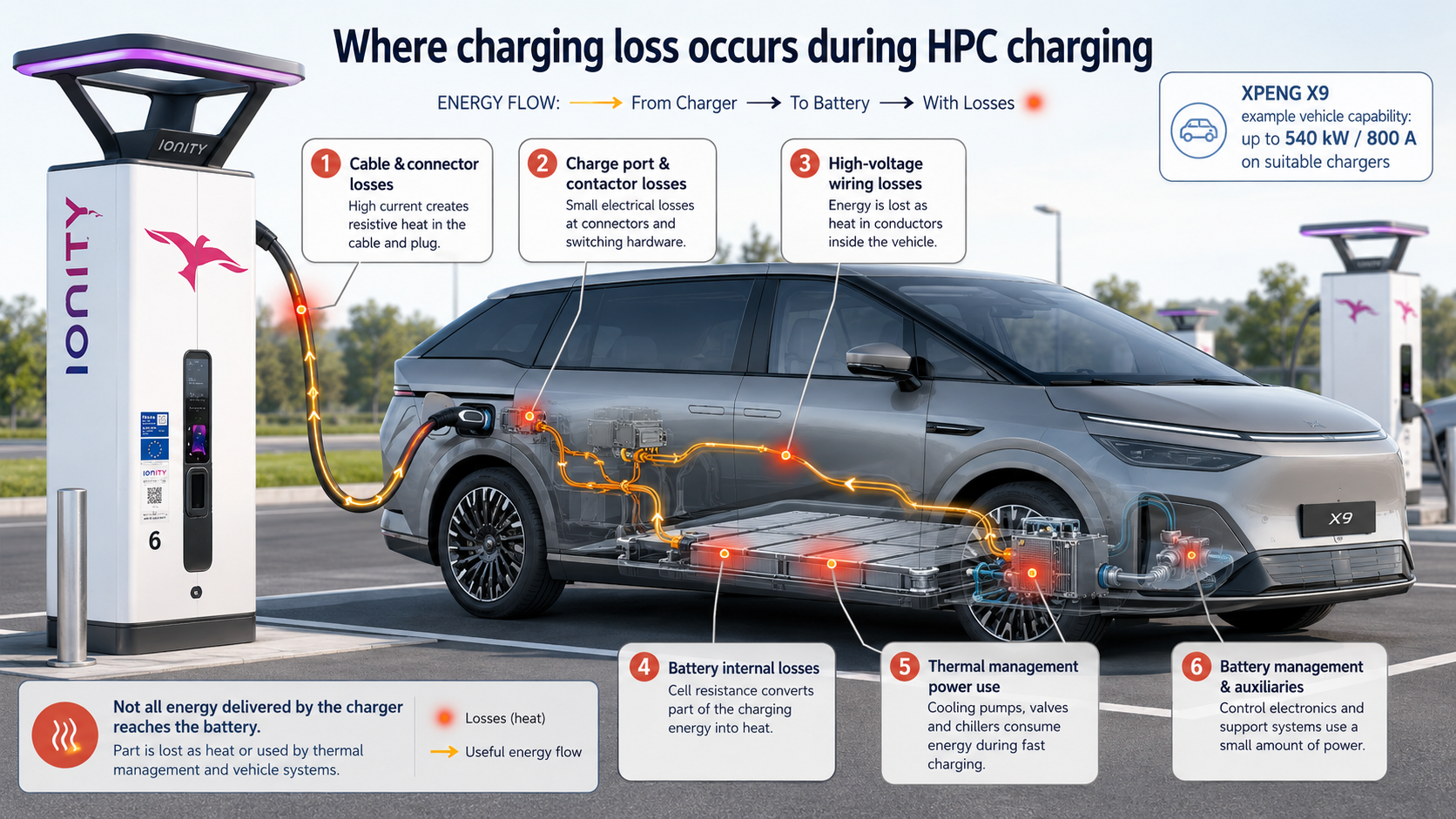
Loss is not a fixed percentage. Current, voltage, state of charge, battery and ambient temperature, charging power, equipment efficiency, and session duration all affect it. Higher current increases resistive heating, while a cold or hot battery may require extra conditioning.
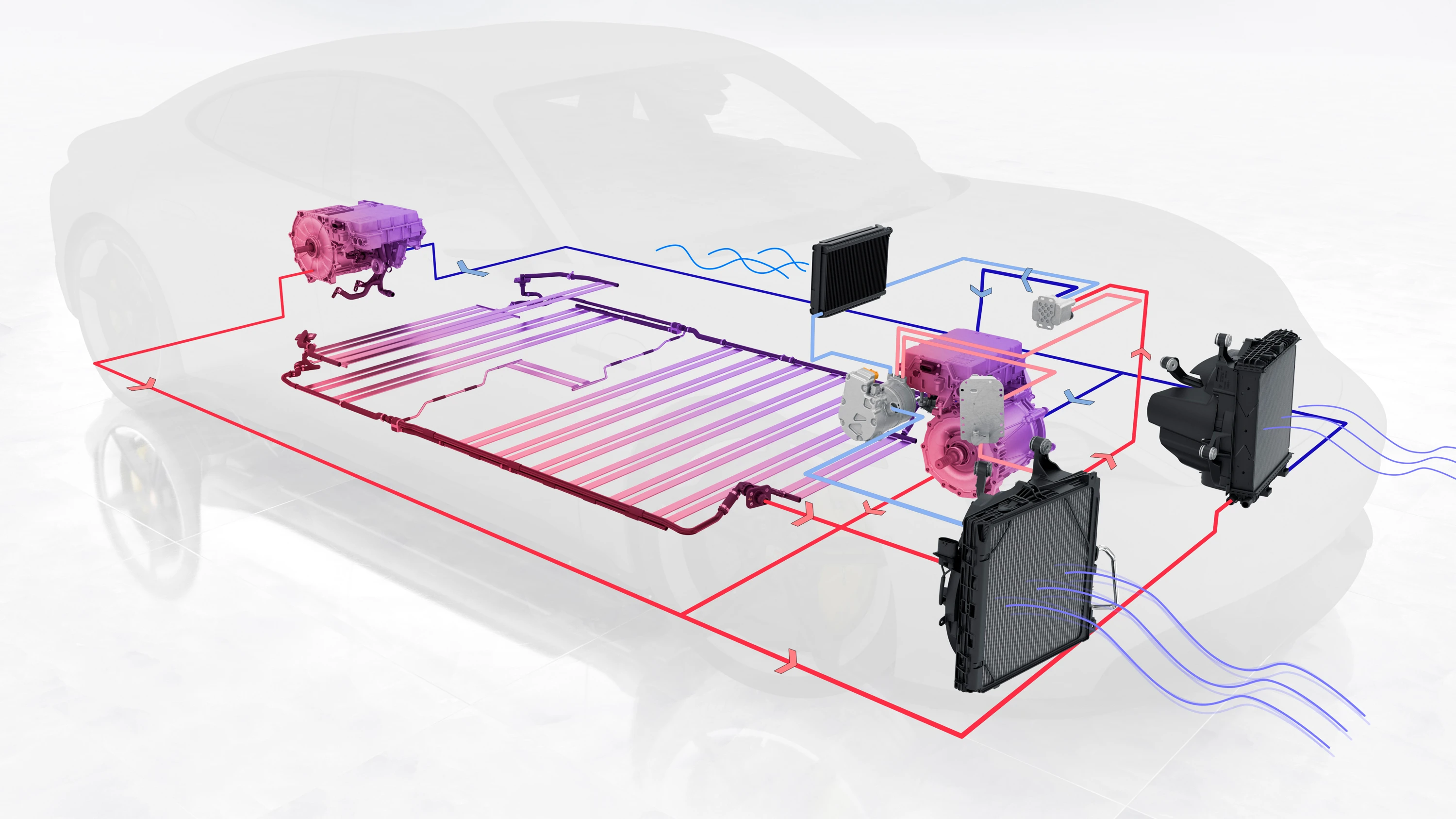
Cooling capacity is not the same as electrical consumption: a thermal system can move more heat than the electrical power used by its compressor and pumps.
Calculating and comparing loss
With matched measurements, the basic calculation is:
Charging loss = energy measured upstream - increase in stored battery energy
Charging efficiency can be written as stored-energy increase divided by upstream energy. In practice, the stored-energy increase is difficult to know precisely. State-of-charge percentages are rounded estimates, usable capacity changes with conditions and aging, and background vehicle loads may continue after the session. Multiplying a displayed percentage change by a nominal battery capacity is therefore only an estimate.
For consistent testing, record the meter location, initial and final battery state, temperature, charging mode, session duration, and any post-charge conditioning. Regulatory consumption figures may use their own defined boundary; for example, U.S. EPA label energy consumption accounts for AC charging losses.
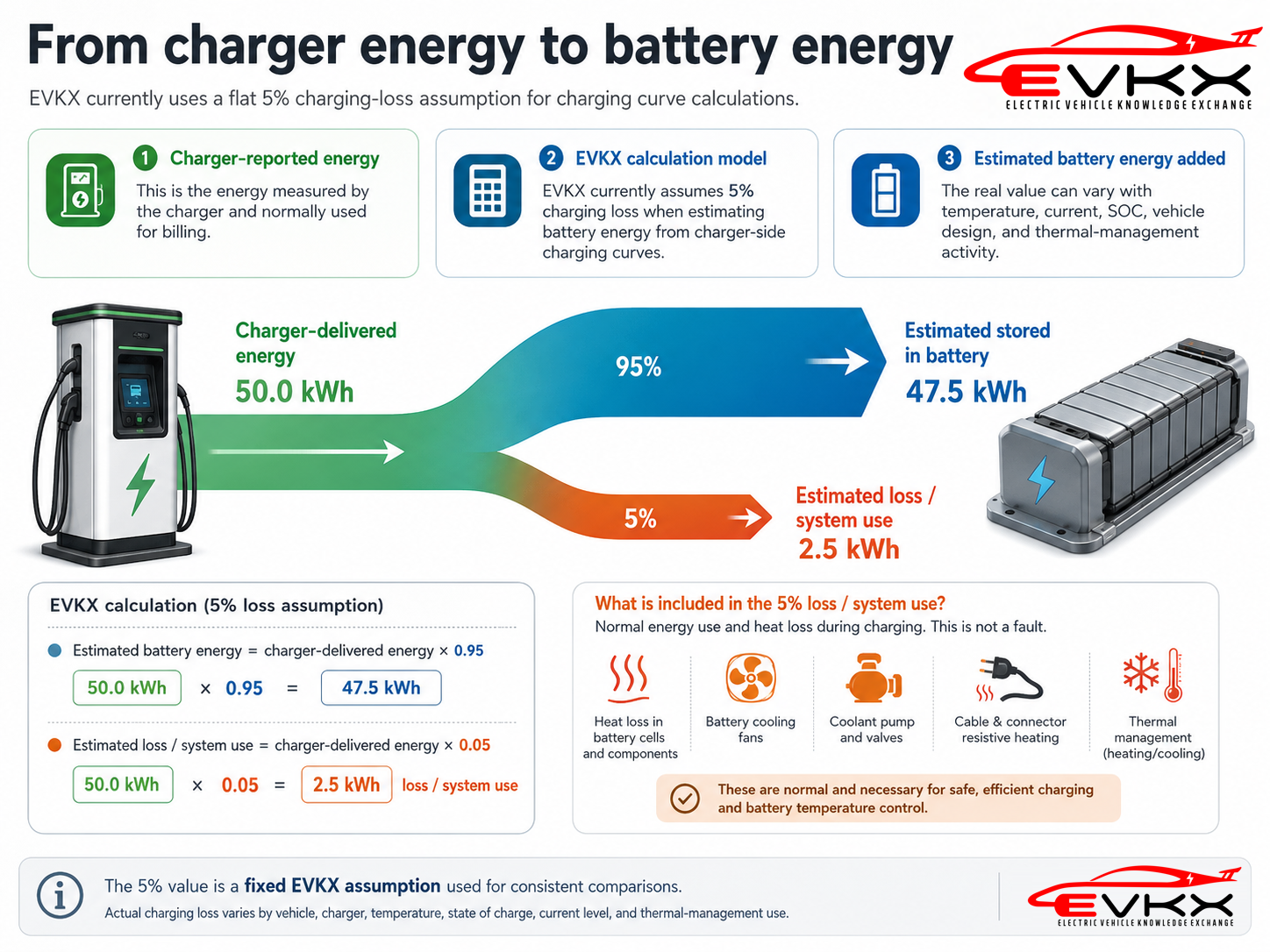
EVKX's travel-calculator model uses a flat 5% charging-loss assumption when converting charger-delivered energy into estimated battery energy. This is a calculation convention for route estimates, not a measured value for every car or session. See Range and Travel Calculator for the model assumptions and DC Fast Charging for the charging path.
For drivers, charging loss mainly affects electricity purchased, charging cost, and the time required to add a given amount of battery energy. It should be kept separate from driving consumption, charger idle fees, and uncertainty in the displayed state of charge.