
Mirrors and Camera-Monitor Systems
Mirrors and camera-monitor systems are the vehicle’s indirect-vision interface: they turn areas outside the driver’s direct view into information for lane changes, reversing, parking, and awareness of nearby road users. Their quality depends on field of view, image geometry, placement, visibility in poor conditions, and how naturally the driver can interpret distance and movement.
Interior and exterior mirrors
A conventional interior mirror provides a reflected view through the rear window. Manual day/night mirrors change the reflective path to reduce glare; automatic-dimming mirrors vary reflectance electronically. Cargo, passengers, body shape, or a small rear window can restrict the view.
A digital interior mirror uses a rear-facing camera and a display in the mirror housing. It can provide a wider, unobstructed view when cargo or occupants block the glass. Many systems can switch back to an optical mirror, which also gives the driver a direct fallback and a quick comparison of magnification.
Exterior mirrors cover the areas beside and behind the vehicle. A flat mirror preserves unit magnification but shows a narrower field. Convex or aspheric sections widen coverage while changing apparent object size and distance. Requirements and warning text vary by market.
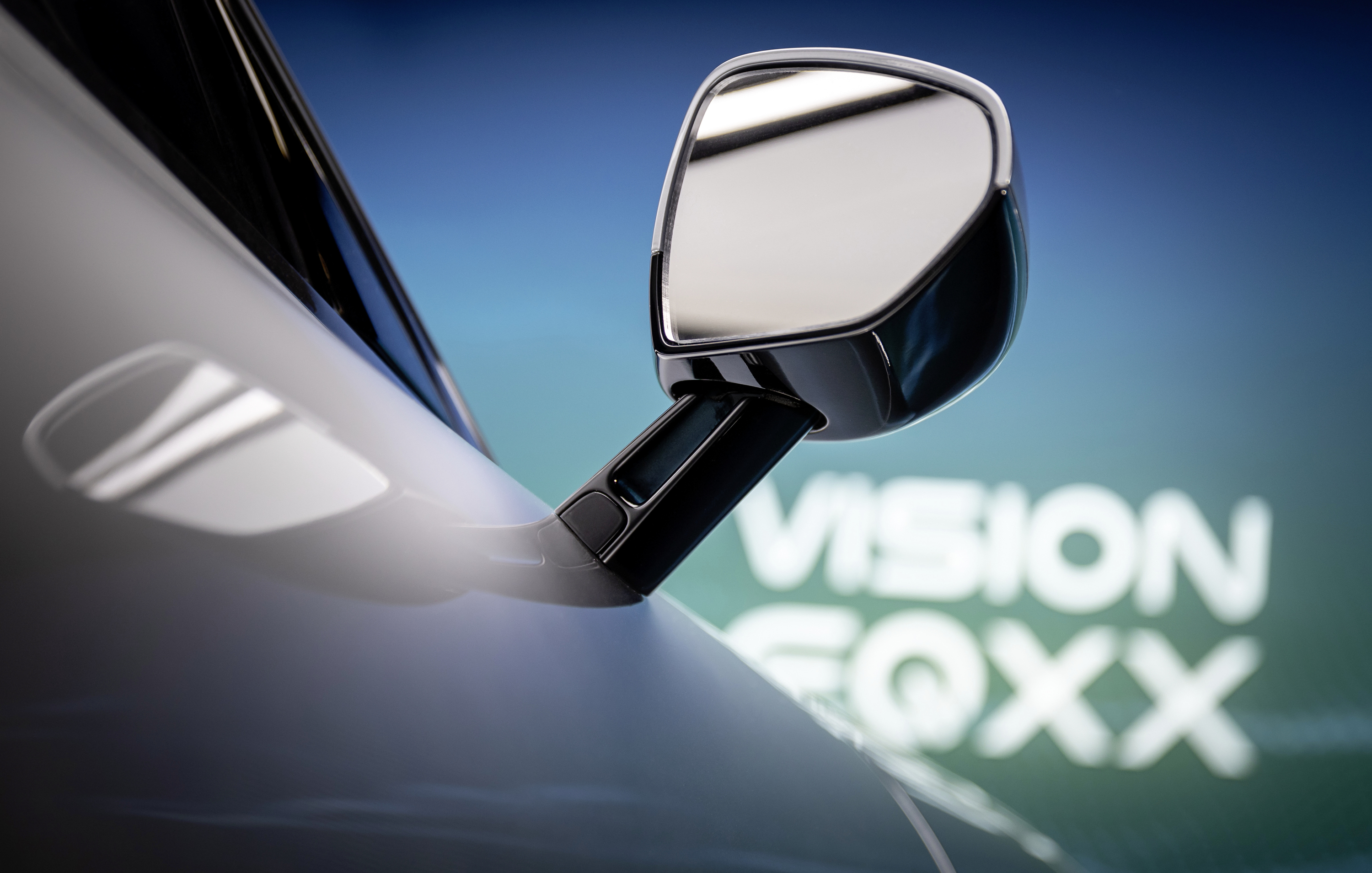
Heating, water management, power folding, reverse tilt, memory, and blind-spot indicators improve usefulness but do not replace correct adjustment or a direct observation when traffic conditions require it.
Camera-monitor systems
A camera-monitor system replaces or supplements a reflective mirror with an exterior camera and an interior display.
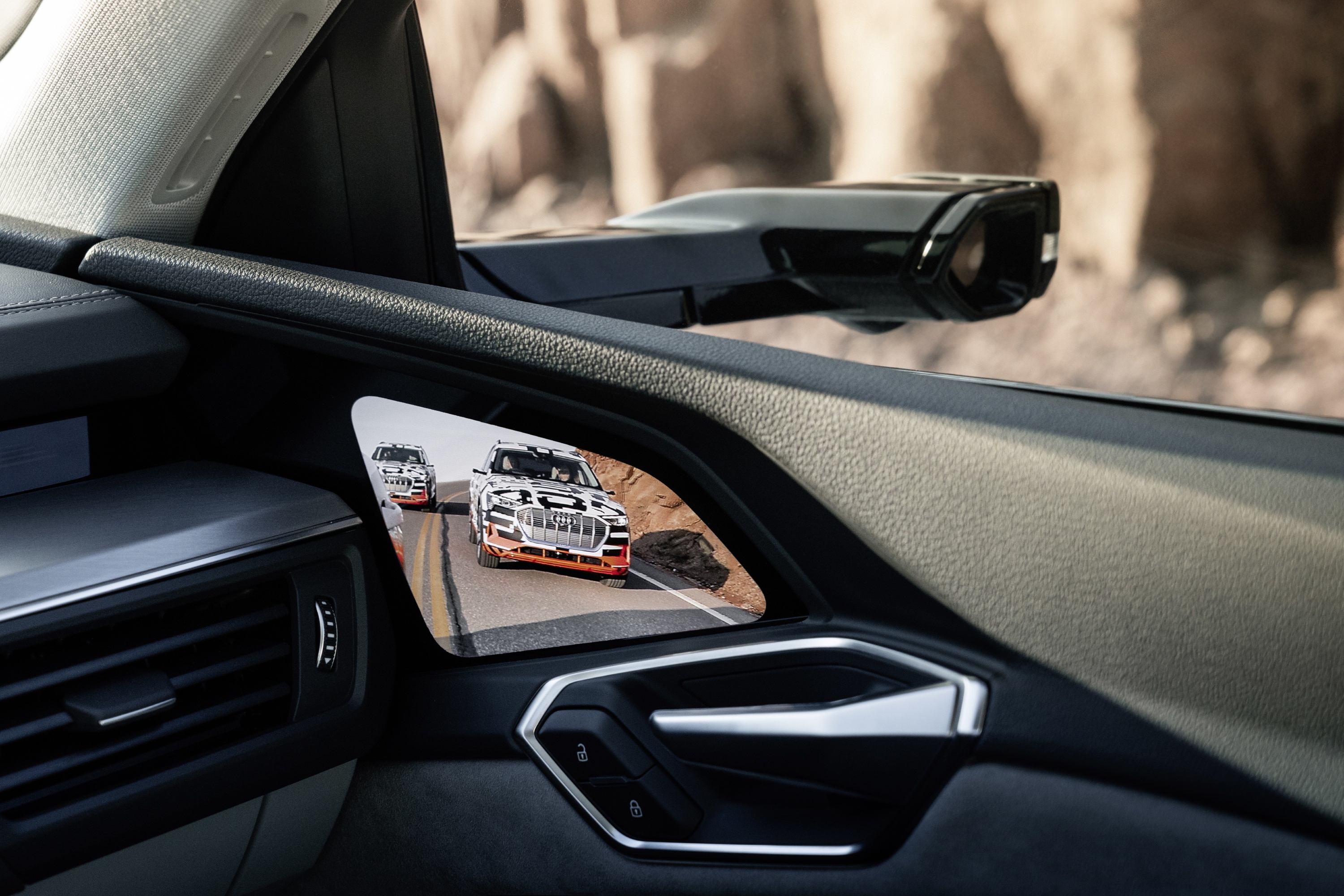
Potential advantages include a smaller exterior housing, a configurable field of view, automatic exposure, glare management, and overlays for selected warnings. The aerodynamic gain depends on the complete vehicle and should not be inferred from the presence of cameras alone.
The trade-offs are equally physical:
- rain, snow, dirt, salt, glare, or condensation can obstruct the lens;
- low light can add noise, blur, or delayed exposure changes;
- a display can fail, freeze, or suffer latency;
- magnification and perspective may differ from a familiar mirror;
- screen position can require a new glance direction;
- the eye must focus at the display distance rather than on a reflected virtual image;
- camera or calibration faults need an immediate, understandable warning.
The system needs a cleaning strategy, usable low-light performance, controlled latency, and failure behaviour that preserves the required indirect view.
Regulation is market-specific
UN Regulation No. 46 covers devices for indirect vision in markets applying the regulation. Its current framework includes conventional mirrors and camera-monitor systems, with defined fields of vision and performance provisions. This does not mean that any camera and screen can replace a mirror; the complete approved system must satisfy the applicable requirements. UNECE — UN Regulation No. 46 on devices for indirect vision
In the United States, Federal Motor Vehicle Safety Standard No. 111 establishes rear-visibility requirements, including mirror and rearview-image provisions. NHTSA’s compliance test procedure describes required mirror performance and location for vehicle categories. Approval of camera-only replacements therefore cannot be assumed from a vehicle sold in another market. NHTSA — FMVSS No. 111 rear-visibility compliance test procedure
Buyers should judge the exact equipment certified for their country, not the model’s global marketing images.
Human-factors details
Field of view is only the start. The driver also needs to judge relative speed, lane position, and time to conflict. A wider view can make objects appear smaller. A digital zoom can change scale between modes. Overlays can help identify a warning, but too much graphic content may mask the scene.
Display placement should preserve a consistent scan path. A door-mounted screen placed far below the conventional mirror position may require a longer downward glance. A bright screen can disturb night adaptation; a dim one may hide detail in daylight. The transition between a bright tunnel exit, darkness, headlight glare, and wet weather is more revealing than a showroom image.
The HMI should distinguish:
- a detected object from a general blind-spot warning;
- a temporarily obstructed camera from a system failure;
- a changed field-of-view mode from the normal view;
- a parking view from the view intended for road-speed driving.
Warnings should explain the limitation and identify which view remains available.
What buyers should check
- Can every required view be adjusted for the normal seating position?
- Do camera screens sit near the expected mirror glance path?
- Is distance easy to judge without a distracting change in magnification?
- How does the view handle darkness, headlights, rain, and a dirty lens?
- Does the system recover quickly after moving from dark to bright conditions?
- Is image motion smooth and low in latency?
- Can a digital interior mirror switch to an optical view?
- What warning appears if a lens is blocked or a camera fails?
- Are replacement windscreen, camera alignment, and calibration requirements documented?
- Is the exact mirror or camera configuration approved in the buyer’s market?
A good indirect-vision system becomes transparent in use. It gives a stable, interpretable view and makes any limitation impossible to mistake for a clear scene.