
Automotive lighting in electric vehicles
Vehicle lighting has four jobs: help the driver see, make the vehicle visible, communicate intent and give occupants usable information without creating distraction. Electric cars use the same regulated functions as other vehicles, but software control, compact LEDs and digital optics have made lighting a much more integrated part of EV design.
The complete lighting system
Automotive lighting is easiest to understand as four connected layers.
- Road illumination includes low beam, high beam, cornering light, front fog light and adaptive beam functions.
- Conspicuity and signalling includes daytime running lights, position lamps, brake lights, turn indicators, hazard lights, reversing lamps, rear fog lights, side markers and reflectors.
- Interior illumination and communication includes instrument lighting, switches, map and reading lights, footwell and cargo lighting, ambient light and visual warnings.
- Control and diagnostics includes sensors, cameras, levelling, light-source drivers, body controllers, software, fault monitoring and market-specific configuration.
The light source is only one component. Real performance depends on the beam pattern, aim, mounting height, sensor accuracy, thermal control, switching logic and the way the system behaves after a fault. A vehicle can have LED or matrix-branded headlamps and still provide weaker road illumination than a better-designed conventional system.
Headlights and forward lighting
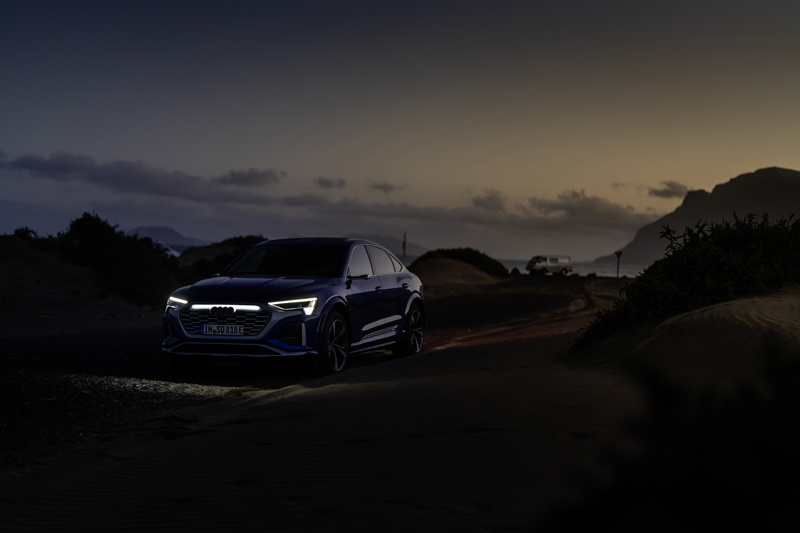
Low and high beams are different optical distributions, not simply dim and bright settings. Low beam controls light above the cutoff to limit glare while providing usable foreground and distance illumination. High beam sends light farther when no other road user would be dazzled.
Modern systems add curve adaptation, automatic high-beam switching and adaptive driving beams that reduce selected parts of the long-range pattern around detected traffic. High-resolution lamps can shape thousands or millions of controlled elements and, where regulations allow, project guidance or warning graphics.
Daytime running lights make the vehicle easier to notice; they are not a substitute for low beam in darkness, rain, fog or snow. Depending on the market and vehicle logic, the rear position lamps may remain off while the DRLs are active. The driver must understand what the automatic setting actually controls.
Read the detailed chapter: Headlights, daytime running lights and adaptive beams.
Rear lights and road-user communication
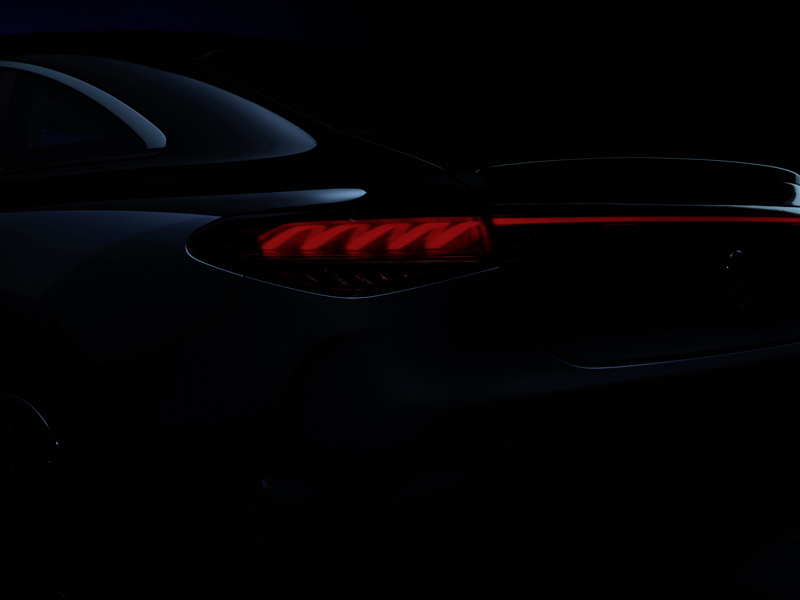
The rear lamp cluster communicates several different states that must remain distinguishable: presence, braking, intended direction, reversing, a hazard and poor-visibility operation. The center high-mounted stop lamp gives following drivers an additional, separated brake signal. Amber rear indicators are mandatory in many UN-regulation markets, while U.S. rules permit amber or red.
Regenerative braking makes switching logic particularly relevant to EVs. Under current UN passenger-car braking provisions, deceleration from regenerative or automatically commanded braking may generate the stop-lamp signal at or below 1.3 m/s² and must generate it above 1.3 m/s². Hysteresis or another control measure prevents flicker. The exact behavior a driver sees can still vary within the permitted range.
LED segmentation and OLED area emitters allow animated indicators, selectable signatures and specific warning patterns. These functions remain constrained by regulated color, brightness, timing and activation conditions. A light show is useful only when mandatory signals remain immediate and unambiguous.
Read the detailed chapter: Rear lights, turn signals and vehicle communication.
Interior and ambient lighting
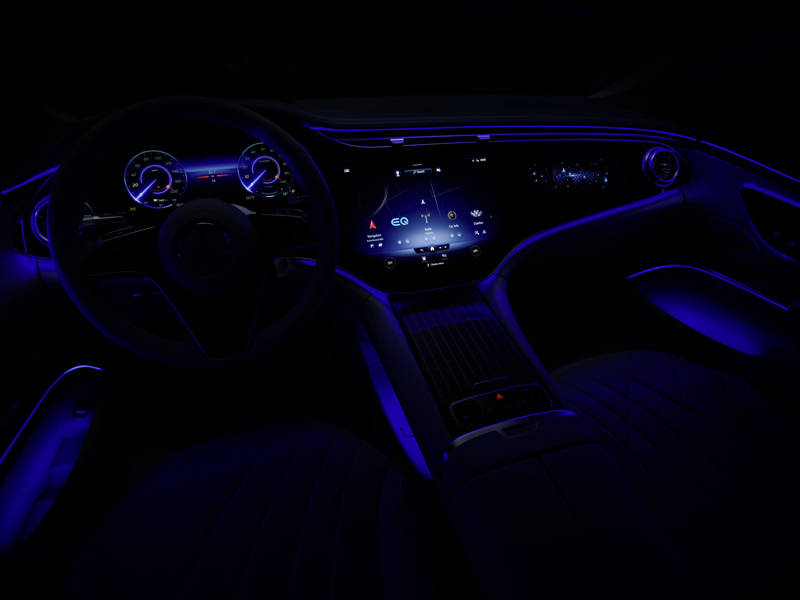
Good cabin lighting makes controls, storage and entry points easier to find while remaining dim enough to preserve the driver's view through the glass. Ambient lighting adds indirect illumination and design character, but it can also carry functional feedback for climate settings, charging, voice control or driver-assistance warnings.
Brightness, placement and reflections matter more than the number of available colors. Bright lines reflected in the windshield or side glass can be distracting, and a dynamic animation can compete with the road scene. Critical warnings should never depend on color alone; sound, text, icons and location provide needed redundancy.
Read the detailed chapter: Interior and ambient lighting.
Engineering, regulation and ownership
Modern lamps combine semiconductor sources, reflectors or projectors, electronic drivers, heat management, vehicle networks, sensors and software. The engineering chapter explains lumens, candela, lux, luminance and color temperature; it also covers regulatory systems, testing, condensation, repairability and retrofit risks.
It includes a useful scale check for EV energy use. Even efficient lighting consumes energy, but traction, cabin heating, speed, temperature, tires and aerodynamics usually dominate range. Lighting efficiency is valuable for heat, packaging and low-voltage load without being a large range claim by itself.
Read the detailed chapter: Lighting engineering, regulation and ownership.
What separates a good system from a decorative one
A capable lighting system should:
- put adequate light at useful distances on straight roads and curves;
- control glare for oncoming and preceding road users;
- keep mandatory signals easy to distinguish at every viewing angle;
- respond predictably to darkness, traffic, weather and steering;
- retain a safe basic function if a camera or advanced controller fails;
- avoid reflections and excessive brightness inside the cabin;
- explain active functions and faults clearly to the driver;
- remain serviceable after lens damage, moisture intrusion or an electronic fault.
Independent vehicle-level testing is more informative than the name of the source technology. IIHS reports that vehicles with good-rated headlight visibility have had 19% fewer nighttime single-vehicle crashes and 23% fewer nighttime pedestrian crashes than vehicles with poor-rated headlights after controlling for several risk factors. The same organization stresses that halogen, HID and LED systems can each perform well or poorly.
Why the same EV can behave differently by market
Lighting is regulated as both equipment and installation. In UN-regulation markets, UN Regulation No. 149 covers road-illumination devices, UN Regulation No. 148 covers signalling devices, and UN Regulation No. 48 governs their installation and switching on the vehicle. The United States uses FMVSS No. 108 and adopted its own adaptive-driving-beam requirements in 2022.
This can produce regional differences in adaptive-beam operation, indicator color, side markers, rear fog lights, projections, animations and software options. A global product video is therefore not a specification for every country. Check the local configurator, approval, owner manual and the equipment fitted to the exact trim.
A practical buyer check
Inspect lighting at night, not only in a showroom.
- Confirm the exact lamp option fitted to the vehicle and whether an advertised feature is standard, optional or software-licensed.
- Drive on an unlit straight road and through left and right curves; compare low beam, high beam and automatic modes.
- Check the cutoff and aim on level ground, then watch how the system handles crests, dips and reflective signs.
- Verify that rear position lamps come on with low beam and that automatic lights respond to darkness and poor weather as expected.
- Walk around the vehicle while another person operates the brakes, indicators, reverse, hazards and rear fog lamp.
- Dim interior and ambient light to a comfortable night setting and look for reflections in every window and mirror.
- Ask about complete-lamp replacement cost, calibration after windshield or suspension work, and warranty coverage for failed segments or moisture ingress.