
Interior and ambient lighting
Interior lighting should help occupants find, understand and use the cabin while preserving the driver's view outside. Ambient light adds indirect color and animation, but its value depends on placement, dimming, reflections and how clearly it supports real vehicle functions.
Ambient, task and information lighting
Interior illumination is not one system with one purpose.
- Task lighting provides directed light for reading, mirrors, storage, the center console, charge-port controls or the cargo area.
- Orientation lighting reveals door handles, footwells, steps, seat controls and other cabin boundaries.
- Control illumination makes switches, icons and touch targets legible.
- Ambient lighting provides low-level indirect light across trim surfaces and light guides.
- Information and warning lighting uses location, color or motion to support a vehicle state, interaction or safety alert.
Good task lighting puts light on an object without shining into the driver's eyes or reflecting in the glass. Good ambient lighting creates a coherent low-level field rather than a series of exposed bright points.
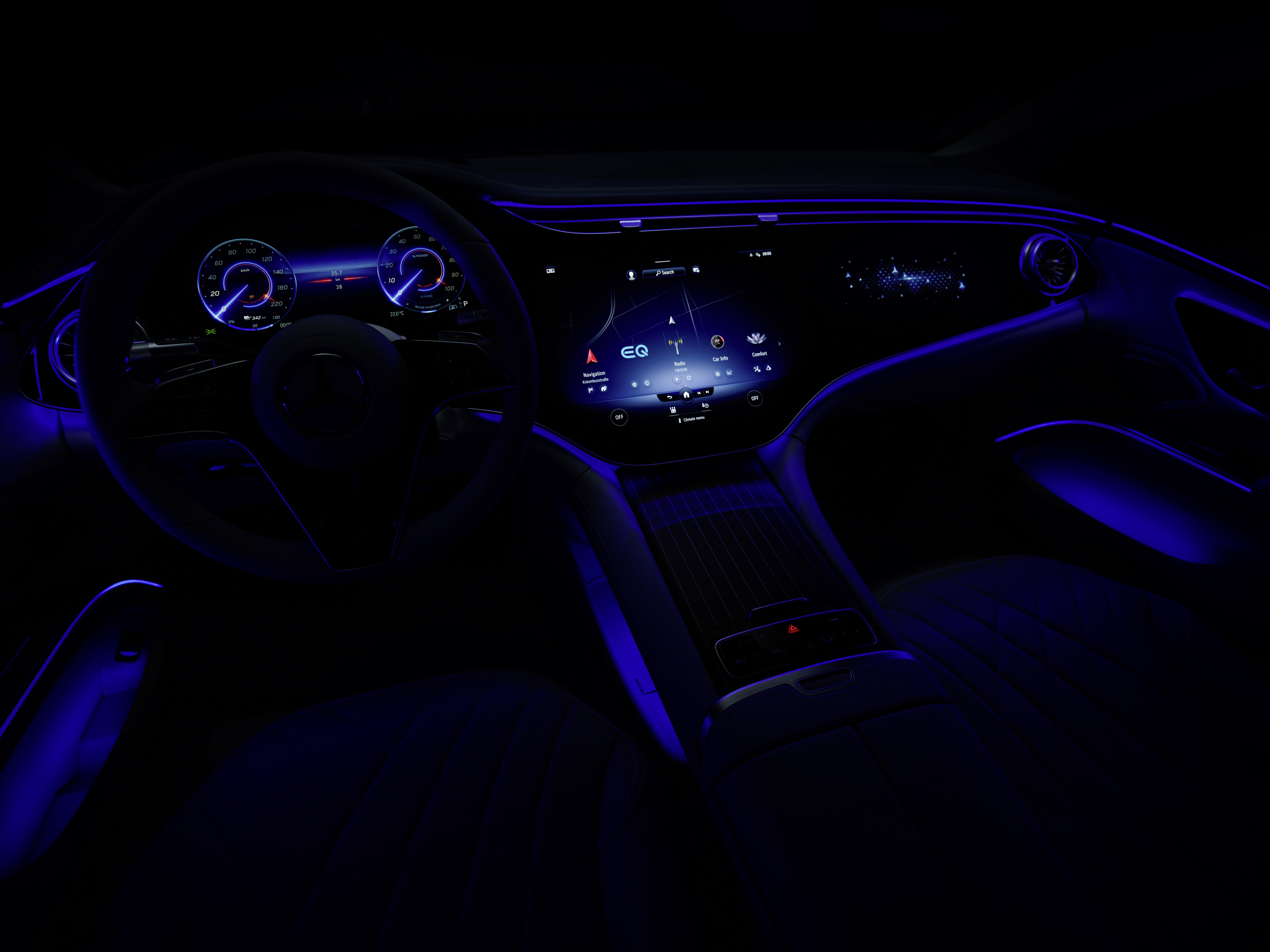
How the hardware creates a continuous line
Most systems use LEDs hidden behind trim. A light guide carries light by internal reflection, while extraction features and a diffuser release it along the desired surface. The visible line can therefore extend far beyond the physical source.
RGB LEDs mix red, green and blue channels to create a wide color gamut. RGBW systems add a dedicated white channel, which can improve neutral white appearance and efficiency compared with mixing all three color channels at once. Single-color sources remain useful where a consistent white or defined warning color matters more than personalization.
The control unit can address one zone, several zones or individual segments. More segments enable gradients and moving effects, but also make color matching, latency and uniformity harder. The eye quickly notices a bright hotspot, a dark gap at a trim joint, different whites between doors or a delayed animation.
Interior materials change the result. Glossy trim and glass create sharp reflections; matte and textured surfaces spread light. Leather, fabric, wood and colored plastics reflect different parts of the spectrum, so a nominal LED color does not look identical across the cabin.
What good ambient lighting can do
Low, indirect illumination can make storage areas, door pulls and cabin boundaries easier to locate without turning on a bright dome lamp. A visible light response can also confirm that the climate temperature changed, the voice assistant is listening, a charge process started or a drive mode was selected.
Location can make a cue easier to understand. A red warning near the door from which a cyclist is approaching is more specific than a generic message in the center screen. Mercedes-Benz uses active ambient lighting to support blind-spot and exit warnings, climate adjustments and voice-assistant feedback in some models.
Lighting must remain a secondary channel for safety-critical information. A driver can miss a color change, be color-vision deficient, have the brightness turned down or be looking elsewhere. A critical warning needs redundant sound, text, iconography or haptic feedback and should use consistent location and timing.
Night vision, reflections and distraction
The driver needs a large contrast range at night: dim instruments and controls inside, then dark objects far beyond the windshield. Excessive cabin brightness reduces visual adaptation to the road scene. Reflections can be worse than direct light because a bright line in a side window or windshield may appear to lie in the traffic environment.
A sound night setting has several properties:
- brightness can be reduced far below the daytime level;
- the driver can dim or disable decorative zones without losing required controls;
- sources are shielded from direct view;
- light strips do not reflect in the windshield, side glass or mirrors;
- moving effects become restrained or stop while driving;
- critical tell-tales retain their regulated or standardized meaning;
- settings respond predictably after a restart.
Color is part of the design, but brightness and placement usually deserve attention first. Deep blue light can appear dim to some observers while a saturated red line can dominate a dark cabin. A white selected in the menu may differ across materials and viewing angles.
The claim that ambient lighting automatically reduces eye fatigue is too broad. A dim orientation field may reduce the need to search in darkness, while a bright or reflective system can make night driving worse. The effect depends on luminance, contrast, location, task and driver, not the existence of colored LEDs.
Color, emotion and health claims
People associate colors with different meanings, but those associations are affected by culture, context, saturation and personal preference. A manufacturer can create a calming preset or an energetic animation as a user-experience choice; that is not evidence of a repeatable medical or safety effect.
Claims that a short exposure to cabin lighting resets circadian rhythm, prevents fatigue or improves health need direct evidence for the exact intensity, spectrum, duration and use case. A vehicle should never use colored light as a substitute for rest or a driver-monitoring intervention.
The CIE has also cautioned against using "blue-light hazard" as a catch-all term for discomfort or well-being. For general white-light sources at similar color temperatures, LED and incandescent exposure limits are similar. The practical cabin concerns are brightness, direct view, reflections, flicker, duration and the driver's task.
Personalization and design quality
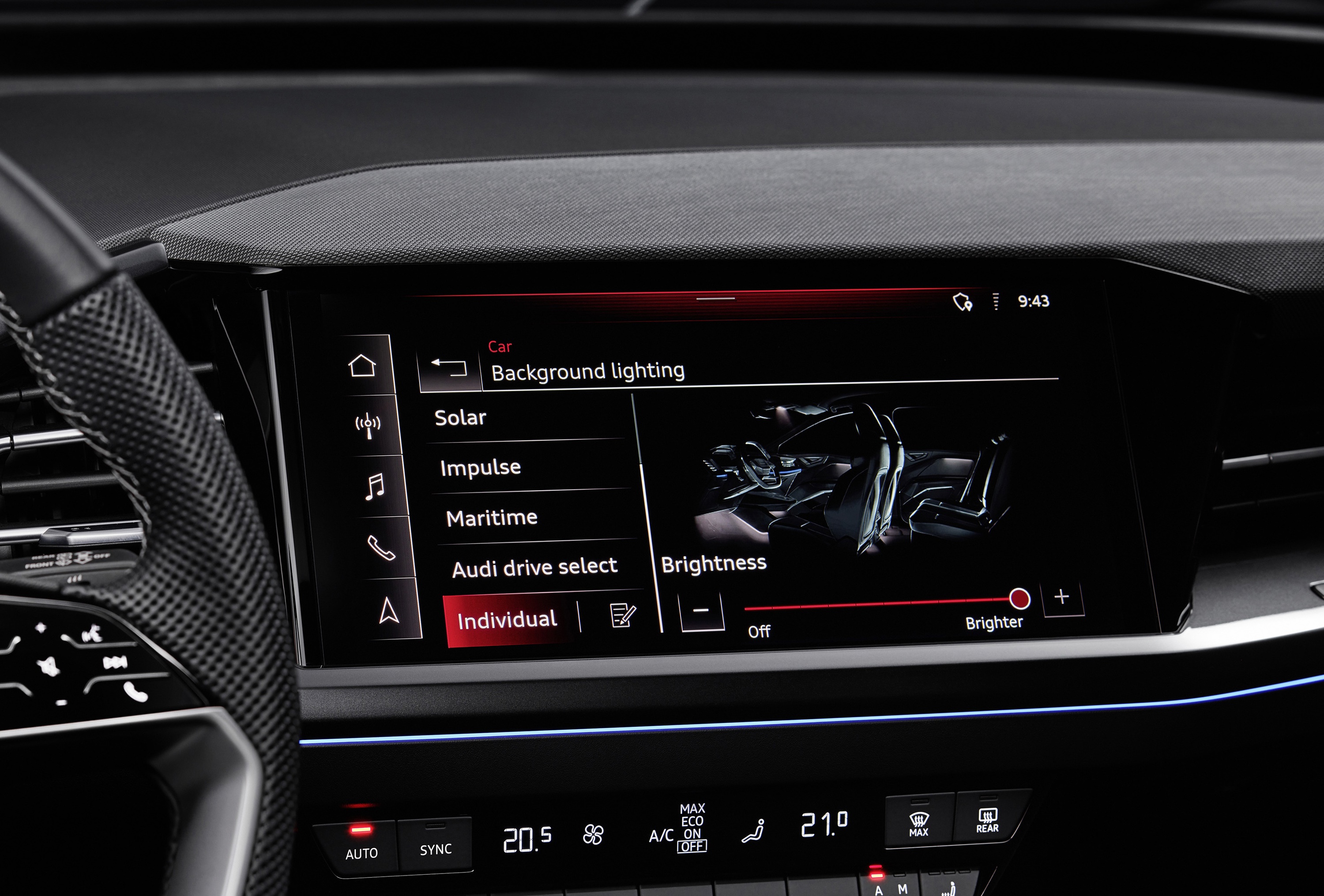
Color choice is the most visible feature, but a mature system also provides:
- separate control of footwell, door, dashboard and rear-seat zones;
- a true low night level with smooth dimming;
- consistent white and color across the cabin;
- profiles linked to individual users or keys;
- a simple way to return to a neutral setting;
- clear separation between decorative themes and warning colors;
- animation speed that does not compete with the driving scene.
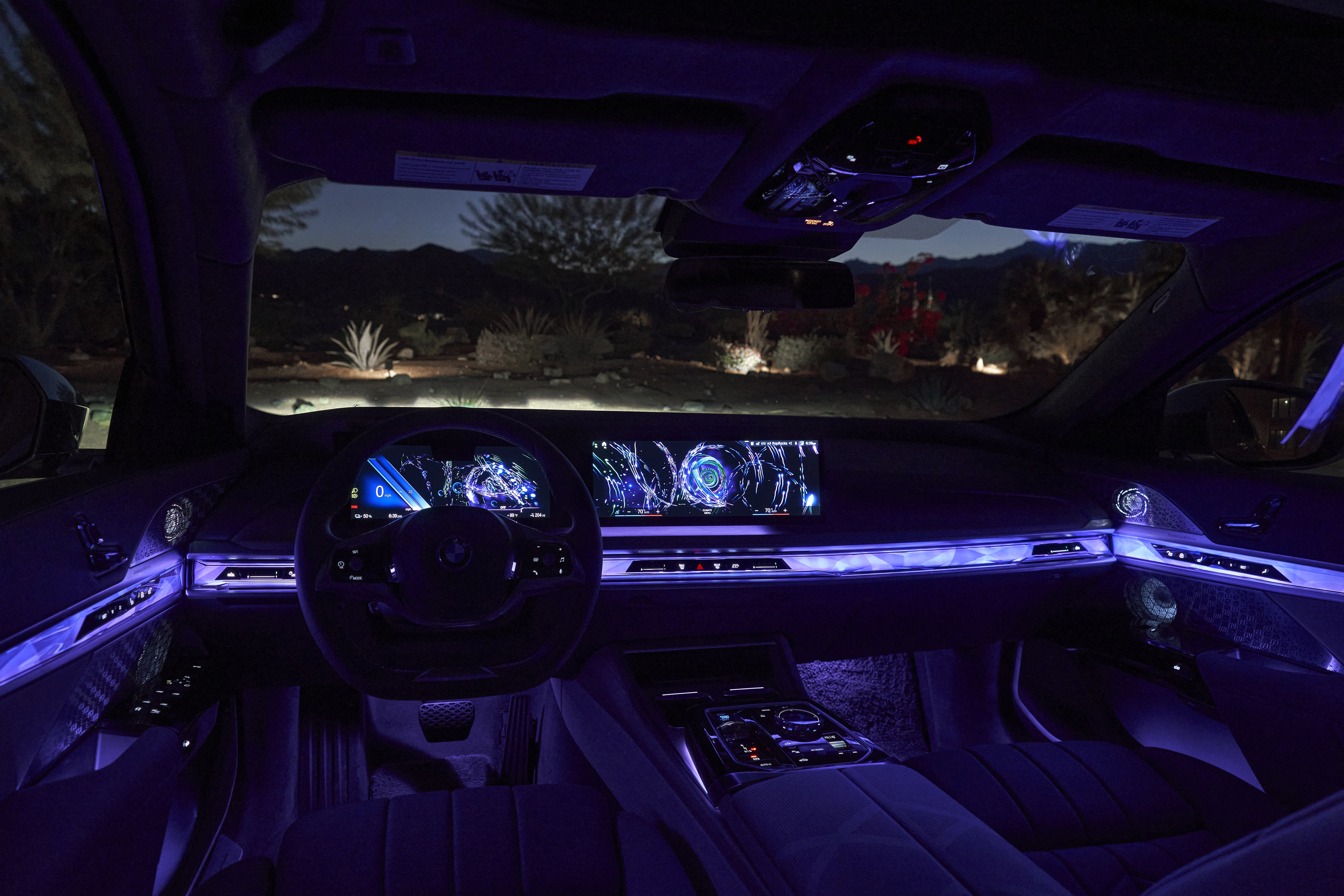
Some vehicles synchronize lighting with music. That can be an entertainment feature while parked or for passengers, but rapid high-contrast changes near the driver's field of view can become distracting. A good implementation limits intensity and motion during driving and allows the effect to be disabled independently.
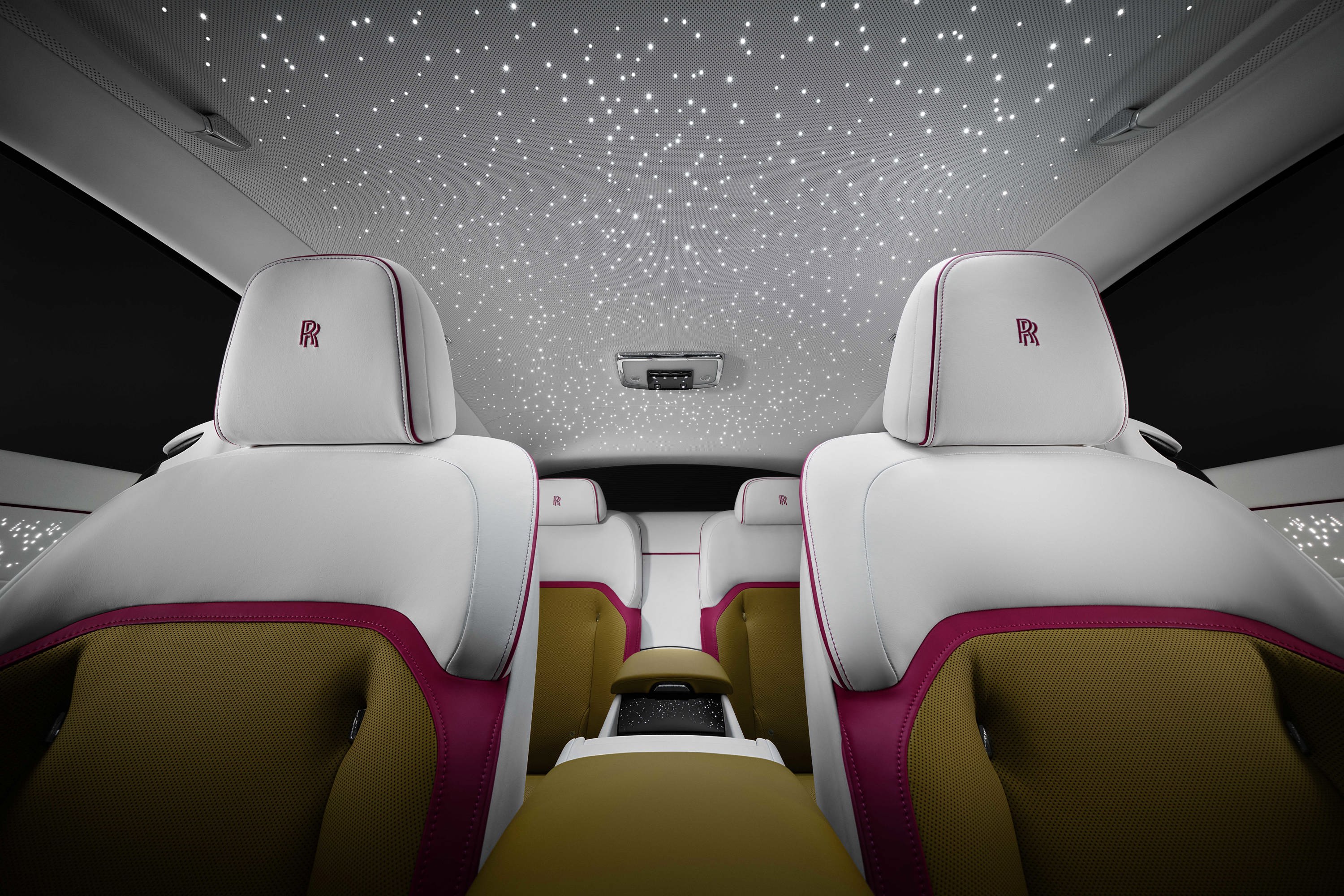
Headliner illumination, illuminated speaker grilles, backlit trim and hidden-until-lit surfaces extend ambient light beyond strips. They create a richer cabin only when the system remains visually quiet at its lowest setting.
EV-specific uses
EVs can connect interior light to states that do not exist in the same form on a combustion vehicle:
- charge-port unlocked, cable connected, charging, complete or fault;
- battery preconditioning and scheduled departure;
- vehicle-to-load or external-power operation;
- regenerative-braking or drive-mode selection;
- parked climate operation while occupants remain in the cabin.
These cues should follow a consistent hierarchy. A charging fault needs a clearer and more persistent indication than a decorative welcome theme. Because the vehicle may remain awake for long parked sessions, lighting software should also manage low-voltage energy and shut down nonessential effects predictably.
EV architecture does not make interior lighting inherently more advanced. It does, however, make software-defined states, a quiet cabin and long parked use more visible to occupants, which increases the value of coherent feedback.
Accessibility and warning design
Color should reinforce meaning, not carry it alone. Red-green color-vision deficiencies, low vision, tinted lenses and bright daylight can all reduce a color cue's effectiveness. Designers can add shape, location, direction, motion, text and sound.
A useful warning sequence is brief, local and proportional. An exit warning can move toward the relevant door; a climate adjustment can use a short warm or cool pulse; a serious fault should use the instrument display and chime as primary channels. Reusing the same animation for entertainment and danger weakens the vocabulary.
Owners should be able to reduce decorative brightness without silencing safety alerts. If the menu does not make that distinction clear, the driver needs to consult the manual rather than assume the warning layer is independent.
Durability and service
Ambient systems contain many small components: LEDs, flex circuits, connectors, light guides, diffusers and clips. A trim repair can create a bright gap, color mismatch or rattle even when the electronics still work. Replacing one door module may also reveal production variation against older modules.
Very low dimming levels can expose flicker, stepping or uneven segment control that is hidden at full brightness. Camera footage may show banding from pulse-width modulation even when the eye does not perceive flicker; the camera artifact alone is not proof of a visual hazard.
Energy use is usually small relative to traction and climate loads, but it matters during long parked sessions and for low-voltage battery management. Efficiency should be assessed together with wake time, sleep behavior and the number of active modules.
The engineering chapter explains LED control, color metrics and low-voltage architecture: Lighting engineering, regulation and ownership.
What buyers should test
- View the cabin after full dark and reduce every lighting zone to its minimum.
- Look for reflections in the windshield, front side windows, mirrors and panoramic roof.
- Confirm that decorative lighting can be dimmed or disabled without losing essential control illumination.
- Test map, mirror, footwell, door-handle, storage and cargo lamps as task lighting.
- Check color and brightness consistency across all doors and dashboard joints.
- Trigger available blind-spot, exit, climate, charging and voice-assistant cues in a safe setting.
- Verify that warnings use more than color and remain clear with a custom theme selected.
- Restart the vehicle and confirm that the preferred night setting persists.
- Ask whether failed light guides or modules are replaceable separately from complete trim panels.
Return to the series overview: Automotive lighting in electric vehicles.
Sources
- Mercedes-Benz: active ambient-lighting hardware and functions
- Mercedes-Benz: ambient-light support for exit and blind-spot warnings
- NHTSA visual-manual driver-distraction guidelines
- U.S. Department of Energy: LED color and source fundamentals
- CIE position statement on the blue-light hazard
- Lighting Research & Technology: influence of vehicle ambient lighting on driver perceptions