
Electric Vehicle Body Types: A Practical Guide
Body style shapes how an EV carries people and cargo, moves through the air and fits into daily life. The badge on the tail is only a starting point: roofline, rear opening, ride height and packaging matter more than the marketing label.
What body type does — and does not — tell you
A body type describes the vehicle’s physical configuration. Number of doors and windows, roofline, cargo arrangement and the way the rear opens are the useful clues. That is close to the definition used in US vehicle-identification rules, while European type-approval assigns formal codes to saloon, hatchback, station wagon, coupé, convertible and multi-purpose bodies. 49 CFR 565.12 — body-type definition EU Regulation 2018/858 — vehicle categories and bodywork codes
Body type is not the same as size, segment or regulatory class. A hatchback can be large, a sedan can be compact, and two SUVs of equal length can differ substantially in width, height, wheelbase and mass. US fuel-economy rules, for example, divide many passenger-car size classes by interior volume rather than exterior length. US EPA 40 CFR 600.315-82 — classes of comparable automobiles
The terminology also changes by country and manufacturer. “Estate”, “station wagon” and “kombi” can describe the same basic form. “Crossover”, “four-door coupé”, “shooting brake” and “coupé SUV” are useful market descriptions, but they do not form one globally consistent technical system. ISO 3833 remains the international vocabulary standard for road-vehicle types, yet marketing language extends well beyond its core categories. ISO 3833:1977 — Road vehicles — Types — Terms and definitions
Treat the body label as a search filter, then verify the measurements and features that matter:
- exterior length, width with mirrors, height and turning circle;
- door openings, sill height and seat height;
- rear headroom, legroom and seating positions;
- luggage-compartment shape, loading lip and underfloor storage;
- payload, roof load, tow rating and tow-ball limit;
- rated consumption and range for the exact wheel and drivetrain configuration.
Low-roof passenger cars
Low-roof cars generally present less frontal area than taller vehicles of similar width. That can help highway efficiency, but the badge alone proves nothing: the complete drag area, tyres, mass and powertrain still decide the result.
Sedan or saloon
A sedan, called a saloon in many markets, has a passenger compartment and a separate enclosed trunk. The rear glass stays fixed when the trunk lid opens. Four doors are common, but the separate luggage compartment — not the door count — is the most useful everyday distinction.
The enclosed trunk isolates luggage from the cabin and can keep road noise, cold air and loose cargo farther from occupants. Its trade-off is a smaller opening than a hatch or liftback. A sedan with a generous litre figure may still struggle with a bicycle, dog crate or bulky box because the aperture and folding-seat pass-through are restrictive.
An electric sedan’s rear-seat geometry deserves a separate check. A battery below the cabin can raise the footwell while the low roof limits how high the seat cushion can be placed. That can reduce the vertical distance from hip to heel, leaving passengers with high knees and too little support beneath the thighs even when knee room looks generous. Genesis package engineers describe this as a recurring electric-sedan challenge caused by the underfloor battery. Hyundai Motor Group — engineering rear-seat space in an electric sedan
Sit in the rear with both heels on the floor and the front seat in a real driving position. Check thigh support, toe space under the front seat, headroom and whether an adult can maintain that posture without sliding forward. A long wheelbase or large legroom figure does not answer those questions.
Browse electric sedans in the EVKX database.
Notchback
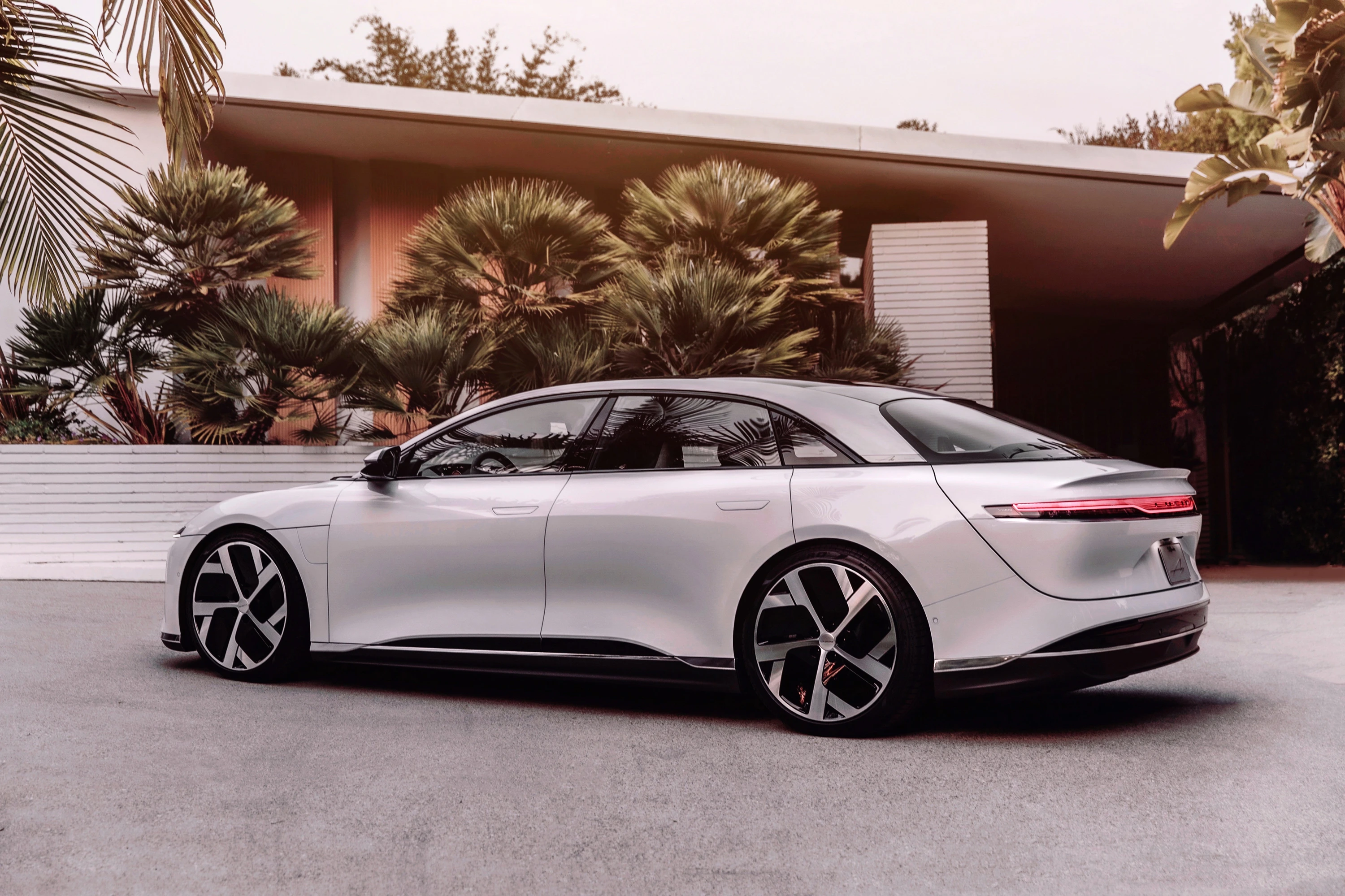
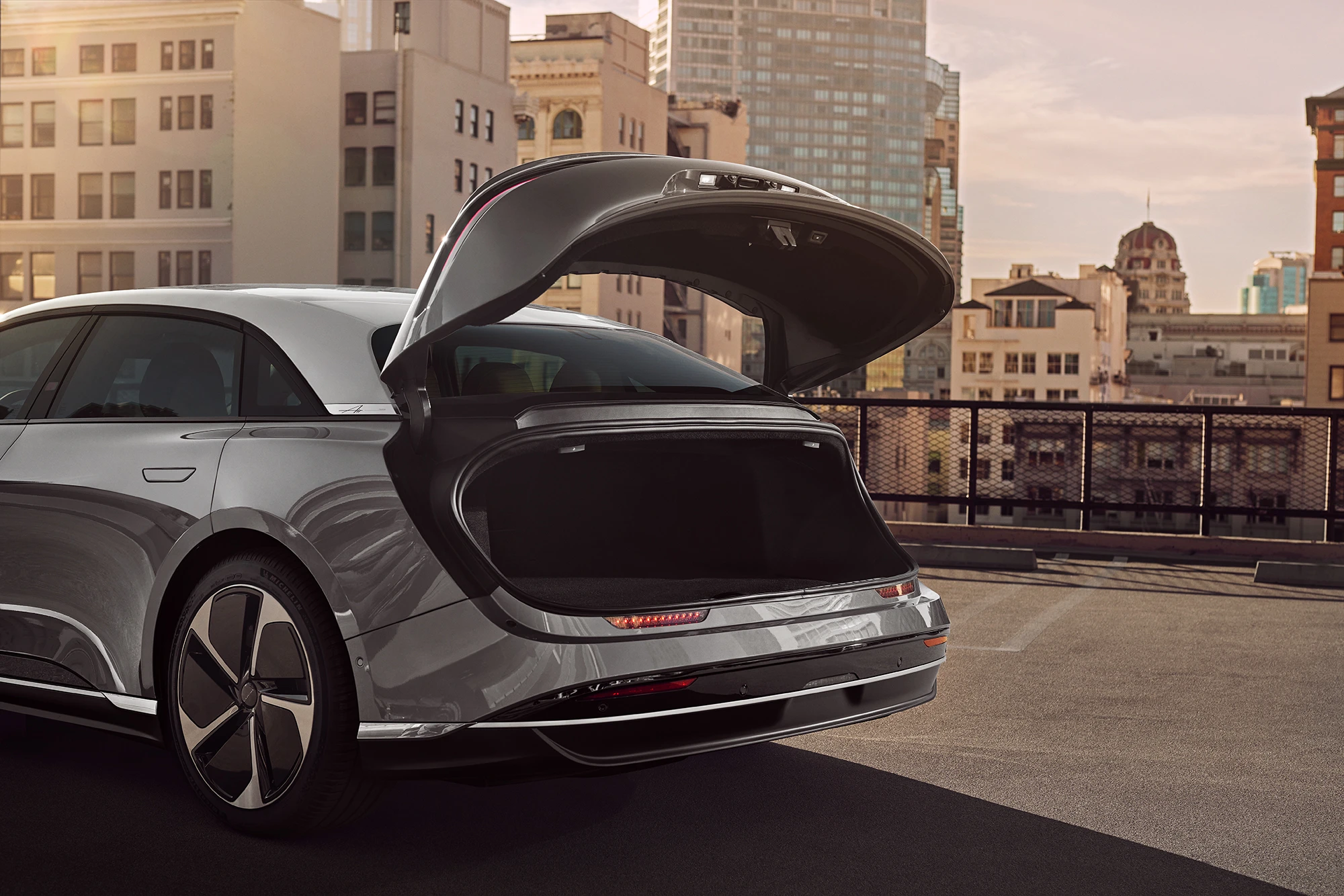
A notchback has three clearly visible volumes in profile: engine or front compartment, cabin and trunk. The roof and rear window end before a distinct horizontal or near-horizontal deck.
Fastback
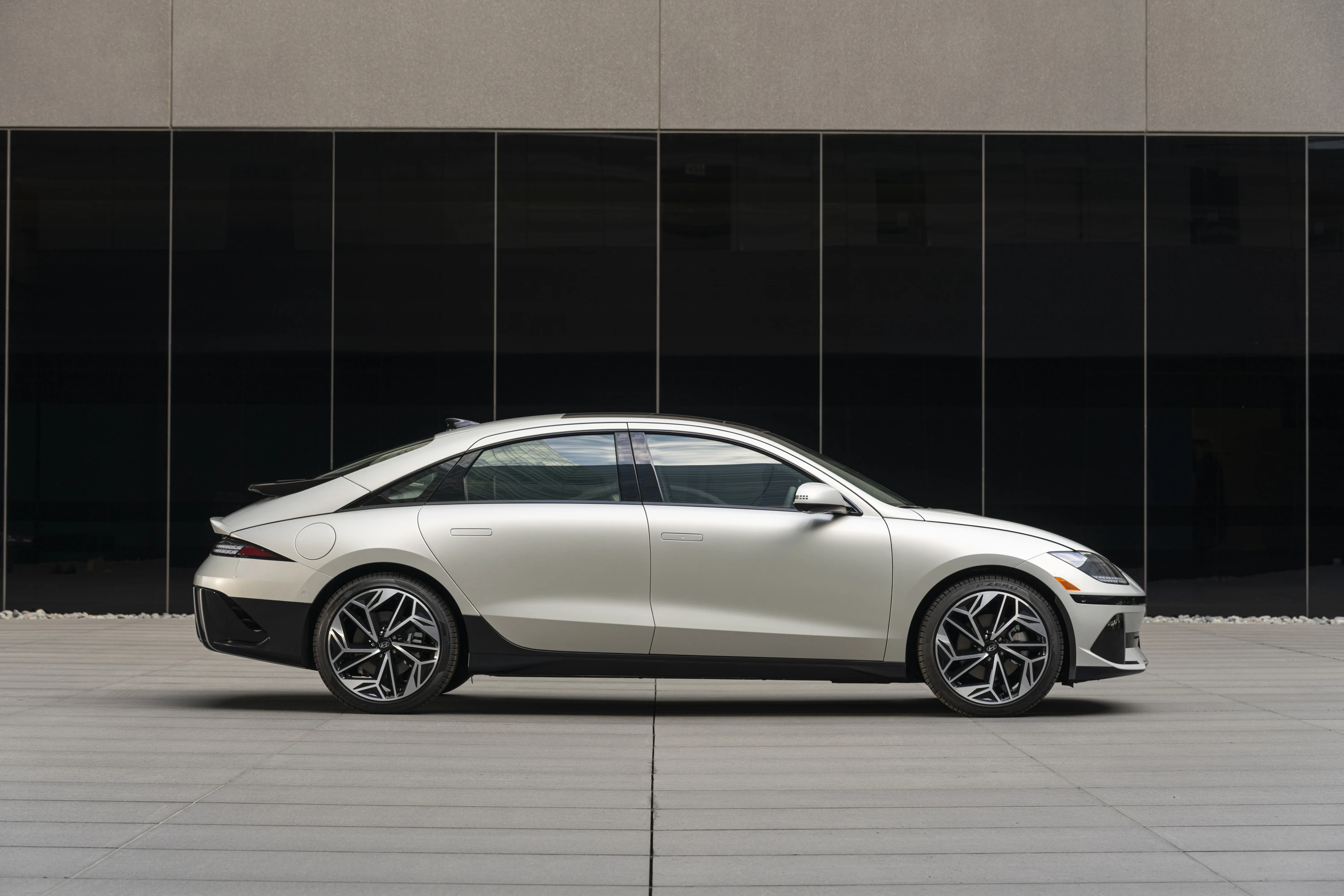
“Fastback” describes the silhouette: the roof flows in a long, continuous slope toward the tail. It does not tell you how the luggage compartment opens. A fastback can retain a sedan-style trunk lid or use a full liftgate, so the term should never be used as a synonym for liftback.
Liftback
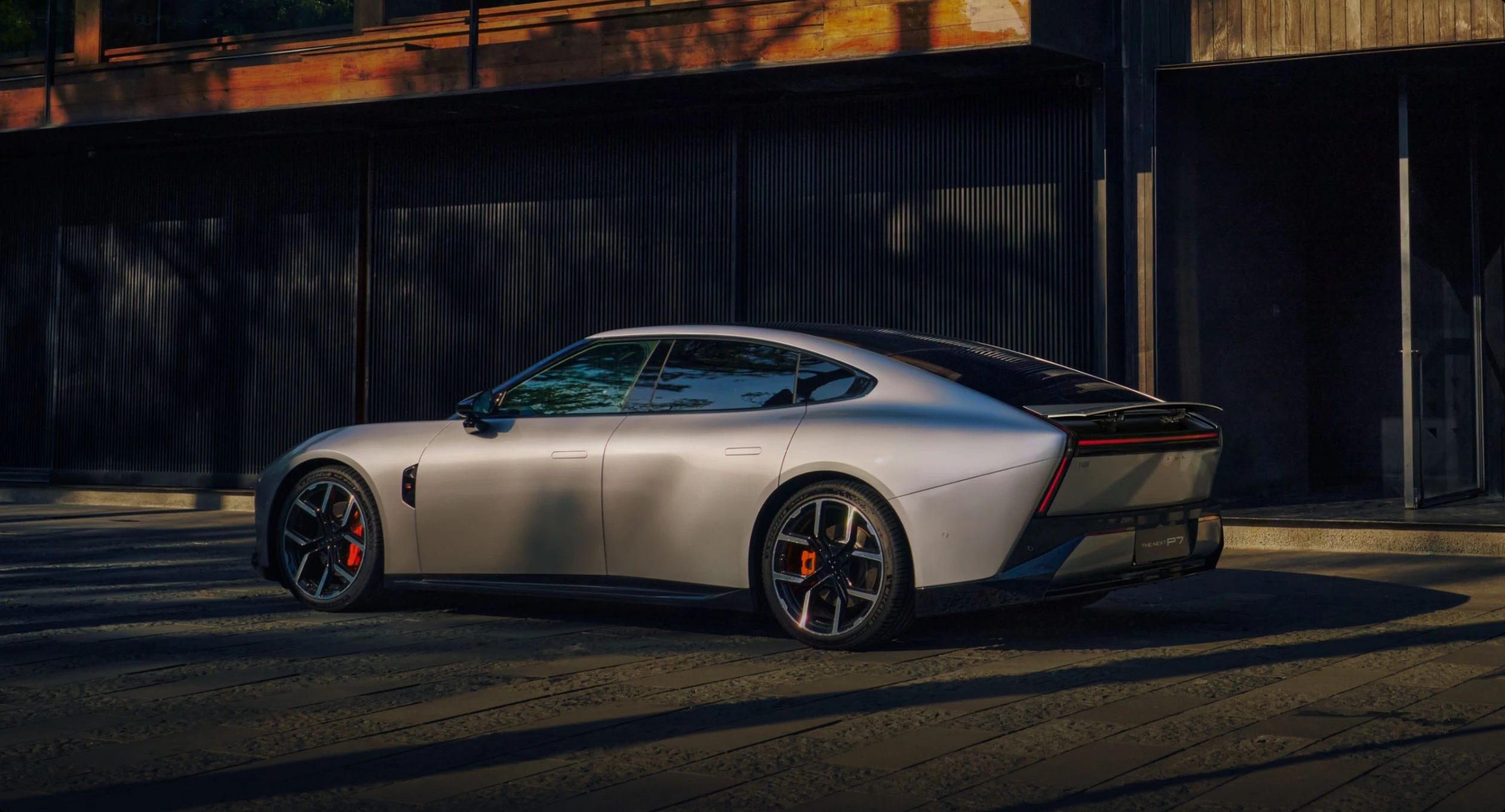
A liftback combines a fast rear profile with a large top-hinged rear door that includes the rear glass. It can look like a sedan while functioning more like a hatchback. The wide opening and folding rear seats make it easier to carry long or bulky items, although the sloping glass can limit usable height near the tail.
Browse electric liftbacks in the EVKX database.
Hatchback
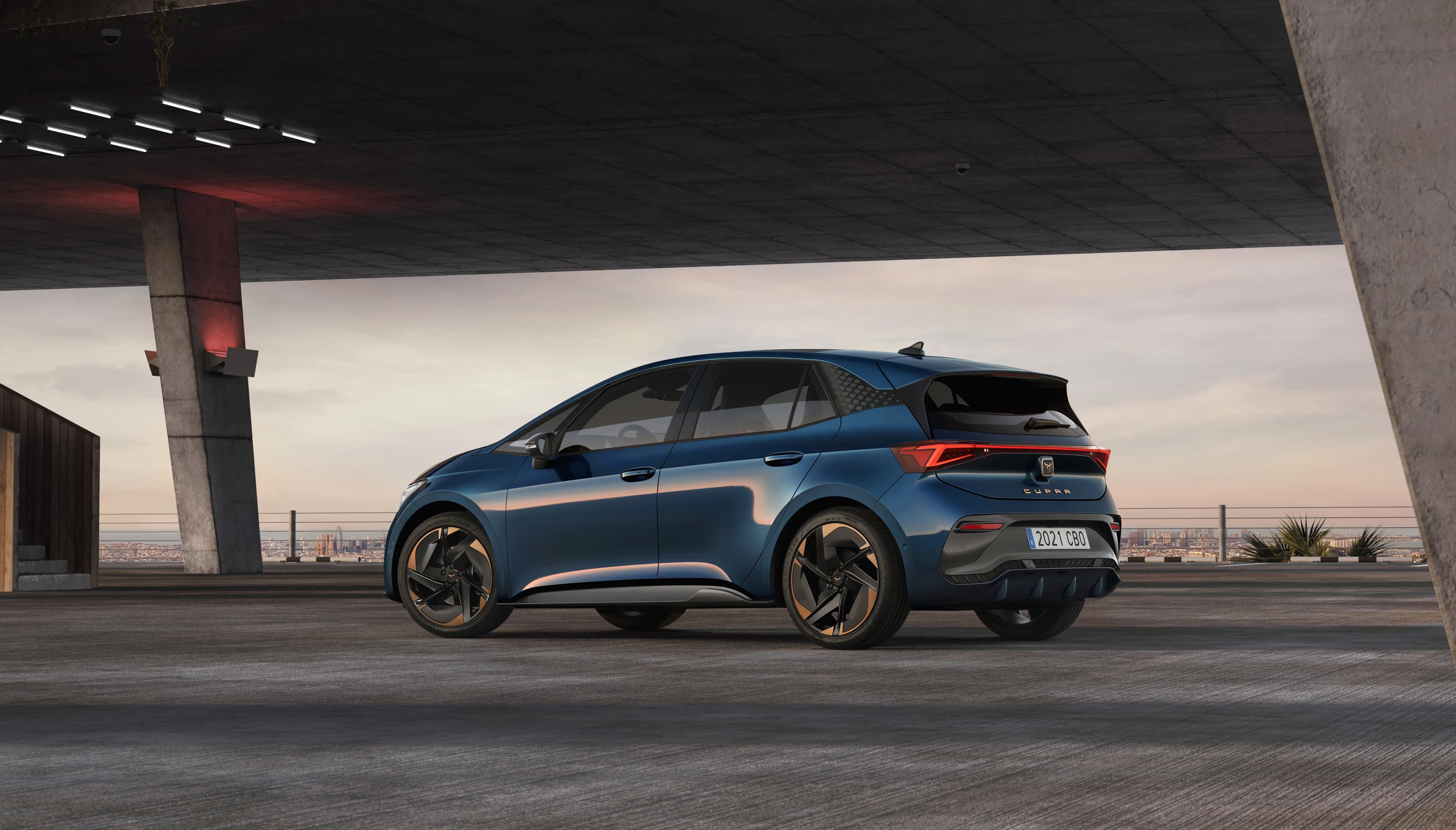
A hatchback has a top-hinged rear door that opens with the rear glass and exposes a cargo area connected to the cabin. Hatchback refers to the rear closure, not to vehicle size: small city cars and large family cars can both use this layout.
The short rear overhang of many hatchbacks helps parking and manoeuvrability. The large opening and removable parcel shelf improve flexibility, but cargo above the seatbacks needs secure restraint and the open cabin can admit more road noise or cold air when the hatch is raised.
Browse electric hatchbacks in the EVKX database.
Station wagon or estate
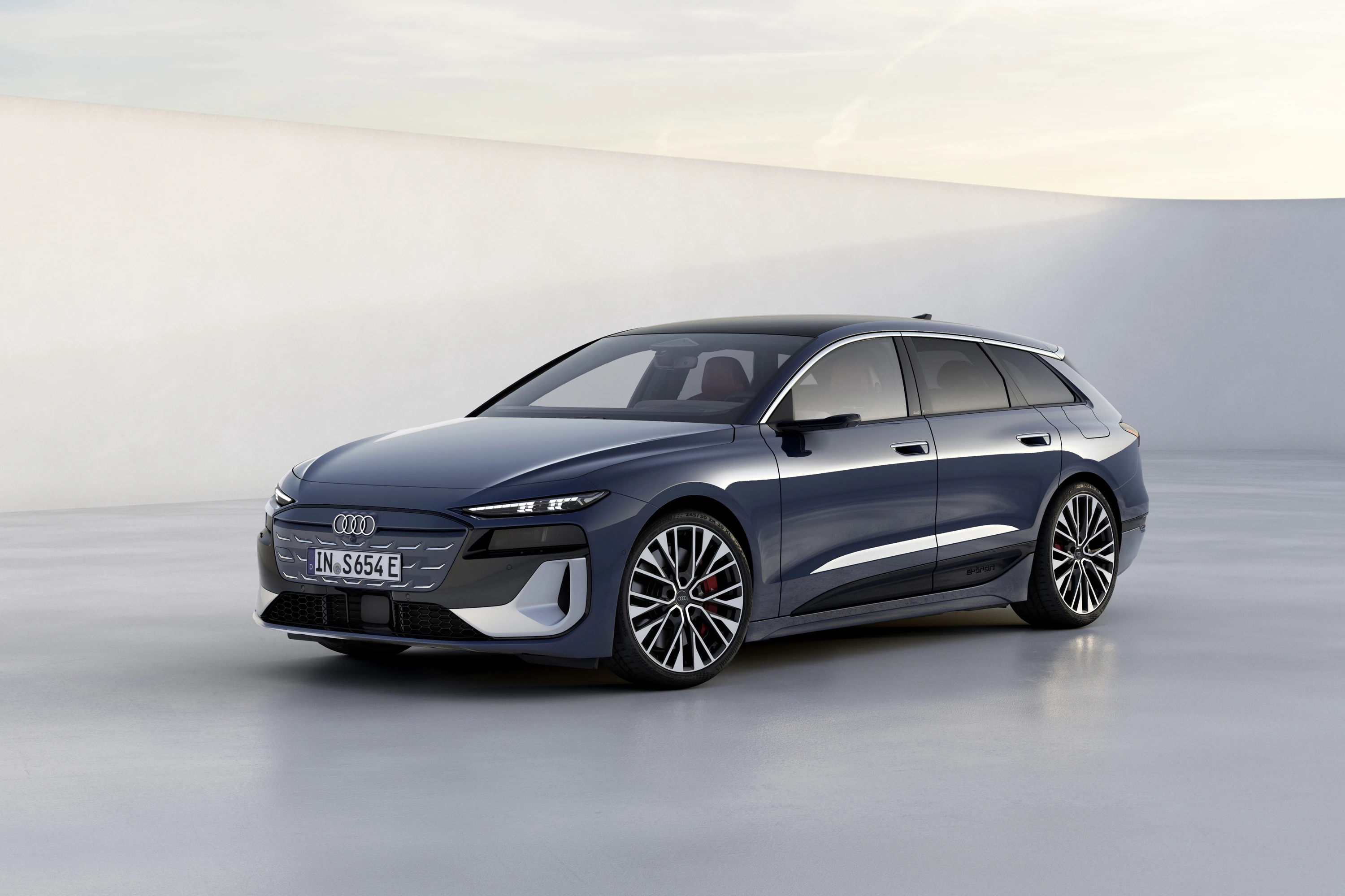
A station wagon extends the roof behind the rear seats and ends in a comparatively upright tailgate. It combines the low seating position and road footprint of a car with a long, accessible cargo floor. Compared with a similarly sized liftback, the squarer rear usually preserves more volume above the luggage cover and more space for dogs or tall objects.
Wagons are not automatically roomier than SUVs. Compare cargo length, width between the wheel housings, roof taper and payload. A long floor with a low roof may suit luggage better than upright passengers in a third row.
Browse electric station wagons in the EVKX database.
Coupé
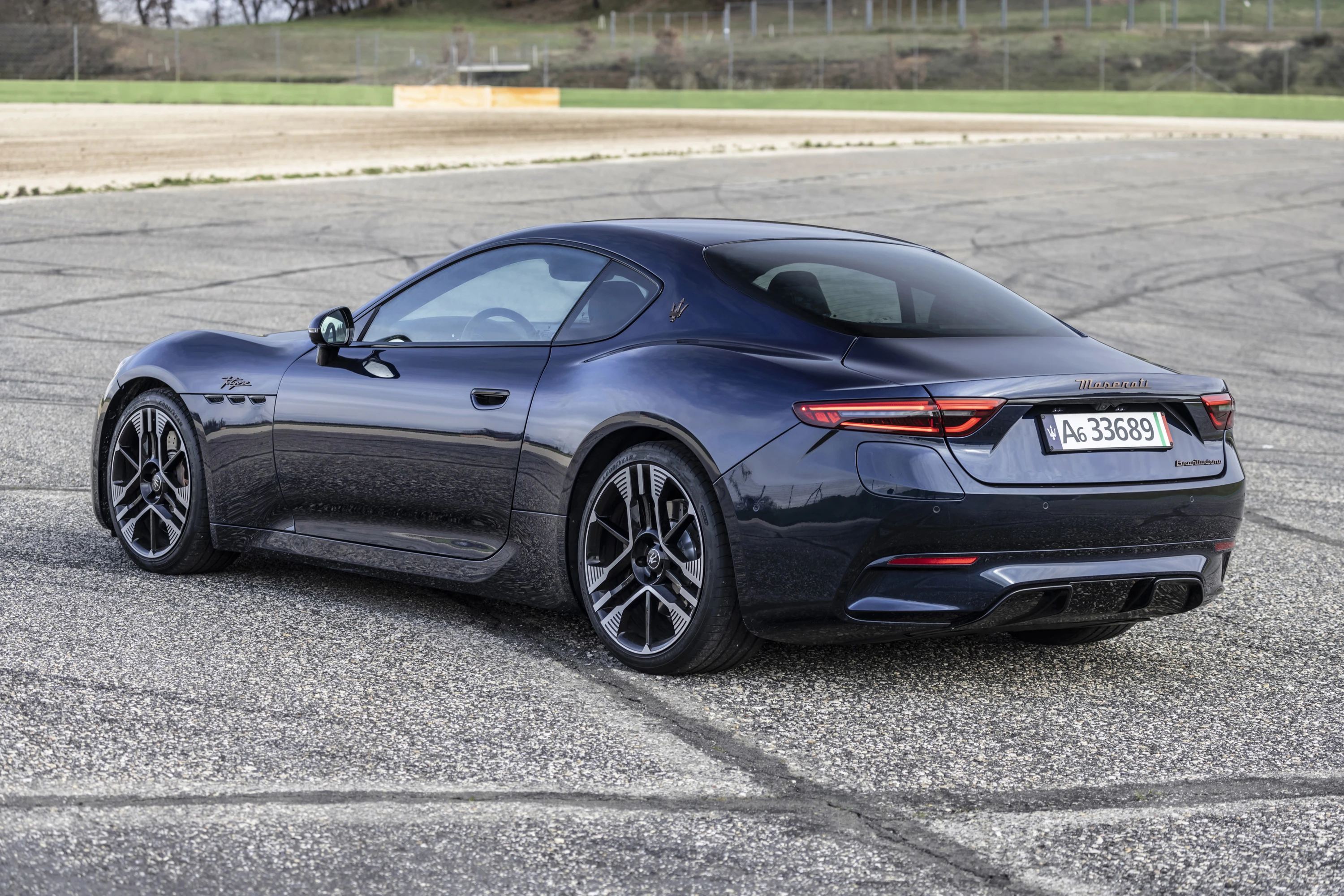
A traditional coupé has two side doors, a fixed roof and a close-coupled cabin, often with a shorter rear seating area than a sedan. Manufacturers also use “four-door coupé” for sedans or liftbacks with a low, arcing roof. In that case, coupé describes proportion and positioning rather than the door layout.
Check rear access, headroom and usable seating instead of assuming every visible seat is suitable for adults. Long front doors need more space in narrow parking bays, and a small trunk opening can matter more than the stated volume.
Browse electric coupés in the EVKX database.
Convertible and roadster
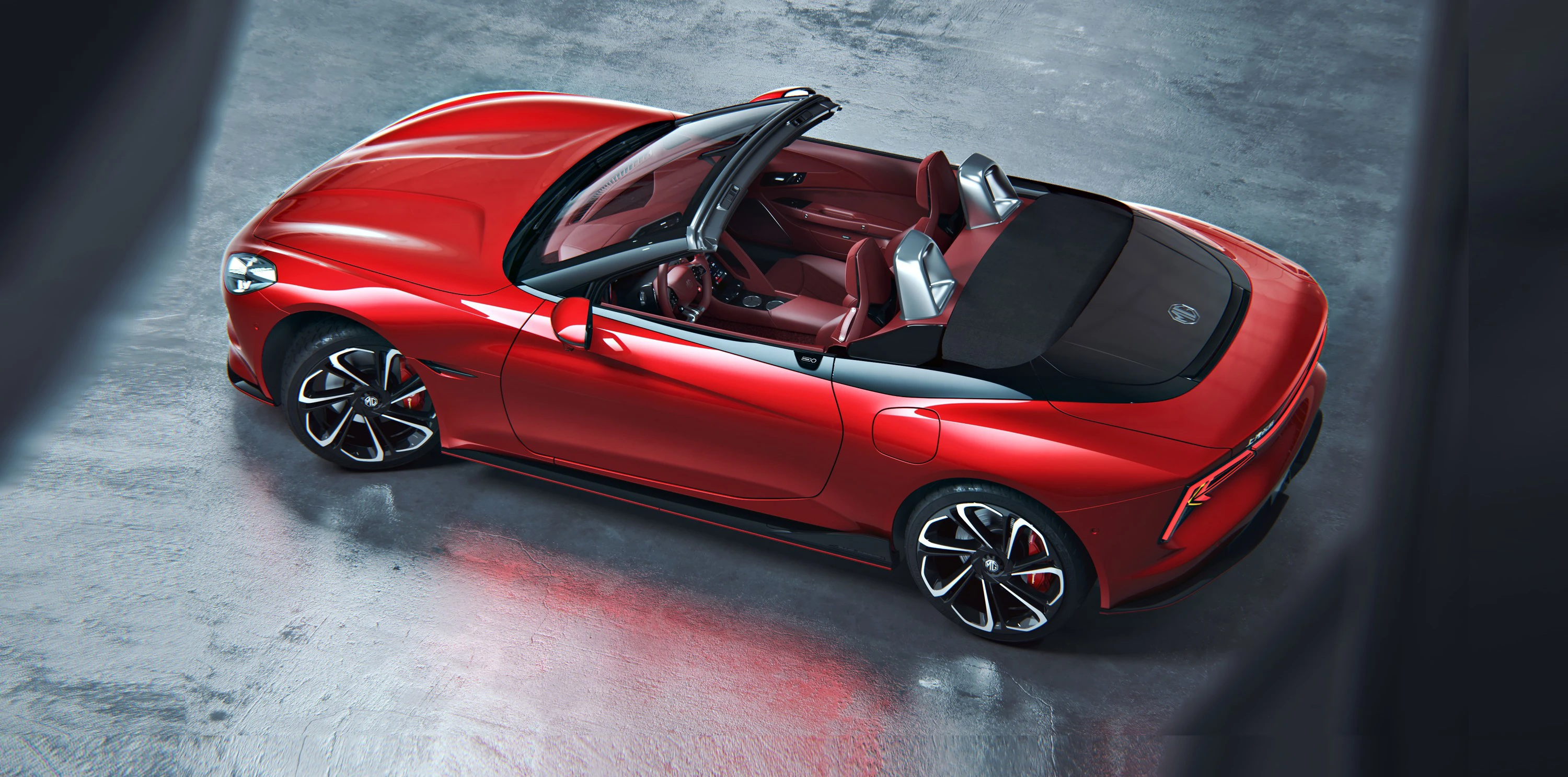
A convertible has a retractable or removable roof. A roadster is usually a two-seat, open sports car, though the name is not applied consistently. Roof mechanisms consume space, and body reinforcement can add mass. With the roof stowed, luggage capacity may shrink; with it raised, headroom and rear visibility can differ sharply between soft-top and folding-hardtop designs.
For an electric convertible, compare consumption and range in the configuration used for the official test, then expect speed, temperature and roof position to affect a real trip. Inspect charging access with the doors open as well: long doors and low seats can make tight charging bays awkward.
Browse electric convertibles in the EVKX database and electric roadsters in the EVKX database.
Tall passenger vehicles
“Crossover” and “SUV” overlap more than most other body labels. Neither word guarantees all-wheel drive, off-road ability, a large cabin or high payload.
Crossover
A crossover is generally a passenger-oriented vehicle with a hatch-style rear, raised seating and more body height or ground clearance than a conventional hatchback. The term originally helped distinguish car-based utility vehicles from traditional truck-based SUVs, but that ancestry is less informative for EVs built on dedicated flat-floor platforms.
There is no universal industry length at which a crossover becomes an SUV. A compact crossover may be taller yet no longer than a hatchback, and the same vehicle may be marketed as a crossover in one market and an SUV in another.
For consistency when adding vehicles to the EVKX database, EVKX uses a vehicle length of 4.50 m (177 in) as its working boundary: EVs shorter than 4.50 m are classified as crossovers, while EVs 4.50 m or longer are classified as SUVs. This is an EVKX editorial convention, not a regulatory or industry standard.
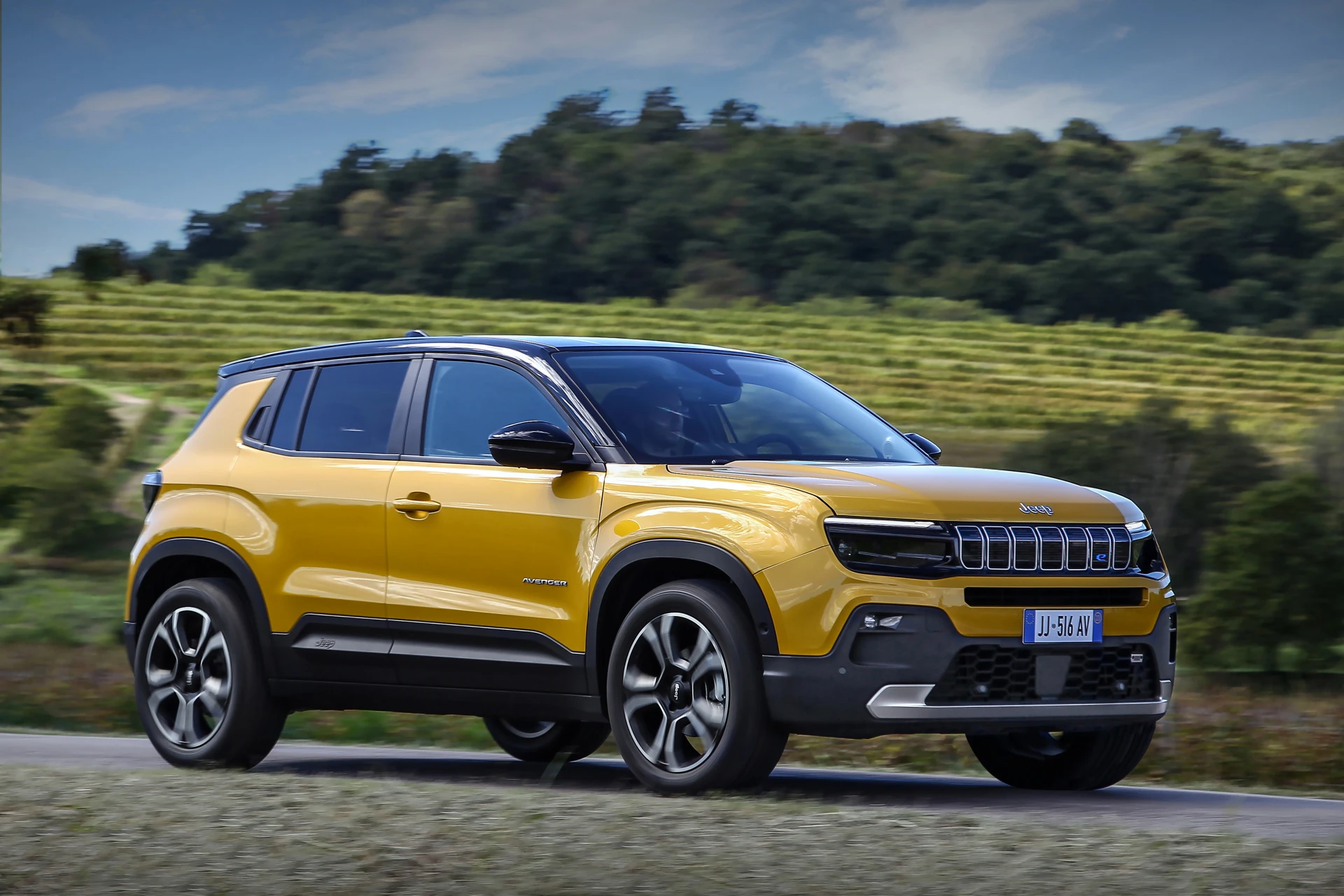
Browse electric crossovers in the EVKX database.
Sport utility vehicle
An SUV typically combines a tall body, upright seating, a large rear opening and SUV market positioning. Ground clearance, wheel travel, underbody protection and drive system determine rough-road ability; the body label does not. Many electric SUVs are rear-wheel drive in their base form, and even all-wheel drive does not establish wading depth, approach angle or suitable tyres.
Height can make entry and child-seat loading easier, while a high floor can also force second-row passengers into a knees-up posture. Large exterior dimensions may be consumed by thick doors, crash structure, large wheels or a tapered roof. Check cabin measurements, payload and turning circle instead of treating “SUV” as a promise of space.
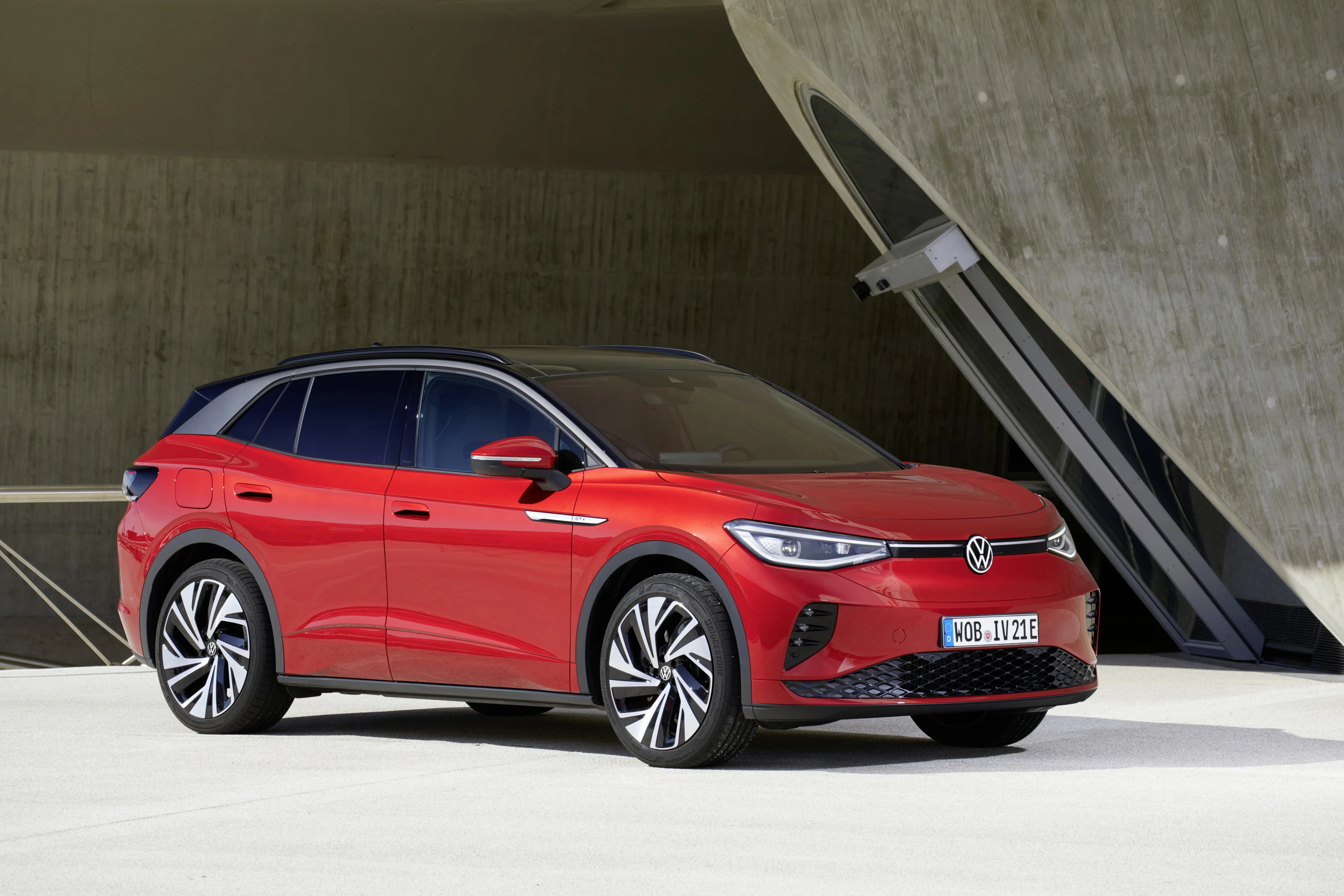
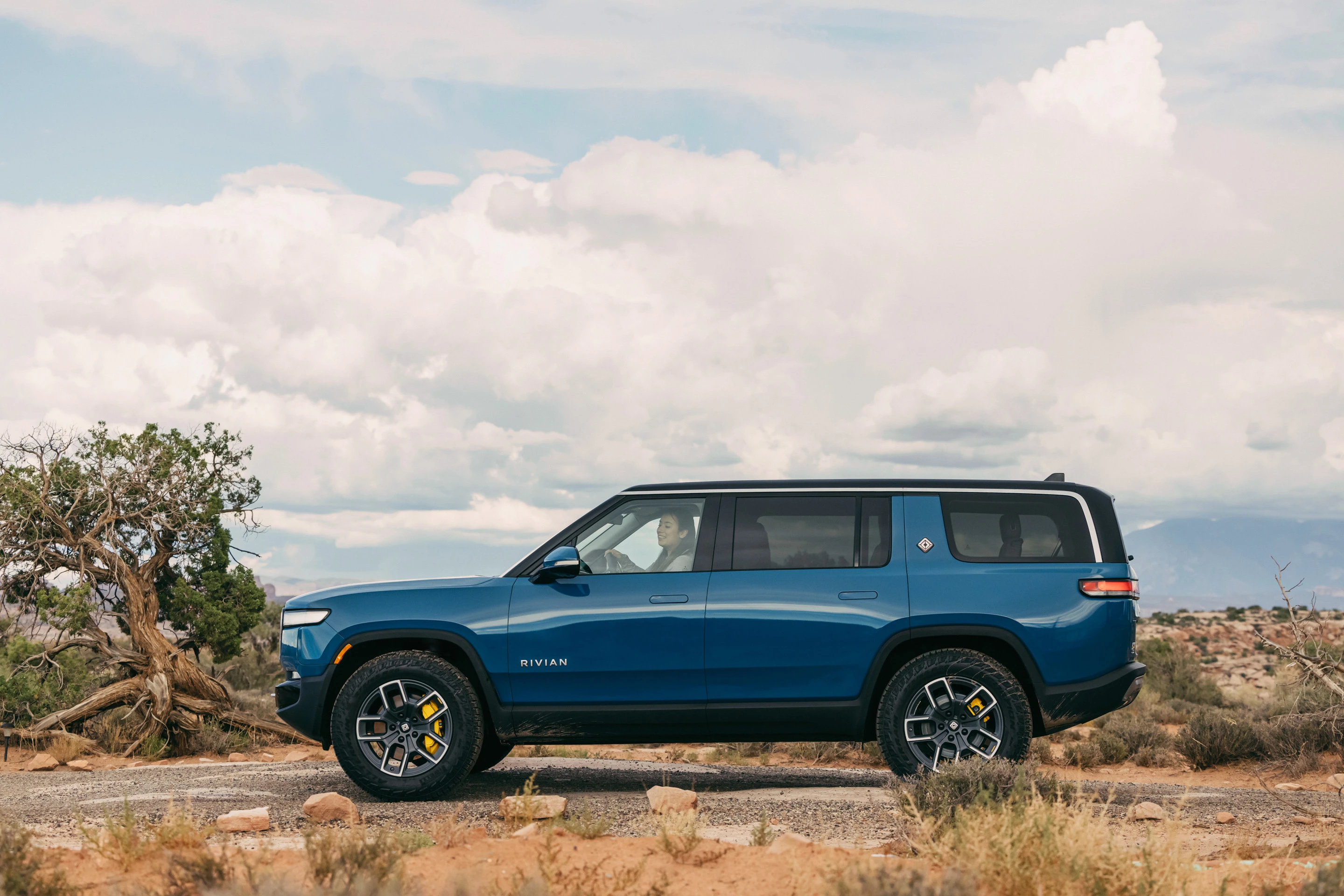
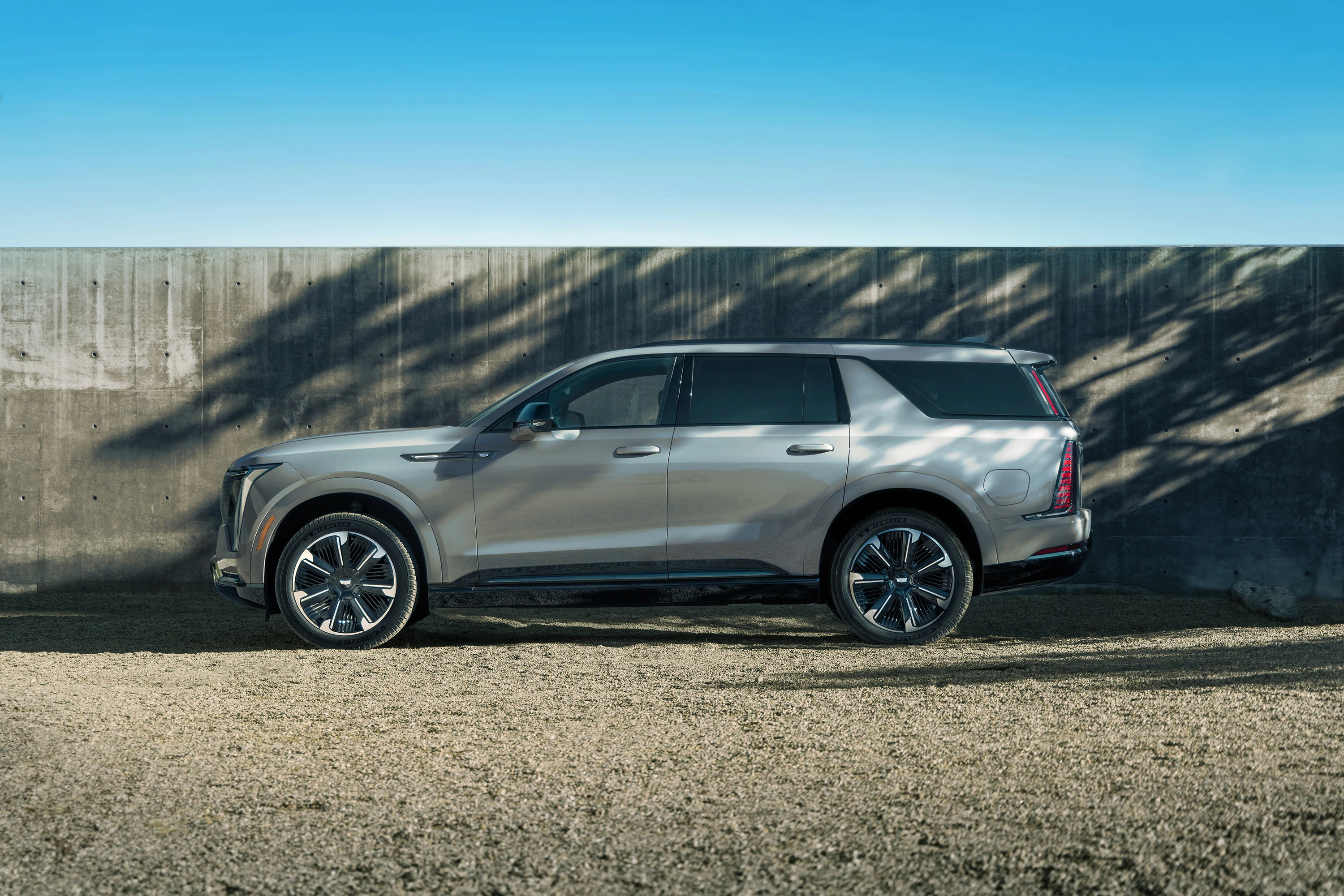
Browse electric SUVs in the EVKX database.
Coupé SUV
A coupé SUV is an SUV or crossover with a faster, more steeply sloping rear roofline. It is usually not a coupé in the traditional two-door sense. The shape may reduce wake and drag if the entire body is engineered well, but the name alone does not guarantee better efficiency.
The clearest trade-offs appear behind the front seats. Compare rear headroom, visibility, tailgate opening height and cargo volume above the luggage cover with the conventional-roof sibling. The floor area may be similar while space for tall luggage is smaller.
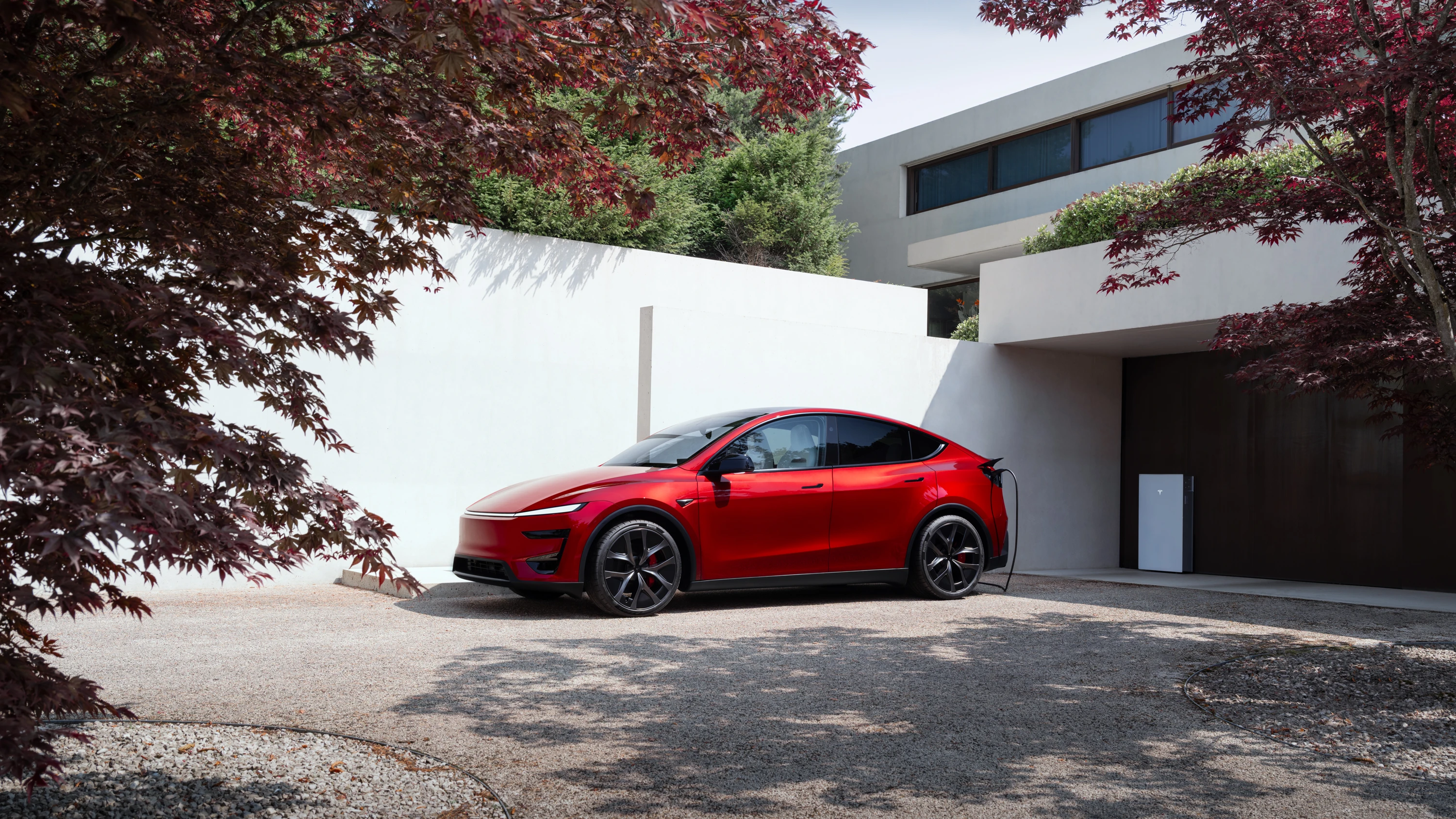
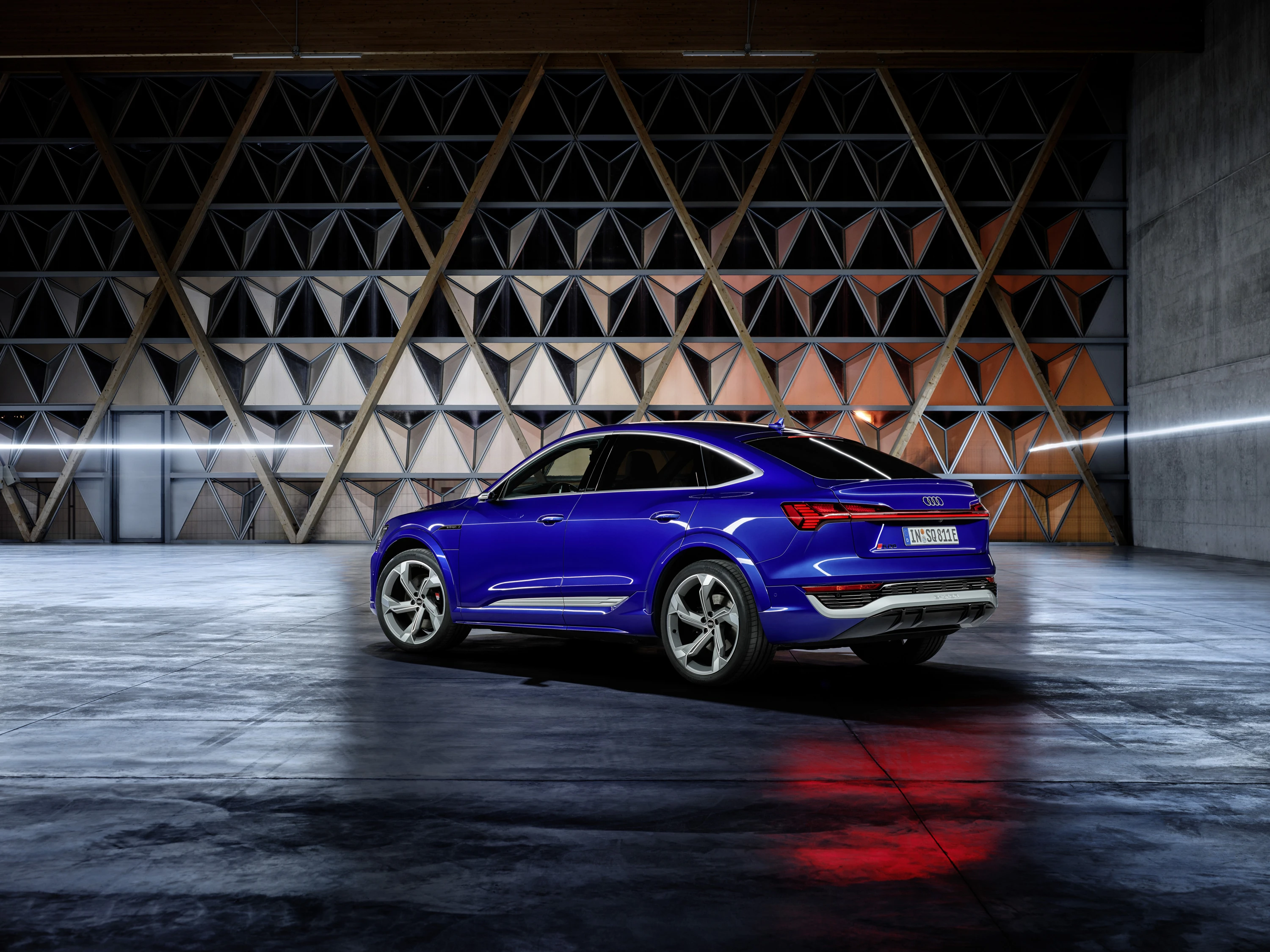
Browse electric coupé SUVs in the EVKX database.
People and cargo carriers
These bodies prioritise access, flexible seating or load space. Their tall, square shapes can be exceptionally useful, but size and weight limits deserve more attention than the category name.
MPV and minivan
An MPV, or multi-purpose vehicle, places passengers and luggage in one main volume and usually emphasises a tall cabin, flexible seats and a low, long floor. “Minivan” is the common North American label for many family-focused MPVs, especially those with sliding rear doors. The terms overlap rather than defining two cleanly separated categories.
Sliding doors are valuable beside walls and neighbouring cars. For seven-seat use, inspect third-row access, child-seat anchor positions and the luggage space left with every seat raised. Also check whether seats fold into the floor, tumble, slide or must be removed, and whether removing them is practical at their actual weight.
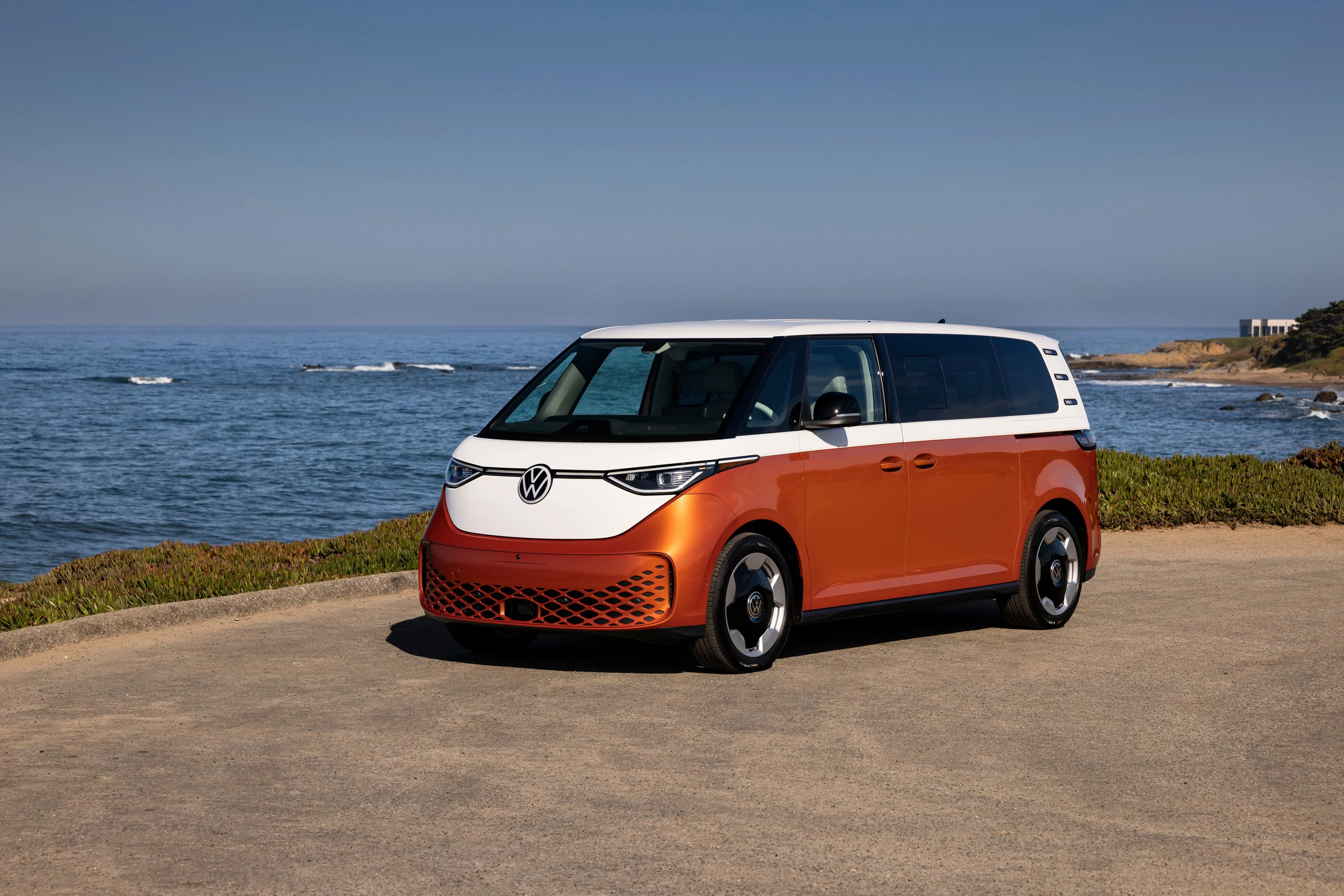
Browse electric MPVs in the EVKX database and electric minivans in the EVKX database.
Van
A van uses a tall, box-like body to carry people, goods or both. Cargo vans may have a bulkhead and few side windows; passenger vans add glazing, trim, restraints and several seating rows. The same model family can therefore contain vehicles with very different legal classifications, payloads and equipment.
For daily use, record vehicle height before entering garages or height-restricted charging sites. Compare sliding-door width, rear-door opening angle, load length, payload after passengers, and whether cabin heating or cooling reaches every occupied row.
Browse electric vans in the EVKX database.
Pickup truck
A pickup separates the passenger cabin from an open cargo bed. EU type-approval, for example, defines a pick-up code for a goods vehicle up to 3,500 kg maximum mass whose seating positions and cargo area are in separate compartments; other markets use different class and weight rules. EU Regulation 2018/858 — vehicle categories and bodywork codes
Bed length, bed width, payload and tie-downs determine carrying usefulness. Tow rating is only one limit: gross vehicle mass, gross combination mass, axle loads and tow-ball or tongue load can become binding first. Calculate payload with occupants and accessories before adding a trailer.
Towing range cannot be inferred from the unladen rating. Trailer frontal area and shape, speed, mass, gradient, wind and temperature all matter. The US Department of Energy also identifies high-speed driving, heavy loads and steep inclines as factors that can reduce EV range. US Department of Energy — all-electric vehicle range factors
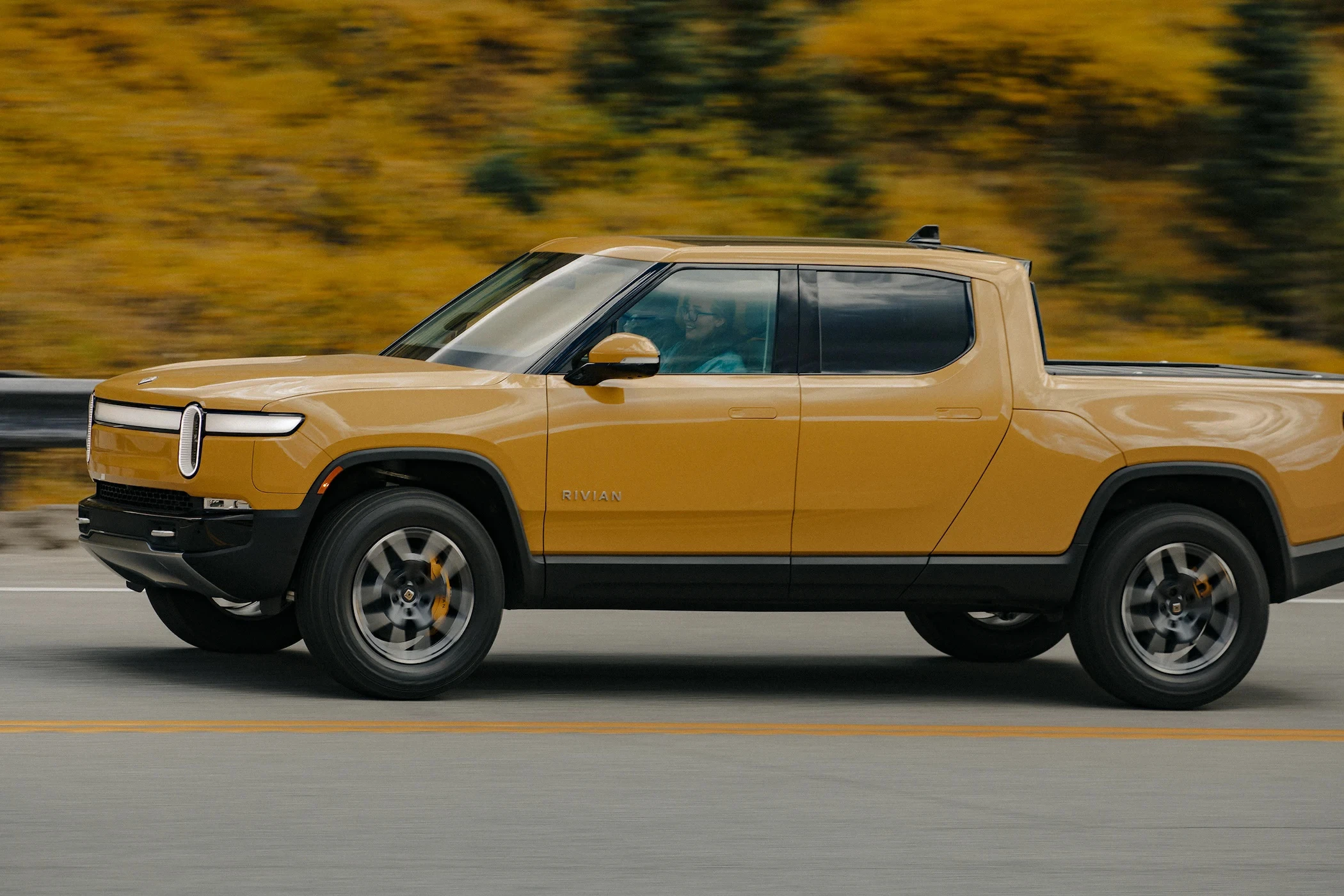
Browse electric pickup trucks in the EVKX database.
Why body shape matters in an EV
Aerodynamics
At road speed, aerodynamic drag depends on air density, speed squared, frontal area and the drag coefficient. This is why the useful shorthand is drag area, CdA, rather than Cd alone: a tall vehicle can post a low coefficient yet still push more air because its frontal area is larger. NASA’s drag equation also makes clear that shape and reference area must be considered together. NASA Glenn Research Center — drag coefficient and reference area
Body-style comparisons are therefore tendencies, not laws. A carefully developed SUV can be more efficient than a poorly developed sedan, and wheels or tyres can change the result within one model line. Compare rated consumption on the same test cycle, battery capacity on the same basis and range for the exact configuration.
Electric packaging
Many dedicated EV platforms place a flat battery below the passenger compartment and use compact drive units near an axle. This can create a long wheelbase and short overhangs for a given exterior length. Volkswagen’s MEB layout in the ID.4 is one documented example, with the battery under the cabin and drive electronics concentrated at the rear axle. Volkswagen ID.4 — body aerodynamics and MEB packaging
That layout is not free space. Battery thickness can raise the cabin floor, which affects seat height, thigh support and rear headroom — especially in low-roof cars. Sit in every row rather than assuming a long wheelbase guarantees comfortable posture. A front trunk is also model-specific, not an automatic EV feature.
Cargo numbers
Cargo volume is useful only when the measurement method and seating configuration are comparable. SAE J1100 defines standard vehicle-dimension procedures, while US rules calculate interior-volume indices differently for hatchbacks and station wagons than for many closed-trunk bodies. SAE J1100 — Motor Vehicle Dimensions US EPA 40 CFR 600.315-82 — classes of comparable automobiles
Use litres or cubic feet as one data point, then inspect:
- minimum width and width between the wheel housings;
- floor length with rear seats up and folded;
- height below the cover and to the roof;
- loading-lip height and any step in the folded floor;
- underfloor storage and front-trunk volume;
- the seat and roof position used for the quoted figure.
Safety and visibility
Body style is not a safety rating. Structure, restraint systems, mass, crash compatibility, visibility and active safety equipment vary by exact model and model year. Euro NCAP advises care when comparing vehicles across categories and says meaningful comparisons require similar type, size and mass; its test year also matters because criteria change. Euro NCAP — comparing safety ratings across vehicle categories
Tall seating may improve the driver’s forward view while creating larger blind areas close to the vehicle. Check mirror and camera coverage, window-line height and direct visibility during a test drive. For family use, verify child-seat fit with the front seats in their real positions.
How to choose the right body
Start with the largest object or hardest passenger you carry regularly, not with a category name.
- Map normal use. Count occupied seats, child seats, mobility equipment, pets, luggage and bicycles for a typical week.
- Measure constraints. Record garage length and height, parking width, charger position and the space needed to open doors or a tailgate.
- Test access. Load the real stroller, crate or wheelchair if possible. Sit in every row and fold or remove the seats yourself.
- Check mass limits. Subtract curb mass from maximum permitted mass, then account for occupants, accessories, cargo and trailer load.
- Compare like with like. Use the same range cycle, wheel size, drivetrain and battery basis. Do not compare WLTP range directly with EPA range.
- Inspect the shape behind the number. A square 450-litre compartment may carry more useful cargo than a tapered 500-litre one.
- Drive the use case. Include motorway speed, a tight car park, rough access roads and a representative charging stop.
The best body type is the smallest and most efficient shape that handles those requirements without turning routine loading, seating or towing into a workaround.
Sources
- ISO 3833:1977 — Road vehicles — Types — Terms and definitions
- EU Regulation 2018/858 — vehicle categories and bodywork codes
- 49 CFR 565.12 — body-type definition
- US EPA 40 CFR 600.315-82 — classes of comparable automobiles
- SAE J1100 — Motor Vehicle Dimensions
- NASA Glenn Research Center — drag coefficient and reference area
- US Department of Energy — all-electric vehicle range factors
- Volkswagen ID.4 — body aerodynamics and MEB packaging
- Hyundai Motor Group — engineering rear-seat space in an electric sedan
- Euro NCAP — comparing safety ratings across vehicle categories