
Audio Systems in Electric Vehicles
An EV audio system is a complete signal chain, not a speaker count. The source, software, digital processing, amplifiers, speaker placement and cabin acoustics all shape what reaches each occupant.
From source to sound
Music may start as broadcast radio, a local file, a streaming service, Bluetooth audio, USB audio or phone projection. The head unit decodes that source and sends it through a digital signal processor. The processor can divide frequencies between drivers, correct timing and frequency response, create surround channels, manage sound zones and adjust the mix for speed or cabin noise. Power amplifiers then drive the speakers.
Automotive audio must also manage calls, voice assistants, parking tones and navigation prompts. Android Automotive, for example, classifies streams by use and can route, mix or reduce the level of one stream when a more important one needs attention. Safety-critical warning sounds may be generated or mixed outside the infotainment operating system so an app failure cannot silence them. Android Open Source Project: Automotive audio overview
That architecture explains why a system with modest published specifications can sound coherent, while a high speaker count or large wattage figure can still produce uneven sound.
Speakers and their positions
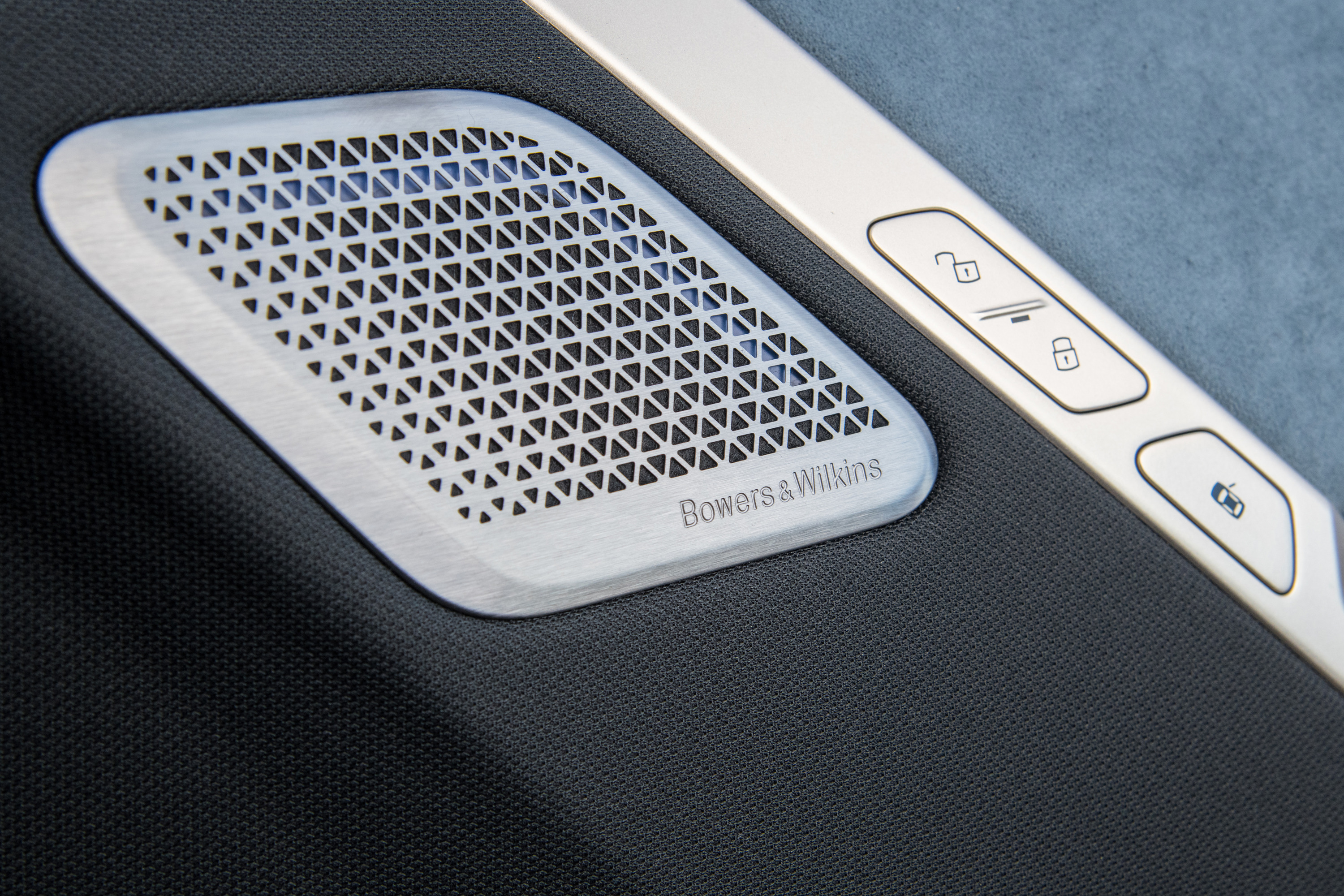
Loudspeaker drivers are optimized for different parts of the audible range:
- Tweeters reproduce high frequencies and are often mounted high in the doors, dashboard or pillars.
- Midrange drivers cover much of the range that carries voices and instruments.
- Woofers reproduce lower frequencies and need more cone area and movement.
- Subwoofers handle the lowest bass, usually with a dedicated enclosure and amplifier channel.
A coaxial speaker places multiple drivers in one assembly. A component system separates them so the manufacturer has more freedom over placement and aiming. Neither label guarantees quality; the crossover design, installation and calibration still matter. JBL: Coaxial and component car speakers
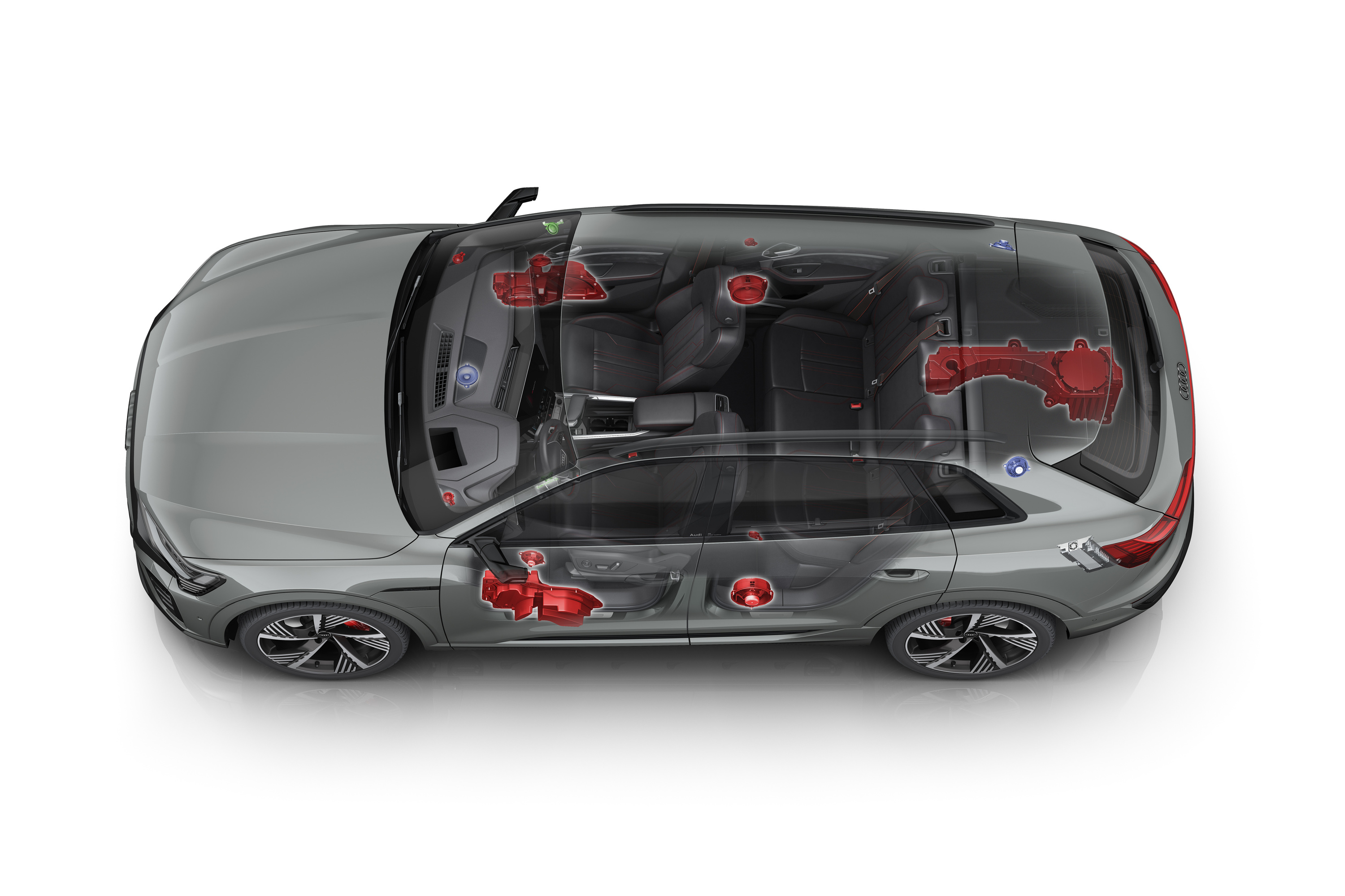
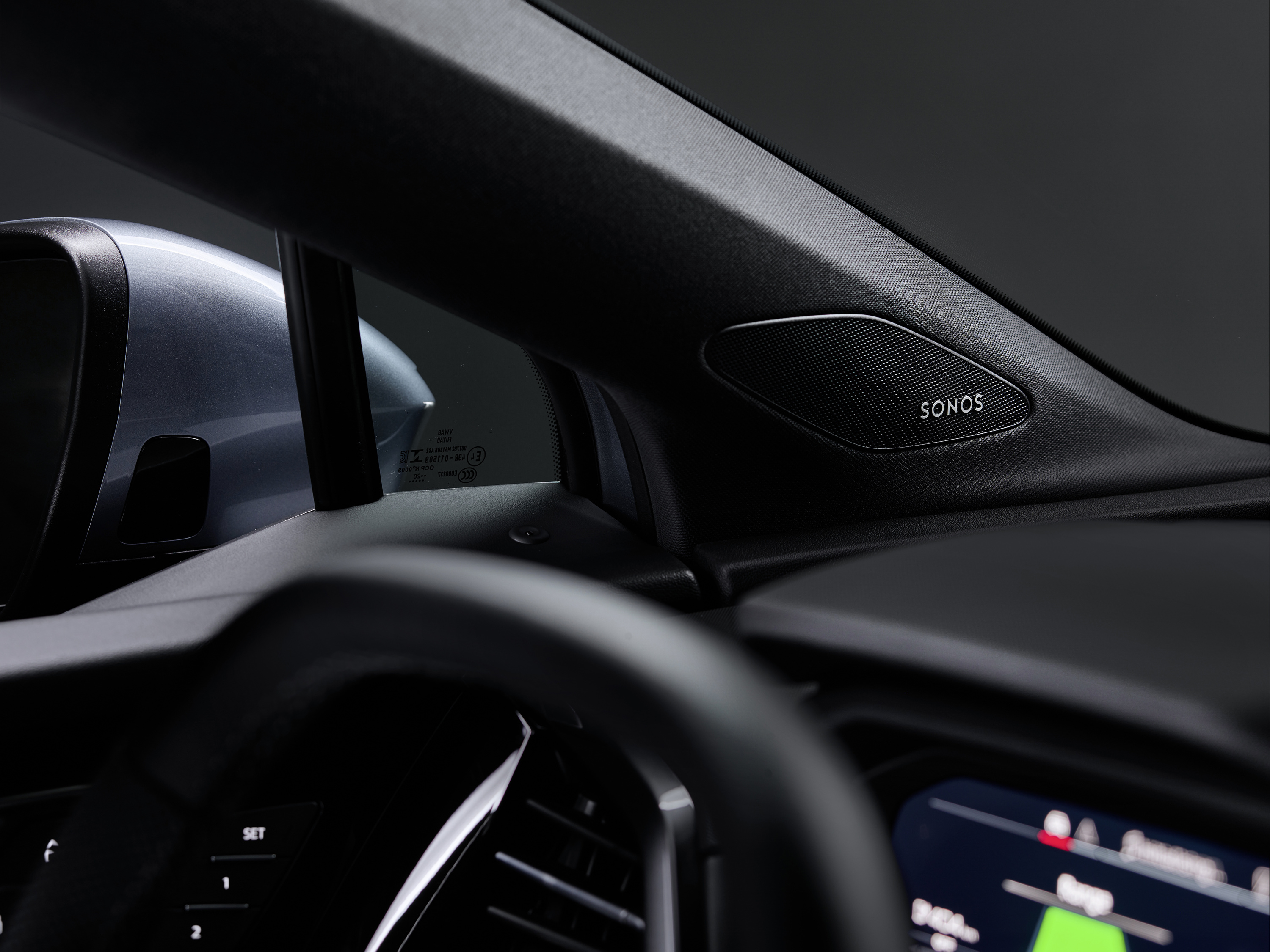
Doors provide space for larger drivers but are mechanically and acoustically difficult: glass, seals, trim panels and changing cabin pressure can introduce vibration or leakage. A dashboard or A-pillar location can bring high frequencies closer to ear level, while center speakers can stabilize voices and prompts near the middle of the windscreen.
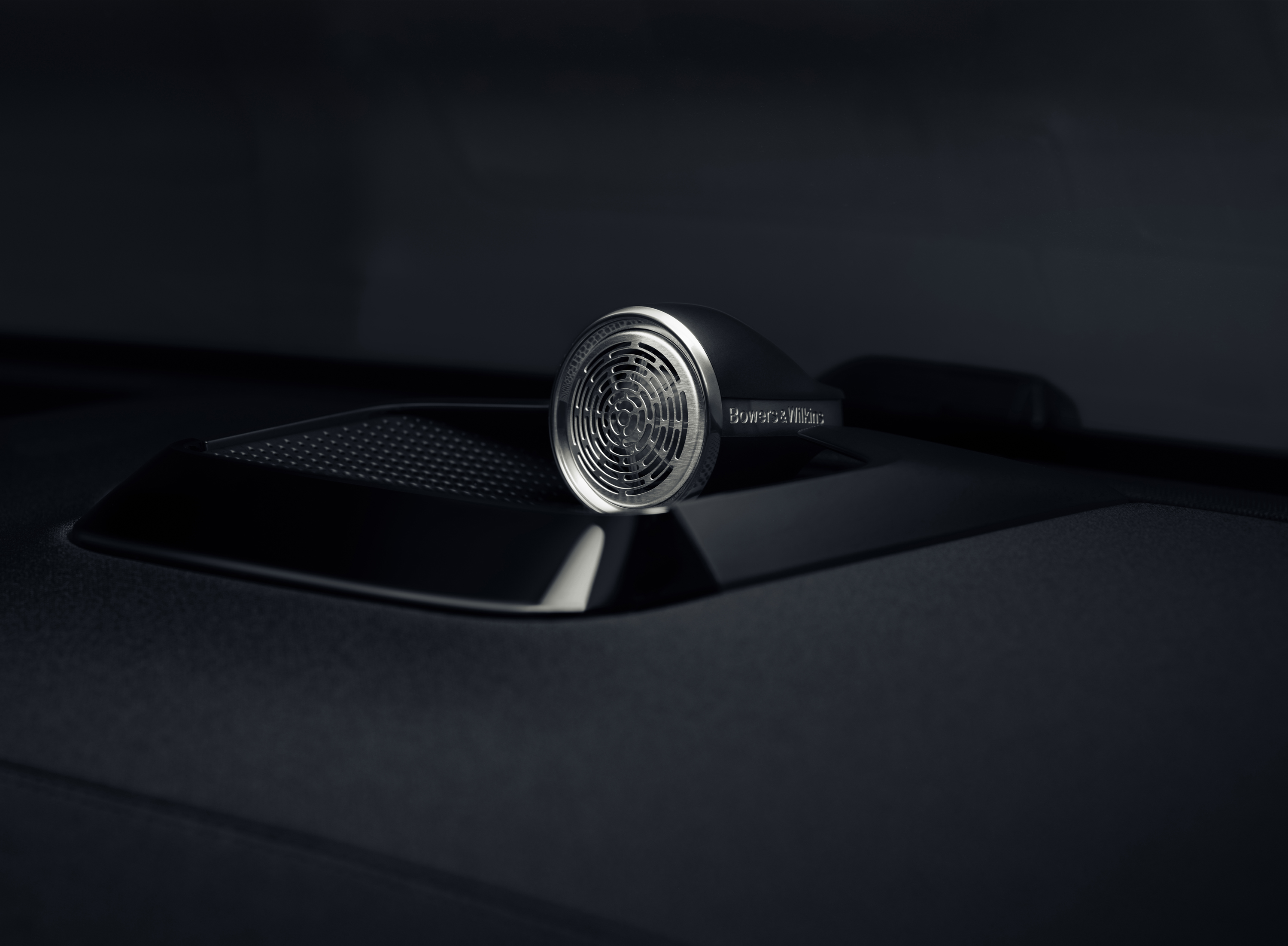
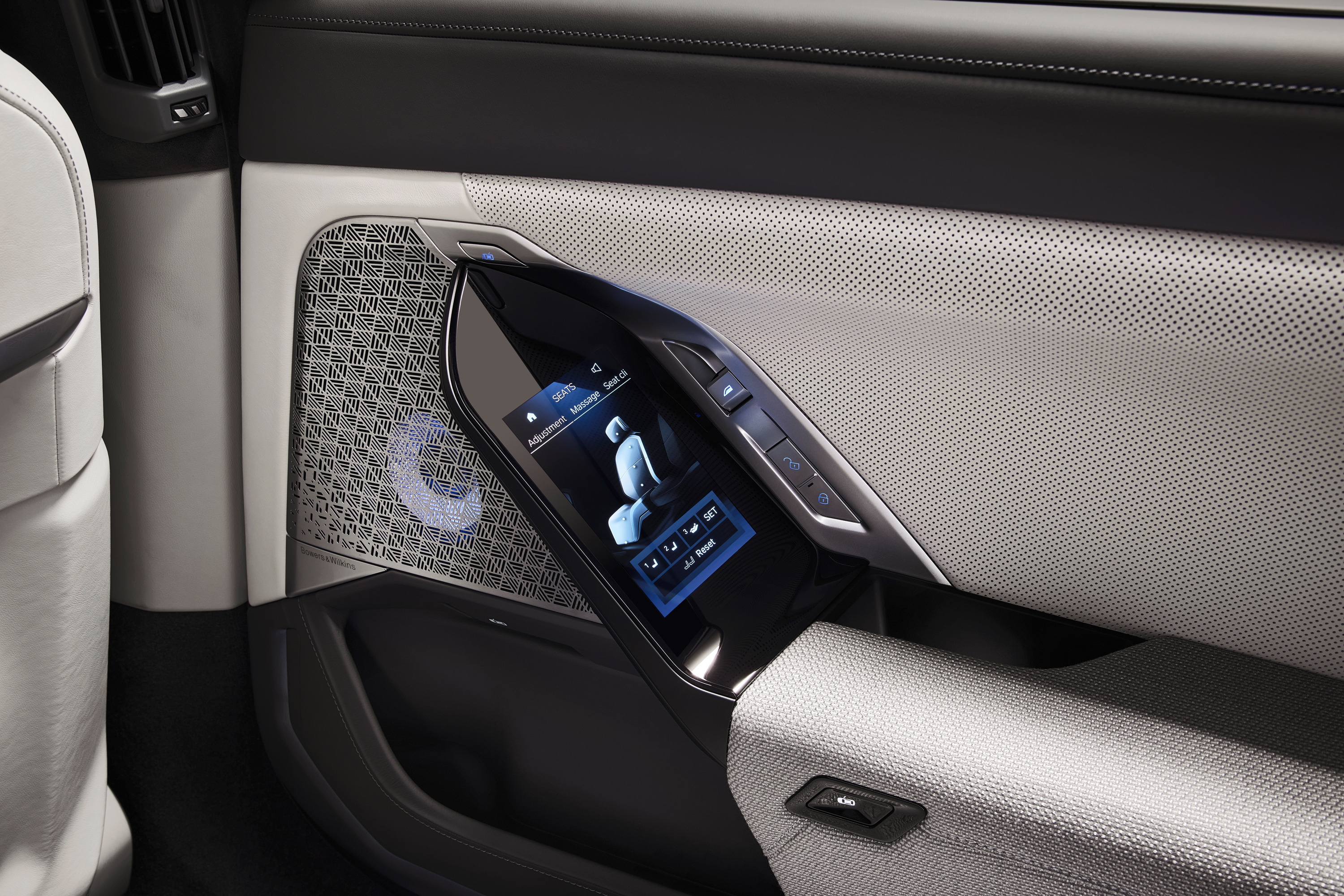
Headrest speakers shorten the acoustic path to one occupant. They can make navigation or calls easier to localize and can support separate listening zones, but a near-field speaker is not automatically a substitute for a well-integrated cabin system.

Amplifiers and digital processing
An amplifier’s channel count shows how many outputs it can control independently. Its power rating is meaningful only with the test conditions: continuous or peak output, load impedance, supply voltage, frequency range and permitted distortion. Two manufacturers can publish incomparable wattage figures for systems that perform similarly in normal use.
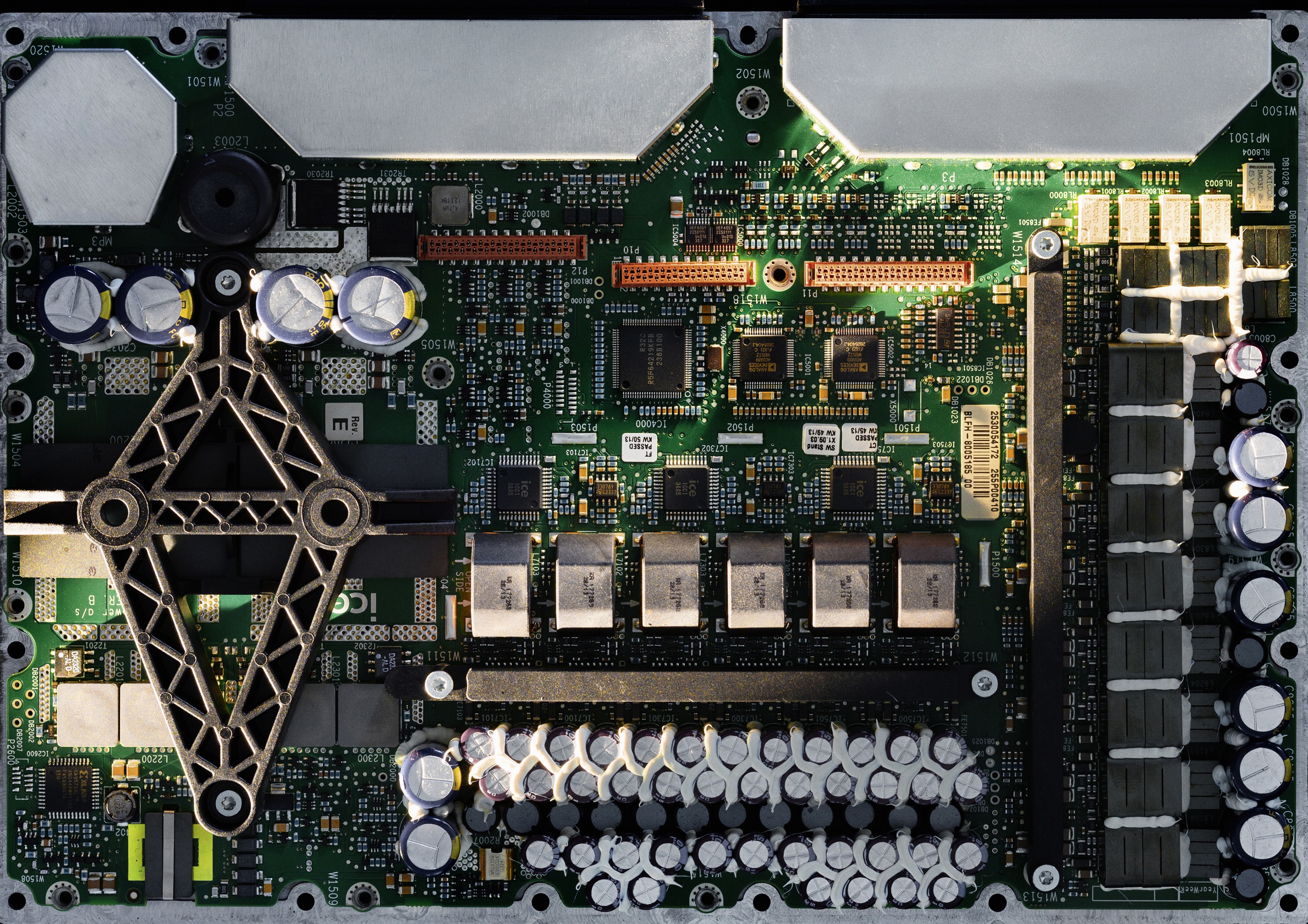
Digital signal processing is central to factory audio. Common functions include:
- crossovers that send each driver an appropriate frequency band;
- equalization for the cabin and speaker response;
- time alignment so sound from different distances reaches a listening position coherently;
- dynamic range and bass management;
- compensation for changing road or wind noise;
- stereo expansion or multichannel rendering; and
- separate audio zones for different seats.
Immersive formats can carry more spatial information than conventional stereo, but the badge alone does not establish how well a specific cabin was measured and tuned. Source availability also matters: a system cannot recover detail or channel information that the selected service, connection or recording does not deliver.
What changes in an EV
Removing combustion noise makes quiet passages and low-level defects easier to hear at low speed. It does not make an EV silent. Tire impact, road texture, wind, suspension movement, pumps, the climate system and electric-drive tones become more prominent as speed and load change.
The earlier EVKX article claimed that an EV battery automatically gives the audio system a cleaner, more stable supply than an alternator. That is too simple. Infotainment and amplifiers normally operate through a low-voltage electrical system and DC-DC conversion, and performance depends on the complete power, grounding and amplifier design. The high-voltage traction battery is not a direct guarantee of lower distortion.
EV packaging can create new speaker locations, but batteries, crash structures, HVAC ducts, door hardware and cargo requirements still constrain the design. A system should be judged in the finished cabin rather than from a general assumption about EV architecture.
Active noise management
Active road-noise control uses sensors, microphones, processing and the audio system to generate a counter-signal for selected noise components. Bose describes a production approach that uses accelerometers and microphones to address road, tire and chassis noise over a range of frequencies. Bose Automotive: Active sound management
The technique has physical limits. It is most effective on predictable noise at the positions for which the system is calibrated; it cannot erase every transient sound throughout the cabin. Poor calibration can also affect perceived pressure or tonal balance. Listen with the feature both enabled and disabled if the vehicle permits it.
What the specifications do not tell you
Speaker count can include small drivers with narrow roles. Amplifier power does not reveal distortion, headroom or how much power reaches each channel. A branded system may use model-specific hardware and calibration, so the same badge can represent different results in two vehicles.
For a useful listening test:
- disable exaggerated demonstration EQ and compare at matched volume;
- use a familiar, high-quality source rather than judging only the built-in demo track;
- listen for clear speech, stable central vocals and bass that stops cleanly;
- try the front and rear seats;
- raise road speed and climate-fan speed;
- check whether navigation, calls and warning tones interrupt media sensibly;
- test both wired and wireless phone sources; and
- confirm which streaming quality, surround formats and connected services require a subscription.
The best system is not necessarily the loudest. It is the one that remains balanced, intelligible and free of distracting rattles across the seats and conditions that matter to its owner.