
Cargo and towing in electric vehicles
Cargo capacity is an engineering envelope, not a single number. The useful answer depends on space, remaining payload, attachment limits, aerodynamics, load security and the rules that apply to the exact vehicle and journey.
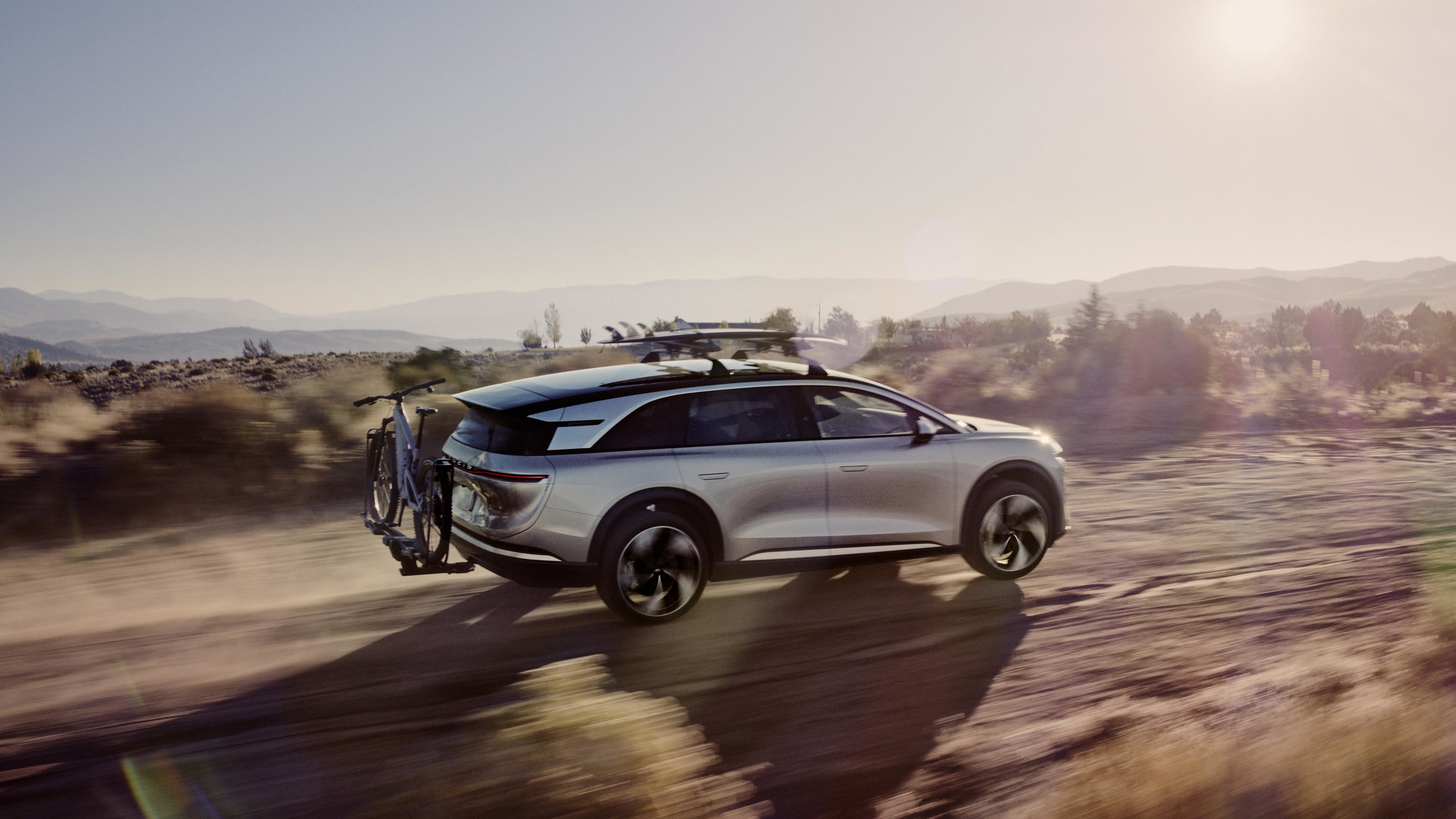
One load, several limits
Volume tells you whether an object might fit. It does not tell you whether the vehicle can carry the object safely.
Every passenger, accessory and item of cargo consumes part of the vehicle's payload. The final load must remain within the certified maximum vehicle mass and the permitted load for each axle. A roof system, tow hitch, cargo floor or pickup tailgate can also have its own lower limit. The applicable figure is the lowest relevant limit, not the largest number in the brochure.
The labels and terminology vary by market. Look for values such as gross vehicle weight rating (GVWR), technically permissible maximum laden mass, gross axle weight rating (GAWR), maximum roof load, maximum vertical coupling load and maximum trailer mass. Use the vehicle's registration documents, certification label and current owner's manual for the exact variant.
Why location changes energy use
Cargo carried inside the body usually adds mass without changing the vehicle's frontal shape. Roof loads, exposed items in a pickup bed, hitch carriers and trailers can change the airflow as well.
Mass matters most during acceleration and climbing. Aerodynamic drag becomes increasingly important as speed rises, so a light but bulky object in fast-moving air can have a greater motorway penalty than a heavier object carried inside. A controlled 2026 towing study separated trailer mass from aerodynamic effects and found that the combined load also changed motor and battery thermal-management demand.
There is no universal percentage for the range lost to a roof box, bicycles or a trailer. The result depends on speed, wind, shape, frontal area, mass, temperature, terrain and the unloaded efficiency of the vehicle.
Choose the right cargo system
- Interior cargo space explains volume standards, usable dimensions, payload and restraint inside the cabin or luggage compartment.
- Front trunks (frunks) covers front-trunk shape, water protection, access and model-specific load limits.
- Roof cargo on electric vehicles explains roof ratings, aerodynamic drag, crosswind sensitivity and clearance.
- Hitch-mounted cargo carriers covers carrier ratings, cantilevered loads, rear-axle effects, lighting and sensor obstruction.
- Pickup-bed cargo explains pickup payload, load placement, restraint and the aerodynamic effect of exposed cargo.
- Towing with an electric vehicle covers vehicle and trailer ratings, stability, energy use, charging access and licence rules.
Four checks before departure
- Identify the exact limits. Check the vehicle, wheels, tires, hitch or roof system, carrier and local rules. Do not transfer a rating from another trim or market.
- Account for every kilogram. Include occupants, luggage, fitted accessories, the carrier itself and any trailer tongue load.
- Secure and inspect the load. Use rated attachment points and suitable restraints. Recheck them after the first part of the journey and at charging stops.
- Protect visibility and range. Confirm that lights, the registration plate, cameras and sensors remain usable, then plan charging with a conservative reserve.
NHTSA reports that unsecured loads cause hundreds of deaths each year in the United States alone. A load that fits is therefore only the beginning; the vehicle must remain within its limits and the cargo must stay attached during braking, cornering, crosswinds and a collision.