
Electric Vehicle Platforms
An electric vehicle platform is the repeatable engineering system from which several vehicles can be developed, defining far more than the visible chassis: packaging, crash load paths, battery integration, high-voltage hardware, thermal systems, electronics, software interfaces, manufacturing and service all meet at platform level.
The platform name is therefore useful but not a specification, because two EVs derived from the same platform can have different battery chemistry, voltage, charging curves, motors, suspension, software and safety equipment.
What an EV platform actually includes
The terms platform, architecture, toolkit and skateboard are often used as if they mean the same thing. Manufacturers also draw the boundary differently. A useful technical definition separates five connected layers:
- Physical architecture: wheelbase and track ranges, axle positions, suspension hardpoints, body attachment points, crash structures and load limits.
- Energy architecture: the battery envelope, cell and pack options, cooling, heating, vents, protection, mounting and structural role.
- Propulsion and charging: motor positions, drive units, inverters, voltage class, charge hardware and the high-voltage distribution system.
- Electrical and software architecture: low-voltage networks, electronic control units, central computers, sensors, operating software and update paths.
- Industrial system: common parts, factories, tooling, assembly sequence, diagnostics, repair procedures and supply-chain interfaces.
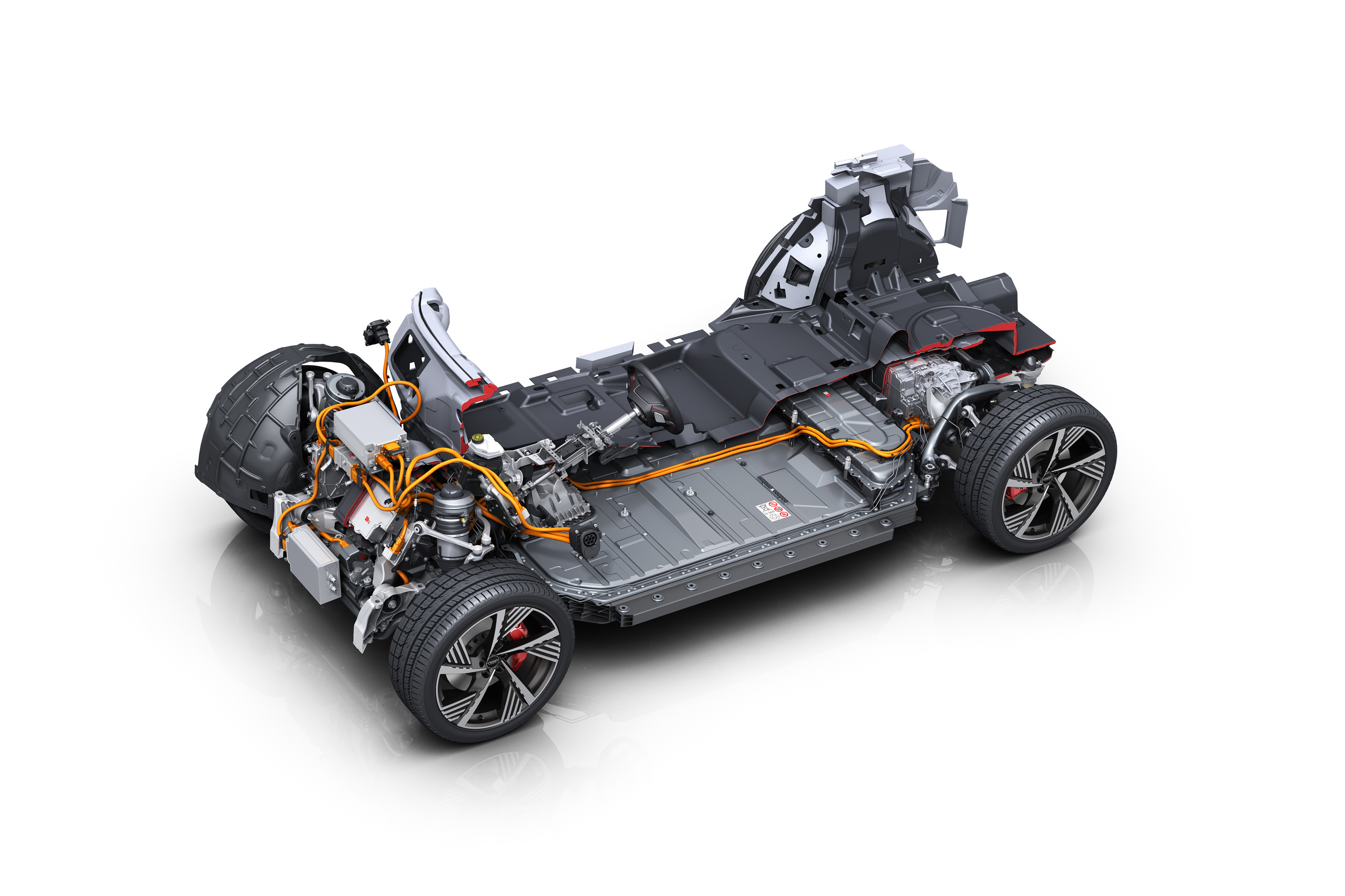
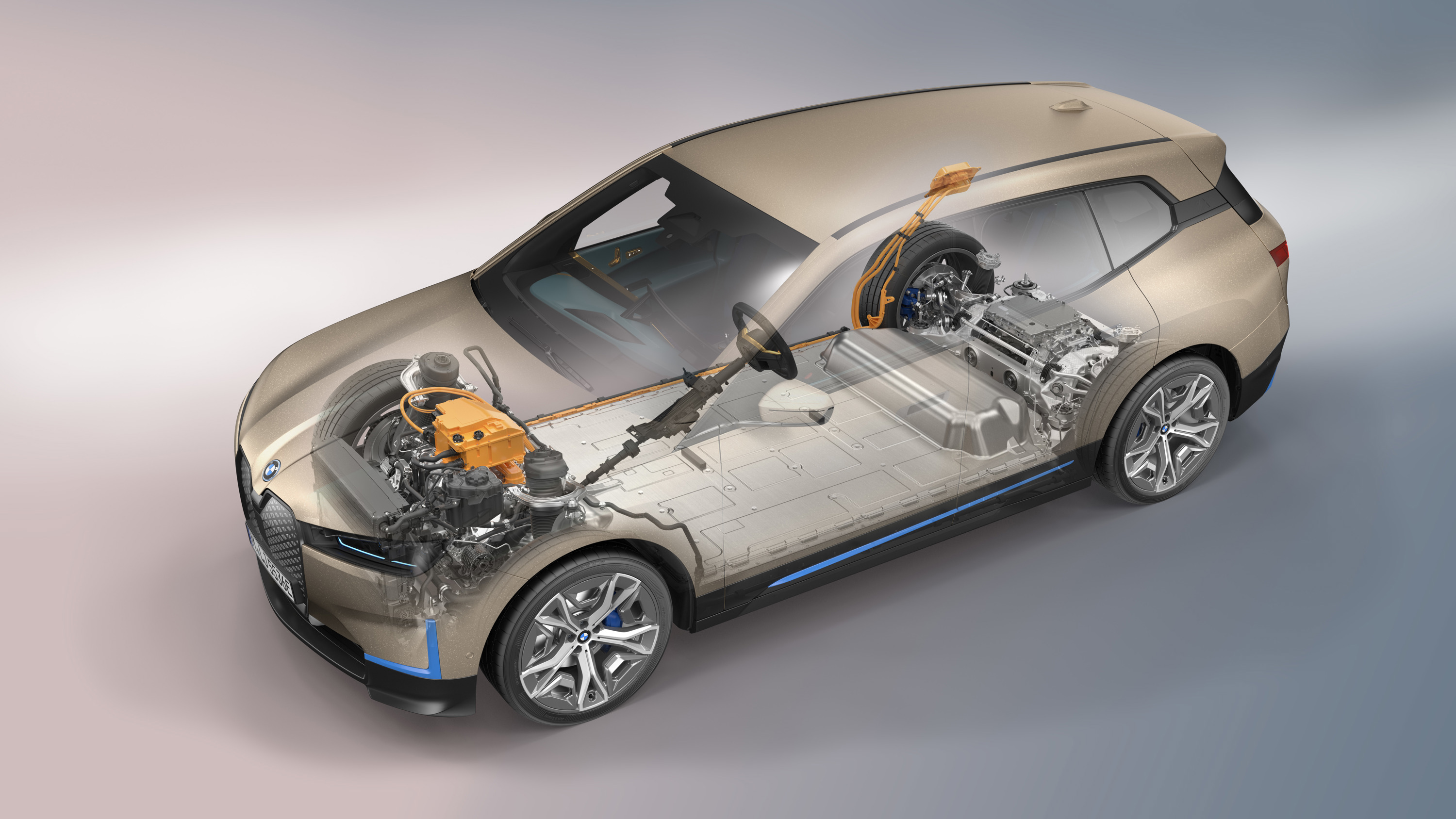
A skateboard is one physical expression of a platform: a relatively flat lower structure containing the battery, axles, drive units and much of the thermal and electrical hardware, with an upper body fitted above it. Many dedicated EVs resemble this layout, but not every EV platform is a self-contained skateboard and not every skateboard is independent of its body.
The essential platform decisions are the interfaces between these layers. A common battery opening, motor mount or software interface can let engineers change components without redesigning the entire vehicle. A tightly integrated design can remove parts and mass, but it can also make later changes or repairs more dependent on the original system.
Platform strategies form a spectrum
The industry is often described as moving from converted combustion cars to dedicated EVs. That direction is real, but a rigid set of platform categories hides important engineering differences.
Adapted combustion platforms
An adapted platform starts with an architecture whose original hardpoints were set by an engine, transmission, exhaust and fuel tank. Engineers then find space for a traction battery, electric drive and high-voltage equipment.
This route can shorten development time, reuse a factory and support a cautious transition to electric production. Its limitations depend on how much of the original structure remains. A narrow transmission tunnel, divided underbody space or rear-mounted battery section can increase pack complexity and reduce cabin or cargo volume. The Volkswagen e-Golf and Ford Focus Electric show two historical packaging solutions.
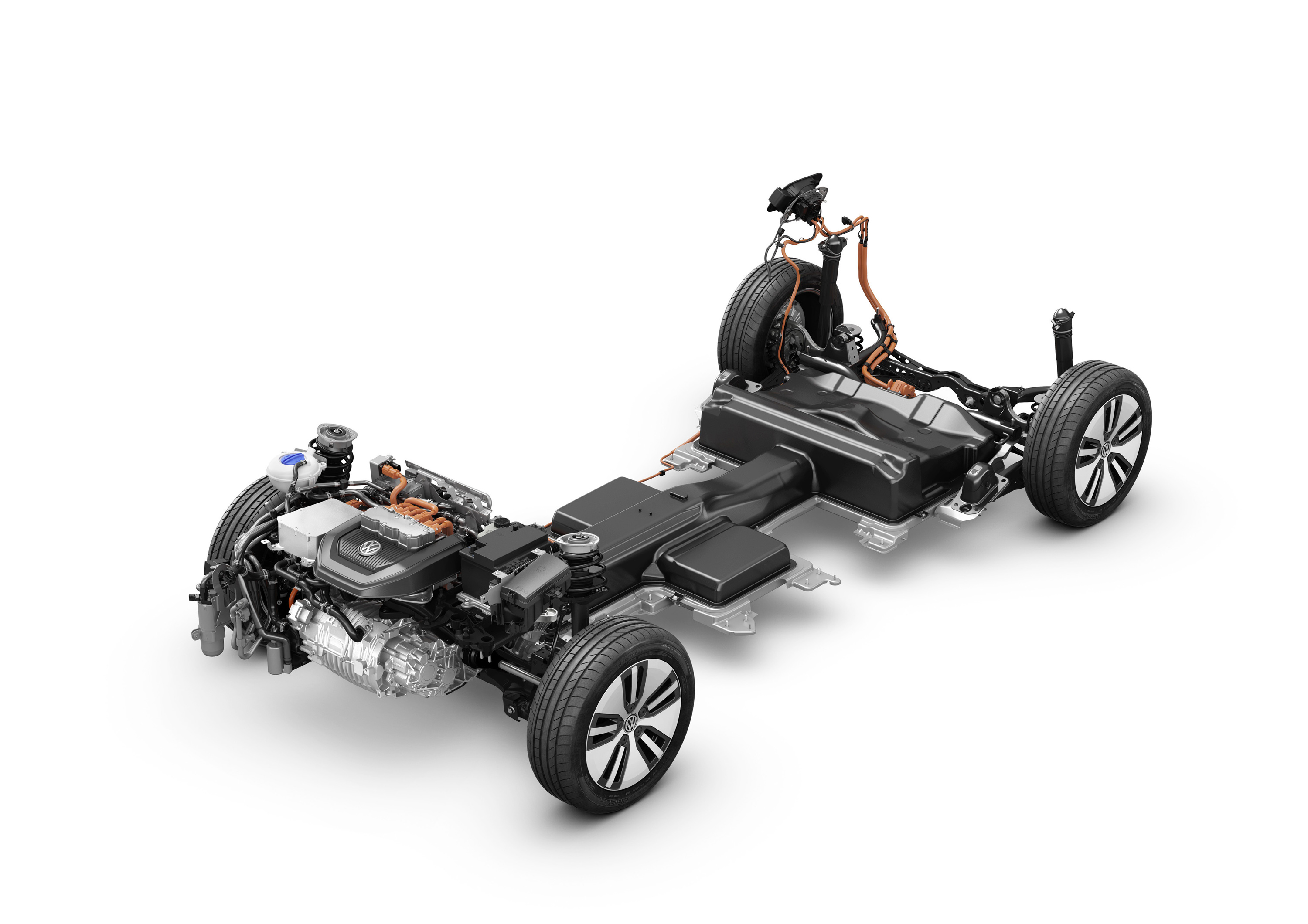

Conversion does not automatically mean an inefficient or poor EV. Aerodynamics, mass, tires, control software and the powertrain still decide much of the result. It does mean that the EV inherits hardpoints chosen for another propulsion system.
Multi-energy platforms
A multi-energy platform is engineered to support more than one propulsion type from the planning stage. Combustion, hybrid, plug-in hybrid and battery-electric versions may share dimensional hardpoints, body sections, suspension modules, electronics or production equipment while receiving different floors and powertrain modules.
This approach gives a manufacturer production flexibility when demand varies by region. It can also spread development and factory investment across more vehicles. The engineering question is not simply whether the platform supports an engine; it is whether the electric version keeps unnecessary constraints. A BEV-first multi-energy design with propulsion-specific modules can differ greatly from an older combustion architecture that merely has space reserved for a battery.
The BMW 7 Series illustrates how one model family can package combustion, plug-in hybrid and electric drivetrains within a shared architecture.
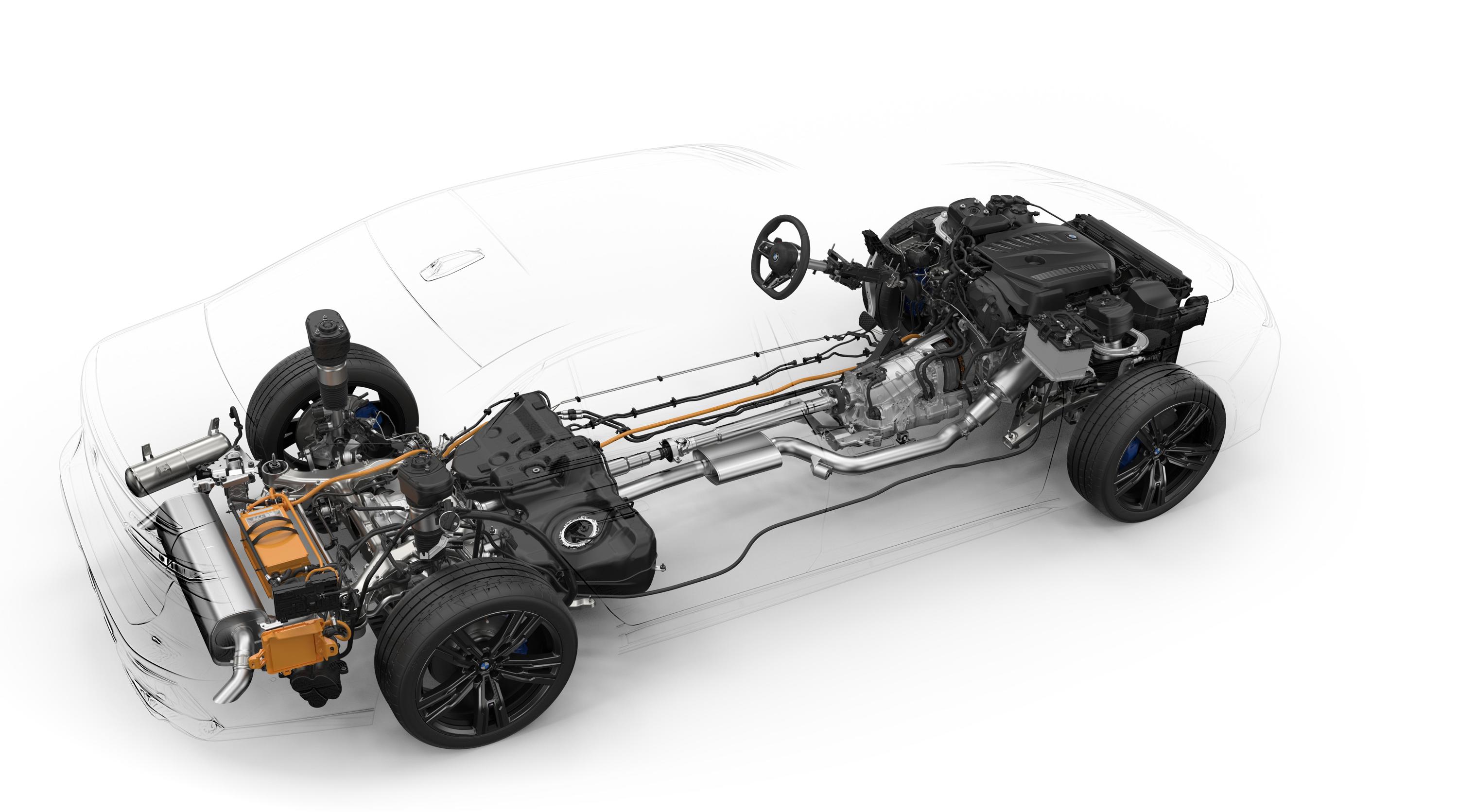

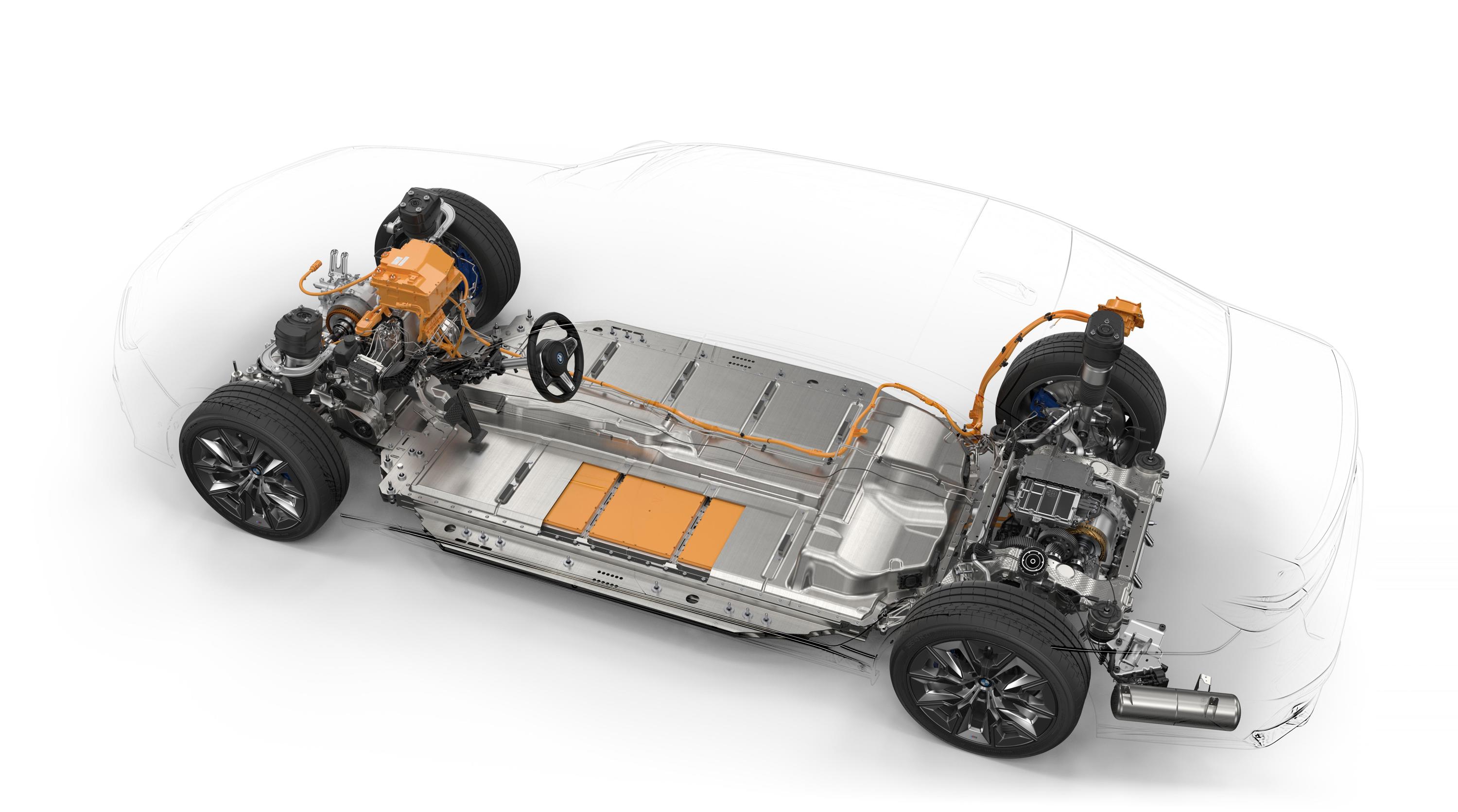
Mercedes-Benz Modular Architecture demonstrates the newer form of this strategy: Mercedes designed the family to support an 800-volt electric drivetrain as well as an electrified combustion drivetrain, with MB.OS as a shared digital layer. Mercedes-Benz: Modular Architecture and MB.OS
Dedicated battery-electric platforms
A dedicated BEV platform does not need to reserve space for an engine, exhaust or fuel system. That freedom commonly produces a battery between the axles, short drive units near one or both axles, a long wheelbase relative to vehicle length and a flat underbody.
The benefits are opportunities, not guarantees. A low battery can reduce the center of gravity, yet pack thickness, roof height and seat mounting still determine seating posture. Compact drive units can free cabin space, yet crash structures, HVAC equipment and luggage priorities still decide whether the vehicle has a front trunk. A dedicated platform can support good efficiency and charging without ensuring either.
Volkswagen's MEB shows the modular principle: defined interfaces and a battery between the axles support vehicles with different dimensions and bodies. Volkswagen: Modular toolkit strategy from MQB to MEB Hyundai's E-GMP combines a dedicated layout with standardized modules, rear- or all-wheel-drive configurations, 400/800-volt multi-charging and bidirectional power conversion. Hyundai Motor Group: Electric-Global Modular Platform

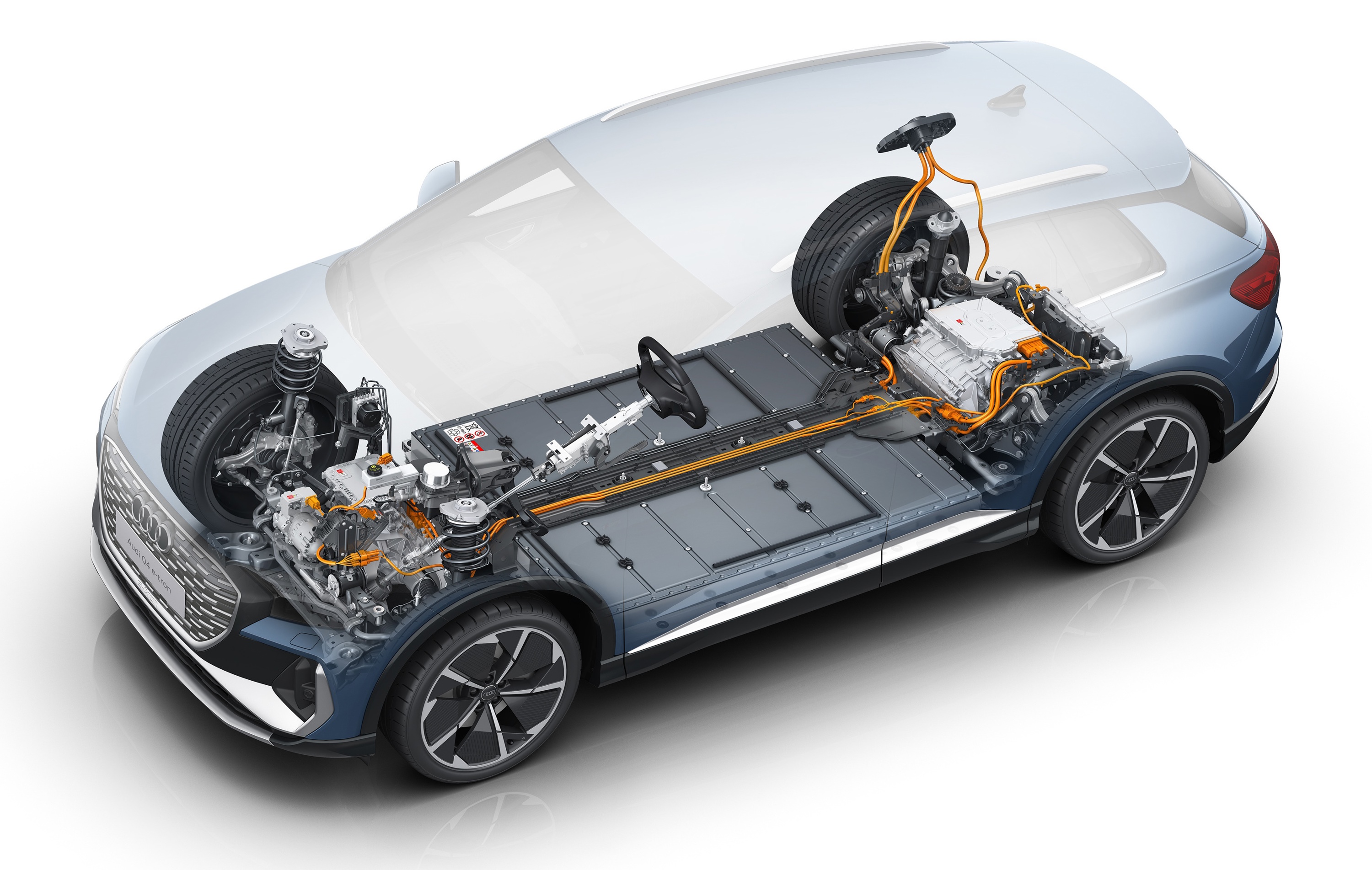
Reusing components does not turn a dedicated platform into a separate technical category. Carmakers routinely share steering, brakes, seats, computers, switches or manufacturing processes across architectures. What matters is which hardpoints and system interfaces were optimized around the traction battery and electric drive.
Supplier skateboard platforms
A supplier skateboard goes further by offering an integrated lower vehicle system to more than one automaker. Standard mechanical, electrical and software interfaces can let each customer develop a different upper body while sharing the expensive lower architecture.
CATL's announced Bedrock Chassis combines cell-to-chassis integration with a lower structure intended to be decoupled from the upper body. It is evidence of the direction of supplier-led platforms, not proof that every claimed benefit has been demonstrated in volume production. CATL: Bedrock cell-to-chassis architecture
Battery integration changes the whole vehicle
The battery is not cargo placed on a finished chassis. Its dimensions influence wheelbase, floor height, seat position, ground clearance and aerodynamics. Its mass and stiffness influence suspension loads, body modes and crash behavior. Its cooling system is linked to charging, performance, cabin heating and cold-weather efficiency.
There is a broad integration spectrum:
- Cell-to-module-to-pack: cells are grouped into serviceable modules, which are installed in a pack enclosure.
- Cell-to-pack: the intermediate module layer is reduced or removed, improving volume use and reducing parts.
- Pack as a structural component: a complete pack contributes to body stiffness and load transfer while remaining a defined assembly.
- Cell-to-body or cell-to-chassis: cells and their supporting structure become more directly integrated with the vehicle structure.
Higher integration can improve usable volume, stiffness and manufacturing efficiency. The trade-off is tighter coupling between battery, body and production process. Collision repair, sealing, pack removal, cell access, recycling and replacement cost must be designed at the same time; they cannot be assumed from the integration label.
BMW's sixth-generation electric system is a current example. The company describes cylindrical cells placed directly in the pack, an 800-volt system, and a pack that serves as a structural component of the Neue Klasse body. BMW Group: Gen6 battery and electric-drive architecture
The body must direct crash loads around the battery, protect it from intrusion and manage the vehicle after a high-voltage fault. UN Regulation No. 100 includes electrical protection and battery tests covering vibration, mechanical shock, mechanical integrity, fire resistance, short circuit, overcharge, over-discharge and over-temperature. Compliance is a baseline; it does not rank real-world crash repair, thermal propagation management or service access. UN Regulation No. 100: Electric powertrain and battery safety
The following layouts show how two manufacturers placed the battery and drive hardware within very different body structures.
Voltage is one platform choice, not a charging result
An EV's advertised 400-volt or 800-volt architecture describes a voltage class, not one exact operating voltage. The battery voltage changes with state of charge and temperature, while the charger and vehicle continuously negotiate current and voltage.
Electrical power is voltage multiplied by current: P = V × I. For the same power, doubling voltage roughly halves current. Resistive heating follows P_loss = I²R, so halving current reduces that loss to one quarter if resistance is unchanged. Engineers can use the lower current to reduce losses, reduce conductor cross-section, increase power, or balance all three.
That is why higher-voltage systems can support high charging and propulsion power efficiently. They also require compatible cells, contactors, insulation, inverters, DC converters, heaters, air-conditioning compressors and service procedures. Silicon-carbide power semiconductors can reduce switching losses, but their use is another design choice rather than an automatic consequence of the platform name.
An 800-volt badge does not guarantee a short charging stop. The result also depends on:
- the battery's charge acceptance across the full state-of-charge window;
- cell temperature and the ability to precondition the pack;
- cooling capacity and thermal limits;
- the charger's voltage and current envelope;
- how the vehicle handles lower-voltage chargers;
- software calibration and battery protection limits.
Audi's PPE combines an 800-volt high-voltage system with a modular battery and charging system, while its E³ 1.2 electronics use five high-performance domain computers. The pairing shows that high-voltage and digital architectures are related parts of a platform program, but remain distinct systems. Audi: PPE and E³ 1.2 electronic architecture
Platform flexibility can also cross voltage classes. Stellantis says STLA Large supports both 400-volt and 800-volt electric architectures, several battery sizes, front-, rear- and all-wheel drive, and non-BEV propulsion. Sharing the platform name therefore does not establish a vehicle's charging voltage or powertrain layout. Stellantis: STLA Large architecture
AC charging power is set mainly by the onboard charger and local electrical supply. Bidirectional functions require suitable high-voltage hardware, control software, communications, external equipment and market approval. Neither should be inferred from the platform alone.
The digital platform is now part of the vehicle platform
Older vehicles distribute functions across many electronic control units connected by long wiring harnesses. A domain architecture consolidates functions such as infotainment, body control, driving dynamics and driver assistance into a smaller number of powerful computers. A zonal architecture adds controllers based on physical areas of the vehicle, so nearby sensors and actuators connect locally before data travels over a high-speed backbone.
The gains are physical as well as digital: less wiring, fewer connectors, lower mass, simpler assembly and a clearer route for software deployment. Rivian reported that its second-generation R1 architecture reduced the number of control units from 17 to 7 and removed 2.6 km of wiring and 20 kg of mass. Rivian: Second-generation R1 electrical architecture
BMW's Neue Klasse uses four central computers for infotainment, automated driving, driving dynamics and basic body functions, combined with a zonal wiring architecture. BMW reports 600 meters less wiring and a 30% lighter harness than its previous generation. BMW Group: Neue Klasse zonal electronics and central computers
Centralization does not make every function freely upgradeable. Software can alter energy management, torque delivery, charging preparation, user interfaces and some assistance behavior. It cannot add absent sensors, increase physical battery capacity or exceed the validated limits of contactors, cells, motors, brakes and cooling. An update also needs secure delivery, a safe fallback path, enough computing headroom and regulatory approval where the function is controlled.
The strongest digital architecture is therefore not the one with the largest screen or compute claim. It is one that keeps safety-critical functions deterministic, isolates faults, supports diagnostics, can recover from an interrupted update and remains maintainable through the vehicle's service life.
Manufacturing and repair belong in the design
Platforms exist partly to create scale. Reusing interfaces, modules, validation work and tooling can shorten development and let different models share a production line. The economic benefit grows with volume, but commonality also concentrates risk: a late component, software defect or design change can affect several vehicles at once.
New production methods deepen the link between product and factory. Large castings can replace many stamped parts, welds and fasteners. Structural batteries can remove duplicated floors or cross-members. Both can reduce part count and assembly steps, but the factory, body shop and service network need suitable handling, measurement and repair processes.
For an owner, fewer factory parts do not automatically mean a cheaper collision repair. The relevant questions are whether damaged sections can be measured and replaced, whether the battery can be removed without destroying bonded structure, whether cooling plates and high-voltage connectors are separately available, and how the manufacturer checks electrical isolation and sealing after work.
Environmental performance also cannot be read from the platform label. Material quantity, recycled content, cell chemistry, factory energy, vehicle efficiency, durability, repairability and end-of-life recovery all contribute. A lighter or more integrated design can reduce material and operating energy while making disassembly harder; the complete lifecycle decides the result.
A 2026 snapshot of platform thinking
These examples are not a ranking. They show how current production systems and announced architectures combine different layers:
- Volkswagen MEB uses a dedicated BEV package and modular dimensions across several brands and body styles. Its layout proves the scale benefit of standardized physical and drive interfaces. Volkswagen: Modular toolkit strategy from MQB to MEB
- Hyundai Motor Group E-GMP combines a dedicated underbody, standardized drive modules, 400/800-volt charging compatibility and bidirectional conversion. Hyundai Motor Group: Electric-Global Modular Platform
- Audi/Porsche PPE joins dedicated BEV hardpoints and 800-volt hardware with a newer domain-computer architecture. Audi: PPE and E³ 1.2 electronic architecture
- BMW Neue Klasse brings cell-to-pack, a structurally integrated pack, 800-volt drive hardware and zonal electronics into one vehicle program. BMW Group: Gen6 battery and electric-drive architecture BMW Group: Neue Klasse zonal electronics and central computers
- Mercedes-Benz MMA shows that a modern architecture can be optimized around an electric drivetrain while retaining a separate electrified-combustion configuration. Mercedes-Benz: Modular Architecture and MB.OS
- Stellantis STLA Large shows how one scalable architecture can vary wheelbase, ground clearance, battery capacity, voltage class, drive layout and propulsion type. Stellantis: STLA Large architecture
- Rivian's second-generation electrical architecture shows that a major platform update can occur inside a familiar body, with zonal controllers reducing hardware and wiring. Rivian: Second-generation R1 electrical architecture
- CATL Bedrock Chassis points toward supplier-developed lower bodies with standardized interfaces and direct cell-to-chassis integration; its announced performance claims still need to be separated from production-fleet evidence. CATL: Bedrock cell-to-chassis architecture
The direction is not one universal skateboard. It is a set of reusable interfaces that let structure, energy storage, propulsion, electronics and software evolve at different speeds without losing safety or manufacturability.
What buyers and reviewers should check
When two EVs share a platform, compare the actual vehicles rather than transferring one model's reputation to the other:
- exact model year, market and platform generation;
- gross and net battery energy, buffer strategy and cell chemistry;
- voltage class, peak DC power, the 10–80% time and the full charging curve;
- battery preconditioning and repeat charging behavior;
- motor type, driven wheels, disconnect hardware and inverter technology;
- measured energy consumption with comparable wheels, weather and test cycles;
- cabin floor height, seating position, cargo volume, payload and towing limits;
- suspension, brakes, steering and tire specification;
- sensor and computing hardware, not only the software feature name;
- update policy, diagnostics, battery warranty, repair procedures and parts availability.
A good EV platform creates room for efficient vehicles, safe battery integration, useful cabins, repeatable charging, dependable software and economical manufacturing. The finished vehicle determines how much of that potential reaches the road.
Sources
- Volkswagen: Modular toolkit strategy from MQB to MEB
- Hyundai Motor Group: Electric-Global Modular Platform
- Audi: PPE and E³ 1.2 electronic architecture
- BMW Group: Gen6 battery and electric-drive architecture
- BMW Group: Neue Klasse zonal electronics and central computers
- Mercedes-Benz: Modular Architecture and MB.OS
- Stellantis: STLA Large architecture
- Rivian: Second-generation R1 electrical architecture
- CATL: Bedrock cell-to-chassis architecture
- UN Regulation No. 100: Electric powertrain and battery safety