
Range Estimator (Guess-O-Meter)
A range estimator, also called distance to empty (DTE), guess-o-meter (GOM) or guessometer, is the display that predicts how far an EV can travel on the energy left in its battery. It is a forecast built on assumptions, so it can differ from the distance actually driven.
How the estimate is calculated
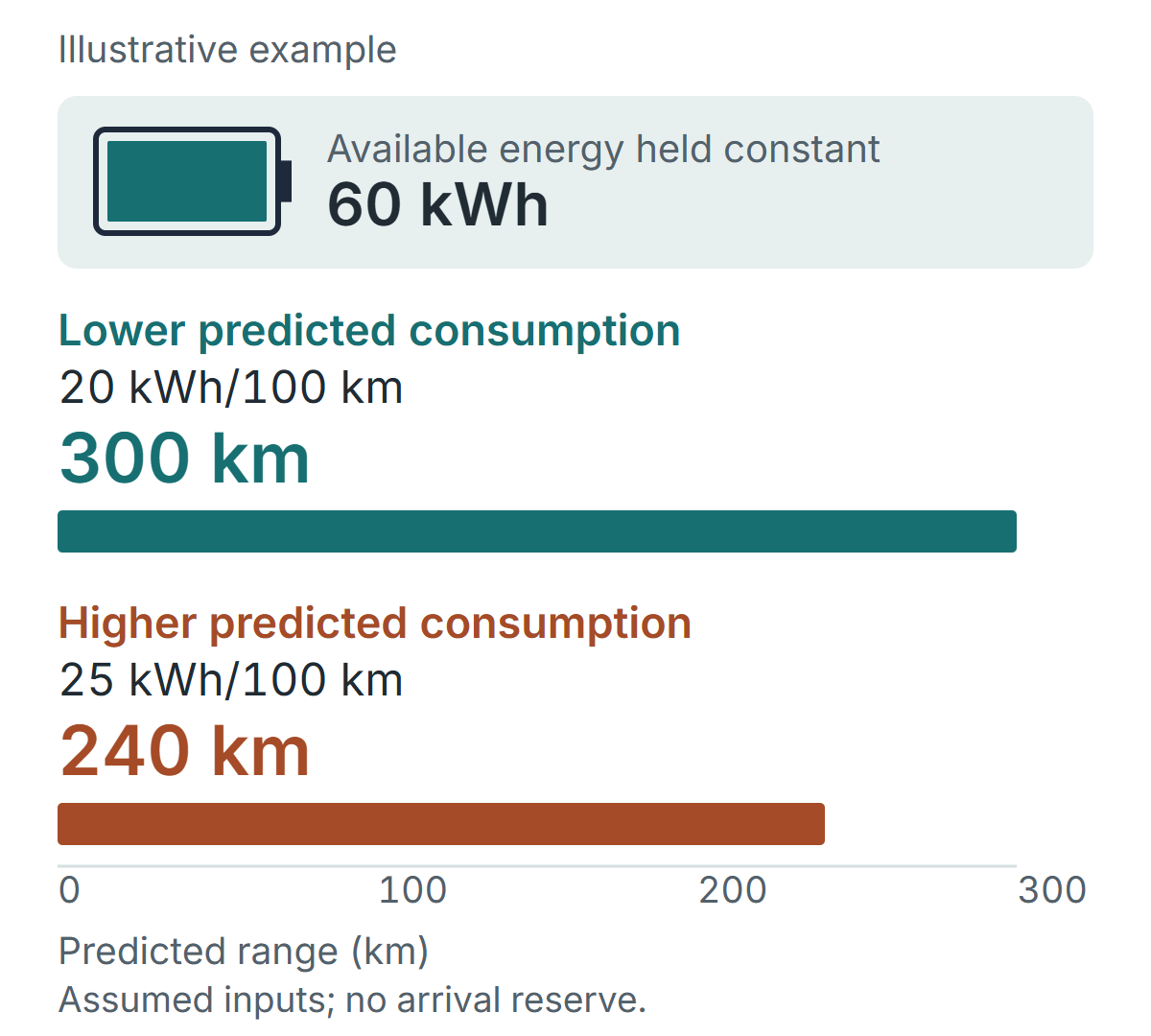
A simplified way to understand a range estimate is to divide available energy by assumed consumption:
range (km) = available energy (kWh) ÷ consumption (kWh/100 km) × 100
With 60 kWh available, 20 kWh/100 km gives 300 km and 25 kWh/100 km gives 240 km. The energy is the same; the higher consumption figure alone cuts the forecast by 20%. These are illustrative inputs, not measured values.
Displays differ mainly in which consumption figure they use:
- Rated displays use a fixed figure from a standard test. Tesla's Model 3 manual says the range shown on the touchscreen is based on EPA-rated consumption and may not account for personal driving or external conditions; a projection from recent consumption is available separately in the Energy app. Tesla Model 3 Owner's Manual: Getting Maximum Range
- Adaptive displays learn from recent driving. Hyundai's IONIQ 5 N manual lists speed and acceleration, electrical loads such as heating, weather, wind, temperature and terrain as factors, and says the figure is recalculated from the destination instead of learned history once one is set. It also warns that resetting learned driving data can raise the displayed figure without increasing actual range. Hyundai IONIQ 5 N Owner's Manual (2026, US): Checking Electric Vehicle Driving Information
A rated display does not respond to how the car is being driven, so its kilometres can fall faster or slower than the distance travelled. An adaptive display follows recent driving more closely, but it also carries recent conditions into the next trip. For how test cycles and driving conditions shape range in general, see Understanding EV Range.
Why the reading drops in cold weather
Both parts of the calculation can change in winter.
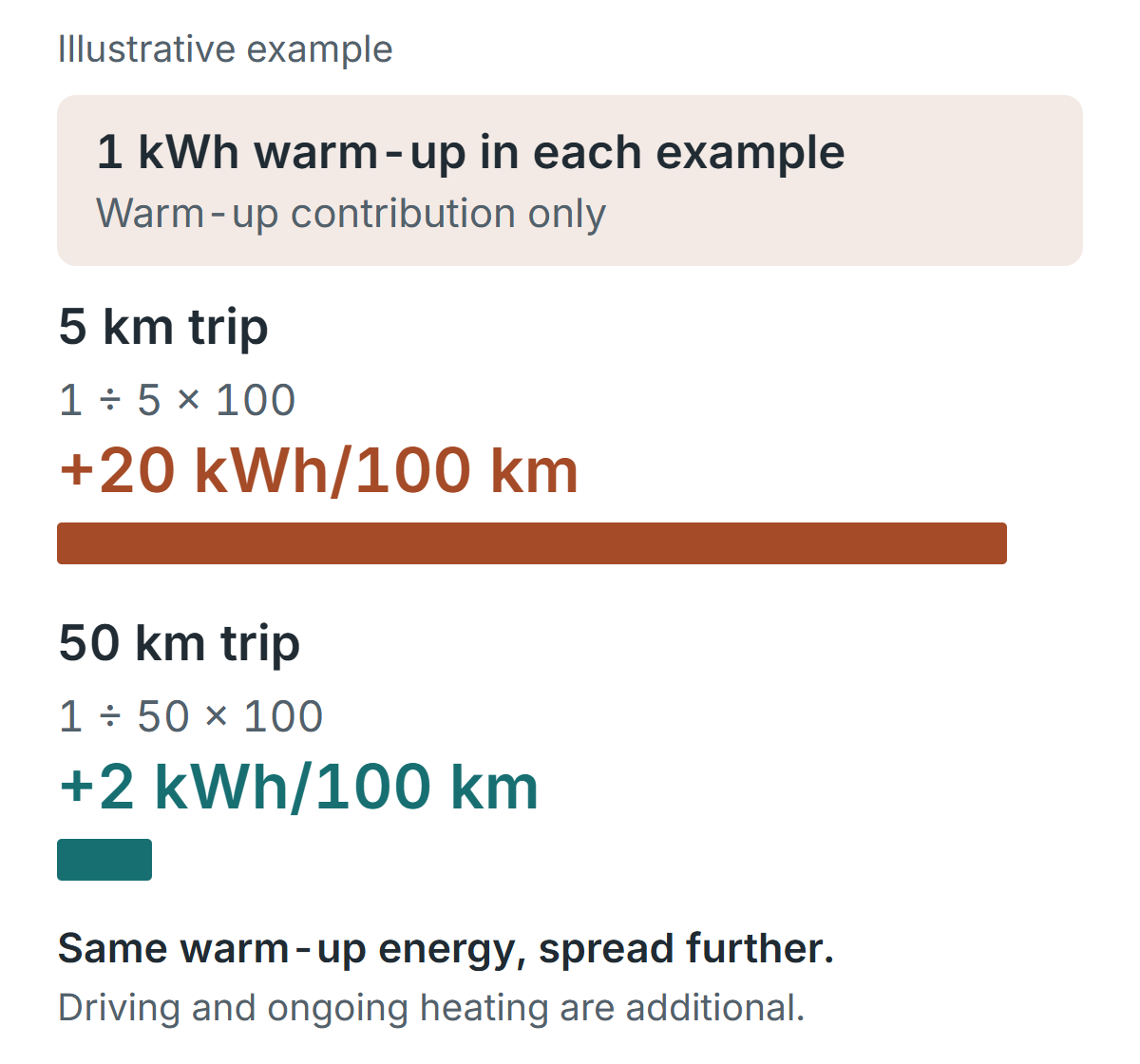
Predicted consumption rises on an adaptive display when recent driving used more energy. Cabin and battery heating draw on the battery Tesla Model Y Owner's Manual: Cold Weather Best Practices, and cold, dense air increases aerodynamic drag. U.S. DOE / EPA: Fuel Economy in Cold Weather Short trips magnify the effect because warming a cold cabin and battery is spread over few kilometres. As an illustration, a one-off 1 kWh warm-up adds 20 kWh/100 km to a 5 km trip but 2 kWh/100 km to a 50 km trip. These figures cover only the assumed initial warm-up; driving and ongoing heating are additional. An estimate shaped by several short winter trips can therefore start pessimistically for a longer journey. Tesla Model 3 Owner's Manual: Getting Maximum Range
Available energy can fall too. A cold battery can make part of its stored energy temporarily unavailable; Tesla's Model Y manual shows that portion in blue on the battery meter with a snowflake icon, and notes that regenerative braking can be limited until the battery warms. Tesla Model Y Owner's Manual: Cold Weather Best Practices Even with fixed rated consumption, a lower estimate of available energy produces a lower range figure. How this appears alongside the battery percentage depends on the vehicle's display logic.
For the size of real winter losses and how to plan for them, see Winter driving: EV Claims, Checked.
Reading the estimate
The state of charge (SoC) shows how full the battery is; the range figure is a forecast of how that energy will be used. A navigation system's predicted arrival charge estimates the energy left at the destination. A general range figure may use rated or historical consumption, although some vehicles also adapt it to the selected route. Keep a reserve and watch how the prediction develops on the way. EV route planning with charging stops
A low winter reading on its own is not evidence of permanent battery degradation; Hyundai notes that a cold battery reduces distance to empty only temporarily. Hyundai IONIQ 5 N Owner's Manual (2026, US): Checking Electric Vehicle Driving Information Compare similar routes, temperatures, speeds and charge levels before drawing that conclusion.